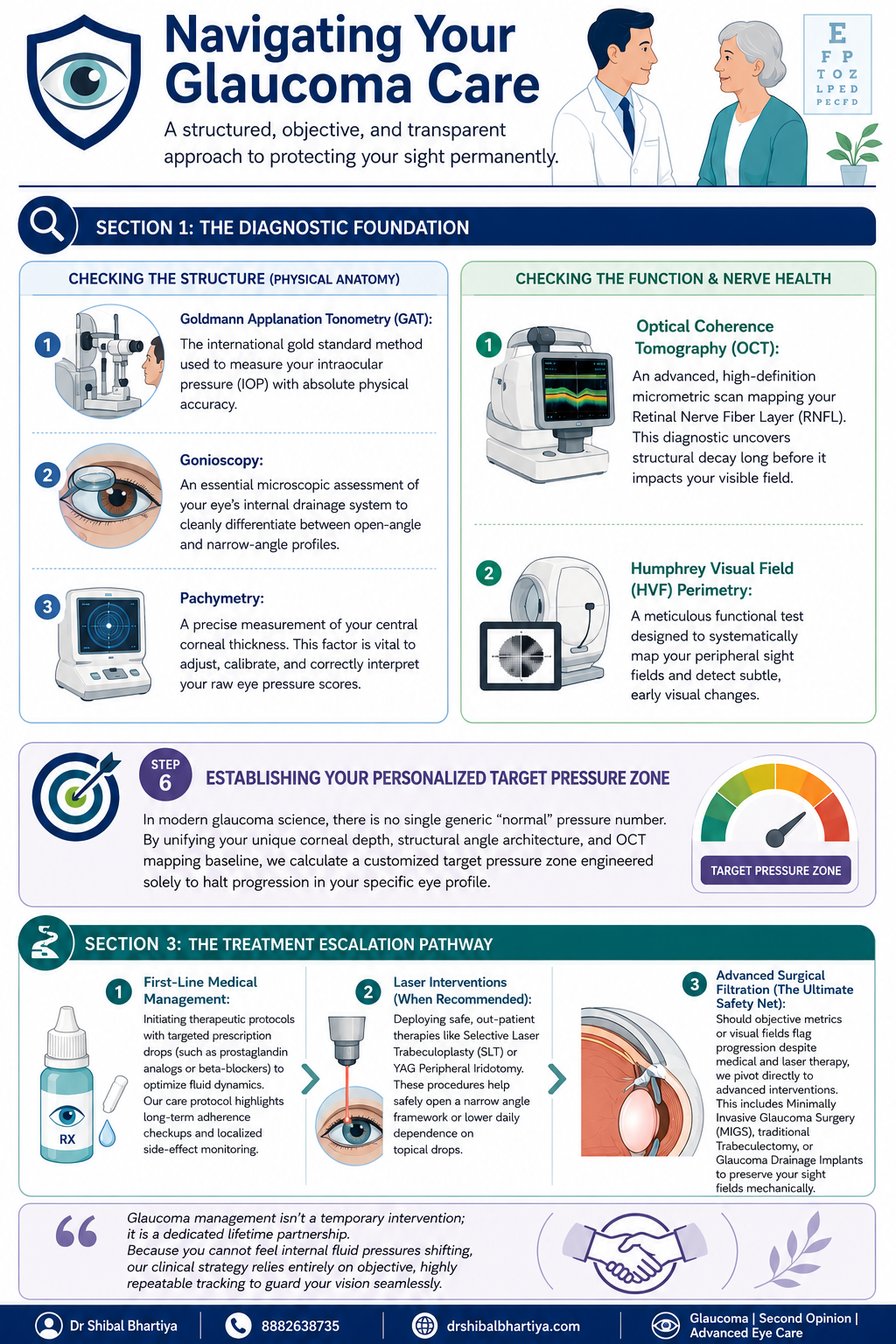
Most common myth about glaucoma is that it causes pain or obvious vision loss, but early glaucoma is often silent and progresses slowly. Regular eye examinations are important because glaucoma damage can occur long before symptoms become noticeable. Patients who believe they would notice symptoms, that only older people are affected, or that treatment means surgery are the patients who present late. Here is what is true, explains Dr Shibal Bhartiya.
Glaucoma affects over 12 million people in India. The majority do not know they have it. Part of the reason is the disease itself: silent, slow, and peripheral. But part of the reason is misinformation that creates false reassurance at precisely the moment awareness matters most.
Eight Glaucoma Myths That Cost People Their Vision
Myth
What the Evidence Shows
Glaucoma only affects the elderly.
While risk rises with age, glaucoma can occur at any age. Juvenile glaucoma affects teenagers. Primary open angle glaucoma is well documented in patients in their 30s and 40s, particularly in South Asian populations with high myopia or family history.
I would know if I had glaucoma — my vision is fine.
Glaucoma destroys peripheral vision first. Central vision — what you use to read and recognise faces — is preserved until very late in the disease. The brain compensates for peripheral loss so effectively that patients can lose 40% of their optic nerve before noticing anything.
Glaucoma always causes high eye pressure.
Normal tension glaucoma — where the optic nerve is damaged despite normal IOP — accounts for 30–40% of glaucoma in India. A normal pressure reading does not mean your optic nerve is safe.
Glaucoma means I will go blind.
Glaucoma diagnosed and treated early is very unlikely to cause blindness. Most patients with well-managed glaucoma retain functional vision for life. The blindness associated with glaucoma is almost always the result of late detection or inadequate treatment.
Glaucoma treatment means surgery.
The majority of glaucoma patients are managed with eye drops alone for many years. Laser procedures (SLT) are used when drops are insufficient or poorly tolerated. Surgery is reserved for cases where other treatments fail or where IOP needs to be lowered substantially.
Once I start glaucoma drops, I am on them forever.
Treatment duration depends on the stage of disease, IOP response, and patient factors. Some patients transition from drops to laser. Some achieve adequate control with laser alone. Surgical treatment can reduce or eliminate drop dependence. Your specialist reviews this regularly.
Glaucoma runs in my family but I feel fine, so I must be fine.
Family history of glaucoma increases your personal risk four to nine times. Feeling fine is expected — glaucoma is asymptomatic. A first-degree relative with glaucoma is the single strongest indication for annual specialist screening, regardless of how well you feel.
Glaucoma eye drops are just for reducing pressure — they have no other effect.
Glaucoma drops significantly affect the eye surface, causing dry eye, redness, and allergic reactions in many patients. Some systemic drops affect heart rate and blood pressure. Your specialist needs to know your full medical history and all medications before prescribing.
Frequently Asked Questions
Is There a Cure for Glaucoma?
There is no cure for glaucoma in the sense of restoring damaged nerve tissue. The optic nerve fibres lost to glaucoma do not regenerate. Treatment halts or slows progression — it does not reverse what has already been lost. This is why early detection is the single most important determinant of outcome.
Can I Check My Own Eye Pressure at Home?
Home tonometers are available and improving, but they are not a substitute for specialist monitoring. IOP is one variable in glaucoma management. Optic nerve appearance, visual field status, and nerve fibre layer thickness are equally or more important — none of which a home device measures. Home monitoring may have a role as a supplement to specialist care, not a replacement for it.
How Often Do I Need to See a Glaucoma Specialist?
This depends on your disease stage and stability. Newly diagnosed or unstable patients are typically reviewed every three to four months. Stable patients with well-controlled IOP and no progression may be reviewed every six to twelve months. Your schedule is set by your specialist and should not be deferred because you feel well.
Does Glaucoma Affect Both Eyes Equally?
Glaucoma is often asymmetric — it begins in one eye before the other and progresses at different rates. This asymmetry is one reason patients do not notice it. The better eye compensates for the worse eye. By the time both eyes are significantly affected, the window for prevention has often closed in the first eye.
She has published peer-reviewed research on glaucoma management, examining how treatment decisions should balance medical evidence, patient preferences, and long-term vision outcomes.
Dry eye disease and glaucoma often occur together, especially because some glaucoma eye drops can affect the tear film and make symptoms like burning, irritation, watering, or fluctuating vision worse. Early diagnosis and treatment of both conditions can improve comfort and help protect long-term vision.
Glaucoma and dry eye disease occur together more often than chance alone explains. If your eyes burn, sting, or feel gritty while you are on glaucoma drops, you are not imagining it. This combination is common, clinically important, and often undertreated.
Studies consistently show that 40 to 60 percent of glaucoma patients meet diagnostic criteria for dry eye disease. The reverse is also true: people with moderate to severe dry eye carry a higher risk of developing glaucoma-related damage. These are not coincidental companions. They share biological mechanisms, and each condition can quietly worsen the other.
Why Does Dry Eye Develop in Glaucoma Patients?
The preservative problem
Most glaucoma eye drops contain benzalkonium chloride (BAK) as a preservative. BAK is effective at keeping the bottle sterile, but it is toxic to the cells of the ocular surface. It disrupts the tear film, damages goblet cells (the cells that produce the mucin layer of your tears), and triggers chronic inflammation.
Patients who use two or three glaucoma drops daily — each containing BAK — are exposing their eyes to this preservative four, six, or more times every day. Over months and years, the cumulative damage is significant. The conjunctiva becomes inflamed, the cornea loses its smooth optical surface, and the eyes feel perpetually uncomfortable.
This is not a rare side effect. It is an expected biological consequence of long-term BAK exposure, and it is one of the most underrecognised sources of glaucoma-related suffering.
Pre-existing risk
Dry eye disease is more common in the same demographic groups that develop glaucoma: older adults, women after menopause, and people with autoimmune conditions. Many patients arrive at a glaucoma diagnosis already carrying a degree of ocular surface disease. Adding BAK-containing drops to a compromised surface accelerates the damage.
Reduced blink rate
Glaucoma patients and patients with dry eye often share a common modern risk factor: prolonged screen use. Reduced blink rate during screen time is one of the fastest-growing contributors to evaporative dry eye, and it worsens the tolerance to topical medications.
Why Does This Overlap Matter Clinically?
Medication adherence
Dry eye makes glaucoma drops uncomfortable. Burning, stinging, and a sense of grittiness after instillation are among the most common reasons patients quietly reduce their drop frequency or stop altogether. This is rational behaviour in response to pain — but the result is uncontrolled intraocular pressure and silent glaucoma progression.
Treating dry eye is not a cosmetic afterthought. It is a strategy for protecting adherence, which protects the optic nerve.
Diagnostic accuracy
Dry eye causes variable intraocular pressure readings. Epithelial irregularity from a damaged ocular surface can affect tonometry (pressure measurement) and cause artificially high or variable readings. This creates noise in the data your glaucoma specialist depends on.
Similarly, a poor ocular surface causes artefacts in OCT scans and visual field tests. Blurring from unstable tear film produces dips and losses in visual field testing that mimic glaucoma progression. Distinguishing true nerve damage from tear-film artefact requires a clinician who is looking for both.
Quality of life
Glaucoma itself does not hurt and often produces no symptoms until late. But the treatment — the drops — can make patients miserable. Chronic ocular surface pain, light sensitivity, and fluctuating vision are quality-of-life burdens that patients often accept as inevitable. They are not inevitable.
How Do We Assess This in the Clinic?
A comprehensive evaluation for a glaucoma patient with ocular surface complaints includes:
Tear film assessment: Tear breakup time (TBUT) measures how quickly your tear film breaks apart after a blink. In dry eye, this is shortened.
Ocular surface staining: Fluorescein and lissamine green dyes reveal damaged cells on the cornea and conjunctiva.
Meibomian gland evaluation: Most dry eye in glaucoma patients is evaporative, caused by dysfunction of the oil-producing meibomian glands at the lid margins.
Symptom questionnaires: Validated tools like OSDI (Ocular Surface Disease Index) capture the patient experience beyond what the slit lamp shows.
Review of the current drop regimen: How many drops, which preservatives, how many times daily.
What Are the Management Options?
Switching to preservative-free formulations
This is often the single most impactful intervention. Preservative-free glaucoma drops deliver the same intraocular pressure-lowering effect without the chronic ocular surface toxicity. Multiple classes of glaucoma medication are now available in preservative-free formats: prostaglandin analogues, beta-blockers, carbonic anhydrase inhibitors, and fixed-dose combinations.
The transition requires some planning — not all formulations are available in preservative-free versions in every market, and cost is a factor — but for patients with documented ocular surface disease, this is a clinically justified switch that most guidelines now support.
Fixed-dose combination drops
Instead of using two bottles separately (each with its own preservative load), a fixed-dose combination delivers two active ingredients in one drop. This halves the number of preservative exposures per day. For patients who genuinely need two active agents, this is a practical step even before moving to preservative-free options.
Treating the dry eye directly
Ocular surface disease responds to targeted treatment. The approach depends on the type and severity:
Artificial tears: Lubricating drops, preferably preservative-free, used consistently throughout the day. These dilute residual BAK, stabilise the tear film, and reduce surface friction.
Warm compresses and lid hygiene: For meibomian gland dysfunction, daily warm compress application followed by gentle lid massage improves the quality of the oily tear layer.
Omega-3 supplementation: Good evidence supports dietary omega-3 fatty acids for meibomian gland function and tear quality.
Anti-inflammatory therapy: Topical cyclosporine (Restasis, Ikervis) or lifitegrast addresses the inflammatory cycle that perpetuates chronic dry eye. In patients with significant ocular surface inflammation, this can be transformative.
Punctal plugs: Small silicone plugs inserted into the tear drainage points slow the drainage of natural tears, keeping the eye surface better hydrated.
Laser and surgical IOP control
For some patients, reducing or eliminating the need for topical drops altogether is the right goal. Selective laser trabeculoplasty (SLT) can lower IOP without any drops. For more advanced glaucoma, surgical options including minimally invasive glaucoma surgery (MIGS) and trabeculectomy may reduce drop burden significantly. When a patient’s ocular surface is severely compromised by long-term drop use, a surgical discussion is worth having.
A Note on Sequence and Timing
When a patient presents with both conditions, the sequence of assessment matters. Dry eye can artificially distort IOP readings and OCT quality. I prefer to stabilise the ocular surface first — or at least treat both simultaneously — so that subsequent glaucoma monitoring data is reliable. A visual field test performed through an unstable tear film is not a trustworthy test.
What Should You Tell Your Doctor?
If you are being treated for glaucoma and your eyes feel uncomfortable, please say so explicitly. Many patients assume irritation is part of the package and do not raise it. Your doctor needs to know:
Which symptoms bother you most (burning, grittiness, blurred vision, light sensitivity)
Whether symptoms are worse at certain times of day or after drop instillation
Whether you have ever reduced or skipped your drops because of discomfort
Whether you use a screen for extended hours daily
This information changes the clinical approach. It does not make you a difficult patient — it makes your care more precise.
Frequently Asked Questions
Can glaucoma drops cause dry eye?
Yes. Most glaucoma drops contain benzalkonium chloride, a preservative that damages the ocular surface over time. Long-term exposure causes inflammation, goblet cell loss, and dry eye disease. Switching to preservative-free formulations often brings significant relief.
Do I have to choose between treating my glaucoma and treating my dry eye?
No. Both conditions can and should be managed simultaneously. In many cases, treating dry eye actively improves the tolerability of glaucoma drops and supports adherence to treatment, which protects the optic nerve.
Are preservative-free glaucoma drops as effective as regular drops?
Yes. The active ingredient is the same. The preservative is only there to keep the bottle sterile between uses. Preservative-free formulations use single-dose units instead, delivering the same intraocular pressure-lowering effect without the surface toxicity.
Can dry eye affect my glaucoma test results?
Yes. An unstable tear film causes variable IOP readings and artefacts in visual field and OCT testing. This is one reason a thorough ocular surface assessment is part of comprehensive glaucoma care.
I use three different glaucoma drops. Is that a problem for my eyes?
Three separate bottles often means three doses of BAK per application. This is a significant preservative load. A conversation about fixed-dose combinations or preservative-free alternatives is worth having with your glaucoma specialist.
Is laser treatment an option if my eyes cannot tolerate drops?
Yes. Selective laser trabeculoplasty (SLT) can lower IOP and reduce dependence on drops. For patients whose ocular surface disease is severe and driven by drop toxicity, reducing the drop burden through laser or surgery is a clinically sound strategy.
Internal Linking Architecture Statement
This page is part of the Glaucoma Hub hub. Read about our full approach to glaucoma diagnosis, monitoring, and treatment. Please also read our Dry Eye Hub. Here’s another heartening patient story: Tired of glaucoma eyedrops.
She has published peer-reviewed research on glaucoma management, examining how treatment decisions should balance medical evidence, patient preferences, and long-term vision outcomes.
Your vision feels fine. No pain, no blur, no obvious change. So why is your doctor urging treatment? This is the most common question glaucoma patients ask, and it deserves a direct, honest answer,
Glaucoma destroys your optic nerve silently. By the time you notice something is wrong, you have already lost nerve fibres that will never return. Treatment does not restore what is gone. It protects what remains.
The Vision You Have Now Is Not the Vision You Started With
Glaucoma removes peripheral vision first. Your central vision stays sharp until the disease is advanced. Your brain also compensates, filling in blind areas so skilfully that you do not notice them. You may have lost 30 to 40 percent of your optic nerve fibres before any symptom appears.
Why Glaucoma Treatment Feels Unnecessary (And Why That Feeling Is Dangerous)
Glaucoma drops do not improve your vision. They do not reduce pain because glaucoma causes none. They do not change how things look today. Their only job is to lower the pressure inside your eye and slow the damage to your optic nerve.
When a treatment produces no felt benefit, stopping it feels harmless. This is the central psychological trap in glaucoma care. Patients who feel well skip doses, delay refills, or discontinue treatment altogether. The nerve continues to deteriorate. By the time symptoms appear, the loss is severe and permanent.
The absence of symptoms is not evidence that you are safe. It is evidence that the disease has not yet crossed your threshold of awareness.
What the Research Actually Shows
Studies consistently show that controlling eye pressure reduces the risk of glaucoma progression. The Ocular Hypertension Treatment Study showed that lowering pressure by 20 percent reduced conversion to glaucoma by more than half. The Early Manifest Glaucoma Trial showed that each mmHg reduction in pressure produced a measurable reduction in progression risk.
You are not treating a feeling. You are treating a measurable biological risk that happens to produce no warning before it causes irreversible harm.
“But My Pressures Are Controlled Now — Do I Still Need Drops?”
Yes. Controlled pressure means the treatment is working. Stopping treatment removes the protection. Pressure typically rises again within days to weeks after discontinuation.
Some patients assume that normal pressure readings mean the problem is resolved. Glaucoma is a chronic condition. Controlled pressure is a maintained state, not a cured one.
Normal-Tension Glaucoma: When Pressure Is Not Even the Full Story
A significant group of patients develop glaucoma with eye pressures in the statistically normal range. Their optic nerves are still vulnerable, often due to poor blood flow, structural susceptibility, or other factors. For these patients, the question “but my pressure is fine” does not mean treatment is unnecessary. It means the target pressure needs to be set lower, and other risk factors need attention.
This is one reason that glaucoma management requires individual assessment, not a one-size guideline.
FAQ
If I have no symptoms, does that mean my glaucoma is mild?
Not necessarily. Glaucoma can cause significant optic nerve damage before any symptom appears. The severity of glaucoma is assessed through structural tests like OCT and functional tests like visual fields, not through how your vision feels day to day.
What happens if I skip my glaucoma drops for a few days?
Eye pressure can rise within 24 to 48 hours of stopping treatment. Over time, this pressure exposure adds to cumulative nerve damage. Occasional missed doses are less harmful than long gaps, but no dose-skipping is risk-free in active glaucoma.
Can I know if my glaucoma is getting worse?
Progression is detected through serial OCT scans and visual field testing, not through symptoms. This is why regular follow-up is essential even when your vision feels unchanged.
My doctor wants to change my drops. Should I get a second opinion first?
A second opinion is always appropriate in glaucoma, especially if you are uncertain about treatment changes, surgical recommendations, or whether your current regimen is adequate. Glaucoma causes irreversible loss, so the cost of a wrong decision is permanent.
Are there people who do not need treatment despite a glaucoma diagnosis?
In very early suspected glaucoma or ocular hypertension with low risk factors, observation may be appropriate rather than immediate treatment. This is a clinical judgement based on your individual risk profile, your optic nerve appearance, and your visual field results. It requires an experienced glaucoma specialist to make that call correctly.
What You Should Expect From Your Glaucoma Care
A good glaucoma consultation does more than prescribe drops. It establishes your target pressure based on your stage of disease, your age, and your life expectancy. Also, it identifies your progression rate through serial testing. It reviews whether your current treatment is achieving that target. And it explains, clearly, what is at stake if treatment is inconsistent.
If you have left a consultation without understanding why your specific pressure target was chosen, that is worth asking about. If you are uncertain whether your glaucoma is stable or progressing, that is worth investigating through formal visual field and OCT trend analysis.
A Note on Seeking a Second Opinion
Glaucoma decisions carry permanent consequences. Second opinions are not a sign of distrust toward your current doctor. They are a rational response to a disease where the cost of under-treatment is irreversible. An independent review of your scans and pressure history can confirm that you are on the right path, or catch something that has been missed.
She has published peer-reviewed research on glaucoma management, examining how treatment decisions should balance medical evidence, patient preferences, and long-term vision outcomes.
A glaucoma diagnosis can feel overwhelming, but the first 90 days are crucial for understanding your condition, starting treatment, and establishing a plan to protect your vision long term. Early follow-up, regular eye pressure monitoring, and clear communication with your glaucoma specialist can make a significant difference in preserving sight.
Your First 90 Days With Glaucoma: A Step-by-Step Action Plan
Many patients ask me: I have been diagnosed with glaucoma. What do I do now. Here is what I tell them: A glaucoma diagnosis does not mean you are going blind. It means you now have information most people get too late. The next 90 days are the most important window — not because the disease moves fast, but because the habits you build now protect your vision for the next 30 years.
This guide, written by Dr Shibal Bhartiya, tells you exactly what to do, in order.
Day 1–7 of Glaucoma Diagnosis: Get the Basics Right
Learn to put in your eye drops correctly
This is the single most important skill you will learn. Studies show that over 60% of patients use eye drops incorrectly — and incorrect technique means the drop misses the eye, or drains immediately into the tear duct and does nothing.
Wash your hands. Tilt your head back. Pull your lower eyelid gently down to form a pocket. Hold the bottle above the eye without touching it. Squeeze one drop into the pocket — not onto the eyeball directly. Close your eye gently. Press the inner corner of your eye (near the nose) firmly with one finger for 60 seconds. This blocks the tear duct and keeps the drug in the eye where it belongs. Do not blink vigorously. Do not wipe.
If you use more than one drop type, wait five minutes between them. The first drop dilutes and flushes out the second if you use them together.
Ask your doctor or optometrist to watch you do it once. Ask for a correction if your technique needs adjustment.
Here’s a video demostration:
Set your alarms — and take them seriously
Glaucoma drops work only when taken on time, every day, for life. A single missed day matters less than a pattern of casual delays.
Most drops are once daily, ideally at night. Set a recurring alarm on your phone with a label — “Left eye drop, right eye drop, press corner.” Place the bottle next to your toothbrush. The habit links to the existing habit.
You walked out of the clinic with reports. Photograph or scan every one of them today — the visual field test, the OCT nerve scan, the IOP readings, the prescription. Put them in a dedicated folder on your phone or email them to yourself with the subject line “Glaucoma Records — [your name].”
You will need these at your next visit, at any second opinion, and if you travel and need emergency eye care. Doctors cannot make good decisions without your baseline.
Week 2–4 of Glaucoma Diagnosis: Build the Follow-Up Structure
Your 30-day appointment is not optional
Glaucoma drops take four to six weeks to show their full pressure-lowering effect. Your doctor needs to see you at 30 days to measure whether the drop is working — and to catch side effects early. Do not skip this.
At this visit, your doctor will check:
Your intraocular pressure (IOP) against your baseline
Whether the drop is causing redness, allergy, or discomfort
Whether you need a dose adjustment or a switch to a different medication
Set a calendar reminder for this appointment the day you are diagnosed. If the appointment was not scheduled, call the clinic and schedule it yourself before the week is over.
Prostaglandin analogues (bimatoprost, travoprost, latanoprost) can darken the iris over time in some patients, and may cause eyelash growth or mild redness. These are cosmetic and not dangerous — but tell your doctor.
Beta-blockers (timolol) can slow your heart rate and cause breathlessness in patients with asthma or heart disease. If you feel unusually short of breath or very tired after starting drops, contact your doctor the same day.
Alpha agonists (brimonidine) sometimes cause an allergic reaction with marked redness and discharge, usually within weeks of starting. Stop the drop and call your doctor if this happens.
None of these mean you must stop treatment. They mean the treatment may need adjustment.
Month 1–2 of Glaucoma Diagnosis: Tell Your Family
Your siblings and children need an eye check — now
Glaucoma has a strong genetic component. First-degree relatives of a glaucoma patient have a four to nine times higher risk of developing the disease. Most of them will have no symptoms at all until damage is advanced.
Tell your siblings and adult children this week. Ask them to see an ophthalmologist for a baseline pressure check, optic nerve assessment, and field test. This is not alarmist. It is the most useful thing your diagnosis can do for your family.
Month 1–3: Address the Controllable Risk Factors
Stop smoking — this one is not negotiable
Smoking constricts blood vessels and reduces blood flow to the optic nerve. It worsens the vascular risk that many glaucoma patients already carry. The damage from smoking adds to the damage from pressure — and your nerve cannot absorb both.
If you smoke, speak to your doctor about cessation support. This is as important as the drops.
Ask your physician to check your blood pressure, fasting glucose, HbA1c, and thyroid function if these have not been done recently. If you snore heavily or feel exhausted in the mornings, mention it — untreated sleep apnoea is a recognised glaucoma risk factor that is almost always missed.
Exercise — the right kind
Moderate aerobic exercise (brisk walking 30 minutes, five days a week) lowers intraocular pressure by a clinically meaningful amount in most patients. Avoid high-resistance head-down exercises like heavy weightlifting or inverted yoga poses — these transiently spike IOP.
If your glaucoma is open-angle type, your doctor may recommend SLT as a first-line treatment or as a supplement to drops. SLT uses a laser to improve fluid drainage from the eye. It is done in the clinic in five to ten minutes, is painless, and works in approximately 75 to 80% of patients.
The effect lasts three to five years and can be repeated. SLT does not burn tissue — it sends a gentle energy pulse that stimulates the drainage cells to work better.
Ask your doctor at the 30-day or 90-day visit: “Am I a candidate for SLT?”
If your glaucoma is narrow-angle or angle-closure type, LPI is a preventive procedure that creates a small opening in the iris to prevent a sudden pressure spike (acute angle-closure attack). LPI is typically recommended before an attack happens — it takes three to four minutes per eye and prevents one of the most painful ophthalmic emergencies.
If your doctor mentioned narrow angles at any point, ask specifically whether you need LPI. Do not wait.
Throughout: Keep Your Perspective
Do not search the internet at 2am
Glaucoma outcomes in treated patients are overwhelmingly good. The disease moves slowly in the vast majority of cases. Patients who take their drops, attend follow-ups, and manage their risk factors maintain useful vision for life in most cases.
The stories of severe vision loss you will find online mostly involve patients who were never diagnosed, or who stopped treatment. You are neither.
Reach out if you need support
A new diagnosis changes how you think about your body. Some patients find this unsettling, and that is entirely normal. Several Indian and international glaucoma patient forums, and online communities run by ophthalmologists offer peer support from people at every stage of the same journey.
Eye drop technique confirmed by a doctor or technician
Alarm set — every day, same time
All reports photographed and filed digitally
30-day follow-up appointment booked
Side effects list saved on your phone
Siblings and adult children informed and booked for screening
Smoking cessation initiated if applicable
Blood pressure, glucose, HbA1c, thyroid checked
SLT or LPI discussion had with your doctor
One support resource bookmarked
Frequently Asked Questions
Do I have to take eye drops for life?
In most cases, yes. Glaucoma is a chronic condition and eye drops control pressure — they do not cure the disease. Stopping drops allows pressure to rise again and damage to resume. Some patients reduce or stop drops after successful laser treatment (SLT), but this is a decision made with your doctor based on your pressure readings, not independently.
What if I forget a drop one day?
Take it as soon as you remember, unless it is almost time for the next dose. Do not double up. One missed dose will not cause a crisis. A habit of casual misses will. Reset the alarm and continue.
Can I drive after putting in my eye drops?
Most glaucoma drops do not affect vision significantly. Some patients notice mild blurring for a few minutes immediately after instillation — wait for this to clear before driving. If your doctor has dilated your pupils at a clinic visit, do not drive until dilation wears off, typically three to four hours.
My pressure was normal at diagnosis. Do I still have glaucoma?
Yes — this is called normal-tension glaucoma (NTG). Roughly 30 to 40% of glaucoma patients in India have pressures within the statistical normal range. The diagnosis is made on optic nerve appearance and visual field changes, not pressure alone. NTG is treated the same way — the target is to lower pressure further from your individual baseline.
Is glaucoma hereditary? Do I need to tell my family?
Yes, and yes. First-degree relatives — parents, siblings, children — have a four to nine times higher risk. Most will have no symptoms. Tell them this week and ask them to see an ophthalmologist for a baseline check that includes pressure, nerve assessment, and a visual field test.
Will I go blind?
Treated glaucoma in a compliant patient who attends follow-up carries a very low risk of blindness. The risk is real only when the disease is undiagnosed, undertreated, or ignored. You have been diagnosed. That is the most important step already taken.
What is SLT and should I ask about it?
Selective Laser Trabeculoplasty (SLT) is a five-minute clinic procedure that improves fluid drainage from the eye. It works in approximately 75 to 80% of open-angle glaucoma patients and can reduce or eliminate the need for drops for three to five years. Ask your doctor at the 30-day visit whether you are a candidate.
Can I exercise with glaucoma?
Yes — moderate aerobic exercise is actively beneficial and lowers IOP. Brisk walking, cycling, and swimming are all good. Avoid heavy resistance training with breath-holding (Valsalva manoeuvre) and inverted positions, both of which spike pressure transiently. If exercise is a regular part of your routine, tell your doctor so they can factor it into your pressure readings.
My drops are making my eyes red. Should I stop?
Do not stop without speaking to your doctor first. Redness is common with several drop classes and is often manageable — a preservative-free formulation or a switch in medication resolves it in most cases. Stopping drops independently allows pressure to rise. Call the clinic and describe the symptom.
How often will I need follow-up forever?
Once stable on treatment, most patients are reviewed every three to six months. This includes a pressure check and, once yearly or more often if needed, a repeat visual field test and OCT nerve scan to confirm the disease is not progressing. Glaucoma never becomes self-managing — the follow-up rhythm continues for life, but it is not onerous once the initial titration phase is complete.
She has published peer-reviewed research on glaucoma management, examining how treatment decisions should balance medical evidence, patient preferences, and long-term vision outcomes.
A visual field test checks your side (peripheral) vision and helps detect or monitor glaucoma and other optic nerve conditions. During the test, you look straight ahead and press a button whenever you notice lights appearing in different parts of your vision.
Automated static perimetry is the clinical gold standard for tracking glaucoma progression. Yet it is notoriously anxiety-inducing. High fixation losses and false positives corrupt diagnostic data when a patient is stressed. Active coaching before and during the test stabilises fixation, yields clean reproducible data, and transforms a feared exam into a collaborative clinical tool.
How Patient-First Coaching Transforms Glaucoma Perimetry
Ask any glaucoma patient what part of their routine checkup they dread most. Nine out of ten will say the visual field test.
Sitting alone in a dark room, staring at a central yellow light, clicking a button for faint flashes you think you might be missing — it feels less like a diagnostic test and more like a high-stakes exam you are destined to fail.
A patient recently left a review that captured exactly why we approach this differently. They noted how other clinics seat you in the machine and tell you to press the clicker. No explanation. No preparation. Just anxiety and confusion. They described how, in our clinic, the entire experience was different. We walked them through what the visual field map actually shows. We explained the rhythm of the test before they started. They felt like a partner in their own care — not a passive subject.
When a patient understands that missing some flashes is a normal part of the machine’s threshold calculation, their heart rate drops. Their blinking stabilises. Their anxiety disappears.
That extra ten minutes of human coaching does not just produce a more comfortable patient. It produces pristine, accurate diagnostic data — the data we rely on to protect their optic nerve for decades.
What Actually Happens During a Visual Field Test
You sit with one eye covered and rest your chin on the machine. Your job is simple: keep looking at the central target and press the button whenever you notice a light anywhere in your side vision.
You are not expected to see every flash.
In fact, the machine deliberately presents lights that become increasingly faint to identify the threshold where vision transitions from “seen” to “not seen.” Missing some lights is not failure — it is how the test works.
Blink normally. Take short pauses if needed. If your attention drifts for a moment, do not panic and start clicking rapidly to catch up. The best visual field tests are usually not the fastest tests. They are the calmest.
The Most Common Mistake Patients Make
Patients often believe this is an intelligence test or a reaction-time test.
It is neither.
Trying too hard can sometimes reduce accuracy. Clicking every time you think a light might have appeared creates false positives. Chasing missed flashes leads to fatigue and fixation loss.
The goal is not perfection. The goal is honest responses.
No special preparation is usually needed. Wear your glasses if advised, stay relaxed, and try to rest your eyes before the test.
Is a visual field test painful?
No. A visual field test is non-contact, painless, and usually takes only a few minutes for each eye.
Why do visual field tests need to be repeated?
Visual field tests help monitor change over time. In glaucoma, repeated tests are often more useful than a single result because they help detect progression early.
Why is the visual field test for glaucoma so stressful?
The test is designed to find the absolute limit of your peripheral vision. It presents flashes that are intentionally very faint, so feeling like you are missing lights or guessing is completely normal. This design triggers anxiety when the process is not explained beforehand. Preparation changes the entire experience.
How does anxiety affect the accuracy of a glaucoma perimetry test?
High anxiety leads to irregular blinking, rapid head movements, and false-positive clicking. These introduce significant noise into the results. An ophthalmologist cannot reliably distinguish true disease progression from a stressful test day. A coached, relaxed patient produces far more clinically reliable data.
What if I think I did badly on my visual field test?
Many patients feel they performed poorly, especially during early tests. A difficult test does not automatically mean glaucoma has worsened. Ophthalmologists interpret reliability measures, compare previous results, and look for repeatable patterns over time.
Am I Doing My Visual Field Test Wrong?
Most patients worry they are doing badly because they miss flashes or feel uncertain during the test. That feeling is normal. Visual field testing is designed to find the edge of what you can see, so missing lights is expected and does not mean you have failed.
Why Do I Keep Missing Lights on My Glaucoma Test?
The machine deliberately shows lights that become fainter and fainter to calculate your visual threshold. Missing some lights helps the test work properly. Trying to click for every possible flash often makes results less reliable than staying relaxed and responding naturally.
She has published peer-reviewed research on glaucoma management, examining how treatment decisions should balance medical evidence, patient preferences, and long-term vision outcomes.