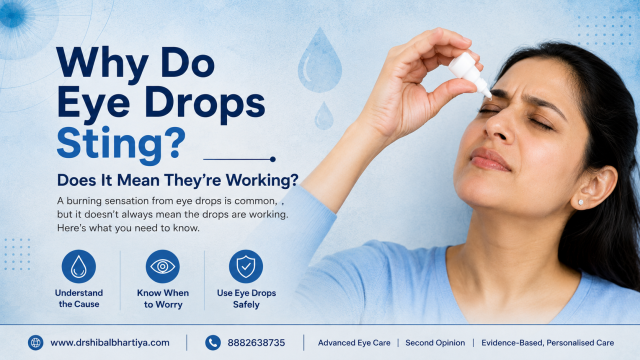
Not necessarily. Some eye drops sting briefly because of their ingredients, preservatives, pH, or because the surface of the eye is already dry or irritated. A mild, short-lived stinging sensation does not mean the medication is working better. Persistent burning, severe pain, or worsening redness should be discussed with your eye doctor.
Stinging after an eye drop does not mean it is working better. Stinging reflects the formulation of the drop, its pH, preservatives, or active ingredient, not how effectively it is treating your eye. Some highly effective drops sting, and some ineffective or even harmful liquids sting too. The sensation and the effect are separate things
Quick Answer: Stinging from eye drops is not a sign of effectiveness. It usually comes from the drop’s acidity, preservatives, or specific active ingredient irritating the eye’s surface on contact. A drop can sting and work well, sting and not suit you, or not sting at all and still be fully effective.
Why This Belief Persists
This belief follows a pattern common to many medical myths, mild discomfort gets equated with potency, in the same way people sometimes assume a bitter medicine or a strong-smelling ointment must be “stronger” or more effective. Stinging is also immediate and noticeable, while the actual therapeutic effect of an eye drop, whether it is lowering eye pressure or treating dryness, is invisible and only measurable at a follow-up visit. In the absence of any felt sensation of the real effect, the sting becomes the only tangible feedback a person gets, and it is easy to mistake that feedback for proof the medication is doing its job.
What The Science Actually Says
Eye drop formulations vary considerably in pH, osmolarity, and preservative content, all of which affect how a drop feels on instillation, independent of the active drug’s therapeutic action. A drop with a pH significantly different from the eye’s natural tear film, or one containing certain preservatives like benzalkonium chloride, is more likely to cause a stinging or burning sensation on contact. This is a formulation and tolerability issue, not a marker of drug strength or mechanism.
The actual therapeutic effect of a drop, for example a glaucoma medication lowering intraocular pressure, works through a specific pharmacological pathway inside the eye, entirely separate from the surface sensation felt in the first few seconds after application. Two different glaucoma drops with the same active ingredient, one preserved and one preservative-free, can have identical pressure-lowering effects while feeling completely different on application. Similarly, some highly effective drops are specifically formulated to minimise stinging, precisely because manufacturers know discomfort reduces how consistently people use their medication, not because reducing sting would reduce effectiveness.
There is a genuine clinical concern hidden inside this myth, worth naming directly. If a person believes stinging equals effectiveness, they may distrust or under-use a comfortable, well-tolerated drop, or worse, continue using an irritating drop that is actually causing surface toxicity or allergic reaction, mistaking ongoing discomfort for the medication “working hard.” Chronic stinging or burning with any drop, especially with long-term use as in glaucoma treatment, is worth discussing with your doctor rather than accepting as a necessary part of treatment.
What Actually Helps
- Report stinging or discomfort with any eye drop to your doctor rather than assuming it means the drop is working
- Ask about preservative-free alternatives if stinging is significant, especially for drops used long-term
- Continue drops exactly as prescribed even if they don’t sting, since comfort is not a sign of ineffectiveness either
- Track actual treatment markers, eye pressure readings for glaucoma, symptom improvement for dryness or infection, rather than the sensation on application
- Never stop a prescribed drop because it doesn’t sting, assuming it isn’t working
When To See a Doctor
- Significant burning, pain, or redness that doesn’t settle within a minute or two of application
- Stinging that has worsened over time with a drop you’ve used before without issue
- Any suspicion that a prescribed drop isn’t working, confirmed through proper monitoring, not sensation alone
- Discontinuing or skipping a drop due to discomfort without informing your doctor
- No follow-up check scheduled if you’re on long-term drops such as for glaucoma
I discuss this concern with patients almost every week in my clinic. Understanding why eye drops sting can help reduce anxiety and improve adherence to treatment. Also, knowing that stinging is not equivalent to working if also very important.
📍 Gurgaon 📞 +91 88826 38735 | 🌐 Contact Us | Second Opinion Form for teleconsults
Frequently Asked Questions
If my eye drops don’t sting at all, does that mean they’re not working?
No. Many effective drops, including modern preservative-free formulations, cause little to no stinging. Absence of stinging is not evidence of reduced effectiveness.
Why do some glaucoma drops sting more than others even with the same active ingredient?
Differences usually come from preservatives, concentration, or the specific formulation base used by different manufacturers, not the active drug itself. Your doctor can often suggest an alternative formulation if stinging is a problem.
Should I stop using a drop that stings a lot?
Don’t stop on your own. Speak to your doctor, since there is often a better-tolerated alternative with the same treatment effect, and stopping abruptly, especially for glaucoma drops, can allow the underlying condition to progress.
Why do lubricating eye drops sting?
Lubricating eye drops can sting briefly if the surface of your eye is already dry, inflamed, or damaged. The pH of the drops, preservatives, or certain ingredients may also cause a short-lived burning sensation. This usually settles within a few seconds.
Why do glaucoma eye drops burn?
Some glaucoma eye drops contain active medications or preservatives that can temporarily irritate the eye. Mild stinging is relatively common, especially when treatment is first started, but persistent discomfort should be discussed with your ophthalmologist.
Can preservative-free eye drops sting?
Yes. Although preservative-free eye drops are generally gentler on the eyes, they can still sting if the eye surface is very dry, inflamed, or has tiny areas of damage. The sensation is usually brief and does not necessarily indicate a problem.
When should I worry about eye drops burning?
A mild stinging sensation lasting a few seconds is usually not a cause for concern. However, seek medical advice if the burning is severe, lasts for several minutes, is accompanied by worsening redness, swelling, blurred vision, discharge, or significant pain, or if your symptoms continue to worsen after using the drops.
How can I reduce stinging after using eye drops?
Wash your hands before instilling eye drops, avoid touching the bottle tip to your eye, and close your eyes gently for one to two minutes after putting the drops in. If you use more than one eye drop, leave at least five minutes between medications. If stinging continues despite proper use, ask your eye doctor whether a preservative-free alternative or a different medication would be more suitable.
Can keeping eye drops in the fridge reduce stinging?
Sometimes. Chilled eye drops may feel more soothing and can reduce temporary stinging, especially in people with dry eyes. However, only refrigerate eye drops if the storage instructions allow it, as some medications should be kept at room temperature.
Book a Consultation
If your eye drops cause persistent stinging, burning, redness, blurred vision, or discomfort, it is important to identify the underlying cause rather than stopping treatment or self-medicating. These symptoms may be due to dry eye, medication sensitivity, allergy, infection, or another eye condition that requires appropriate care.
If your eye drops sting significantly or you’re unsure whether your treatment is actually working, it’s worth discussing rather than guessing from sensation alone. A comprehensive eye examination can determine the cause of your symptoms and help you receive the right treatment. My approach is evidence-based, personalised, and focused on protecting your long-term vision.
Book an Appointment →
📍 Gurgaon 📞 +91 88826 38735 | 🌐 Contact Us | Second Opinion Form for teleconsults
This article is part of a series of articles on Using Eyedrops, which aim to help you use your eye drops as required. You may want to read How to remember your glaucoma medication, Tips and tricks on how to use your eye drops, Whether refrigerating eye drops helps, How to manage side effects of glaucoma drops, Why my dry eye drops are not working, How to reduce glaucoma drops, Glaucoma drops not working, and Glaucoma progressing despite eye drops.
Learn how to put eye drops here.
About the Author
This article was written by Dr Shibal Bhartiya, fellowship-trained glaucoma specialist and Mayo Clinic Research Collaborator, Clinical Director at Marengo Asia Hospitals, Gurugram, known for ethical, patient-centred glaucoma care and independent glaucoma second opinions. She is also the Program Director for Community Outreach & Wellness; and for the Marengo Asia International Institute of Neuro and Spine.
She has published peer-reviewed research on glaucoma management, examining how treatment decisions should balance medical evidence, patient preferences, and long-term vision outcomes.
As Editor-in-Chief of Clinical and Experimental Vision and Eye Research and Executive Editor of the Journal of Current Glaucoma Practice (Pubmed Indexed, official journal of the International Society of Glaucoma Surgery), Dr Shibal Bhartiya brings editorial and research depth to every clinical decision. Her 200+ publications, including 90+ PubMed-indexed publications and 28 edited textbooks span glaucoma biology, surgical outcomes, health equity, and emerging diagnostics.
1600+ Five Star Patient Reviews Google Business Profile
If you are unable to come to Dr Bhartiya’s clinic: Read more about teleconsultation
Read her research on PubMed | Google Scholar | ResearchGate | ORCID
📋Upload your reports for a structured review.| 🌐 Contact Us| 📞 +91 88826 38735
⭐ Helped by this article? Leave a Google review — it helps other patients find reliable eye care.