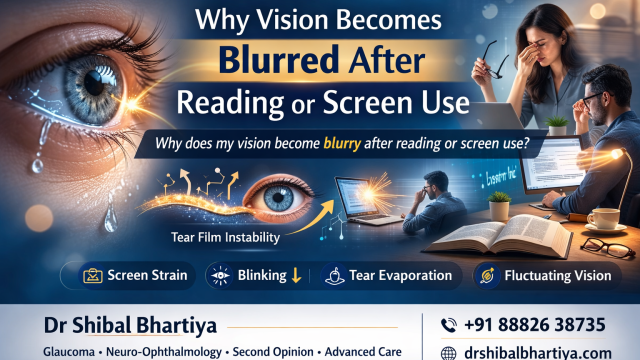
Many people notice an unusual pattern with their vision, and wonder why vision becomes blurred after reading or screen use. This experience is extremely common, and in many cases it is related to tear film instability associated with dry eye disease.
They can see clearly at first, but after some time spent reading, working on a computer, or using a phone, the vision begins to blur, fluctuate, or feel difficult to maintain. When they blink, the vision may clear briefly, only to blur again.
Read on to answer the question: why does my vision become blurry after reading orscreen use. Understanding why this happens can help you recognise an often overlooked cause of visual discomfort, says Dr Bhartiya.
Dr Shibal Bhartiya is a fellowship-trained glaucoma specialist and Mayo Clinic Research Collaborator with over 25 years of experience. Her approach focuses on identifying risk before damage is irreversible, simplifying treatment decisions, and protecting vision long-term. Emphasis on early detection, risk assessment, and continuity of care. She is rated 5 stars across 1,500+ patient reviews on Google.
Clear Vision Depends on a Stable Tear Film
When we think of vision, we usually think about the cornea, lens, and retina. But an often forgotten component of visual clarity is the tear film.
The tear film forms the first optical surface of the eye.
It must remain smooth and stable for light to focus properly.
A healthy tear film has three important layers:
• Lipid (oil) layer – produced by the meibomian glands; prevents rapid evaporation
• Aqueous (water) layer – hydrates the eye surface
• Mucin layer – helps tears spread evenly across the cornea
When this structure becomes unstable, the tear film breaks up between blinks.
This disrupts the optical surface of the eye and causes fluctuating vision.
Why Reading and Screens Trigger Blurring
Reading and digital work change the way we use our eyes.
When concentrating on a screen or text:
• Blink rate drops significantly
• Blinks become incomplete
• Tear distribution becomes less effective
• Tears evaporate more quickly
Studies have shown that during intensive screen use, people may blink up to 60–70% less frequently than normal.
As blinking decreases, the tear film begins to break down faster than it can be replenished, causing intermittent blur.
Why Blinking Temporarily Clears the Vision
One clue that tear film instability may be involved is this pattern: Vision becomes blurred after reading or screen time. BUT Vision clears after blinking.
Blinking spreads a fresh layer of tears across the eye surface, temporarily restoring smooth optics.
However, if the tear film breaks down quickly again, the blur soon returns.
This cycle — blur → blink → temporary clarity → blur again — is typical of tear-film related visual fluctuation.
Dry Eye Does Not Always Feel “Dry”
Many people with this symptom do not think they have dry eye. All they notice is that the vision becomes blurred after reading or screen time. That is because dry eye symptoms can be surprisingly varied.
Instead of dryness, patients may notice:
• fluctuating or unstable vision
• eye fatigue while reading
• difficulty maintaining focus
• heaviness of the eyelids by evening
• watering eyes despite irritation
• increased sensitivity to light
These symptoms often reflect tear film instability rather than simple tear deficiency.
The Role of Meibomian Glands
A major contributor to fluctuating vision is meibomian gland dysfunction (MGD).
These glands line the eyelids and produce the oil layer of the tear film.
This oil layer slows evaporation and stabilises tears.
When these glands become blocked or inflamed:
• the tear film evaporates more quickly
• tear stability decreases
• vision may blur intermittently during tasks that require sustained attention
Because this process develops gradually, patients may not realise the glands have become dysfunctional.
Why Vision Often Worsens Later in the Day
Many people notice that their vision becomes more unstable as the day progresses.
Several factors contribute to this:
• prolonged screen exposure
• cumulative tear evaporation
• increasing ocular surface fatigue
• reduced blinking during concentrated work
By evening, the tear film may be significantly less stable than it was earlier in the day. This is why symptoms such as blur, irritation, or eye fatigue often peak in the late afternoon or evening.
The Symptom–Sign Mismatch in Dry Eye
Dry eye disease is known for a puzzling phenomenon: symptoms and clinical findings do not always match. Some patients experience significant visual fluctuation despite relatively mild findings on examination. Others may show clear tear-film instability yet report fewer symptoms.
Because of this mismatch, dry eye evaluation relies not only on tests but also on careful attention to symptom patterns. A history of fluctuating vision during reading or screen work is an important clue.
Lifestyle Factors That Contribute to Tear Film Instability
Modern environments can place significant stress on the tear film.
Common contributors include:
• prolonged screen use
• air-conditioning or heating systems
• low indoor humidity
• pollution and environmental irritants
• reduced blinking during concentrated tasks
Over time, these factors can worsen meibomian gland dysfunction and destabilise the tear film.
Small Lifestyle Changes That Can Help
Because daily visual habits influence tear stability, small behavioural adjustments can help reduce symptoms.
These include:
• taking regular breaks during screen use
• consciously blinking more fully during digital work
• positioning screens slightly below eye level
• maintaining good hydration
• avoiding direct airflow from fans or air conditioners toward the eyes
Many patients also benefit from warm compresses, which help support the natural oil glands of the eyelids and improve tear stability.
These measures may seem simple, but when practised consistently they can significantly improve day-to-day comfort.
Vision Becomes Blurred After Reading or Screen May Indicate Something Else
Although tear film instability is a common cause of fluctuating vision, other conditions can also contribute.
These may include:
• uncorrected refractive error
• early cataract
• accommodative strain
• certain neurological conditions affecting vision
If visual blur persists, worsens, or occurs suddenly, a comprehensive eye evaluation is important to rule out other causes.
Please also read Can Dehydration Cause Dry Eyes?
When to Seek Evaluation
Consider an eye examination if you experience:
• vision that becomes blurry during reading or screen work
• vision that clears briefly after blinking
• fluctuating vision throughout the day
• eye fatigue with digital use
• irritation or watering of the eyes
These symptoms often reflect tear film instability, which can usually be managed once identified properly.
📍 Gurgaon 📞 +91 88826 38735 | 🌐 Contact Us | Second Opinion Form for teleconsults
A Final Thought
Vision is not determined only by the structures inside the eye.
It also depends on the health and stability of the tear film, the delicate optical surface that allows light to focus clearly.
When this surface becomes unstable, vision may blur intermittently during tasks that require sustained visual attention.
Recognising this pattern can help patients understand that fluctuating vision during reading or screen use may be because of dry eyes. In other words, your “vision becomes blurred after reading or screen time” is often a treatable tear film problem rather than a mysterious change in eyesight.
Learn more about Vision Symptoms, Why is My Vision Blurry and Why My Vision is Blurred in the Morning
Please also read Does Reading on a Moving Vehicle or Train Damage Your Eyes Permanently?, If Wearing Glasses Early Makes Your Eyes Lazy or Dependent, and If Wearing Someone Else’s Glasses Can Damage Your Eyes?
Book a Consultation
Blurry vision has a cause. Finding it requires more than a glasses check. Dr. Shibal Bhartiya performs a thorough, evidence-based assessment to identify the underlying cause using advanced diagnostic testing, including OCT, visual field analysis, corneal imaging, optic nerve evaluation, and detailed retinal examination. Every treatment plan is based on your clinical findings, symptoms, and long-term visual needs—not a one-size-fits-all approach. Schedule your consultation today for a personalised evaluation and expert guidance.
Book an Appointment:
📍 Gurgaon 📞 +91 88826 38735 | 🌐 Contact Us | Second Opinion Form for teleconsults
This article is part of the Dry Eye Hub. Please also read Basics of Dry Eye, Dry Eye Second Opinion and Dry Eye: A Chronic Disease. Why Vision Becomes Blurred After Reading or Screen Use, and Why Are Your Dry Eye Drops Not Working may also help you understand your problem better.
You may also want to read this article written by Dr Bhartiya for NDTV online. And listen to her talk about dry eyes here.
Read the research articles
This article was written by Dr Shibal Bhartiya, fellowship-trained glaucoma specialist and Mayo Clinic Research Collaborator, Clinical Director at Marengo Asia Hospitals, Gurugram, known for ethical, patient-centred glaucoma care and independent glaucoma second opinions. She is also the Program Director for Community Outreach & Wellness; and for the Marengo Asia International Institute of Neuro and Spine.
She has published peer-reviewed research on glaucoma management, examining how treatment decisions should balance medical evidence, patient preferences, and long-term vision outcomes.
As Editor-in-Chief of Clinical and Experimental Vision and Eye Research and Executive Editor of the Journal of Current Glaucoma Practice (Pubmed Indexed, official journal of the International Society of Glaucoma Surgery), Dr Shibal Bhartiya brings editorial and research depth to every clinical decision. Her 200+ publications, including 90+ PubMed-indexed publications and 28 edited textbooks span glaucoma biology, surgical outcomes, health equity, and emerging diagnostics.
1600+ Five Star Patient Reviews Google Business Profile
If you are unable to come to Dr Bhartiya’s clinic: Read more about teleconsultation
Read her research on PubMed | Google Scholar | ResearchGate | ORCID | Github
📋Upload your reports for a structured review.| 🌐 Contact Us| 📞 +91 88826 38735
⭐ Helped by this article? Leave a Google review — it helps other patients find reliable eye care.