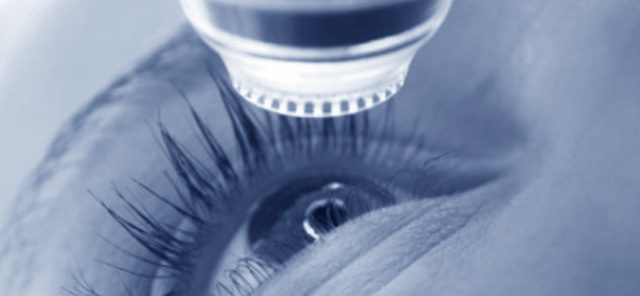
LASIK is one of the most commonly performed elective surgeries in the world. For the right patient, it delivers reliable, lasting spectacle freedom. For the wrong patient, it can cause complications that are difficult to reverse.
The question is not simply whether you want LASIK. The question is whether your eyes are suitable for it.
Dr Shibal Bhartiya is a fellowship-trained eye specialist and Mayo Clinic Research Collaborator with over 25 years of experience. Her approach focuses on identifying risk before damage is irreversible, simplifying treatment decisions, and protecting vision long-term. Emphasis on early detection, risk assessment, and continuity of care. She is rated 5 stars across 1,500+ patient reviews on Google.
What Is LASIK?
LASIK stands for Laser In Situ Keratomileusis. It uses an excimer laser to reshape the cornea, the clear front surface of the eye, so that light focuses accurately on the retina. The result, in suitable candidates, is clear vision without glasses or contact lenses.
The procedure is performed as a day case under topical anaesthetic eye drops. It takes approximately 10 to 15 minutes per eye. A thin flap is created on the corneal surface, the underlying corneal tissue is reshaped with the laser, and the flap is repositioned. Vision improves within 24 hours for most patients.
LASIK corrects myopia (short-sightedness), hypermetropia (long-sightedness), and astigmatism.
Am I Suitable for LASIK?
Not everyone is a candidate. Suitability depends on a detailed pre-operative evaluation that includes corneal thickness mapping, topography, refraction stability, and assessment of the ocular surface. A thorough evaluation takes time and should not be rushed.
If you are 18 years or older, your glasses prescription has been stable for at least 12 months, your corneas are of adequate thickness and normal shape, your eyes are healthy with no active surface disease, and you are not pregnant or breastfeeding.
You are not suitable if:
Your prescription is still changing. Your corneas are thin or show irregular topography suggesting early keratoconus. You have keratoconus or a family history of it. If you are pregnant or breastfeeding : hormonal changes alter corneal shape and refractive measurements are unreliable. You have severe dry eye. You have had certain types of previous eye surgery.
Relative contraindications, discuss carefully with your surgeon:
Autoimmune conditions such as rheumatoid arthritis or lupus can affect corneal healing. Uncontrolled diabetes alters corneal wound healing. Contact sports like boxing, wrestling, martial arts, carry a risk of flap displacement after LASIK; surface-based procedures (PRK or SMILE) may be safer alternatives. A history of uveitis, iritis, or herpetic eye disease requires careful evaluation.
LASIK and Glaucoma: An Important Caution
This is an area that deserves more attention than it typically receives.
LASIK permanently alters corneal thickness and biomechanics. This changes how eye pressure is measured. After LASIK, standard Goldmann applanation tonometry, the most widely used method for measuring eye pressure, tends to underestimate the true intraocular pressure. This means that after LASIK, a pressure reading that appears normal may actually be higher than it looks.
For patients being monitored for glaucoma or glaucoma suspect status, or for patients with a family history of glaucoma, this has practical consequences. Your ophthalmologist must know you have had LASIK so that pressure readings can be interpreted correctly. Devices such as the Pascal dynamic contour tonometer or corrected pressure formulas are used to adjust for post-LASIK corneal changes.
Glaucoma is also a relative contraindication to LASIK, not necessarily an absolute one, but it requires careful assessment. If you have glaucoma or are being monitored for it, discuss this explicitly with your surgeon before proceeding.
LASIK vs Other Laser Vision Correction Procedures
LASIK is not the only option. Several alternatives exist, and in some patients they are preferable.
PRK (Photorefractive Keratectomy): The surface layer of the cornea (epithelium) is removed rather than creating a flap. No flap means no risk of flap-related complications. Recovery is slower. Vision takes several days to stabilise, and the eye is more uncomfortable initially. PRK is preferred for patients with thinner corneas, those in contact sports, and some patients with surface disease.
SMILE (Small Incision Lenticule Extraction): A newer technique. A femtosecond laser creates a small lens-shaped disc of corneal tissue (a lenticule) which is removed through a small incision. No flap is created. SMILE is associated with less post-operative dry eye than LASIK, and is a good option for patients with mild to moderate dry eye who would otherwise not be ideal LASIK candidates. Currently approved for myopia and myopic astigmatism.
ICL (Implantable Collamer Lens): A lens is implanted inside the eye, in front of the natural lens, without removing corneal tissue. This is the preferred option for patients with high prescriptions outside the range of laser correction, very thin corneas, or keratoconus. The procedure is reversible.
The right procedure depends on your prescription, corneal measurements, dry eye status, lifestyle, and risk tolerance. A good surgeon will present the options honestly, including the option of not having surgery.
What to Expect: Before, During, and After LASIK
Before surgery:
Contact lens wearers must stop wearing lenses before evaluation: soft lenses for at least one week, rigid gas-permeable lenses for several weeks. Lenses alter corneal shape, and measurements taken while lenses are still being worn are unreliable.
The pre-operative evaluation includes corneal topography and tomography, pachymetry (corneal thickness measurement), pupil size assessment, dry eye evaluation, and a full refraction. The surgeon will review all findings before confirming candidacy.
On the day of surgery:
The procedure takes 10 to 15 minutes per eye. Anaesthetic drops are instilled, there are no injections. A speculum holds the eye open. A suction ring is applied briefly to create the flap. The laser treatment lasts less than a minute per eye. You may notice a clicking sound and a smell during the laser application, both are normal.
After surgery:
Vision improves within hours for most patients. The eyes are comfortable by the following morning in the majority of cases, though mild fluctuation and halos around lights are common in the first few weeks. Antibiotic and anti-inflammatory drops are prescribed for the first week. Avoid rubbing the eyes. Avoid swimming and dusty environments for two to four weeks. Driving is usually possible within 24 to 48 hours once vision is confirmed adequate.
Dry eye after LASIK:
LASIK cuts corneal nerves during flap creation, reducing corneal sensitivity and tear production temporarily. Most patients notice increased dryness for three to six months after surgery. Preservative-free lubricating drops are used during this period. In patients with pre-existing dry eye, symptoms can persist longer. This is one reason pre-operative dry eye evaluation is important.
Realistic Expectations
LASIK achieves 20/20 vision or better in the majority of suitable candidates. Most patients achieve spectacle independence for distance vision.
However, LASIK does not prevent the need for reading glasses in your forties. Presbyopia, the age-related loss of near focusing ability, affects everyone and is not corrected by LASIK. Patients in their late thirties and forties considering LASIK should understand this before surgery.
A small percentage of patients require an enhancement procedure, a repeat laser treatment, to fine-tune the outcome. This is more common at higher prescriptions.
Night vision symptoms like halos, glare, and starbursts around lights are common in the first few weeks and usually settle. In a minority of patients they persist, particularly those with large pupils or high prescriptions. Modern laser platforms and wavefront-guided treatment have reduced but not eliminated this risk.
Questions to Ask Your Surgeon Before LASIK
A good pre-operative consultation should give you clear answers to all of these:
- Am I a good candidate based on all my measurements, not just my prescription?
- Which procedure do you recommend for me, and why?
- What is my risk of dry eye after this procedure?
- What is my corneal thickness and how much tissue will be removed?
- Do I have any early signs of keratoconus on my topography?
- What happens if my vision regresses over time?
- How will LASIK affect future eye pressure readings?
- If I develop glaucoma in future, will this surgery have made it harder to monitor?
- Is LASIK safe for me?
- What about side effects?
If a surgeon dismisses these questions or rushes the consultation, seek a second opinion before proceeding.
This article is a part of the LASIK Hub. Please also read LASIK Recovery Timeline, Are You Fit For LASIK?, Is LASIK Safe?, Bladeless LASIK, Lasik Side Effects: Incidence and Management,
Femtosecond Lasik: Bladeless Surgery, LASIK Eye Surgery: Are You a Candidate? What to Expect, and What to Ask, and PROWL: Listening to Lasik patients. Also useful is Second Opinion Before Eye Surgery, and What is Corneal Topography
You may want to watch these videos to understand things better here, here, and here.
FAQs: LASIK Eye Surgery
What is LASIK and how does it work?
LASIK uses an excimer laser to reshape the cornea, correcting the focusing error that causes dependence on glasses or contact lenses. A thin flap is created on the corneal surface, the laser reshapes the underlying tissue, and the flap is replaced. The procedure takes 10 to 15 minutes per eye and is performed under anaesthetic eye drops.
Am I a good candidate for LASIK?
You are likely suitable if you are over 18, your prescription has been stable for at least 12 months, your corneas are of adequate thickness and normal shape, and you have no active eye disease or significant dry eye. A detailed pre-operative evaluation is the only way to confirm suitability — prescription alone is not enough.
What is the minimum age for LASIK?
LASIK is not performed below the age of 18. In practice, most surgeons prefer to wait until the mid-twenties when prescriptions are more likely to have stabilised, particularly in patients with progressive myopia.
Can LASIK correct all types of refractive errors?
LASIK corrects myopia, hypermetropia, and astigmatism within certain ranges. Very high prescriptions may be outside the safe range for corneal laser surgery, and an ICL (implantable lens) may be a better option. Your pre-operative measurements will determine the range that can safely be treated.
Will I still need reading glasses after LASIK?
LASIK corrects distance vision. It does not prevent presbyopia, the age-related loss of near focusing ability that affects everyone from their early to mid-forties. If you are already using reading glasses, LASIK will not eliminate that need. Patients in their forties should discuss monovision options before surgery.
What is the difference between LASIK, SMILE, and PRK?
LASIK creates a flap and uses an excimer laser to reshape the cornea beneath it. PRK removes the surface epithelium and reshapes the surface directly: no flap, slower recovery, but preferred for thinner corneas and contact sport athletes. SMILE uses a femtosecond laser to remove a small disc of corneal tissue through a tiny incision with no flap, associated with less post-operative dry eye. The right choice depends on your corneal measurements, dry eye status, and lifestyle.
Can I have LASIK if I have glaucoma?
Glaucoma is a relative contraindication to LASIK, not an absolute one. More importantly, LASIK permanently changes corneal thickness and biomechanics, which affects how eye pressure is measured. After LASIK, standard pressure readings may underestimate true intraocular pressure. For any patient with glaucoma, glaucoma suspect status, or a strong family history of glaucoma, this must be discussed carefully with both the refractive surgeon and the glaucoma specialist before proceeding.
Does LASIK cause dry eye?
LASIK cuts corneal nerves during flap creation, temporarily reducing corneal sensation and tear secretion. Most patients experience some degree of dry eye for three to six months after surgery. Pre-existing dry eye is a relative contraindication. SMILE is associated with less post-operative dry eye than LASIK and may be preferable for patients with mild dry eye symptoms.
Is LASIK permanent?
The corneal reshaping from LASIK is permanent. However, some patients experience gradual regression, a partial return of the original prescription, over years, particularly at higher corrections. An enhancement procedure can address regression. LASIK also does not prevent future changes in the eye such as cataract or presbyopia.
What should I avoid after LASIK surgery?
Avoid rubbing the eyes flap displacement is most likely in the early post-operative period. Also, avoid swimming and water sports for four weeks. Avoid dusty environments. Do not wear eye makeup for one week. Follow your antibiotic and anti-inflammatory drop schedule as prescribed. Driving is usually possible within 24 to 48 hours once vision is confirmed adequate by your doctor.
About the Author
This article was written by Dr Shibal Bhartiya, fellowship-trained glaucoma specialist and Mayo Clinic Research Collaborator, Clinical Director at Marengo Asia Hospitals, Gurugram, known for ethical, patient-centred glaucoma care and independent glaucoma second opinions. She is also the Program Director for Community Outreach & Wellness; and for the Marengo Asia International Institute of Neuro and Spine.
She has published peer-reviewed research on eye care, examining how treatment decisions should balance medical evidence, patient preferences, and long-term vision outcomes.
As Editor-in-Chief of Clinical and Experimental Vision and Eye Research and Executive Editor of the Journal of Current Glaucoma Practice (Pubmed Indexed, official journal of the International Society of Glaucoma Surgery), Dr Shibal Bhartiya brings editorial and research depth to every clinical decision. Her 200+ publications, including 90+ PubMed-indexed publications and 28 edited textbooks span glaucoma biology, surgical outcomes, health equity, and emerging diagnostics.
1500+ Five Star Patient Reviews Google Business Profile
If you are unable to come to Dr Bhartiya’s clinic: Read more about teleconsultation
Read her research on PubMed | Google Scholar | ResearchGate | ORCID
Upload your reports for a structured review.| www.drshibalbhartiya.com | +91 88826 38735
Leave a review on Google