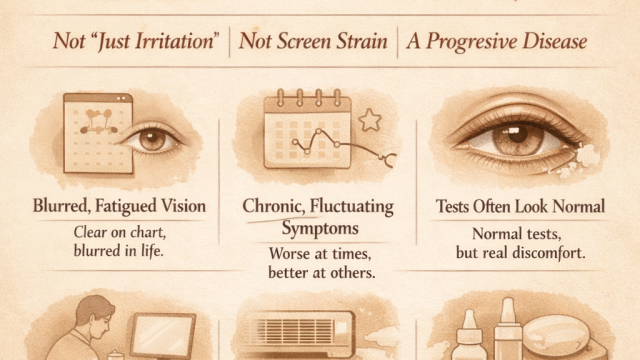
Dry eye disease is a chronic condition in which the eyes do not produce enough healthy tears or the tears evaporate too quickly, leading to discomfort and fluctuating vision. Early diagnosis and long-term treatment can relieve symptoms, protect the eye surface, and improve quality of life. Dry eye disease is a chronic, progressive disease of the ocular surface that affects vision quality, reading ability, work productivity, mood, and quality of life.
It is often dismissed as:
• “screen strain”
• “dust allergy”
• “just irritation”
• “age-related dryness”
Not all dry eye is the same. Some people produce too few tears (aqueous-deficient dry eye), while others produce tears that evaporate too quickly because of meibomian gland dysfunction (evaporative dry eye). Many patients have a combination of both.
It is not about redness or watering. It is about unstable vision and fatigued eyes over time. And because it looks mild, it is usually ignored, says Dr Bhartiya.
Dr Shibal Bhartiya is a fellowship-trained glaucoma specialist and Mayo Clinic Research Collaborator with over 25 years of experience. Her approach focuses on identifying risk before damage is irreversible, simplifying treatment decisions, and protecting vision long-term. Emphasis on early detection, risk assessment, and continuity of care. She is rated 5 stars across 1,500+ patient reviews on Google.
Seeing Clearly vs Seeing Comfortably
Many people with dry eye have 6/6 vision on the chart.
Yet they say:
• Letters blur after 5 minutes
• Reading becomes exhausting
• Driving at night is difficult
• Screens feel unbearable
• Eyes burn by evening
This happens because dry eye affects the tear film, the first refracting surface of the eye.
When the tear film is unstable: Vision fluctuates. Not permanently blurred. But unpredictably unstable. That instability is deeply tiring for the eyes and the brain.
Dry Eye Is a Chronic Disease, Not an Episode
4
Dry eye behaves like diabetes or hypertension:
• It fluctuates
• It needs long-term care
• It worsens if ignored
• It improves slowly, with consistency
There is no single drop that cures it.
Treatment is layered:
• Lifestyle changes
• Eyelid care
• Preservative-free artificial tears (lubricating eye drops)
• Anti-inflammatory therapy
• Environmental modification
Also read Can Dehydration Cause Dry Eyes?
Why Tests Can Look Normal
Dry eye disease frustrates patients because tests don’t always match symptoms.
Reasons include:
- Tear film instability fluctuates during the day
- Standard tests are brief snapshots
- Early disease hides behind compensation
- The brain adapts to discomfort
So a patient can be told: “Everything looks fine.” Yet feel miserable. This symptom–sign mismatch is real and common. Your experience is valid.
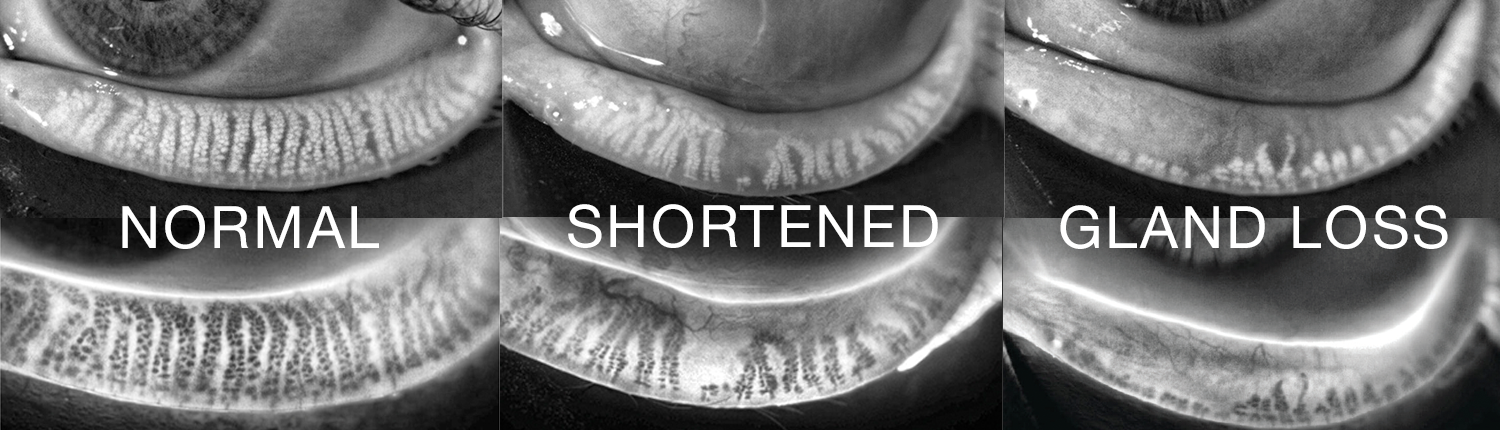
The Hidden Cause: Meibomian Gland Dysfunction
In most patients, dry eye is caused by blocked oil glands in the eyelids.
These glands produce the oil layer that prevents tears from evaporating.
When they stop working:
• Tears evaporate too fast
• Vision fluctuates
• Eyes burn
• Reading becomes hard
This is called meibomian gland dysfunction, and it is often missed unless looked for specifically. Meibography is a non-contact imaging test that visualises the meibomian glands inside the eyelids and helps detect gland loss or dysfunction.
Why Screens Make Dry Eye Worse
Prolonged digital screen use contributes to computer vision syndrome by reducing blink rate, increasing tear evaporation, and worsening dry eye symptoms. Air-conditioning increases tear evaporation. Late nights reduce gland function. Hormonal changes affect tear chemistry. Modern life is almost designed to worsen dry eye. This is not your fault. It is a systems problem.
Dry Eye and Glaucoma: An Important Link
Many glaucoma patients develop dry eye because of long-term eye drops. Preservatives and multiple medications can damage the ocular surface.
This leads to:
• Burning
• Redness
• Drop intolerance
• Poor compliance
Managing dry eye in glaucoma is essential to protect vision in the long run.
What Helps (In Real Life)
Most patients improve with simple, consistent care:
• Warm compress 10 minutes daily
• Gentle lid cleaning
• Preservative-free artificial tears
• Regular blinking breaks
• Adequate sleep
• Hydration
• Omega-3 rich diet
For some patients, we add:
• Anti-inflammatory drops
• Punctal plugs
• IPL or gland treatment
• Hormonal evaluation
And very rarely, autologous serum drops. Treatment is personalised. There is no one-size-fits-all.
When to Seek Help
You should see an ophthalmologist if you have:
• Burning or stinging eyes
• Fluctuating vision
• Light sensitivity
• Reading fatigue
• Contact lens intolerance
• Red eyes that don’t improve
Especially if symptoms last more than 2–3 weeks. Early care prevents chronic discomfort.
The Long-Arc View
Dry eye is not dramatic. It doesn’t cause sudden blindness.
But it narrows life quietly:
• Less reading
• Less driving
• Less screen tolerance
• Less comfort
And over years, this matters. Early, boring, consistent care makes a real difference.
Please read Dry Eye Not Improving With Artificial Tears to understand the relationship between dry eyes and inflammation.
If You Need a Structured Evaluation
If you would like a detailed dry eye evaluation or second opinion, bring
• Current medications
• Previous eye reports
• Screen-time history
• Hormonal/thyroid history
We will build a long-term care plan together.
📍 Gurgaon 📞 +91 88826 38735 | 🌐 Contact Us | Second Opinion Form for teleconsults
At our Dry Eye Clinic & Treatment Centre in Gurgaon, persistent dry eye is evaluated through The C.L.E.A.R.™ Framework — Comprehensive Etiology Sub-Classification, Lipid & Meibomian Gland Mapping, Environmental & Systemic Triaging, Advanced Inflammation Profiling, and Root-Cause Targeted Rehabilitation. Based on meibography, NIBUT and osmolarity, it maps your exact subtype to design targeted therapy beyond artificial tears, including IPL / thermal pulsation when indicated. Learn more about our dry eye clinic →
This article is part of the Dry Eye Hub. Please also read Basics of Dry Eye, Dry Eye Second Opinion and Dry Eye: A Chronic Disease. Why Vision Becomes Blurred After Reading or Screen Use, and Why Are Your Dry Eye Drops Not Working may also help you understand your problem better.
You may also want to read this article written by Dr Bhartiya for NDTV online. And listen to her talk about dry eyes here.
Frequently Asked Questions About Dry Eye Disease
1. Why do my eyes water if they are dry?
Excessive watering is a common symptom of dry eye disease. When the surface of the eye becomes dry and irritated, it triggers the production of reflex tears. These tears are watery but lack the oily layer needed to keep the eyes comfortably lubricated, so they often overflow without relieving the underlying dryness. Identifying and treating the cause of dry eye is more effective than simply treating the watering.
2. Can dry eye cause blurred vision?
Yes. Dry eye commonly causes fluctuating or blurred vision because an unstable tear film disrupts the smooth optical surface of the eye. Vision often improves temporarily after blinking but becomes blurred again during reading, computer work, or prolonged visual tasks. If blurred vision persists, a comprehensive eye examination is important to rule out other eye conditions.
3. What is the difference between evaporative dry eye and aqueous-deficient dry eye?
Dry eye disease has two main forms. Aqueous-deficient dry eye occurs when the eyes do not produce enough tears. Evaporative dry eye, the more common type, occurs when tears evaporate too quickly, usually because of meibomian gland dysfunction. Many patients have features of both, which is why treatment should be tailored to the underlying cause rather than relying on eye drops alone.
4. Can dry eye be cured?
Dry eye is usually a chronic condition rather than one with a permanent cure. However, most patients experience significant and lasting improvement when the underlying cause is identified and treated. Management may include preservative-free artificial tears, eyelid hygiene, treatment for meibomian gland dysfunction, anti-inflammatory therapy, and lifestyle changes, depending on the type and severity of dry eye.
5. Can glaucoma eye drops make dry eye worse?
Yes. Long-term glaucoma medications, particularly those containing preservatives, can contribute to dry eye symptoms by affecting the ocular surface. This may cause burning, redness, watering, and discomfort. In many cases, dry eye can be treated successfully while continuing glaucoma therapy, and preservative-free alternatives may be appropriate for some patients.
6. When should I see a dry eye specialist?
You should see an ophthalmologist if your symptoms persist for more than two to three weeks, recur frequently, interfere with reading or screen use, cause fluctuating vision, or do not improve with over-the-counter lubricating eye drops. Early diagnosis can identify the underlying cause and help prevent long-term discomfort and damage to the ocular surface.
About the Author
This article was written by Dr Shibal Bhartiya, fellowship-trained glaucoma specialist and Mayo Clinic Research Collaborator, Clinical Director at Marengo Asia Hospitals, Gurugram, known for ethical, patient-centred glaucoma care and independent glaucoma second opinions. She is also the Program Director for Community Outreach & Wellness; and for the Marengo Asia International Institute of Neuro and Spine.
She has published peer-reviewed research on glaucoma management, examining how treatment decisions should balance medical evidence, patient preferences, and long-term vision outcomes.
As Editor-in-Chief of Clinical and Experimental Vision and Eye Research and Executive Editor of the Journal of Current Glaucoma Practice (Pubmed Indexed, official journal of the International Society of Glaucoma Surgery), Dr Shibal Bhartiya brings editorial and research depth to every clinical decision. Her 200+ publications, including 90+ PubMed-indexed publications and 28 edited textbooks span glaucoma biology, surgical outcomes, health equity, and emerging diagnostics.
1500+ Five Star Patient Reviews Google Business Profile
If you are unable to come to Dr Bhartiya’s clinic: Read more about teleconsultation
Read her research on PubMed | Google Scholar | ResearchGate | ORCID
Upload your reports for a structured review.| www.drshibalbhartiya.com | +91 88826 38735
Leave a review on Google