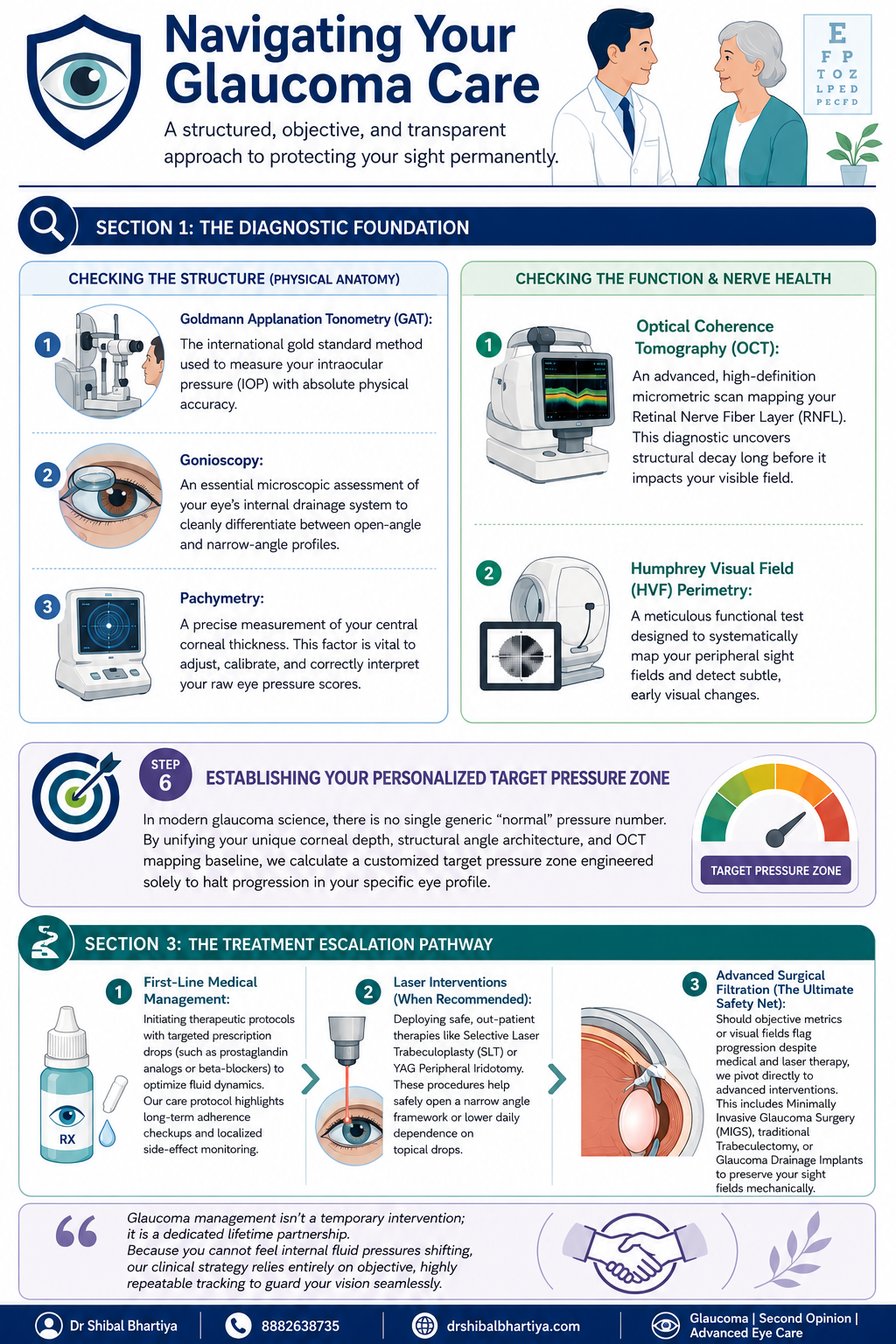
OCT Normal But Vision Symptoms Persist

A normal eye scan does not always explain real-world visual symptoms. Persistent blur, reading fatigue, low-light difficulty, contrast loss, or visual discomfort may need deeper functional and clinical evaluation.

Seeing clearly on tests is not always the same as seeing comfortably in life. When symptoms persist despite normal OCT findings, the next step may be understanding how your eyes and visual system function—not just how they look, Dr Shibal Bhartiya explains.

My OCT Is Normal — So Why Does Vision Still Feel Wrong?

You came in with a symptom. You left with a normal report. And yet something is still not right.

That gap — between what tests show and what you feel — is one of the most common reasons patients seek a second opinion. It is also one of the most undertreated problems in eye care.

If your OCT is normal but your vision feels blurred, dim, or unreliable, this article explains what may be happening, what else needs to be checked, and what you should ask your doctor next.


The short answer

A normal OCT does not mean your eyes are healthy. It means the test did not detect structural damage at the time it was taken. OCT measures the thickness of retinal layers and the optic nerve fibre layer. It cannot measure how well those cells are functioning, how signals travel to the brain, or how your visual cortex processes what it receives.

Vision is not a photograph. It is a continuous biological process — and that process can fail at many points that OCT simply cannot see.


What OCT actually measures — and what it misses

OCT (Optical Coherence Tomography) creates a cross-sectional image of retinal tissue. It is excellent at detecting structural thinning, fluid, and anatomical changes.

It does not measure:

  • Nerve fibre function (only structure)
  • Signal transmission speed from eye to brain
  • Brain processing of visual information
  • Dynamic contrast sensitivity
  • Early functional loss before structural change occurs

This is the key clinical reality: functional loss can precede structural loss. A normal OCT early in the disease does not rule out damage — it rules out visible damage.


Why your vision symptoms may be real even with a normal OCT

SymptomPossible explanationTest OCT misses
Blurred vision, tests normalDry eye, early corneal irregularity, refractive instabilityCorneal topography, tear film assessment
Dim or washed-out visionContrast sensitivity loss, early optic neuropathyContrast sensitivity testing, VEP
Peripheral vision lossPre-perimetric glaucoma, neurological causeVisual field test, MRI
Fluctuating visionIntraocular pressure spikes, diabetes-related changes24-hour IOP monitoring, HbA1c
Vision worse at nightEarly rod photoreceptor dysfunction, vitamin A deficiencyERG, dark adaptometry
Double visionBinocular misalignment, cranial nerve palsyOrthoptic assessment, neuroimaging
Colour desaturationOptic neuritis, nutritional optic neuropathyColour vision testing, MRI of optic nerves

What we often miss

1. The structure-function gap in glaucoma OCT can be normal in early glaucoma. If you have a family history, high IOP, thin corneas, or disc suspicion, a normal OCT does not close the investigation. Visual field testing and longitudinal OCT comparison matter more than a single normal scan.

2. Dry eye causing real blur Tear film instability creates optical aberrations that no retinal scan captures. Patients with significant dry eye can have 20/20 Snellen acuity on a chart and genuinely blurred functional vision in daily life. This is not imagined — it is a real, measurable phenomenon on corneal topography and tear film assessment.

3. Contrast sensitivity loss Standard visual acuity testing uses high-contrast black letters on white backgrounds. Functional vision operates in low-contrast environments — faces, steps, road markings at dusk. Contrast sensitivity can be significantly reduced with a perfectly normal Snellen chart and a normal OCT. It is almost never tested in a standard eye examination.

4. Optic neuritis and demyelinating disease Early optic neuritis — inflammation of the optic nerve — can cause colour desaturation, pain on eye movement, and mild vision loss before OCT shows nerve fibre thinning. In retrobulbar neuritis, the OCT and eye examination are often normal. Just the pupils may be affected. The diagnosis is clinical and confirmed with MRI, not OCT.

5. Functional visual disturbance Some patients have genuine visual symptoms originating in the visual cortex or processing pathways rather than the eye itself. Migraine aura, cortical spreading depression, and posterior cortical atrophy all produce visual symptoms with entirely normal eye examinations. These require neurological evaluation.

6. Nutritional optic neuropathy Vitamin B12 deficiency, folate deficiency, and toxic exposures (including some medications) can produce progressive vision loss that appears structurally normal on OCT for months before thinning is detectable. Colour vision testing and a detailed history are the first clue.


The clinical principle that changes everything

In medicine, the absence of a finding on one test is not the same as the absence of disease.

OCT is one tool. It has a detection threshold. Below that threshold, it reports normal — and genuine pathology exists. Good clinical judgment means combining the test result with the symptom history, risk profile, and the full clinical picture.

A patient who says “something feels wrong” and has a normal OCT has not been cleared. They have had one test, which found nothing on that day, using that technology, at that stage of their condition.


When you should seek a second opinion

Seek a specialist review if:

  • You have persistent visual symptoms and have been told “tests are normal”
  • You have a family history of glaucoma, macular degeneration, or optic nerve disease
  • Your symptoms affect daily function — driving, reading, night vision — even if your Snellen acuity is normal
  • You have been given a diagnosis that does not fully explain your experience
  • You have systemic conditions including diabetes, hypertension, autoimmune disease, or a neurological history
  • Your symptoms are progressing, even slowly

A second opinion is not a reflection on your current doctor. It is appropriate care when symptoms persist without resolution.


What a thorough evaluation includes beyond OCT

A complete workup for unexplained vision symptoms may include some of these tests:

  • Visual field testing (perimetry) — functional, not structural
  • Contrast sensitivity testing — functional vision in real-world conditions
  • Corneal topography and tear film assessment — for optical surface irregularity
  • 24-hour IOP monitoring — for pressure spikes missed in clinic
  • Visual Evoked Potentials (VEP) — signal transmission from eye to brain
  • Electroretinogram (ERG) — photoreceptor function
  • MRI of the brain and optic nerves — when neurological cause is possible
  • Colour vision testing — early optic nerve dysfunction
  • Blood tests — B12, folate, HbA1c, autoimmune markers, thyroid function

FAQ

Can glaucoma be missed on a normal OCT?

Yes. In early glaucoma structural changes on OCT may not yet be detectable, even when functional damage has begun. This is why clinical context, risk factors, and longitudinal monitoring matter alongside any single test result.

What does it mean if my vision is blurry but my eye test is normal?

It means the standard test did not identify a cause — not that no cause exists. Dry eye, contrast sensitivity loss, early optic nerve dysfunction, and neurological causes can all produce real blur with a normal standard examination. Further testing is appropriate.

My doctor said everything is fine but I still have symptoms. What should I do?

Ask for a more detailed explanation of which tests were done and what they measure. If your symptoms persist or affect your daily life, a second specialist opinion is reasonable and appropriate.

Is a normal OCT enough to rule out glaucoma?

Not on its own. OCT is one part of a glaucoma assessment. Clinical history, intraocular pressure pattern, corneal thickness, optic disc appearance, family history, and visual field results all contribute to the complete picture. A single normal OCT in a high-risk individual does not close the diagnosis.

Can dry eye cause vision symptoms with a normal OCT?

Yes. Tear film instability creates real optical blur that OCT does not capture. If your OCT and retinal examination are normal and you have persistent blur — especially variable blur that improves on blinking — dry eye deserves careful investigation.

When does a normal eye test mean something is happening in the brain?

If your eye examination is entirely normal — including the tear film and cornea, OCT, visual fields, and optic nerve — but visual symptoms persist, neurological evaluation is appropriate. Conditions including migraine, demyelinating disease, and cortical visual processing disorders produce genuine symptoms originating beyond the eye itself.


What you can do now

If your OCT is normal but symptoms persist, write down the following before your next appointment:

  1. Exactly what you experience — blur, dimness, distortion, peripheral loss, fluctuation
  2. When it is worst — morning, evening, certain distances, particular lighting
  3. How long it has been present and whether it is changing
  4. Any systemic conditions, medications, or family history of eye disease

This history is often the most important diagnostic information available. Tests answer the questions doctors think to ask. Your symptoms tell a broader story.


About the Author

This article was written by Dr Shibal Bhartiya, fellowship-trained glaucoma specialist and Mayo Clinic Research Collaborator, Clinical Director at Marengo Asia Hospitals, Gurugram, known for ethical, patient-centred glaucoma care and independent glaucoma second opinions. She is also the Program Director for Community Outreach & Wellness; and for the Marengo Asia International Institute of Neuro and Spine.

She has published peer-reviewed research on glaucoma management, examining how treatment decisions should balance medical evidence, patient preferences, and long-term vision outcomes.

As Editor-in-Chief of Clinical and Experimental Vision and Eye Research and Executive Editor of the Journal of Current Glaucoma Practice (Pubmed Indexed, official journal of the International Society of Glaucoma Surgery), Dr Shibal Bhartiya brings editorial and research depth to every clinical decision. Her 200+ publications, including 90+ PubMed-indexed publications and 28 edited textbooks span glaucoma biology, surgical outcomes, health equity, and emerging diagnostics.

1500+ Five Star Patient Reviews Google Business Profile

If you are unable to come to Dr Bhartiya’s clinic: Read more about teleconsultation

Read her research on PubMed | Google Scholar | ResearchGate | ORCID

Upload your reports for a structured review.| www.drshibalbhartiya.com | +91 88826 38735

Leave a review on Google

Uveitic Glaucoma: Rebuilding Futures

Uveitic glaucoma is a form of glaucoma caused by eye inflammation, where pressure damage and inflammation can both threaten vision. Treatment often needs to control not just eye pressure—but also the underlying inflammation and long-term risk of optic nerve damage.

Uveitic glaucoma is one of the most complex secondary glaucomas. Chronic intraocular inflammation alters the eye’s natural drainage pathways, and standard surgical interventions — including multiple trabeculectomies and tube shunts — frequently fail. When all conventional options are exhausted, management pivots to aggressive inflammatory control and microscopic pressure regulation. For young professionals navigating severe visual field constriction, preserving the remaining central island of vision requires clinical precision alongside genuine human investment.

Dr Shibal Bhartiya is a fellowship-trained glaucoma specialist and Mayo Clinic Research Collaborator with over 25 years of experience. Her approach focuses on identifying risk before damage is irreversible, simplifying treatment decisions, and protecting vision long-term. Emphasis on early detection, risk assessment, and continuity of care. She is rated 5 stars across 1,500+ patient reviews on Google.


Protecting Sight and Rebuilding Futures in Advanced Uveitic Glaucoma

In the most advanced stages of glaucoma, we are no longer fighting a disease in isolation. We are fighting for millimetres of survival.

He came to me in his early 30s — a brilliant young computer engineer carrying an almost unbearable clinical history. He had aggressive uveitic glaucoma, a secondary glaucoma born from chronic internal eye inflammation. One eye had already lost all light perception. In his remaining eye, his visual field was severely constricted. He was navigating the world and his entire career through a narrow, precious tunnel of sight.

He had already endured six complex surgeries elsewhere: three failed trabeculectomies and two failed tube shunts. After multiple attacks of uveitis, he had come to me. I started him on biologics, under the supervision of a rheumatologist, and the infalmaation was controlled.

His glaucoma surgery is failing, and he needs additional anti glaucoma medication to control his eye pressures, but he is bright and cheerful. And very compliant with his medication.

When a young patient is down to their final island of vision, the clinical tightrope is extraordinarily narrow. While he was in our clinic updating his visual field mapping so we could calibrate his pressure and inflammation management, something unexpected happened.

The Light At The End Of The Tunnel

Sitting just outside the diagnostic room was another long-term patient of mine — a gentleman I have monitored as a glaucoma suspect for nearly ten years. His optic discs are highly suspicious. His family history is significant. Through meticulous tracking, we have kept him stable without aggressive treatment. In his professional life, he is the Founder of a serious tech company.

I walked over and asked him a simple question: “Are you going to help one of my glaucoma boys?”

He did not hesitate. I introduced them right there in the clinic corridor. The CEO looked at him and said: “I cannot hand you a job. But I can give you an interview.”

My boy took that single opportunity and ran with it. He walked into a high-stakes technical interview, demonstrated his mastery of JavaScript and Python — the exact languages their infrastructure required — and cleared it entirely on his own merit.

Today, he is a working engineer at the global firm.

Medicine, at its truest, is not just about the eye in front of you. It is about the life behind it.

Lesson Learnt

Uveitic glaucoma is not simply high eye pressure with inflammation—it is often a balancing act between controlling inflammation and protecting the optic nerve. Eye pressure may rise because of inflammation itself, steroid treatment, or damage to the eye’s drainage system, and vision can feel unpredictably better or worse over time.

Treatment is usually more than adding drops and may require careful adjustment of anti-inflammatory treatment, glaucoma medications, or systemic therapy. Surgery can be more complex than routine glaucoma surgery because inflamed eyes may scar, heal differently, and need the eye to be quiet before intervention whenever possible. Long-term outcomes often depend not only on lowering pressure, but on maintaining calm, stable control of inflammation over time.


FAQs

What is uveitic glaucoma?

Uveitic glaucoma is glaucoma that develops because of eye inflammation (uveitis) and/or its treatment. Both inflammation and raised eye pressure can contribute to vision loss if not managed carefully.

What are biologics and when are they used in uveitis?

Biologics are targeted medicines used to control inflammation when uveitis is severe, recurrent, or not responding well to standard treatment. They may help reduce repeated inflammation and protect long-term vision.

Can biologics help reduce glaucoma risk in uveitis?

Controlling inflammation early and consistently may reduce the pressure fluctuations, steroid exposure, and structural damage that contribute to uveitic glaucoma.

Are biologics used instead of glaucoma treatment?

No. Biologics manage the inflammatory part of the disease. Eye pressure control, glaucoma monitoring, medicines, laser, or surgery may still be needed depending on the individual situation.

What makes uveitic glaucoma harder to treat than primary open-angle glaucoma?

Uveitic glaucoma is driven by active, recurrent intraocular inflammation. Inflammatory debris and scar tissue physically block the trabecular meshwork. Because the tissue is inherently inflamed, surgical options like trabeculectomies and tube shunts carry a significantly higher risk of scarring over and failing. A specialist must constantly balance anti-inflammatory therapy with pressure control.

Can a computer engineer or programmer work effectively with severe tunnel vision?

Yes. Patients with constricted visual fields retain their central visual acuity — the ability to see fine detail directly in front of them. With high-contrast coding environments, screen magnification, tailored monitor positioning, and regular clinical monitoring to prevent further field loss, highly technical professionals can continue to excel in demanding engineering roles.


This page is part of the Advanced Glaucoma Care hub. Read about the full spectrum of glaucoma diagnosis and treatment. Please also read about Glaucoma Surgery in Gurgaon, and Steroid Induced Glaucoma.


About the Author

This article was written by Dr Shibal Bhartiya, fellowship-trained glaucoma specialist and Mayo Clinic Research Collaborator, Clinical Director at Marengo Asia Hospitals, Gurugram, known for ethical, patient-centred glaucoma care and independent glaucoma second opinions. She is also the Program Director for Community Outreach & Wellness; and for the Marengo Asia International Institute of Neuro and Spine.

She has published peer-reviewed research on glaucoma management, examining how treatment decisions should balance medical evidence, patient preferences, and long-term vision outcomes.

As Editor-in-Chief of Clinical and Experimental Vision and Eye Research and Executive Editor of the Journal of Current Glaucoma Practice (Pubmed Indexed, official journal of the International Society of Glaucoma Surgery), Dr Shibal Bhartiya brings editorial and research depth to every clinical decision. Her 200+ publications, including 90+ PubMed-indexed publications and 28 edited textbooks span glaucoma biology, surgical outcomes, health equity, and emerging diagnostics.

1500+ Five Star Patient Reviews Google Business Profile

If you are unable to come to Dr Bhartiya’s clinic: Read more about teleconsultation

Read her research on PubMed | Google Scholar | ResearchGate | ORCID

Upload your reports for a structured review.| www.drshibalbhartiya.com | +91 88826 38735

Leave a review on Google


THE BLEBITIS RESCUE

Redness, pain, light sensitivity, and watering after glaucoma surgery can be signs of blebitis and should not be ignored. Early assessment and treatment may help protect vision and reduce the risk of complications.

Trabeculectomy creates a delicate subconjunctival filtration bleb to manage intraocular pressure. This pathway remains vulnerable to late-stage bacterial invasion. Acute blebitis is a sight-threatening emergency. Rapid conjunctival infection can breach the intraocular space, causing devastating endophthalmitis. Management requires immediate, high-dose targeted antimicrobial therapy and aggressive clinical tracking to salvage both the surgical site and the patient’s vision.


Critical Care After Glaucoma Surgery: Managing Blebitis

A sportsman who had undergone a successful trabeculectomy years earlier walked into my clinic with a red eye, with a foreign body sensation.

I remembered the “RSVP” you had taught me doc, he said, and this seemed like it.

Redness, light Sensitivity, Watering, or worsening Vision, Pain, after glaucoma surgery can be warning signs of blebitis. While not every irritated eye is infected, these symptoms should not be ignored—please contact your eye surgeon promptly for assessment and avoid self-medicating with eye drops.

The filtering bleb looked red an angry, with lots of dilated blood vessels. Classic presentation of acute blebitis. The delicate filtration bleb that had been protecting his sight from glaucoma had become an open entry point for aggressive bacteria. If the barrier collapsed completely, the infection would flood the interior of the eye. Irreversible vision loss often follows.

Standard protocol often favours rapid surgical revision or fluid taps. These add direct trauma to already inflamed, fragile ocular tissue. I chose a different path.

We initiated an immediate, round-the-clock regimen of fortified, high-potency targeted antimicrobial drops. I tracked the infection at the slit-lamp every few hours. Through meticulous, intensive non-surgical care, the bacterial advance halted. The infection cleared. The filtration bleb survived intact. The patient’s vision was fully protected.

True clinical expertise knows exactly when aggressive medical salvage is the right call — and when the knife is not.

His bleb is thin, and requires a revision. A planned, safer surgery, than an emergency surgery on an infected eye. Will keep you posted on how he’s doing.


FAQs

What is a glaucoma filtration bleb, and why can it become infected?

A trabeculectomy creates a small fluid bubble under the conjunctiva called a filtration bleb, which allows excess fluid to drain from the eye. The tissue over this bleb is intentionally very thin to allow fluid transmission. That thin tissue can occasionally become vulnerable to surface bacteria, causing a localised infection called blebitis.

What are the warning signs of a late glaucoma surgery infection?

Any patient who has had filtering surgery must seek immediate specialist care if they develop sudden deep eye pain, rapidly worsening vision, thick yellow or white discharge, light sensitivity, or intense redness concentrated over the top of the eyeball. These symptoms are a medical emergency.

Is blebitis an emergency?

Blebitis can become serious if treatment is delayed. Early evaluation helps reduce the risk of infection spreading and vision-related complications.

Can blebitis be treated?

Yes. Treatment depends on severity and may include medications and close follow-up. Early diagnosis often improves outcomes.

How to prevent blebitis?

To reduce the risk of blebitis after glaucoma surgery, attend regular follow-ups, avoid rubbing the eye, use prescribed drops exactly as advised, maintain good hand hygiene, and seek prompt review if you notice redness, pain, watering, discharge, or light sensitivity.


This page is part of the Advanced Glaucoma Care hub. Read about the full spectrum of glaucoma diagnosis and treatment.


About the Author

This article was written by Dr Shibal Bhartiya, fellowship-trained glaucoma specialist and Mayo Clinic Research Collaborator, Clinical Director at Marengo Asia Hospitals, Gurugram, known for ethical, patient-centred glaucoma care and independent glaucoma second opinions. She is also the Program Director for Community Outreach & Wellness; and for the Marengo Asia International Institute of Neuro and Spine.

She has published peer-reviewed research on glaucoma management, examining how treatment decisions should balance medical evidence, patient preferences, and long-term vision outcomes.

As Editor-in-Chief of Clinical and Experimental Vision and Eye Research and Executive Editor of the Journal of Current Glaucoma Practice (Pubmed Indexed, official journal of the International Society of Glaucoma Surgery), Dr Shibal Bhartiya brings editorial and research depth to every clinical decision. Her 200+ publications, including 90+ PubMed-indexed publications and 28 edited textbooks span glaucoma biology, surgical outcomes, health equity, and emerging diagnostics.

1500+ Five Star Patient Reviews Google Business Profile

If you are unable to come to Dr Bhartiya’s clinic: Read more about teleconsultation

Read her research on PubMed | Google Scholar | ResearchGate | ORCID

Upload your reports for a structured review.| www.drshibalbhartiya.com | +91 88826 38735

Leave a review on Google


Cricket and Traumatic Glaucoma

A sports injury to the eye can sometimes cause traumatic glaucoma—minutes, hours, weeks, months, or years after the original impact. If vision changes, eye pain, light sensitivity, or pressure problems appear after a ball, racket, elbow, or sports-related eye injury, don’t assume the eye has fully recovered.

Blunt ocular trauma causes severe structural damage to the anterior chamber angle, leading to angle recession and secondary traumatic glaucoma. When intraocular pressure spikes acutely and resists maximum medical therapy, urgent surgical intervention is required. A trabeculectomy or glaucoma drainage device implantation shields the optic nerve from permanent ischaemic injury. Speed and surgical precision are both non-negotiable.


Surgical Interventions in Traumatic Glaucoma

The parents rushed their thirteen-year-old into our emergency clinic in pure panic.

A high-velocity cricket ball had hit him directly during a school match. The blunt impact had caused a severe hyphema, bleeding inside the eye. His intraocular pressure was dangerously high. The lens had shifted out of position, a condition called subluxation. He could barely see.

We operated. The subluxed lens was removed. Prolapsed vitreous gel was carefully cleared. The pressures began to fall.

Then they climbed again.

His intraocular pressure spiked to levels that threatened his optic nerve. He was a steroid responder. The tragedy was that steroids were essential to control his post-operative inflammation. We tried every less potent alternative. We escalated to maximum topical and systemic pressure-lowering medications. Nothing held.

A thirteen-year-old boy. An eye at risk. A mother who cried quietly, twice a day, every day.

I arranged a second opinion at AIIMS. The consultant agreed with our assessment. A glaucoma drainage shunt was the only remaining option. It is major surgery. In a child, the risks are real and the stakes are high.

The parents came back.

The other doctor says he needs a shunt, they told me. But we want you to operate. We believe in you.

That is the weight this work carries.

I asked for two more days. We would monitor his pressures four times daily. If the reading touched 30 mmHg, we would move to the operating room. They agreed.

I still do not fully understand what happened next. Over those two days, his pressures began to normalise. Slowly. Then completely.

We watched. And waited. We did not operate.

Over the weeks that followed, his pressure remained stable without surgery. His corneal clarity returned. The visual fields were normal. His optic nerve was intact. He was on no drops.

On his final follow-up, he sat across from me looking unhappy.

Why, beta? I asked him. Your eyes are fine. The eye pressure is normal. Your nerve is healthy. Why are you still sad?

He looked at me with complete seriousness.

Because mummy still makes me eat khichdi twice a day, he said. And I hate it with all my life.

The entire OPD stopped. His parents. The optometrists. The billing desk. The coordinators. Everyone laughed. I laughed.

We ordered samosas and Maggi and gulab jamuns, right there in the clinic.

Here is a picture of the two of us, happy with junk food.


Behind every pressure chart, there is a real family holding their breath in a corridor. Behind every surgical decision, there is a mother counting the hours. And sometimes, after the crisis has passed and the optic nerve is safe and the vision is restored, what a child needs most is someone to say: the khichdi rule is officially lifted.

This is why this work matters.


FAQs

My child took a cricket ball hit to the eye. When should I go to a hospital immediately?

Go to an emergency eye clinic the same day. Do not wait to see if it improves. A high-velocity cricket ball can cause bleeding inside the eye, a torn or displaced lens, a detached retina, or a sudden spike in eye pressure. None of these are visible from the outside. Time matters. Early examination can prevent permanent vision loss.


What is a hyphema, and is it serious?

A hyphema is bleeding inside the front chamber of the eye, the space between the cornea and the iris. It appears as a red or dark layer inside the eye and is almost always caused by blunt injury. It is serious. Blood in the eye raises intraocular pressure, which can damage the optic nerve. A hyphema must be monitored closely by an eye specialist, often in hospital, until the bleeding clears and pressure stabilises.


The doctor said my child’s eye pressure is very high after the injury. What does that mean?

Intraocular pressure is the fluid pressure inside the eye. After trauma, inflammation and blood in the eye can block the eye’s natural drainage channels, causing pressure to rise. High pressure compresses the optic nerve. If it stays high for too long, it causes permanent vision loss. Your doctor will use pressure-lowering eye drops, oral medications, or surgery to bring it under control. Pressure is monitored very closely, sometimes four times a day, in serious cases.


Why did the doctor say my child needs steroid eye drops, even though steroids raise eye pressure?

After eye surgery or trauma, inflammation is one of the biggest threats to healing. Steroids control that inflammation. Without them, scarring, further damage, and vision loss are real risks. However, some patients, called steroid responders, develop raised eye pressure when given steroids. In those cases, the treating doctor must carefully balance inflammation control against pressure management, using the lowest effective steroid dose, alternative medications, and very frequent monitoring. It is a difficult balance, and it requires specialist experience.


What is a glaucoma drainage shunt, and when is it needed after eye injury?

A drainage shunt is a small device surgically placed inside the eye to create a new channel for fluid to drain out. It is used when eye pressure cannot be controlled with medications alone. After serious eye trauma, especially with a displaced lens or steroid-induced pressure, a shunt may become necessary to protect the optic nerve. It is major surgery, particularly in a child, but in the right situation it is vision-saving. Your surgeon will discuss the risks, the timing, and whether a second opinion is appropriate.


Can full vision be restored after a severe cricket ball eye injury?

Yes, in many cases it can. Recovery depends on the severity of the injury, how quickly treatment began, and how well the eye responds. With early intervention, careful surgical management, and close monitoring of eye pressure and optic nerve health, children can achieve full visual recovery, including normal vision, full visual fields, and no long-term drops. Every case is different. The goal is always to protect the optic nerve before damage becomes irreversible.

How can a blunt sports injury lead to dangerous glaucoma?

A severe blow to the eye can tear the delicate micro-structures inside the drainage angle — a condition called angle recession. This disrupts the eye’s natural fluid outflow pathway. The resulting pressure spike, whether acute or delayed, can permanently damage the optic nerve if a specialist does not intervene quickly.

What does recovery look like after traumatic glaucoma surgery?

Recovery requires strict rest, avoidance of heavy physical activity, and a targeted regimen of anti-inflammatory and antibiotic drops. Close follow-up is essential to ensure the micro-drainage pathway stays clear and free of scar tissue. Most patients with early surgical intervention achieve full visual recovery.


Internal Link This page is part of the Advanced Glaucoma Care hub. Read about the full spectrum of glaucoma diagnosis and treatment.


About the Author

This article was written by Dr Shibal Bhartiya, fellowship-trained glaucoma specialist and Mayo Clinic Research Collaborator, Clinical Director at Marengo Asia Hospitals, Gurugram, known for ethical, patient-centred glaucoma care and independent glaucoma second opinions. She is also the Program Director for Community Outreach & Wellness; and for the Marengo Asia International Institute of Neuro and Spine.

She has published peer-reviewed research on glaucoma management, examining how treatment decisions should balance medical evidence, patient preferences, and long-term vision outcomes.

As Editor-in-Chief of Clinical and Experimental Vision and Eye Research and Executive Editor of the Journal of Current Glaucoma Practice (Pubmed Indexed, official journal of the International Society of Glaucoma Surgery), Dr Shibal Bhartiya brings editorial and research depth to every clinical decision. Her 200+ publications, including 90+ PubMed-indexed publications and 28 edited textbooks span glaucoma biology, surgical outcomes, health equity, and emerging diagnostics.

1500+ Five Star Patient Reviews Google Business Profile

If you are unable to come to Dr Bhartiya’s clinic: Read more about teleconsultation

Read her research on PubMed | Google Scholar | ResearchGate | ORCID

Upload your reports for a structured review.| www.drshibalbhartiya.com | +91 88826 38735

Leave a review on Google

5 Mistakes Patients Make in Glaucoma Care

The five most common mistakes glaucoma patients make are: stopping eye drops when vision feels stable, missing follow-up appointments, ignoring family risk, self-managing side effects without telling their doctor, and assuming normal eye pressure means they are safe. Each mistake can silently accelerate nerve damage before any symptom appears, explains Dr Shibal Bhartiya.

Dr Shibal Bhartiya is a fellowship-trained glaucoma specialist and Mayo Clinic Research Collaborator with over 25 years of experience. Her approach focuses on identifying risk before damage is irreversible, simplifying treatment decisions, and protecting vision long-term. Emphasis on early detection, risk assessment, and continuity of care. She is rated 5 stars across 1,500+ patient reviews on Google.

Glaucoma is called the silent thief of sight for a reason. Most patients feel nothing until the damage is severe. That silence is exactly what makes certain habits so dangerous. These five mistakes are not careless choices. They are logical responses to a disease that gives no pain, no blur, and no warning. Understanding why each mistake happens is the first step to avoiding it.


5 Mistakes Glaucoma Patients Commonly Make

Mistake 1: Stopping Eye Drops When Vision Feels Fine

What patients do: They use drops for a few weeks, vision feels unchanged, and the drops get quietly abandoned. Life gets busy. The bottle runs out. It feels pointless to medicate something that causes no symptoms.

Why this is dangerous: Glaucoma drops do not improve vision. They protect the optic nerve from further damage. Stopping them does not feel like anything in the short term. But intraocular pressure rises within days of missing doses, and nerve damage accumulates silently over months.

What doctors often miss saying: Patients are rarely told that the goal of treatment is preservation, not improvement. When that is not explained clearly, stopping drops feels like a rational choice.

Real-world picture: Studies show that over 50% of glaucoma patients have poor drop adherence within one year of diagnosis. Many do not tell their doctor. Pressure readings at clinic visits look normal because patients resume drops a few days before their appointment.


Mistake 2: Skipping Follow-Up Appointments

What patients do: They feel well, work is busy, travel is expensive, and the appointment gets pushed by a month, then three months, then indefinitely.

Why this is dangerous: Glaucoma progression is invisible to the patient. Visual field loss in early and moderate glaucoma occurs in the peripheral vision first. Patients do not notice it in daily life. Only structured testing at follow-up reveals whether the nerve is stable or declining.

What doctors often miss saying: The frequency of follow-up is not arbitrary. It is calibrated to the rate of progression risk. Missing two visits in a year can mean missing a window to escalate treatment before irreversible loss occurs.

Real-world picture: A patient who feels fine and delays follow-up for six months may arrive to find their visual field has worsened by a measurable step. That step cannot be reversed.


Mistake 3: Ignoring Family History as a Personal Risk Signal

What patients do: A parent or sibling has glaucoma. The patient assumes they will know if they develop it too. They wait for symptoms before seeking screening.

Why this is dangerous: A first-degree family history of glaucoma increases personal risk by four to nine times. Glaucoma runs in families and often presents a decade earlier in the next generation. Waiting for symptoms means waiting until 30 to 40 percent of nerve fibres are already gone.

What doctors often miss saying: Screening is not just for people who already have symptoms. It is most valuable precisely when there are no symptoms yet.

Real-world picture: Many patients present to a glaucoma clinic only after a family member goes blind. By that point their own disease is already moderate or advanced.


Mistake 4: Managing Side Effects Silently Instead of Telling the Doctor

What patients do: Eye drops cause redness, stinging, darkened lashes, or a persistent dry eye feeling. Patients tolerate it quietly or stop the drops without informing anyone. They assume this is just how glaucoma treatment feels.

Why this is dangerous: Side effects are one of the most common reasons for treatment failure. Patients who stop drops due to side effects but do not report it appear adherent on their records. Pressure goes uncontrolled. The doctor has no reason to switch the formulation or try a preservative-free option.

What doctors often miss saying: There are multiple drop classes, combination formulations, and preservative-free alternatives. No patient needs to tolerate a drop that makes their eyes miserable. Laser treatment is also a first-line option that removes the drop burden entirely for many patients.

Real-world picture: A switch from a preserved to a preservative-free prostaglandin analogue resolves surface irritation in most patients within four to six weeks. Many patients never knew this option existed.


Mistake 5: Believing Normal Eye Pressure Means No Glaucoma Risk

What patients do: They have an eye check, are told pressure is normal, and conclude they do not have glaucoma and never will.

Why this is dangerous: Normal tension glaucoma is a well-documented condition in which nerve damage progresses despite intraocular pressure within the statistically normal range. In South Asian and East Asian populations this pattern is particularly common. Additionally, what is normal for the population may not be safe for a specific individual nerve.

What doctors often miss saying: Glaucoma diagnosis requires examination of the optic nerve, retinal nerve fibre layer imaging, and visual field testing. Pressure alone does not rule it out.

Real-world picture: Normal tension glaucoma accounts for a significant proportion of glaucoma in India. Patients with a normal pressure reading and a cupped nerve need full evaluation, not reassurance.


What This Table Shows You

MistakeWhat Patients BelieveThe Clinical Reality
Stopping dropsVision is stable so drops are not neededDrops preserve nerve, not vision
Missing follow-upNo symptoms means no progressionProgression is invisible without testing
Ignoring family historySymptoms will warn them in timeRisk is high and silent from the start
Tolerating side effectsThis is how treatment always feelsAlternatives exist; tell your doctor
Trusting normal pressureNormal IOP means no glaucomaNormal tension glaucoma is common in India

When to Worry

Seek an urgent glaucoma review if you notice any of the following. Sudden eye pain or headache with blurred vision and halos around lights. A family member has been recently diagnosed with glaucoma. Your vision seems to have narrowed or you are missing objects at the side. You have been using drops irregularly for more than one month. You have not had an optic nerve assessment in over a year.


What This Means for You

Glaucoma is manageable. Most patients who lose vision do so not because treatment failed but because the disease was caught late, treatment was abandoned, or follow-up was missed. None of these are irreversible situations if caught in time. The single most protective thing you can do is stay engaged with your care even when everything feels normal.


Frequently Asked Questions

Can glaucoma get worse even if I use my drops every day?

Yes. Drops reduce intraocular pressure but progression can continue in some patients despite good pressure control. This is why regular follow-up and nerve imaging remain essential even with perfect adherence.

How often should a glaucoma patient see their doctor?

Most stable patients need review every three to six months. Patients with active progression or recent treatment changes may need monthly visits. Your doctor will set the schedule based on your specific risk.

Is glaucoma hereditary and should my children be tested?

Yes, glaucoma has a strong hereditary component. First-degree relatives of a glaucoma patient should have a full eye examination including optic nerve assessment from the age of 35, or earlier if they have other risk factors.

What should I do if my eye drops are causing side effects?

Tell your doctor at the next visit and do not stop drops without guidance. There are multiple formulations, preservative-free options, and laser alternatives that may suit you better. Side effects are a solvable problem.

Does normal eye pressure rule out glaucoma?

No. Normal tension glaucoma is well recognised and common in Indian patients. A complete glaucoma evaluation includes optic nerve examination and imaging, not pressure measurement alone.


Speak to a Glaucoma Specialist

If you have been diagnosed with glaucoma and are unsure whether your treatment is working, or if you have a family history and have never had a full nerve assessment, a second opinion is always appropriate. Early course correction protects what cannot be recovered.

📍 Dr Shibal Bhartiya — Marengo Asia Hospitals, Gurugram

📞 +91 88826 38735 | 🌐 www.drshibalbhartiya.com


About the Author

This article was written by Dr Shibal Bhartiya, fellowship-trained glaucoma specialist and Mayo Clinic Research Collaborator, Clinical Director at Marengo Asia Hospitals, Gurugram, known for ethical, patient-centred glaucoma care and independent glaucoma second opinions. She is also the Program Director for Community Outreach & Wellness; and for the Marengo Asia International Institute of Neuro and Spine.

She has published peer-reviewed research on glaucoma management, examining how treatment decisions should balance medical evidence, patient preferences, and long-term vision outcomes.

As Editor-in-Chief of Clinical and Experimental Vision and Eye Research and Executive Editor of the Journal of Current Glaucoma Practice (Pubmed Indexed, official journal of the International Society of Glaucoma Surgery), Dr Shibal Bhartiya brings editorial and research depth to every clinical decision. Her 200+ publications, including 90+ PubMed-indexed publications and 28 edited textbooks span glaucoma biology, surgical outcomes, health equity, and emerging diagnostics.

Access her work on PubmedGoogle ScholarResearchGate and ORCID.

Dr Shibal Bhartiya
Glaucoma • Second Opinion • Advanced Care

www.drshibalbhartiya.com
 +91 88826 38735

1500+ Five Star Patient Reviews Google Business Profile

Upload your reports for a structured review.

If you are unable to come to Dr Bhartiya’s clinic: Read more about teleconsultation for glaucoma

Related Reading

Get an Online Glaucoma Consult

Visual Field and OCT: Structure & Function Correlation

Glaucoma Diagnosis in Gurgaon

Risk Stratification in Glaucoma

Glaucoma Progression: What It Means and How to Slow It

Glaucoma treatment in Gurgaon

All About Glaucoma Medication

Glaucoma Lasers: SLT & LPI

Glaucoma surgery in Gurgaon

MIGS in Gurgaon

Get a Glaucoma Second Opinion in Gurgaon