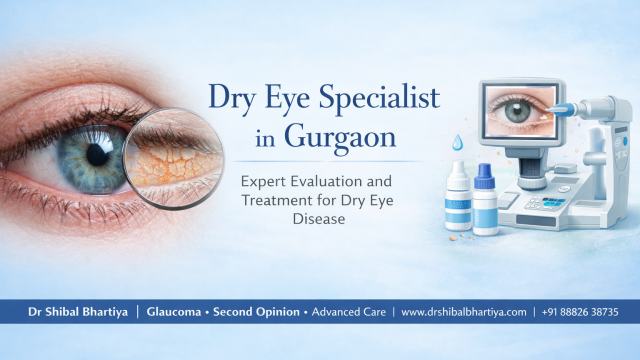
If your eyes burn, sting, water excessively, feel gritty, become tired while using a computer, or if your vision fluctuates during the day, you may have dry eye disease. Dr Shibal Bhartiya sees dry eye patients in Gurgaon. She is fellowship-trained, evidence-based, and focused on finding the root cause, not just adding more drops.
Dry eye is one of the most undertreated eye conditions in India. Although often dismissed as a minor irritation, untreated dry eye can significantly affect comfort, reading, driving, work productivity, and quality of life. Accurate diagnosis is important because not all dry eyes have the same cause, and treatment should be tailored accordingly. Many patients spend months using drops that do not work. They see multiple doctors. They get the same prescription. Nobody explains why the eye is dry, or whether the actual cause has been identified.
The C.L.E.A.R.™ Dry Eye Second Opinion Framework, devised by Dr Shibal Bhartiya, is a structured, evidence-based approach that identifies the underlying causes of dry eye disease to guide personalised, root-cause treatment.
5 Reasons Your Dry Eye Has Not Been Treated Properly
1. Nobody typed your dry eye
Dry eye has two main forms. Aqueous-deficient dry eye means the eye does not produce enough tears. Evaporative dry eye means tears evaporate too quickly because the meibomian glands (oil glands in the eyelids) are blocked or damaged. Evaporative dry eye causes 80% of all cases. Most patients are never told which type they have.
2. You received treatment for the wrong type
Lubricating drops help symptoms temporarily. They do not unblock or repair meibomian glands. If your problem is evaporative, drops will not fix it. The surface stays irritated. The cycle continues.
3. Your glands were never imaged
Meibography is a painless scan that shows whether your meibomian glands are healthy, blocked, or atrophied. Most patients with dry eye have never had this test. Without it, treatment is guesswork.
4. A systemic cause was missed
Hormonal changes at menopause, rosacea, autoimmune conditions, and long-term medication use all affect the tear film. Dry eye in these contexts needs a different approach.
5. Your glaucoma drops were not considered
Most glaucoma drops contain preservatives (most commonly BAK, benzalkonium chloride). Daily long-term exposure damages the surface of the eye. If you have glaucoma and dry eye together, the drops may be making the surface worse. This is treatable, but only if the connection is recognised.
Dr Shibal Bhartiya has over 25 years of experience managing complex ocular surface disease alongside glaucoma. Her research background, editorial roles and international collaborations help ensure that treatment decisions are guided by evidence rather than routine practice.
Who Gets Dry Eye
| Who | Why | What to Look For |
|---|---|---|
| Screen-heavy professionals | Reduced blinking, incomplete blinks | Burning, blur at end of workday |
| Glaucoma patients | Preservative toxicity from daily drops | Gritty irritation, red eyes, drop intolerance |
| Post-LASIK patients | Corneal nerve damage during surgery | Persistent dryness since surgery |
| Women at perimenopause / menopause | Hormonal effects on gland function | Worsening dryness in mid-life |
| Ocular GVHD patients | Immune attack on ocular surface after transplant | Severe dryness, light sensitivity |
| SJS / TEN patients | Mucous membrane scarring from severe drug reaction | Extreme dryness, chronic eye surface damage |
Who Is More Likely to Develop Dry Eye?
Although dry eye can affect anyone, certain people have a higher risk because of their health, lifestyle, medications, or environmental exposures. You may be more likely to develop dry eye if you:
- Spend long hours on digital screens, as reduced blinking causes tears to evaporate more quickly.
- Wear contact lenses, especially for prolonged periods, which can alter the tear film and contribute to ocular surface irritation.
- Are over the age of 50, as natural tear production often declines with age.
- Are a woman, particularly during pregnancy, menopause, or other periods of hormonal change.
- Have meibomian gland dysfunction (MGD) or blepharitis, two of the commonest causes of evaporative dry eye.
- Have diabetes, which can affect tear production, corneal sensitivity, and the health of the ocular surface.
- Have thyroid eye disease, where eyelid changes and increased eye exposure may worsen dryness and irritation.
- Use a CPAP (Continuous Positive Airway Pressure) machine, particularly if the mask leaks air around the eyes during sleep.
- Take certain medications, including antihistamines, antidepressants, acne medications such as isotretinoin, some blood pressure medicines, and hormone therapies, all of which may reduce tear production or affect tear quality.
- Have autoimmune conditions, such as Sjögren syndrome or rheumatoid arthritis, which can significantly reduce tear production.
- Have had previous eye surgery, including LASIK or cataract surgery, where dry eye symptoms may occur during recovery.
- Live or work in dry, windy, air-conditioned, or polluted environments, which increase tear evaporation.
- Smoke or are regularly exposed to cigarette smoke, as tobacco smoke can irritate the eyes and destabilise the tear film.
Please read Can Blepharitis or Rosaceae Cause Dry Eyes?
What Doctors Often Miss
Watery eyes do not rule out dry eye. When the surface is irritated, the eye produces a reflex overflow of thin, watery tears. These tears do not lubricate. Constant watering with an underlying burning or gritty feeling is a classic dry eye presentation. Many patients are told their eyes cannot be dry because they water. This is incorrect.
Post-LASIK dryness is often undertreated. LASIK cuts corneal nerves. This reduces the eye’s ability to sense dryness and trigger reflex tearing. Post-LASIK dry eye can persist for months to years. Patients are rarely warned before surgery, and are often told it will resolve on its own. A structured evaluation is warranted if dryness has continued since the procedure.
Ocular GVHD requires specialist management. Ocular graft-versus-host disease is a serious complication of stem cell or bone marrow transplantation. It causes severe dry eye, conjunctival scarring, and progressive corneal damage. Standard lubricating drops are rarely enough. Early specialist referral changes outcomes.
SJS and TEN damage the surface permanently if untreated. Stevens-Johnson Syndrome and Toxic Epidermal Necrolysis destroy goblet cells, scar the conjunctiva, and cause some of the most severe dry eye seen in clinical practice. These patients need autologous serum drops, amniotic membrane therapy in acute phases, and long-term specialist follow-up. Standard drops do not address the underlying surface destruction.
When to Worry
See a dry eye specialist, not just a general ophthalmologist, if:
- You have been on lubricating drops for more than three months without clear improvement
- Your vision fluctuates or blurs after reading or screen use
- You have glaucoma and your eyes feel gritty, red, or irritated
- You have had LASIK and your eyes have felt dry ever since
- You are approaching or have passed menopause and dry eye is worsening
- You have had a bone marrow or stem cell transplant
- You have had Stevens-Johnson Syndrome, TENS, Ocular GVHD, or a severe drug reaction
Dry eye disease is one of the commonest eye conditions seen in clinical practice. Although it often becomes chronic, most patients can achieve significant improvement with an accurate diagnosis and an individualised treatment plan. The goal is not simply to prescribe eye drops, but to identify the underlying cause and restore long-term ocular comfort.
📍 Gurgaon 📞 +91 88826 38735 | 🌐 Contact Us | Second Opinion Form for teleconsults
What This Means for You
Dry eye is usually a chronic condition. It is not something to wait out. The right diagnosis changes everything, because it changes the treatment.
At this clinic, a dry eye consultation includes meibography (gland imaging), TBUT measurement, ocular surface staining, and lid margin evaluation. These tests are done at the first visit where possible. You will leave understanding what type of dry eye you have, why the drops have not worked, and what the plan is.
Treatment depends on findings. Options include preservative-free lubricants, Intense Pulsed Light (IPL) therapy for meibomian gland dysfunction, punctal plugs, and autologous serum drops for severe or treatment-resistant disease.
If you also have glaucoma, the two conditions are managed together. Preservative-free drop formulations are used where possible. The ocular surface and the optic nerve are both tracked.
Dry eye is usually treatable—but only after the correct diagnosis is made.
If you have been using eye drops for months without lasting relief, the next step may not be another bottle. It may be understanding why your eyes are dry in the first place.
That is what a specialist dry eye evaluation is designed to do.
Could Your “Dry Eye” Actually Be Something Else?
Not every patient with burning, irritation, watering, or gritty eyes has dry eye disease. Several other eye conditions can produce similar symptoms but require different treatment. A comprehensive eye examination helps identify the underlying cause and ensures you receive the most appropriate care.
- Eye allergy (Allergic conjunctivitis): Itching is often the dominant symptom, along with redness, watering, and swelling. Treating allergy rather than simply using lubricating drops is often the key to relief.
- Blepharitis: Inflammation of the eyelid margins can cause burning, crusting, fluctuating vision, and irritation. It frequently coexists with dry eye and often requires dedicated eyelid treatment.
- Recurrent corneal erosion: Patients may experience sudden episodes of severe eye pain, especially on waking, due to repeated breakdown of the corneal surface.
- Neuropathic ocular pain: Some people have severe eye discomfort despite a relatively normal-looking ocular surface. In these cases, the pain may arise from abnormal nerve signalling rather than inadequate tears alone.
- Conjunctivochalasis: Redundant folds of the conjunctiva can disrupt the normal tear film, leading to watering, irritation, and symptoms that mimic dry eye.
- Exposure keratopathy: Incomplete eyelid closure, facial nerve weakness, thyroid eye disease, or prominent eyes can leave the cornea exposed, resulting in dryness and irritation.
- Lagophthalmos: Some people are unable to close their eyelids completely, particularly during sleep. Even a small gap can cause significant morning dryness, discomfort, and blurred vision.
- Early Sjögren syndrome: Persistent dry eyes, particularly when accompanied by dry mouth, joint symptoms, or other autoimmune features, may be an early sign of Sjögren syndrome and should be evaluated appropriately.
- Medication-related ocular surface disease: Some glaucoma medications, preserved eye drops, acne medications, antihistamines, antidepressants, and other systemic drugs can cause or worsen dry eye symptoms. Adjusting treatment may provide significant relief.
The bottom line: Dry eye symptoms do not always mean dry eye disease. Identifying the correct diagnosis is the first step towards effective, long-lasting treatment.
📍 Gurgaon 📞 +91 88826 38735 | 🌐 Contact Us | Second Opinion Form for teleconsults
At our Dry Eye Clinic & Treatment Centre in Gurgaon, persistent dry eye is evaluated through The C.L.E.A.R.™ Framework — Comprehensive Etiology Sub-Classification, Lipid & Meibomian Gland Mapping, Environmental & Systemic Triaging, Advanced Inflammation Profiling, and Root-Cause Targeted Rehabilitation. Based on meibography, NIBUT and osmolarity, it maps your exact subtype to design targeted therapy beyond artificial tears, including IPL / thermal pulsation when indicated. Learn more about our dry eye clinic →
How I Diagnose Dry Eye
- Symptom assessment with OSDI, DEQ 5 Questionnaire
- Tear Break-Up Time
- Meibography
- Ocular Surface Staining
- Lid Margin Evaluation
- Blink Assessment
- Tear Meniscus
- Digital eye strain evaluation
- Medication review
Evidence-based care
Our approach is guided by the latest international evidence, including the TFOS DEWS III recommendations, while being tailored to each patient’s symptoms, examination findings, lifestyle, and underlying cause of dry eye disease.
The C.L.E.A.R.™ Dry Eye Second Opinion Framework is a structured, evidence-based approach that identifies the underlying causes of dry eye disease to guide personalised, root-cause treatment.
Please read Dry Eye Not Improving With Artificial Tears to understand the relationship between dry eyes and inflammation.
Book a Consultation
If your eyes often feel dry, irritated, watery, gritty, or tired despite using artificial tears, it’s important to identify the underlying cause. Dry eye disease is not the same for everyone, and effective treatment begins with an accurate diagnosis.
Having completed three years of advanced training in Cornea and Glaucoma as a Senior Research Associate at AIIMS, New Delhi, I evaluate dry eye disease comprehensively to determine why your symptoms are occurring and recommend an evidence-based, personalised treatment plan. My goal is to improve your comfort, protect the surface of your eyes, and provide lasting relief rather than temporary symptom control.
Book a consultation for a comprehensive dry eye evaluation and a personalised treatment plan tailored to your eyes, your lifestyle, and your symptoms.
📍 Gurgaon 📞 +91 88826 38735 | 🌐 Contact Us | Second Opinion Form for teleconsults
IPL is NOT for everyone
IPL (Intense Pulsed Light) and its newer variant IRPL (Intense Regulated Pulsed Light) are advanced treatments for selected patients with dry eye, particularly those with meibomian gland dysfunction and ocular rosacea. Patients with aqueous-deficient dry eye, autoimmune disease, neuropathic ocular pain, or other underlying conditions may need different or additional treatments. A detailed examination helps determine whether light-based therapy is appropriate or whether another treatment will provide better and more lasting relief.
IPL is highly effective for many patients with meibomian gland dysfunction, but it is not the correct treatment for every form of dry eye. Some patients improve with preservative-free lubricants, some need punctal plugs, others require treatment of eyelid inflammation, autoimmune disease or medication-related toxicity. Treatment should follow diagnosis—not the other way around.
What Happens During Your First Visit
- Detailed history
- Dry eye questionnaire
- Slit lamp examination
- Meibography, if needed
- Tear film tests like Schirmer’s
- Discussion of findings and lifestyle
- Written, long term treatment plan
📍 Gurgaon 📞 +91 88826 38735 | 🌐 Contact Us | Second Opinion Form for teleconsults
Frequently Asked Questions About Dry Eye Disease
1. What is dry eye disease?
Dry eye disease is a common condition in which your eyes do not produce enough healthy tears or your tears evaporate too quickly. Tears are essential for keeping the surface of the eye smooth, comfortable, and clear. When the tear film becomes unstable, symptoms such as burning, grittiness, watering, redness, and blurred vision can develop.
2. Why do my eyes water if they are dry?
This is one of the most common symptoms of dry eye disease. When the surface of the eye becomes dry and irritated, it sends a signal to produce a large amount of reflex tears. These watery tears lack the oily and mucous components needed to keep the eye properly lubricated, so they often overflow without relieving the underlying dryness.
3. What are the most common symptoms of dry eye?
Symptoms may include:
- Burning or stinging
- A gritty or sandy sensation
- Excessive watering
- Redness
- Blurred or fluctuating vision
- Sensitivity to light
- Eye fatigue
- Contact lens intolerance
4. What causes dry eye disease?
Dry eye can result from aqueous-deficient dry eye (reduced tear production), evaporative dry eye (most commonly due to meibomian gland dysfunction), or a combination of both. Common causes include ageing, menopause, prolonged screen use, meibomian gland dysfunction (MGD), certain medications, autoimmune diseases such as Sjögren’s syndrome, contact lens wear, previous eye surgery, and environmental factors.
5. Can staring at a computer make dry eyes worse?
Yes. Screen use is also associated with computer vision syndrome, in which reduced blinking contributes to dry eye symptoms, eye fatigue, and fluctuating vision. Taking regular breaks and making a conscious effort to blink fully can help.
6. What is meibomian gland dysfunction (MGD)?
MGD is one of the commonest causes of evaporative dry eye. The meibomian glands produce the oily layer of the tear film that slows tear evaporation. When these glands become blocked or dysfunctional, tears evaporate too quickly, causing irritation, watering, and fluctuating vision.
7. Can dry eye cause blurred vision?
Yes. An unstable tear film can temporarily blur vision, especially during reading or prolonged screen use. Vision often improves after blinking because the tear film is briefly restored.
8. Can dry eye damage my eyesight?
Most people with dry eye do not develop permanent vision loss. However, severe or untreated dry eye can damage the ocular surface, increase the risk of infection, and affect visual quality. Early diagnosis and treatment help prevent complications.
9. Is dry eye disease permanent?
Dry eye is often a chronic condition, but it can usually be managed successfully. Treatment focuses on improving tear quality, reducing inflammation, protecting the ocular surface, and addressing the underlying cause.
10. Can cataract surgery cause dry eyes?
Yes. Dry eye symptoms may temporarily worsen after cataract surgery because of changes to the ocular surface and corneal nerves. Most patients improve over the following weeks or months with appropriate treatment.
11. Can LASIK or other laser vision correction cause dry eye?
Yes. Temporary dry eye is common after LASIK and other refractive procedures. Most patients improve gradually as the corneal nerves recover, although some require longer-term treatment.
12. Can glaucoma eye drops cause dry eye?
Yes. Some glaucoma medications, particularly those containing preservatives, can contribute to ocular surface irritation and dry eye symptoms. Your ophthalmologist can often optimise treatment while maintaining good glaucoma control.
13. Are artificial tears safe to use every day?
Preservative-free artificial tears are generally safe for regular use. However, if you rely on them several times a day or continue to experience symptoms despite using them, you should have a comprehensive dry eye evaluation.
14. How is dry eye diagnosed?
Diagnosis involves understanding your symptoms, examining the tear film and eyelids, assessing the meibomian glands, evaluating the ocular surface with specialised dyes, and determining whether your dry eye is primarily due to reduced tear production, excessive evaporation, or both.
15. When should I see a dry eye specialist?
You should seek specialist care if symptoms persist despite lubricating drops, interfere with daily activities, recur frequently, or are associated with autoimmune disease, previous eye surgery, contact lens intolerance, or glaucoma treatment.
16. I have been using eye drops for months. Why is nothing working?
Lubricating drops relieve symptoms temporarily but do not always treat the underlying cause. If your meibomian glands are blocked, inflamed, or not functioning properly, eye drops alone are unlikely to provide lasting relief. A detailed evaluation helps identify the cause so treatment can be directed at the glands, inflammation, or tear film—not just the eye’s surface.
17. Is IPL therapy safe for Indian skin?
Yes. Intense Pulsed Light (IPL) therapy can be performed safely on Indian skin when appropriate settings are selected based on the individual’s skin type. Treatment should always be carried out by clinicians experienced in managing dry eye and meibomian gland dysfunction.
18. How many IPL sessions will I need?
Most patients benefit from three to four treatment sessions, usually spaced three to four weeks apart. Some people with milder disease improve after two sessions, while maintenance treatment every six to twelve months may help sustain long-term improvement.
19. I am on glaucoma drops. Can you treat my dry eye without stopping them?
Yes. This is a common clinical situation. Treatment may include preservative-free glaucoma medications where appropriate, therapy directed at the ocular surface, and careful monitoring of both conditions. Glaucoma medications should never be stopped without advice from your ophthalmologist.
20. Can dry eye be cured?
Dry eye is usually a chronic condition rather than one with a permanent cure. However, with an accurate diagnosis and personalised treatment, most patients achieve significant, long-lasting relief from symptoms and a marked improvement in comfort and vision. The goal is long-term control by treating the underlying cause, not simply masking symptoms with eye drops.
This article is part of the Dry Eye Hub. Please also read Basics of Dry Eye, Dry Eye Second Opinion and Dry Eye: A Chronic Disease. Why Vision Becomes Blurred After Reading or Screen Use, and Why Are Your Dry Eye Drops Not Working may also help you understand your problem better.
You may also want to read this article written by Dr Bhartiya for NDTV online. And listen to her talk about dry eyes here.
About the Author
This article was written by Dr Shibal Bhartiya, fellowship-trained glaucoma specialist and Mayo Clinic Research Collaborator, Clinical Director at Marengo Asia Hospitals, Gurugram, known for ethical, patient-centred glaucoma care and independent glaucoma second opinions. She is also the Program Director for Community Outreach & Wellness; and for the Marengo Asia International Institute of Neuro and Spine.
She has published peer-reviewed research on glaucoma management, examining how treatment decisions should balance medical evidence, patient preferences, and long-term vision outcomes.
As Editor-in-Chief of Clinical and Experimental Vision and Eye Research and Executive Editor of the Journal of Current Glaucoma Practice (Pubmed Indexed, official journal of the International Society of Glaucoma Surgery), Dr Shibal Bhartiya brings editorial and research depth to every clinical decision. Her 200+ publications, including 90+ PubMed-indexed publications and 28 edited textbooks span glaucoma biology, surgical outcomes, health equity, and emerging diagnostics.
1600+ Five Star Patient Reviews Google Business Profile
If you are unable to come to Dr Bhartiya’s clinic: Read more about teleconsultation
Read her research on PubMed | Google Scholar | ResearchGate | ORCID
📋Upload your reports for a structured review.| 🌐 Contact Us| 📞 +91 88826 38735
⭐ Helped by this article? Leave a Google review — it helps other patients find reliable eye care.
Related Reading
Dry Eye Specialist in Gurgaon, Haryana, India
Why Do Women Get Dry Eye More Often?
Dry Eyes: Tips to Soothe Sore Eyes
Why Dry Eye Is Worse in Air Conditioning and on Flights
Why Vision Becomes Blurred After Reading or Screen Use
Why Your Eyes Water Constantly
Why Are Your Dry Eye Drops Not Working