Prostaglandin Eye Drops for Glaucoma: Why Stopping Them Is Dangerous, Dr Shibal Bhartiya explains. Every week, a patient sits across…
Tag: glaucoma eye drops
What Happens During a Glaucoma Consultation?
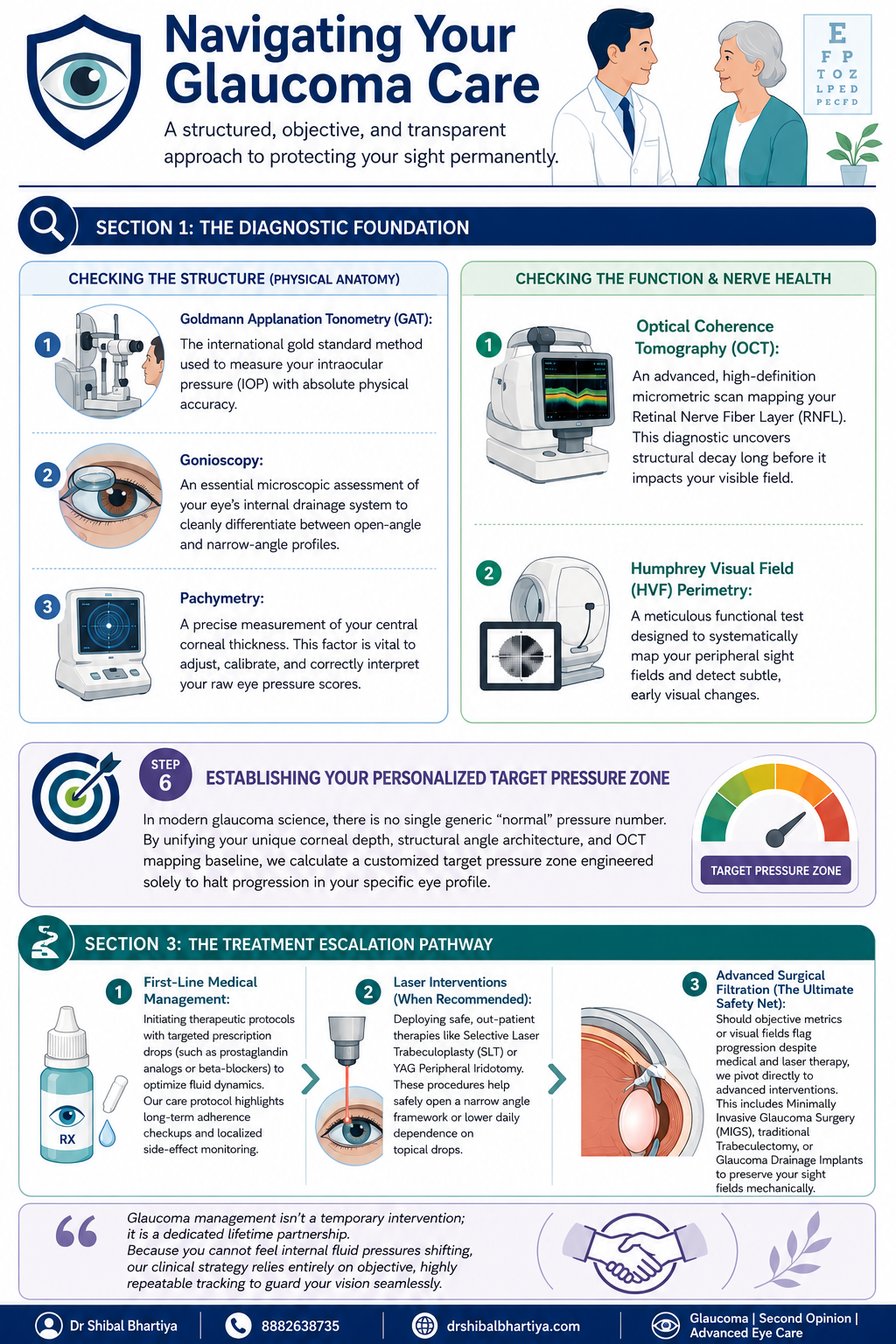
A glaucoma consultation in my clinic follows a structured five-step process. Detailed history and vision assessment, comprehensive eye examination, glaucoma-specific testing (including corneal thickness, eye pressure, gonioscopy, OCT, and visual fields when needed), pupil dilation if required, and a personalized discussion of findings.
Every consultation ends with practical education on how to use eye drops correctly and simple strategies to improve treatment adherence. Successful glaucoma care depends on both accurate diagnosis and consistent treatment.
Dr Shibal Bhartiya is a fellowship-trained glaucoma specialist and Mayo Clinic Research Collaborator with over 25 years of experience. Her approach focuses on identifying risk before damage is irreversible, simplifying treatment decisions, and protecting vision long-term. Emphasis on early detection, risk assessment, and continuity of care. She is rated 5 stars across 1,500+ patient reviews on Google.
What Happens During a Glaucoma Consultation? A Doctor’s Walkthrough
Most patients walk into a glaucoma consult expecting a quick pressure check and a prescription. What they get instead, in my clinic, is a sequence. History, vision, anterior segment, a deliberate order of imaging and gonioscopy, baseline pressure testing across more than one visit. The final ten minutes that I consider non negotiable, teaching you how to actually use your drops.
I have refined this sequence over years of glaucoma practice because the disease itself demands it. You cannot feel your eye pressure changing. You cannot feel your nerve fibre layer thinning. The only way to catch glaucoma early and keep it from progressing is a structured, repeatable, slightly unglamorous process. Repeated the same way every single time.
This page walks through that process exactly as it happens in my clinic. So that you know what to expect. It also helps you plan your day better.
Quick Answer: A glaucoma consultation in my clinic moves through five stages. First, the optometrist takes a detailed history and checks vision. This includes uncorrected vision, best corrected vision, and vision with your current glasses. Second, I review that history myself and examine the front of your eye. Third, I run structural and functional tests in a specific order. Corneal thickness, then pressure measurement, then gonioscopy, with OCT and visual field testing done before gonioscopy when they are needed. Fourth, if your pupils need to be dilated, you wait about forty five minutes. Fifth, no consult ends without me personally teaching you how to instil your eye drops correctly and how to remember whether you have taken them.

Step 1: Before You See Me, the Optometrist Does the Groundwork
Every consult starts with my optometrist, not with me. This is deliberate. It means your history is captured properly and your vision is measured in a structured way before I ever walk into the room.
History taking
The optometrist takes a detailed history and reviews any prior reports, scans, or visual fields you bring with you, noting all of it into your file. This includes systemic conditions that have nothing to do with the eye on the surface, diabetes, high blood pressure, heart disease, asthma, or autoimmune disease, along with any current medications and known allergies. Glaucoma management decisions are frequently shaped by what is happening in the rest of your body, so none of this is skipped.
Three vision measurements, not one
Your vision is then checked through a formal refraction, and three separate numbers are recorded:
- UCVA, your uncorrected visual acuity, what you see with no glasses at all
- PGP, your vision with the glasses you are currently wearing and prescribed
- BCVA, your best corrected visual acuity, what you could see with the ideal glasses prescription
Comparing these three numbers tells me whether a vision problem is about your eyewear, your ocular surface, or your optic nerve, before I have even examined you. A non contact tonometry pressure check is occasionally done at this stage as a screening step. I insist on Goldmann Applanation Tonometry for all of my glaucoma patients.
Step 2: I Review Your History and Examine the Front of the Eye
When you come in to see me, I read through everything the optometrist has documented at a glance. If anything looks incomplete, inconsistent, or worth a second look, I will ask more specific questions to understand it properly before moving forward.
There is also, always, a few minutes of ordinary conversation. A glaucoma consult is a long term relationship, not a transaction. It starts with treating you like a person before a set of test results. And you will be shocked at the details I remember. Your family, your last vacation, your dog 🙂 sometimes, even your favourite chutney!
I then examine the front of your eye in detail. The conjunctiva and ocular surface, the meibomian glands, the eyelid and bulbar conjunctiva, the anterior chamber, and the lens, looking specifically for cataract, a shallow anterior chamber, or any cells in the anterior chamber (inflammation).
Step 3: A Deliberate Order of Testing, Not a Random Checklist
The sequence in which glaucoma tests are performed matters, and I follow a fixed order rather than doing whichever test is most convenient.
Angle assessment first, with imaging informing the decision
I assess the optic nerve with a 90 dioptre lens. Every glaucoma patient gets a gonioscopy. When you need a repeat gonioscopy is decided after that. I perform it only after the visual field test, the OCT, and fundus photography are done, when those are part of that visit. Imaging the nerve and the visual field before manipulating the angle gives me a cleaner functional and structural baseline to work from.
Central corneal thickness, then pressure, then gonioscopy
Before gonioscopy, I measure central corneal thickness (CCT), the test also called pachymetry. Corneal thickness directly affects how your raw eye pressure reading should be interpreted. But it is always done before your tonometry. Because touching your corneas to measure your IOP before the CCT may alter it slightly. Gonioscopy then follows. This examines your drainage angle under magnification. This determines whether you have an open angle or a narrow angle profile.
Why I do the pressure check myself
Goldmann applanation tonometry (GAT), the test that measures your intraocular pressure, is the one test I do not delegate. In my clinic, I personally perform this for every glaucoma patient before treatment starts. Again at the first follow up, and at every annual review. My optometrists are trained to do it and do perform it in my absence. Doing it myself gives me a direct feel for what is happening in your eye that a number on a chart cannot fully convey.
I also insist on doing my gonioscopy myself, always with the lights switched off, so be prepared for a few minutes in a dark room. I keep talking to you, so its never scary.
How is Applanation Tonometry Done?
For the GAT, one of my team members will put some numbing eyedrops and ask you not to touch your eye. I then put a dye which stains your tears yellow. And then I check your eye pressures under blue light on the slit lamp, with a prism that comes close to the eye.
It takes less than a minute if you don’t blink and keep looking straight ahead, and a few extra seconds if you fidget. It’s painless, and quick, and we finish with a drop of antibiotic in the eye.
Step 4: Dilation, When It Is Needed
If your assessment requires dilating your pupils, you will be told this in advance, because dilation takes about forty five minutes to take full effect and changes how you experience the rest of your day.
- We ask you to bring dark glasses, a scarf, or an umbrella, since dilated eyes are far more light sensitive, particularly in Gurugram’s daytime heat
- We advise you not to drive yourself home after a dilated examination
Step 5: Establishing a True Baseline, Not a Single Snapshot
Glaucoma decisions should never rest on one reading taken on one day. Two specific habits in my clinic exist to correct for that.
Repeating your first visual field
There is a genuine learning curve to taking a visual field test well. The first attempt is frequently unreliable simply because the patient has not yet learned the rhythm of the test. I routinely discard the first visual field and ask patients to return the next morning. We do not charge for that repeat test. The inaccuracy is a known limitation of the test itself, and is not a reason to bill twice.
Three pressure readings, not one
For a true baseline, I usually take three intraocular pressure readings at different times of day. Rather than relying on a single number, since pressure naturally fluctuates through the day. One of these three readings may be taken by an optometrist, if it’s after my working hours. We usually work from the average of all three.
The water drinking test
A formal diurnal variation test, in which pressure is measured every few hours through the day, is not practical for every patient. We often use the water drinking test as a more practical stand in. This is typically done before starting treatment, again about one to two months after treatment begins. We may repeat it if your eye appears to be progressing despite your pressure meeting its target.
Step 6: Setting Your Personalised Target Pressure
There is no single universal normal pressure number in modern glaucoma care. Your corneal thickness, the structure of your drainage angle, and your Visual field and OCT baseline are combined to calculate a target pressure zone. This is specific to your eye, designed to halt progression for you.
Step 7: The Most Important Section of Glaucoma Consultation: Eye Drop Training
A prescription on its own does not protect your vision if the drops never go in correctly or are forgotten. So every consult ends with practical training, not just instructions.
- I personally show you how to instil your eye drops correctly, since technique affects how much medication actually reaches the eye
- I ask you to set a phone alarm for every dose. Because relying on memory alone is the most common reason treatment fails
- If you are on more than one medication, I recommend keeping two small boxes. One empty and one full of your drop bottles. After each dose, you move that bottle from the full box to the empty one. So a glance at the boxes tells you whether you have already taken that round of drops. And which ones remain.
- When you leave, my coordinator helps you set your next appointment, before you leave the clinic. You will also receive a Whatsapp message with links to important information and details of phone numbers to book appointments. You will also get my direct phone number for any clinical queries, or emergencies.
When To See Me Before Your Booked Glaucoma Consultation
- Sudden eye pain, redness, or blurred vision, which can signal an acute angle closure attack
- Any one sided change in vision or eye appearance
- Headache or nausea accompanying eye pain
- A noticeable change in your visual field between scheduled visits
- New side effects after starting or changing a glaucoma medication
- Missed doses for several consecutive days, which should be flagged at your next visit rather than left unmentioned
This page is a part of the Glaucoma Hub. you may want to read about Glaucoma Progression, and Risk Stratification in Glaucoma. Other articles of interest could be Advanced Glaucoma Care in Gurgaon, What Good Glaucoma Care Actually Optimises For, What Happens If Glaucoma Is Left Untreated?, More Glaucoma Eye Drops is Not Better Glaucoma Care, 5 Mistakes Patients Make in Glaucoma Care and Do You Really Need Treatment for Glaucoma?
Frequently Asked Questions
Why does the optometrist see me before the doctor does?
The optometrist’s workup, history, refraction, and the three part vision check, ensures your file is complete and your baseline vision is documented accurately before I begin my own examination. This makes the time I spend with you more focused on interpretation and decision making rather than data collection.
Why do you measure my eye pressure yourself instead of leaving it to staff?
Goldmann applanation tonometry is the gold standard pressure test, and for every glaucoma patient I treat, I perform it myself before starting treatment, at the first follow up, and at every annual review. It gives me a direct sense of your eye’s behaviour that I do not want to lose by always delegating it.
Why do you discard my first visual field test and ask me to repeat it?
Most patients have not yet learned the rhythm of the visual field test on their first attempt. This makes that first result unreliable. We ask you to return the next morning for a repeat test. We do not charge for it, since the inaccuracy belongs to the learning curve of the test, not to you.
Why is gonioscopy done after OCT and visual field testing, not before?
When OCT, visual field testing, and fundus photography are part of your visit, I prefer to have that structural and functional picture in hand before manipulating the angle during gonioscopy. The order is chosen to give the cleanest possible baseline. Also, sometimes I use a viscoelastic gel for gonioscopy. In that case, your vision is fuzzy for about ten minutes after, and I don’t want your time wasted.
What is the water drinking test and why would I need one?
It is a practical way of checking how your eye pressure responds to a physiological stress. This is used in place of round the clock diurnal variation testing, which is not feasible for every patient. I typically use it before starting treatment. I may repeat it again a month or two into treatment. And again later if your eye appears to be progressing even though your pressure looks controlled.
Why do you spend time teaching me to put in my own eye drops?
Technique directly affects how much medication reaches your eye. A missed or mistimed dose is the most common reason glaucoma treatment underperforms. Pairing a phone alarm with the two box system is simple. It gives you a simple, visual way to know whether today’s dose has already gone in. Research says it is the most important intervention in preventing glaucoma blindness.
Key Takeaways
- Your consult begins with the optometrist. They document history and perform three vision measurements, UCVA, PGP, and BCVA, before I examine you
- Testing follows a fixed order: imaging and visual field first when needed, then corneal thickness, then gonioscopy, then pressure measurement
- I personally measure your eye pressure for every glaucoma patient at key visits, rather than delegating it
- Your first visual field is usually repeated free of charge, because of a genuine learning curve with the test
- Baseline pressure is built from three readings at different times of day, sometimes supplemented by a water drinking test
- Your target pressure is personalised to your eye’s anatomy, not based on one generic normal number
- No consult ends without hands on training in how to use your drops. And how to track whether you have taken them
Book a Consultation
If you have been told you have glaucoma, or are due for a routine check because of family history or elevated pressure, this is the process you can expect to walk through.
[Book an Appointment →www.drshibalbhartiya.com | +91 88826 38735]
About the Author
This article was written by Dr Shibal Bhartiya, fellowship-trained glaucoma specialist and Mayo Clinic Research Collaborator, Clinical Director at Marengo Asia Hospitals, Gurugram, known for ethical, patient-centred glaucoma care and independent glaucoma second opinions. She is also the Program Director for Community Outreach & Wellness; and for the Marengo Asia International Institute of Neuro and Spine.
She has published peer-reviewed research on glaucoma management, examining how treatment decisions should balance medical evidence, patient preferences, and long-term vision outcomes.
As Editor-in-Chief of Clinical and Experimental Vision and Eye Research and Executive Editor of the Journal of Current Glaucoma Practice (Pubmed Indexed, official journal of the International Society of Glaucoma Surgery), Dr Shibal Bhartiya brings editorial and research depth to every clinical decision. Her 200+ publications, including 90+ PubMed-indexed publications and 28 edited textbooks span glaucoma biology, surgical outcomes, health equity, and emerging diagnostics.
1500+ Five Star Patient Reviews Google Business Profile
If you are unable to come to Dr Bhartiya’s clinic: Read more about teleconsultation
Read her research on PubMed | Google Scholar | ResearchGate | ORCID
Upload your reports for a structured review.| www.drshibalbhartiya.com | +91 88826 38735
Leave a review on Google
Avoid Glaucoma Surgery
Glaucoma can appear uncontrolled when medications are not being used consistently or correctly. Complex treatment schedules, poor eye drop technique, treatment fatigue, and medication side effects may raise eye pressure and mimic disease progression. A glaucoma second opinion can identify these issues before surgery is considered.
Not every patient with glaucoma needs surgery immediately. In many cases, improving eye drop technique, simplifying medications with fixed-dose combinations, or considering SLT laser treatment can achieve good pressure control and delay or avoid surgery. This is when a Glaucoma Second Opinion can help, says Dr Shibal Bhartiya.
A Word of Caution: Avoiding glaucoma surgery is NOT always advisable. In certain cases, the surgery is the only option, and helps prevent blindness. You must discuss the risks and benefits of your treatment protocol in detail with your glaucoma doctor before coming to a decision.
She Was Told She Needed Surgery
Anita, 63, had been living with glaucoma for nearly six years when she came to see me. At her previous appointment, surgery had been advised. Her eye pressure remained above target despite treatment, and recent visual field tests suggested possible progression. The changes were not dramatic, but they were concerning enough for surgery to enter the discussion.
She arrived carrying a large folder of records and four eye drop bottles.
As I reviewed her reports, I understood the concern. Her pressures were higher than ideal. A few visual field tests appeared slightly worse than earlier ones. Yet the optic nerve photographs showed only subtle change over time.
The clue had been present for months. I asked Anita to describe her treatment routine.
She was not avoiding treatment. She was trying very hard to follow it. The problem was that her regimen had gradually become more complicated. Four medications meant four separate bottles. Some needed morning doses. Others needed evening doses. During travel, one bottle might be forgotten. On busy days, she sometimes could not remember whether she had already used a drop.
Then I asked her to put in her medication. One drop landed on her cheek. Another missed the eye completely.
The glaucoma was real. The pressure problem was real. The possible progression was real.
But the patient was not failing treatment. The treatment plan was failing the patient. We simplified her regimen. Four separate medications became two fixed-dose combination bottles. We reviewed eye drop technique and built the schedule around her daily routine. Over the next three months, we achieved her target IOP, with the same medicines. Just in fewer bottles, and just because she learnt how to put them herself.
Over the last two years, her visual fields and RNFL OCT have been stable.
Patient details have been changed to protect privacy.
Here is What We Must Remember
Anita’s case highlights an important lesson. Not every patient with uncontrolled eye pressures needs glaucoma surgery. Sometimes the problem lies in how treatment is being delivered rather than the treatment itself. Glaucoma medications only work when they reach the eye consistently and correctly. Before treatment is escalated, it is important to understand whether the prescribed therapy is practical, tolerable, and sustainable. In this article, I explain why glaucoma treatment sometimes appears to fail and how a glaucoma second opinion can help.
Why Glaucoma Treatment Sometimes Appears To Fail
The goal of glaucoma treatment is simple. Lower eye pressure enough to prevent damage to the optic nerve. Achieving that goal is often more complicated.
Many patients begin treatment with a single eye drop. As glaucoma progresses, additional medications may be added. Over time, one bottle can become two, then three, then four. Each medication may have a different schedule.
For some patients, this becomes difficult to sustain.
In my practice, I commonly see patients who understand the importance of their medication but struggle with the practical realities of long-term treatment. Life gets busy. Travel happens. Schedules change. Even highly motivated patients miss doses.
Poor adherence does not always mean patients are careless. More often, it reflects treatment burden.
The clue had been present for almost a year in Anita’s case. Her pressure fluctuated more than expected. Her visual fields suggested borderline progression. Yet the optic nerve remained relatively stable. The pattern suggested that treatment effectiveness might be inconsistent.
When treatment appears to fail, specialists should ask several questions:
- Is the diagnosis correct?
- Is the target pressure appropriate?
- Is the medication reaching the eye?
- Is the patient able to follow the regimen?
- Are side effects reducing adherence?
The answers can significantly change management.
The Importance of Eye Drop Technique
Many patients have never been shown how to use an eye drop correctly.
Common mistakes include:
- Missing the eye completely
- Blinking immediately after instillation
- Using multiple drops at once
- Touching the bottle tip to the eye
- Administering medications too close together
Even small technique errors can reduce treatment effectiveness.
A simple demonstration often reveals problems that no scan or visual field test can detect.
Why Fixed-Dose Combinations Matter
Fixed-dose combinations combine two glaucoma medications into a single bottle.
Many patients assume these combinations are prescribed for convenience alone. In reality, they often improve treatment success.
A patient using four medications in four separate bottles may struggle with timing, scheduling, and adherence. The same medications delivered through two fixed-dose combinations can reduce confusion and simplify daily routines.
Fewer bottles often mean:
- Better adherence
- Less treatment fatigue
- Lower preservative exposure
- Greater long-term consistency
The most effective treatment is not always the strongest treatment. Often, it is the treatment a patient can realistically follow every day for years.
Could Laser Treatment Reduce the Need for Eye Drops?
For some patients, Selective Laser Trabeculoplasty (SLT) offers another way to lower eye pressure without adding more medications. SLT is a quick outpatient laser procedure that improves the eye’s natural drainage system. It does not cure glaucoma, but it can reduce eye pressure and, in some patients, decrease the number of medications needed.
This can be particularly helpful for patients who struggle with eye drop schedules, experience side effects from medications, or find long-term adherence difficult. While not every patient is a suitable candidate, SLT is increasingly being used earlier in the treatment pathway because it avoids many of the compliance challenges associated with daily eye drops. A glaucoma specialist can determine whether SLT is appropriate based on the type of glaucoma, eye pressure targets, and the overall risk of progression.
This is why a glaucoma second opinion should not focus only on surgery versus medications. For selected patients, laser treatment may offer an effective middle path.
How to Tell Glaucoma Progression From Treatment Problems
| Symptom | What It Suggests | What To Do |
|---|---|---|
| Rising eye pressure with stable optic nerve | Possible adherence issue | Review medication use and eye drop technique within weeks |
| Borderline visual field progression | Inconsistent treatment or early progression | Repeat visual field testing and specialist review |
| Multiple missed doses each week | Treatment burden | Simplify regimen and reassess pressure |
| Burning or redness from medication | Ocular surface toxicity | Review medications and ocular surface health |
| Difficulty managing several bottles | Compliance challenge | Consider fixed-dose combinations |
| Progressive optic nerve damage despite good adherence | True disease progression | Discuss laser or surgical options with a glaucoma specialist |
Why This Diagnosis Is So Often Missed
Doctors naturally focus on disease progression. Sometimes the treatment process receives less attention.
Eye pressure is easy to measure. Medication adherence is much harder to assess. Many patients feel embarrassed to admit they miss doses. Others genuinely believe they are using their medication correctly.
Busy clinics may not have time to observe eye drop technique. Treatment burden develops gradually. Patients adapt to it until the regimen becomes overwhelming.
Preservatives in glaucoma medications may also contribute to ocular surface disease. Redness, burning, and irritation can reduce adherence further.
When eye pressure rises, it is easy to assume the disease is worsening. Sometimes the medication is simply not reaching the eye consistently.
Recognising this distinction can prevent unnecessary treatment escalation.
When To See an Eye Specialist
You should seek specialist evaluation, or a second opinion, if:
- You have been advised glaucoma surgery and want a second opinion
- Eye pressure remains above target despite multiple medications
- Your visual field tests show possible progression
- You struggle to remember or administer your eye drops
- Your eyes burn, sting, or remain red after glaucoma treatment
- You have been told everything is stable but symptoms continue
Frequently Asked Questions
Can poor eye drop technique make glaucoma appear worse?
Yes. If medication does not reach the eye consistently, eye pressure may remain elevated. This can create the impression that treatment is failing even when the prescription itself is appropriate.
Why might a glaucoma specialist recommend a second opinion before surgery?
A second opinion helps confirm whether glaucoma is truly progressing. It also evaluates medication adherence, eye drop technique, treatment burden, and medication tolerance before irreversible procedures are considered.
How do fixed-dose combination eye drops help glaucoma patients?
Fixed-dose combinations reduce the number of bottles and simplify treatment schedules. This often improves adherence and helps patients maintain more consistent pressure control over time.
Should glaucoma surgery be delayed if treatment adherence is poor?
Not always. Some patients genuinely require surgery. However, adherence problems, poor eye drop technique, and unnecessarily complex regimens should be identified and addressed before concluding that surgery is the only option.
Book a Consultation
Consider a consultation if you have been advised glaucoma surgery, if your eye pressure remains uncontrolled, or if your visual field tests show possible progression despite treatment.
A glaucoma consultation includes assessment of optic nerve health, visual field results, pressure trends, medication tolerance, and practical evaluation of how glaucoma medications are being used.
[Book an Appointment →+91 8882638735]
This page is a part of the Glaucoma Hub. you may want to read about Glaucoma Progression, and Risk Stratification in Glaucoma. Other articles of interest could be Advanced Glaucoma Care in Gurgaon, What Good Glaucoma Care Actually Optimises For, What Happens If Glaucoma Is Left Untreated?, More Glaucoma Eye Drops is Not Better Glaucoma Care, 5 Mistakes Patients Make in Glaucoma Care and Do You Really Need Treatment for Glaucoma?
You may also want to read Glaucoma Second Opinion — Gurgaon, Online Glaucoma Consultation and Second Opinion Before Eye Surgery.
About the Author
This article was written by Dr Shibal Bhartiya, fellowship-trained glaucoma specialist and Mayo Clinic Research Collaborator, Clinical Director at Marengo Asia Hospitals, Gurugram, known for ethical, patient-centred glaucoma care and independent glaucoma second opinions. She is also the Program Director for Community Outreach & Wellness; and for the Marengo Asia International Institute of Neuro and Spine.
She has published peer-reviewed research on glaucoma management, examining how treatment decisions should balance medical evidence, patient preferences, and long-term vision outcomes.
As Editor-in-Chief of Clinical and Experimental Vision and Eye Research and Executive Editor of the Journal of Current Glaucoma Practice (Pubmed Indexed, official journal of the International Society of Glaucoma Surgery), Dr Shibal Bhartiya brings editorial and research depth to every clinical decision. Her 200+ publications, including 90+ PubMed-indexed publications and 28 edited textbooks span glaucoma biology, surgical outcomes, health equity, and emerging diagnostics.
1500+ Five Star Patient Reviews Google Business Profile
If you are unable to come to Dr Bhartiya’s clinic: Read more about teleconsultation
Read her research on PubMed | Google Scholar | ResearchGate | ORCID
Upload your reports for a structured review.| www.drshibalbhartiya.com | +91 88826 38735
Leave a review on Google
Glaucoma and Dry Eye
Dry eye disease and glaucoma often occur together, especially because some glaucoma eye drops can affect the tear film and make symptoms like burning, irritation, watering, or fluctuating vision worse. Early diagnosis and treatment of both conditions can improve comfort and help protect long-term vision.
Glaucoma and dry eye disease occur together more often than chance alone explains. If your eyes burn, sting, or feel gritty while you are on glaucoma drops, you are not imagining it. This combination is common, clinically important, and often undertreated.
Dr Shibal Bhartiya is a fellowship-trained glaucoma specialist and Mayo Clinic Research Collaborator with over 25 years of experience. Her approach focuses on identifying risk before damage is irreversible, simplifying treatment decisions, and protecting vision long-term. Emphasis on early detection, risk assessment, and continuity of care. She is rated 5 stars across 1,500+ patient reviews on Google.
How Common Is Glaucoma and Dry Eye Overlap?
Studies consistently show that 40 to 60 percent of glaucoma patients meet diagnostic criteria for dry eye disease. The reverse is also true: people with moderate to severe dry eye carry a higher risk of developing glaucoma-related damage. These are not coincidental companions. They share biological mechanisms, and each condition can quietly worsen the other.
Why Does Dry Eye Develop in Glaucoma Patients?
The preservative problem
Most glaucoma eye drops contain benzalkonium chloride (BAK) as a preservative. BAK is effective at keeping the bottle sterile, but it is toxic to the cells of the ocular surface. It disrupts the tear film, damages goblet cells (the cells that produce the mucin layer of your tears), and triggers chronic inflammation.
Patients who use two or three glaucoma drops daily — each containing BAK — are exposing their eyes to this preservative four, six, or more times every day. Over months and years, the cumulative damage is significant. The conjunctiva becomes inflamed, the cornea loses its smooth optical surface, and the eyes feel perpetually uncomfortable.
This is not a rare side effect. It is an expected biological consequence of long-term BAK exposure, and it is one of the most underrecognised sources of glaucoma-related suffering.
Pre-existing risk
Dry eye disease is more common in the same demographic groups that develop glaucoma: older adults, women after menopause, and people with autoimmune conditions. Many patients arrive at a glaucoma diagnosis already carrying a degree of ocular surface disease. Adding BAK-containing drops to a compromised surface accelerates the damage.
Reduced blink rate
Glaucoma patients and patients with dry eye often share a common modern risk factor: prolonged screen use. Reduced blink rate during screen time is one of the fastest-growing contributors to evaporative dry eye, and it worsens the tolerance to topical medications.
Why Does This Overlap Matter Clinically?
Medication adherence
Dry eye makes glaucoma drops uncomfortable. Burning, stinging, and a sense of grittiness after instillation are among the most common reasons patients quietly reduce their drop frequency or stop altogether. This is rational behaviour in response to pain — but the result is uncontrolled intraocular pressure and silent glaucoma progression.
Treating dry eye is not a cosmetic afterthought. It is a strategy for protecting adherence, which protects the optic nerve.
Diagnostic accuracy
Dry eye causes variable intraocular pressure readings. Epithelial irregularity from a damaged ocular surface can affect tonometry (pressure measurement) and cause artificially high or variable readings. This creates noise in the data your glaucoma specialist depends on.
Similarly, a poor ocular surface causes artefacts in OCT scans and visual field tests. Blurring from unstable tear film produces dips and losses in visual field testing that mimic glaucoma progression. Distinguishing true nerve damage from tear-film artefact requires a clinician who is looking for both.
Quality of life
Glaucoma itself does not hurt and often produces no symptoms until late. But the treatment — the drops — can make patients miserable. Chronic ocular surface pain, light sensitivity, and fluctuating vision are quality-of-life burdens that patients often accept as inevitable. They are not inevitable.
How Do We Assess This in the Clinic?
A comprehensive evaluation for a glaucoma patient with ocular surface complaints includes:
- Tear film assessment: Tear breakup time (TBUT) measures how quickly your tear film breaks apart after a blink. In dry eye, this is shortened.
- Ocular surface staining: Fluorescein and lissamine green dyes reveal damaged cells on the cornea and conjunctiva.
- Meibomian gland evaluation: Most dry eye in glaucoma patients is evaporative, caused by dysfunction of the oil-producing meibomian glands at the lid margins.
- Symptom questionnaires: Validated tools like OSDI (Ocular Surface Disease Index) capture the patient experience beyond what the slit lamp shows.
- Review of the current drop regimen: How many drops, which preservatives, how many times daily.
What Are the Management Options?
Switching to preservative-free formulations
This is often the single most impactful intervention. Preservative-free glaucoma drops deliver the same intraocular pressure-lowering effect without the chronic ocular surface toxicity. Multiple classes of glaucoma medication are now available in preservative-free formats: prostaglandin analogues, beta-blockers, carbonic anhydrase inhibitors, and fixed-dose combinations.
The transition requires some planning — not all formulations are available in preservative-free versions in every market, and cost is a factor — but for patients with documented ocular surface disease, this is a clinically justified switch that most guidelines now support.
Fixed-dose combination drops
Instead of using two bottles separately (each with its own preservative load), a fixed-dose combination delivers two active ingredients in one drop. This halves the number of preservative exposures per day. For patients who genuinely need two active agents, this is a practical step even before moving to preservative-free options.
Treating the dry eye directly
Ocular surface disease responds to targeted treatment. The approach depends on the type and severity:
- Artificial tears: Lubricating drops, preferably preservative-free, used consistently throughout the day. These dilute residual BAK, stabilise the tear film, and reduce surface friction.
- Warm compresses and lid hygiene: For meibomian gland dysfunction, daily warm compress application followed by gentle lid massage improves the quality of the oily tear layer.
- Omega-3 supplementation: Good evidence supports dietary omega-3 fatty acids for meibomian gland function and tear quality.
- Anti-inflammatory therapy: Topical cyclosporine (Restasis, Ikervis) or lifitegrast addresses the inflammatory cycle that perpetuates chronic dry eye. In patients with significant ocular surface inflammation, this can be transformative.
- Punctal plugs: Small silicone plugs inserted into the tear drainage points slow the drainage of natural tears, keeping the eye surface better hydrated.
Laser and surgical IOP control
For some patients, reducing or eliminating the need for topical drops altogether is the right goal. Selective laser trabeculoplasty (SLT) can lower IOP without any drops. For more advanced glaucoma, surgical options including minimally invasive glaucoma surgery (MIGS) and trabeculectomy may reduce drop burden significantly. When a patient’s ocular surface is severely compromised by long-term drop use, a surgical discussion is worth having.
A Note on Sequence and Timing
When a patient presents with both conditions, the sequence of assessment matters. Dry eye can artificially distort IOP readings and OCT quality. I prefer to stabilise the ocular surface first — or at least treat both simultaneously — so that subsequent glaucoma monitoring data is reliable. A visual field test performed through an unstable tear film is not a trustworthy test.
What Should You Tell Your Doctor?
If you are being treated for glaucoma and your eyes feel uncomfortable, please say so explicitly. Many patients assume irritation is part of the package and do not raise it. Your doctor needs to know:
- Which symptoms bother you most (burning, grittiness, blurred vision, light sensitivity)
- Whether symptoms are worse at certain times of day or after drop instillation
- Whether you have ever reduced or skipped your drops because of discomfort
- Whether you use a screen for extended hours daily
This information changes the clinical approach. It does not make you a difficult patient — it makes your care more precise.
Frequently Asked Questions
Can glaucoma drops cause dry eye?
Yes. Most glaucoma drops contain benzalkonium chloride, a preservative that damages the ocular surface over time. Long-term exposure causes inflammation, goblet cell loss, and dry eye disease. Switching to preservative-free formulations often brings significant relief.
Do I have to choose between treating my glaucoma and treating my dry eye?
No. Both conditions can and should be managed simultaneously. In many cases, treating dry eye actively improves the tolerability of glaucoma drops and supports adherence to treatment, which protects the optic nerve.
Are preservative-free glaucoma drops as effective as regular drops?
Yes. The active ingredient is the same. The preservative is only there to keep the bottle sterile between uses. Preservative-free formulations use single-dose units instead, delivering the same intraocular pressure-lowering effect without the surface toxicity.
Can dry eye affect my glaucoma test results?
Yes. An unstable tear film causes variable IOP readings and artefacts in visual field and OCT testing. This is one reason a thorough ocular surface assessment is part of comprehensive glaucoma care.
I use three different glaucoma drops. Is that a problem for my eyes?
Three separate bottles often means three doses of BAK per application. This is a significant preservative load. A conversation about fixed-dose combinations or preservative-free alternatives is worth having with your glaucoma specialist.
Is laser treatment an option if my eyes cannot tolerate drops?
Yes. Selective laser trabeculoplasty (SLT) can lower IOP and reduce dependence on drops. For patients whose ocular surface disease is severe and driven by drop toxicity, reducing the drop burden through laser or surgery is a clinically sound strategy.
Internal Linking Architecture Statement
This page is part of the Glaucoma Hub hub. Read about our full approach to glaucoma diagnosis, monitoring, and treatment. Please also read our Dry Eye Hub. Here’s another heartening patient story: Tired of glaucoma eyedrops.
About the Author
This article was written by Dr Shibal Bhartiya, fellowship-trained glaucoma specialist and Mayo Clinic Research Collaborator, Clinical Director at Marengo Asia Hospitals, Gurugram, known for ethical, patient-centred glaucoma care and independent glaucoma second opinions. She is also the Program Director for Community Outreach & Wellness; and for the Marengo Asia International Institute of Neuro and Spine.
She has published peer-reviewed research on glaucoma management, examining how treatment decisions should balance medical evidence, patient preferences, and long-term vision outcomes.
As Editor-in-Chief of Clinical and Experimental Vision and Eye Research and Executive Editor of the Journal of Current Glaucoma Practice (Pubmed Indexed, official journal of the International Society of Glaucoma Surgery), Dr Shibal Bhartiya brings editorial and research depth to every clinical decision. Her 200+ publications, including 90+ PubMed-indexed publications and 28 edited textbooks span glaucoma biology, surgical outcomes, health equity, and emerging diagnostics.
1500+ Five Star Patient Reviews Google Business Profile
If you are unable to come to Dr Bhartiya’s clinic: Read more about teleconsultation
Read her research on PubMed | Google Scholar | ResearchGate | ORCID
Upload your reports for a structured review.| www.drshibalbhartiya.com | +91 88826 38735
Leave a review on Google
Read More
Basics of Dry Eye, Dry Eye Second Opinion, Dry Eye: A Chronic Disease
Why Do Women Get Dry Eye More Often? Menopause and Dry Eye
Dry Eyes: Natural Remedies, Dry Eyes: Tips to Soothe Sore Eyes
Why Dry Eye Is Worse in Air Conditioning and on Flights
Screen Fatigue, Why Vision Becomes Blurred After Reading or Screen Use,
Why Your Eyes Water Constantly, Omega-3 and Dry Eye, Why Are Your Dry Eye Drops Not Working
Glaucoma Eye Drops: The Complete Guide, Laser or Eye Drops for Glaucoma
Managing Glaucoma Eye Drop Side Effects, Which Is the Best Eyedrop for Glaucoma?
More Glaucoma Eye Drops is Not Better Glaucoma Care
More glaucoma eye drops do not guarantee better control. Treatment must be individualised based on risk, progression, and tolerance. Overmedication can increase side effects, reduce adherence, and still fail to protect long-term vision, explains Dr Shibal Bhartiya. Adding more glaucoma medications does not always mean better care and may reflect disease progression requiring proper reassessment.
When glaucoma worsens, many patients assume the next step is simple: add more eye drops.
But glaucoma care is not about the number of medicines. It is about protecting the optic nerve safely over a lifetime.
Sometimes adding drops helps. Sometimes it harms. Good care depends on judgement, sequencing, and long-term strategy.
Dr Shibal Bhartiya is a fellowship-trained glaucoma specialist and Mayo Clinic Research Collaborator with over 25 years of experience. Her approach focuses on identifying risk before damage is irreversible, simplifying treatment decisions, and protecting vision long-term. Emphasis on early detection, risk assessment, and continuity of care. She is rated 5 stars across 1,500+ patient reviews on Google.
Glaucoma Is a Long-Arc Disease
Glaucoma damage is slow, silent, and irreversible.
Treatment must balance:
- Eye pressure control
- Optic nerve protection
- Side effects
- Quality of life
- Long-term safety
The goal is not perfect numbers. The goal is lifelong, stable vision.
What Is Target Eye Pressure?
Every patient has a target intraocular pressure (IOP), a level considered safe for their optic nerve.
This depends on:
- Existing nerve damage
- Age
- Rate of progression
- Family history
- Overall risk profile
Two patients with the same pressure may need very different treatment. Glaucoma care is about staying below your safe pressure consistently, not just lowering it once.
Dr Bhartiya, along with her colleagues in Australia and Switzerland, has published peer-reviewed research on current perspectives on Target IOP in glaucoma practice, examining how treatment decisions should balance medical evidence, patient preferences, and long-term vision outcomes. Her 2014 paper, Target Intraocular Pressure: Approaches and Options, examines how glaucoma specialists should set, communicate, and revise pressure targets, balancing clinical evidence, patient preferences, and long-term vision outcomes. It is cited by glaucoma surgeons internationally and is freely available on PubMed.
When More Eye Drops Are Not Better
Adding multiple medications can lead to:
- Redness, burning, and irritation
- Allergy and eyelid swelling
- Severe dryness
- Complex dosing schedules
- Poor adherence
In some cases, pressure appears controlled, but damage continues.
More medication does not always mean better protection.
What Is Maximal Medical Therapy?
Maximal medical therapy refers to using the maximum safe combination of eye drops before considering laser or surgery.
But “maximum” is not always “optimal.”
It can result in:
- Ocular surface damage
- Poor compliance
- Fluctuating eye pressure
- Reduced quality of life
In many cases, laser or surgery may be safer than adding more drops. Glaucoma care is not reactive, it is risk-governed.
Fixed-Dose Combination Drops: A Smarter Approach
Fixed-dose combinations combine two medications in one bottle.
They help by:
- Reducing the number of drops
- Simplifying treatment
- Improving adherence
- Lowering preservative exposure
Often, simpler regimens protect vision better than complex ones.
What Is Preservative Load?
Many glaucoma drops contain preservatives. Using multiple medications increases cumulative preservative exposure, which can damage the eye surface.
This may cause:
- Burning and redness
- Blurred or fluctuating vision
- Severe dryness
- Poor tolerance
Reducing drops, or using preservative-free options, can significantly improve comfort and safety.
Why More Glaucoma Drops is Not Better Glaucoma Care
| Situation | What Patients Often Think | What Is Actually Happening | What Better Care Looks Like |
|---|---|---|---|
| Pressure still high | “Add another drop” | Target pressure may be wrong or disease is progressing despite treatment | Reassess diagnosis, stage, and target pressure |
| Multiple drops prescribed | “More medicines = stronger treatment” | Overmedication increases side effects without improving outcomes | Rationalise drops, simplify regimen |
| Eyes becoming red / irritated | “Drops are working but causing minor issues” | Ocular surface damage from preservatives affecting adherence | Switch to preservative-free or reduce drop burden |
| Vision feels worse despite “good reports” | “Tests are normal, so everything is fine” | Functional loss or fluctuation not captured in routine exams | Correlate symptoms with OCT + visual fields |
| Frequent drop changes | “Doctor is trying different combinations” | Lack of structured long-term plan | Establish stable, personalised treatment pathway |
| Difficulty remembering drops | “I just need to be more careful” | Complex regimens reduce compliance and effectiveness | Simplify treatment or consider laser (SLT) |
| Long-term progression | “Glaucoma just gets worse over time” | Inadequate monitoring or delayed escalation | Timely escalation: laser or surgery when needed |
Glaucoma Care Is Not Just About Pressure
Effective glaucoma management looks beyond numbers:
- Optic nerve structure
- OCT trends over time
- Visual field progression
- Target IOP
- Medication tolerance
- Lifestyle and adherence
More treatment is not always better treatment. The right treatment, at the right time, matters more.
Clinical Reality (What’s Not Always Obvious)
- More drops does not mean better control
Adding medications can feel like escalation, but without reassessing the disease, it may not improve long-term outcomes. - A “good” pressure reading can be misleading
One normal reading does not guarantee stability—glaucoma damage can continue silently between visits. - Treatment can become habit instead of strategy
Over time, care may drift into simply adding or switching drops rather than redefining targets and plans. - Side effects quietly affect outcomes
Multiple preserved drops can irritate the ocular surface, making patients less consistent with treatment. - Stable reports don’t always mean stable disease
Individual tests may look fine, but progression often appears only when data is tracked over time. - Complex regimens reduce adherence
The more complicated the schedule, the harder it becomes to follow consistently—reducing real-world effectiveness. - Escalation is often delayed
Laser or surgery may be postponed because “something is being done,” even if it’s no longer enough. - Follow-up gaps change the disease trajectory
Longer intervals without structured review can allow subtle progression to go unnoticed. - Targets are not always redefined
As glaucoma advances, the required pressure often needs to be lower—but this isn’t always updated. - Activity is mistaken for effectiveness
More visits, more drops, more changes—these can create the illusion of control without actually protecting vision.
When Laser or Surgery May Be Safer
Laser or surgery may be recommended if:
- Target pressure is not achieved
- Drops cause significant side effects
- Adherence is difficult
- Disease continues to progress
- Risk of vision loss is high
These decisions are about long-term safety, not treatment failure.
Signs Your Glaucoma Treatment Needs Review
Consider a second opinion if you notice:
- Increasing number of medications
- Persistent redness or irritation
- Confusing or difficult schedules
- “Normal” pressure but worsening tests
- High cost or poor affordability
- Reduced quality of life
Treatment should feel sustainable and tolerable.
Why an Independent Glaucoma Review Helps
Glaucoma decisions are complex and long-term.
A structured second opinion can help:
- Reconfirm diagnosis
- Reassess target IOP
- Simplify medications
- Identify better options
- Avoid overtreatment
Especially important if you are on 3 or more eye drops.
The Real Goal of Glaucoma Care
Not perfect pressure numbers. Not maximum medications.
- Right treatment
- Right timing
- Minimal burden
- Long-term stability
More eye drops do not always mean better care.
FAQs
1. Do more glaucoma eye drops mean better treatment?
No. More drops do not necessarily improve outcomes. Treatment must be tailored to your risk profile and disease progression, not just escalated.
2. How many glaucoma drops are too many?
There is no fixed number, but if you are on 3 or more medications, your treatment strategy should be reviewed for effectiveness, tolerance, and alternatives.
3. Why do glaucoma drops stop working?
Glaucoma may progress despite treatment, or medications may become less effective over time. Poor adherence and incorrect sequencing also play a role.
4. What are the side effects of multiple glaucoma drops?
Common side effects include redness, burning, dryness, allergy, blurred vision, and poor tolerance, especially with long-term use.
5. What is target eye pressure in glaucoma?
Target IOP is the pressure level considered safe for your optic nerve. It varies based on damage, age, and progression risk.
6. Are laser or surgery better than eye drops?
In some cases, yes. If drops are not effective or tolerated, laser or surgery may offer safer long-term control.
7. What are fixed combination glaucoma drops?
These combine two medications in one bottle, helping reduce drop burden, improve compliance, and lower preservative exposure.
8. When should I get a second opinion for glaucoma?
If you are on multiple drops, still progressing, or experiencing side effects, a second opinion can help optimise your treatment plan.
Book a glaucoma care review
Known for her structured approach to glaucoma risk assessment and progression analysis, Dr Shibal Bhartiya provides trusted second opinions for patients seeking clarity before major treatment decisions. Both, in person, and online.
Dr Shibal Bhartiya
Glaucoma • Second Opinion • Advanced Care
Read the research articles
This article was written by Dr Shibal Bhartiya, fellowship-trained glaucoma specialist and Mayo Clinic Research Collaborator, Clinical Director at Marengo Asia Hospitals, Gurugram, known for ethical, patient-centred glaucoma care and independent glaucoma second opinions. She is also the Program Director for Community Outreach & Wellness; and for the Marengo Asia International Institute of Neuro and Spine. This article was updated in April 2026.
She has published peer-reviewed research on glaucoma management, examining how treatment decisions should balance medical evidence, patient preferences, and long-term vision outcomes.
As Editor-in-Chief of Clinical and Experimental Vision and Eye Research and Executive Editor of the Journal of Current Glaucoma Practice (Pubmed Indexed, official journal of the International Society of Glaucoma Surgery), Dr Shibal Bhartiya brings editorial and research depth to every clinical decision. Her 200+ publications, including 90+ PubMed-indexed publications and 28 edited textbooks span glaucoma biology, surgical outcomes, health equity, and emerging diagnostics.
Access her work on Pubmed, Google Scholar, ResearchGate and ORCID.
Dr Shibal Bhartiya
Glaucoma • Second Opinion • Advanced Care
www.drshibalbhartiya.com
+91 88826 38735
1500+ Five Star Patient Reviews Google Business Profile
Upload your reports for a structured review.
If you are unable to come to Dr Bhartiya’s clinic: Read more about teleconsultation for glaucoma