We must understand the Early Glaucoma Symptoms Most People Ignore, and The Silent Signs Most Patients Miss Until It’s Too Late. These are the early optic nerve damage signs.
Which is why glaucoma is an asymptomatic disease. By the time vision loss becomes obvious, significant damage to the optic nerve may already have occurred.
Understanding the early glaucoma symptoms and signs of optic nerve damage can help patients seek care before permanent vision loss develops.
Why Glaucoma Often Has No Obvious Symptoms
Glaucoma damages the optic nerve, the structure that carries visual information from the eye to the brain.
In most forms of glaucoma:
Vision loss begins gradually
Peripheral vision is affected first
The brain compensates for missing information
Because of this, many patients continue to see clearly in the centre and feel that their vision is normal.
Glaucoma cannot reverse damage that has already occurred.
However, when detected early, it can often be controlled effectively and vision can be preserved for many years.
Early diagnosis allows treatment to begin before significant visual field loss develops.
The goal of glaucoma care is therefore long-term protection of vision, not simply reacting to symptoms once they appear.
Why glaucoma care requires long-term thinking
Unlike many medical conditions, glaucoma management requires decisions that may affect 30–40 years of a patient’s life.
Ethical glaucoma care therefore considers:
• how fast the disease is progressing • how long the patient is expected to live with the condition • the cumulative burden of medications and procedures • the patient’s personal priorities and lifestyle
By focusing on long-term visual safety, glaucoma treatment can be tailored to protect both vision and quality of life.
How ethical glaucoma care protects long-term vision
Glaucoma is unusual among eye diseases because vision loss is irreversible and often occurs silently. Many patients continue to see clearly in early stages even when damage has already begun.
Ethical glaucoma care therefore focuses on protecting the future, not just treating the present.
This includes:
• identifying patients at real risk of progression • avoiding unnecessary long-term medications when risk is low • intervening early when vision is truly threatened • monitoring disease carefully over time
The goal is always the same: preserving useful vision for the patient’s lifetime.
Ethical glaucoma care vs aggressive treatment
Patients sometimes assume that more treatment automatically means better care, but this is not always true in glaucoma.
Careful review of tests such as OCT scans and visual field reports is often essential in making these decisions.
Frequently Asked Questions About Glaucoma Symptoms
What are the earliest symptoms of glaucoma?
Most early glaucoma causes no obvious symptoms. Some patients may notice subtle changes such as difficulty seeing in dim light, reading fatigue, or mild peripheral vision problems.
Can you have glaucoma without symptoms?
Yes. Many people with early glaucoma have no noticeable symptoms. Damage to the optic nerve can occur slowly before vision loss becomes obvious.
Does glaucoma always cause high eye pressure?
No. Some people develop normal tension glaucoma, where optic nerve damage occurs despite normal eye pressure.
Can routine eye tests miss glaucoma?
Yes. Standard vision tests measure clarity of vision, but glaucoma often affects peripheral vision first. Special tests such as optic nerve imaging and visual field testing are required.
Many patients with glaucoma can still read the eye chart perfectly. This is why glaucoma can remain undetected unless the optic nerve and visual fields are specifically evaluated.
Can glaucoma cause problems with driving even if vision seems normal?
Yes. Glaucoma affects peripheral vision and contrast sensitivity before central vision. A person may read 6/6 on the chart and still miss hazards approaching from the side, struggle with headlight glare, or feel less confident on unfamiliar roads at night. Driving safety in glaucoma depends on functional vision, not chart vision alone.
Is glaucoma hereditary? Should I get tested if a parent or sibling has glaucoma?
Yes. First-degree relatives of glaucoma patients have a significantly higher risk of developing the disease. If a parent or sibling has glaucoma, a structured eye examination including optic nerve imaging and visual field testing is recommended from age 40, or earlier if other risk factors are present.
She has published peer-reviewed research on glaucoma management, examining how treatment decisions should balance medical evidence, patient preferences, and long-term vision outcomes.
A glaucoma second opinion is an independent review of your diagnosis, test results and treatment plan to determine whether your current management is appropriate, whether progression is real, and whether any treatment changes are actually needed. Glaucoma second opinions in Gurgaon focus on confirming diagnosis, reassessing risk, and ensuring the treatment plan is appropriate for long-term vision protection. With Dr Shibal Bhartiya, the goal is careful evaluation, not escalation, often refining than increasing treatment.
A glaucoma second opinion is essential when diagnosis is unclear, treatment is escalating, or vision feels different despite normal reports. If you’re considering a glaucoma second opinion in Gurgaon, the goal isn’t more tests—it’s clearer understanding of risk, stability, and what actually needs to be done next. A thoughtful review can distinguish true progression from noise, helping you avoid both over-treatment and missed change. Sometimes a second opinion confirms the original diagnosis completely. In those situations, reassurance itself is valuable. The information in this article is based on published evidence, international glaucoma guidelines and day-to-day clinical practice.
Glaucoma Second Opinion in Gurgaon: Clear Answers, Long-Term Vision Protection
Many people come for a glaucoma second opinion in Gurgaon and NCR (from across Delhi NCR; South Delhi, Faridabad, and Noida) not because something dramatic happened, but because something doesn’t feel clear.
This page is designed as a patient education resource to help people understand when an independent glaucoma review may be useful. Many patients simply need reassurance and clarity rather than change in treatment.
If you’ve been told you have glaucoma, or might have it, and something doesn’t feel clear, this page is for you.
After reviewing thousands of glaucoma patients over more than two decades, I have found that the most common reason patients seek a second opinion is not uncontrolled glaucoma—it is uncertainty about what their tests actually mean.
Are OCTs, visual fields, imaging and other tests being interpreted correctly and in context?
Disease staging
Does the severity assessment match the actual disease?
Treatment plan
Is the current management appropriate for disease stage, lifestyle and lifetime risk?
Surgery recommendation
Is surgery truly indicated? Is the timing appropriate? Have less invasive options been adequately considered?
Monitoring plan
Is the follow-up schedule appropriate for the patient’s risk of progression?
Why patients seek a second opinion:
Diagnosis feels unclear
Treatment is escalating
Reports don’t match symptoms
They want to avoid unnecessary intervention
A test result that was explained too quickly, or not at all.
Drops started without explanation.
Different doctors saying different things.
“Watch and wait” without explaining the risk.
Or simply the feeling that something important may be getting missed.
Glaucoma is not a disease of sudden events. It is a disease of small decisions repeated over years. And that is exactly why a thoughtful second opinion with a glaucoma specialist matters.
The L.I.F.T.S.™ Framework is a structured, evidence-based approach to evaluating glaucoma diagnosis, progression, and personalised treatment decisions. it provides a systematic second-opinion evaluation to confirm glaucoma, assess progression, and optimise long-term management.
Glaucoma is often called a silent disease. But what makes it truly difficult is something deeper:
Damage happens slowly, invisibly, and often irreversibly. Many patients see clearly on the chart and are told everything is fine. Yet subtle loss in contrast, low-light vision, reading comfort, or navigation confidence may already be happening.
Routine eye exams can miss glaucoma. Single test results can mislead. Normal eye pressure does not rule it out. Cataract surgery does not protect against it.
A second opinion from a glaucoma specialist is not about doubting your doctor. It is about protecting your long-term vision.
When Should You Seek an Independent Glaucoma Second Opinion?
You may benefit from one if:
You were diagnosed suddenly and don’t understand why
Different doctors gave different advice
You were told you are a glaucoma suspect, to “watch and wait” without clarity
You are on multiple drops and unsure if risk is controlled
Many people seek second opinions simply for reassurance. Or to understand their Visual field and OCT reports. That is completely reasonable.
At my clinic in Gurgaon, I have reviewed thousands of glaucoma diagnoses from across India, including patients who were overtreated, undertreated, or misclassified as suspects without adequate follow-up. That said, many second opinions do not result in treatment changes. Often, they simply help patients understand risk, timelines, and what truly needs attention.
These questions change management more than any single scan. Glaucoma is a neurodegenerative disease affecting the optic nerve. The goal is not just lowering pressure- it is protecting brain-eye function over the long arc of life.
Therefore, the focus is on:
• Independent interpretation of OCT and visual fields • Looking for progression patterns rather than single reports • Identifying treatment escalation that may not add benefit • Identifying under-treatment when risk is underestimated • Clarifying whether surgery timing is appropriate
The goal is not to replace your treating doctor. The goal is to make sure the long-term direction of care is clear.
Dr Bhartiya’s second opinion is structured around lifetime risk, not single numbers: a framework built on 25 years of subspecialty glaucoma practice and peer-reviewed research.
Two patients with identical pressure may have very different risk.
4. What Is Target Eye Pressure?
Target eye pressure (Target IOP) is the eye pressure level that is likely to keep your glaucoma stable over your lifetime. It is not the same for every patient. Your target is decided based on your optic nerve health, visual field changes, age, rate of progression, and overall risk of vision loss. Two people with the same pressure may need different targets.
Importantly, the goal of treatment is not just to lower a number, but to protect the optic nerve and preserve useful vision for the long term. Your target pressure may change over time as new information becomes available, which is why regular follow-up is essential. Dr Bhartiya’s seminal work on Target IOP is referenced by glaucoma specialists globally.
A clear follow-up plan reduces anxiety: How often to test. What changes matter. When to escalate treatment. What symptoms to watch. What tests show glaucoma progression.
Clarity reduces fear, and improves long term outcomes.
A second opinion with Dr Bhartiya is not a repeat of your last appointment. It is a structured review of your lifetime glaucoma risk: built on 94 peer-reviewed publications, 25 years of subspecialty practice, and a patient-centred approach to long-term vision protection. All decisions are discussed, explained, and formulated keeping your preferences in mind.
Learn more about Dr Bhartiya’s L.I.F.T.S.™ Glaucoma Second Opinion Framework which integrates clinical history, diagnostic testing, and risk assessment to support accurate, personalised glaucoma care.
How I Approach a Glaucoma Second Opinion
I rarely start by looking at the eye pressure. Instead I ask four questions:
Is the optic nerve healthy?
Does the OCT agree with what I see?
Does the visual field tell the same story?
Could this simply represent normal variation rather than disease?
Only after those answers fit together do I decide whether treatment should begin, change or remain exactly the same.
My structured second-opinion framework
Every second opinion follows six questions:
Is the diagnosis correct?
What is the lifetime risk?
Is progression real?
Is treatment proportional?
Are investigations reliable?
What happens if nothing changes?
Primary clinical guidelines
Confirm or refine the diagnosis.
Independently reinterpret all investigations in clinical context.
Stage disease accurately and assess lifetime risk.
Critically evaluate medical, laser, and surgical management.
Consider alternative ocular and neurological diagnoses where appropriate.
Develop a personalized long-term monitoring strategy.
Base decisions on comprehensive longitudinal evidence rather than isolated test results.
This is quiet work. But it saves vision. Many patients who lose sight from glaucoma did everything they were told—they were simply diagnosed too late or monitored incorrectly. Glaucoma second opinions help prevent that.
Don’t worry if you don’t have everything. Come anyway — we will work with what you have. But if you have your records, please remember to bring:
• OCT reports • Visual field reports • Previous prescriptions • Eye pressure records • Any optic nerve photos • Medical history
Even reports from many years ago help understand progression. If you don’t have them, we can still help, but more data improves clarity.
Patient-Friendly Explanation Is Essential
A good second opinion should leave you feeling calmer, not more confused.
You should understand:
• your diagnosis • your risk • your options • your timeline
If you leave with clarity, the consultation was successful, even if the advice is simply reassurance and the same as the first doctors’.
Over 1,500 patients have rated their consultation five stars on Google. Read their experiences before your visit. If you want to understand your condition better before deciding: Explore patient-friendly explanations here
Surgery being recommended before medical or laser therapy has been fully optimized.
Neurological disease mistaken for glaucoma or another eye condition.
Inappropriate choice of medications for the underlying diagnosis.
A Note on Ethics
A second opinion is not about doubt. It is about clarity before irreversible decisions.
Seeking a second opinion is not disrespectful to your current doctor. It is responsible healthcare.
Glaucoma decisions affect vision irreversibly. Patients deserve clarity. And often, the second opinion confirms the first and strengthens confidence in your care.
To better understand my glaucoma treatment philosophy, you may want to read my editorial on Pubmed, published in the Journal of Current Glaucoma Practice titled Patient Centricity and the Ethics of Glaucoma Care
A second opinion is due diligence, not criticism of another clinician.
Many second opinions ultimately confirm the original diagnosis and management.
The goal is to provide patients with clarity, confidence, and an individualized long-term plan.
AI tools can help patients organize information, but clinical judgment remains essential for diagnosis, risk assessment, and surgical decision-making.
A Second Opinion from AI
In an era where AI can analyse scans, summarise records, and identify patterns, the value of a second opinion is not simply getting another answer, it is gaining another layer of judgement. AI can help process information, but decisions about eye surgery still require clinical context, experience, risk assessment, and an understanding of how a recommendation fits into a patient’s life, goals, and long-term visual needs. A thoughtful second opinion can help patients move forward with greater clarity, confidence, and peace of mind.
So use ChatGPT and Claude and Gemini with absolute confidence. Discuss your fears and aspirations. Make notes. And carry them all- fears, notes, expectations- to your second opinion human doctor. I know I love an informed patient, and it is a pleasure to take care of people who invest their time and energy in their own care.
1. Why should I take a glaucoma second opinion if my vision is normal?
Many people with glaucoma read the eye chart perfectly until late stages. Early glaucoma affects contrast, low-light vision, and visual safety before clarity. A second opinion helps assess long-term risk, not just current vision.
2. Does a glaucoma second opinion mean my first doctor was wrong?
Not at all. Glaucoma care often has more than one reasonable approach. A second opinion helps confirm diagnosis, clarify risk, and ensure that treatment timing is right for your lifetime vision protection.
5. If my eye pressure is normal, can I still have glaucoma?
Yes. Normal-tension glaucoma is common. Eye pressure is only one risk factor. Optic nerve structure, visual fields, family history, and progression over time are equally important.
6. I was told to “watch and wait.” Is that safe?
Sometimes observation is appropriate, but it should be based on careful risk assessment. A second opinion can help determine whether observation is safe or whether early treatment would better protect vision.
7. Will I need to repeat all tests during a second opinion?
Not always. Often, existing tests can be carefully interpreted to understand patterns. Additional tests are only recommended if needed for clarity or if previous data is incomplete.
8. Can a glaucoma second opinion be done online?
Initial review of reports can often be done through teleconsultation. However, a full clinical evaluation may be needed in some cases to assess optic nerve structure, pressure variation, and risk accurately.
9. How do I choose a glaucoma specialist in Gurgaon or NCR?
Look for a fellowship trained glaucoma specialist who focuses on early diagnosis, clear communication, and long-term monitoring of glaucoma progression. Look for a glaucoma doctor who is known for ethical, patient-centred glaucoma care and independent second opinions. You may want to read through their google reviews as well, to see what their patients say about explanations, communication skills and patient centricity.
How to Book a Glaucoma Second Opinion
Consultations in person are ideal. If you can come over for a glaucoma second opinion in Gurgaon. Patients travel from across North India, including Delhi NCR (especially South Delhi, Faridabad, and Noida) for independent glaucoma consultations in person with Dr Shibal Bhartiya. If you can’t, a teleconsult may help.
To prepare a structured review, please fill the second-opinion form on the website before your appointment.
• Glaucoma • Blindness of unknown cause • Long-term eye drop use
Glaucoma often runs in families.
5. Symptom Notes
Even if vision feels normal, write down if you notice:
• Difficulty in dim light • Trouble with stairs or navigation • Reading fatigue • Glare at night • Feeling slower visually
These subtle symptoms help guide risk assessment.
6. Questions You Want Answered
Write your questions before coming.
Examples:
Do I really have glaucoma? What is my lifetime risk? Are my drops necessary? Can I stop treatment safely? How often should I test?
A second opinion should leave you with clarity.
7. Glasses and Previous Prescriptions
Bring your current glasses and older prescriptions if available. Changes in power can sometimes give useful clues.
8. If You Don’t Have Reports
Please don’t worry.
Come anyway. We can repeat tests if needed. The goal is clarity, not paperwork perfection.
Before Your Appointment
• Sleep well if possible • Continue your eye drops unless told otherwise • Bring someone with you if you feel anxious • Allow enough time for discussion
Glaucoma decisions should not be rushed.
Closing Thought
Glaucoma does not usually cause pain. It does not usually cause sudden blindness. It quietly narrows life over years if missed. The goal of a glaucoma second opinion is not fear. It is clarity.
Early, calm, stabilising clarity in a system that often reacts late. If you are unsure, anxious, or confused about your glaucoma diagnosis, a thoughtful review can protect something precious: your future vision, and your quality of life.
Sometimes I recommend exactly the same treatment you are already receiving.
Sometimes I simplify it.
Occasionally I recommend additional investigations or a different approach.
Whatever the conclusion, my goal is the same: that you leave understanding your diagnosis, your level of risk, and the reasoning behind every recommendation. So that you can be an active partner in your care.
A successful second opinion is not one that changes treatment. It is one that replaces uncertainty with clarity.
She has published peer-reviewed research on glaucoma management, examining how treatment decisions should balance medical evidence, patient preferences, and long-term vision outcomes.
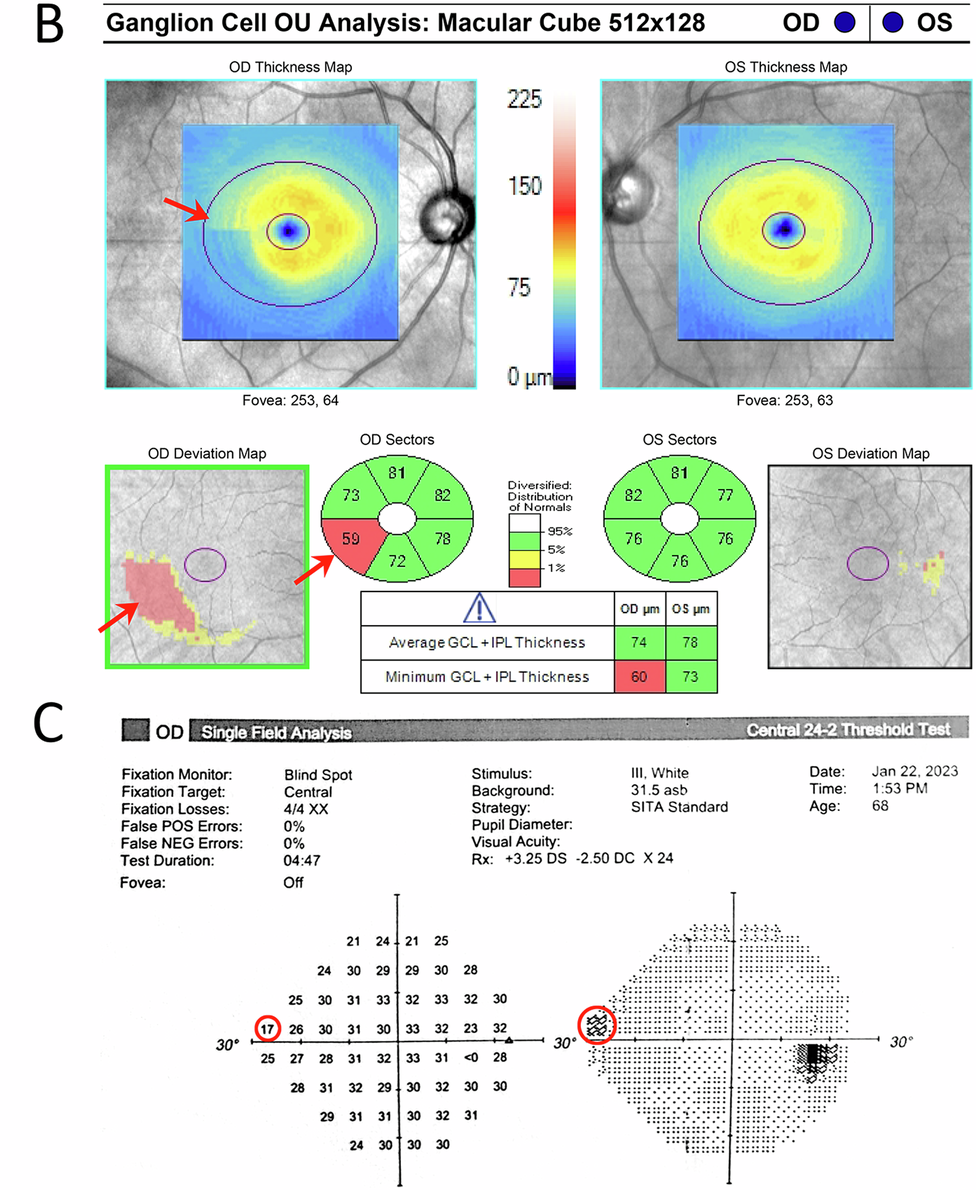
OCT and visual field reports can disagree because they measure different aspects of glaucoma. One assesses the structure of the optic nerve, while the other measures how well your peripheral vision functions.This difference is common and does not necessarily mean your glaucoma is getting worse; the two tests are most accurate when interpreted together in the context of your overall eye examination.
Understanding Glaucoma Investigations: OCT and Visual Field
Patients struggle to understand why their doctor has reached a certain diagnosis, or treatment strategy. Many patients receive OCT and visual field reports full of colours and numbers. Both require careful interpretation, and an equally careful explanation.
Glaucoma diagnosis is rarely based on one scan. Also glaucoma often has no symptoms. It requires understanding patterns over time: how the optic nerve looks, how visual fields change, how eye pressure behaves, and how your individual risk factors fit together.
Why do my OCT and Visual Field reports disagree? OCT shows the structure of the optic nerve. Visual field tests show how vision is functioning. Neither test alone can diagnose glaucoma. One test may show early structural damage while the other remains normal. Sometimes the opposite happens. This is why reports sometimes seem confusing. Remember, a red area on OCT may be normal for a highly myopic eye. An abnormal visual field may simply reflect fatigue or cataract. On the other hand, subtle early glaucoma can be missed if reports are not compared carefully across months and years.
Machines measure data. Doctors interpret patterns. If your reports are confusing, conflicting, or leading to rushed treatment decisions, a structured glaucoma second opinion can help bring clarity.
Dr Shibal Bhartiya is a fellowship-trained glaucoma specialist and Mayo Clinic Research Collaborator with over 25 years of experience. Her approach focuses on identifying risk before damage is irreversible, simplifying treatment decisions, and protecting vision long-term. Emphasis on early detection, risk assessment, and continuity of care. She is rated 5 stars across 1,500+ patient reviews on Google.
Understanding OCT
OCT measures thickness of nerve fibres. Red areas may indicate thinning.
One abnormal field may not mean disease. Repeated patterns matter more when evaluating progression.
Why do my OCT and Visual Field reports disagree?
Most glaucoma patients eventually face this confusing situation. One test looks worse than the other. Does that mean the glaucoma is progressing? Which test should you trust?
The answer is neither, and both.
Common reasons OCT and visual fields appear to disagree
Early glaucoma – OCT may become abnormal before the visual field.
Advanced glaucoma – OCT may reach a “floor effect” while the visual field continues to worsen.
High myopia – OCT can appear falsely abnormal.
Cataract – Visual fields may worsen even when the optic nerve is stable.
Learning effect or fatigue – Early visual field tests are often less reliable.
Scan artefacts – Poor image quality or segmentation errors can affect OCT interpretation.
Why OCT and Visual Field Reports Must Be Interpreted Together
Glaucoma diagnosis needs both structure and function. OCT shows nerve structure. Visual field shows vision function. When both OCT and Visual Field show similar changes over time, diagnosis is stronger, and rooted in deeper evidence.
The Importance of Serial Comparison
The most important glaucoma test is comparison.
We compare:
• OCT over years • visual fields over years • optic nerve photos
Progression becomes visible only in hindsight. That is why follow-up matters.
Common Misinterpretations
• Red OCT areas in high myopia • Field defects from cataract • Machine artefacts • Ignoring early thinning
You should not panic, or be falsely reassured. What you should ask for is a detailed explanation.
When to Seek Specialist Interpretation
• Conflicting reports • Advice for surgery • Multiple drops • Normal pressure but abnormal OCT • Strong family history
A structured interpretation can clarify risk.
My Approach
My approach focuses on calm, structured interpretation of OCT and visual field reports so patients can make informed decisions about long-term eye health. I don’t diagnose glaucoma from a number. I recognise patterns across OCT, visual fields, optic nerve appearance, pressure, corneal thickness, risk factors and time. Because glaucoma is usually invisible early, our goal is not only to see clearly today, but to protect vision safely ten years from now.
Patients receive:
• clear explanation • risk assessment • management options, including follow up schedule • missing data list
If your OCT and visual field reports seem to contradict each other, you’re not alone. This is one of the commonest reasons patients seek a glaucoma second opinion. Most apparent contradictions have an explanation once the scans are interpreted in context rather than isolation. Because glaucoma care is about continuity, and steady compliance with treatment.
1. My OCT report shows red areas. Does this mean I have glaucoma?
Not always. OCT compares your nerve thickness with an average database. Red areas can appear in:
• high myopia • large optic nerves • normal anatomical variation • machine artefacts
OCT is only one part of glaucoma diagnosis. It must be interpreted with visual fields, optic nerve exam, and follow-up over time.
2. My visual field test was abnormal once. Should I worry?
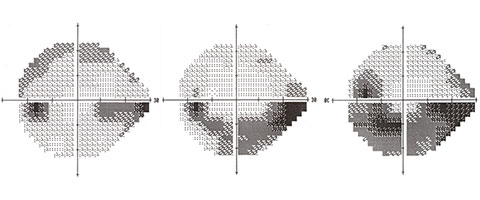
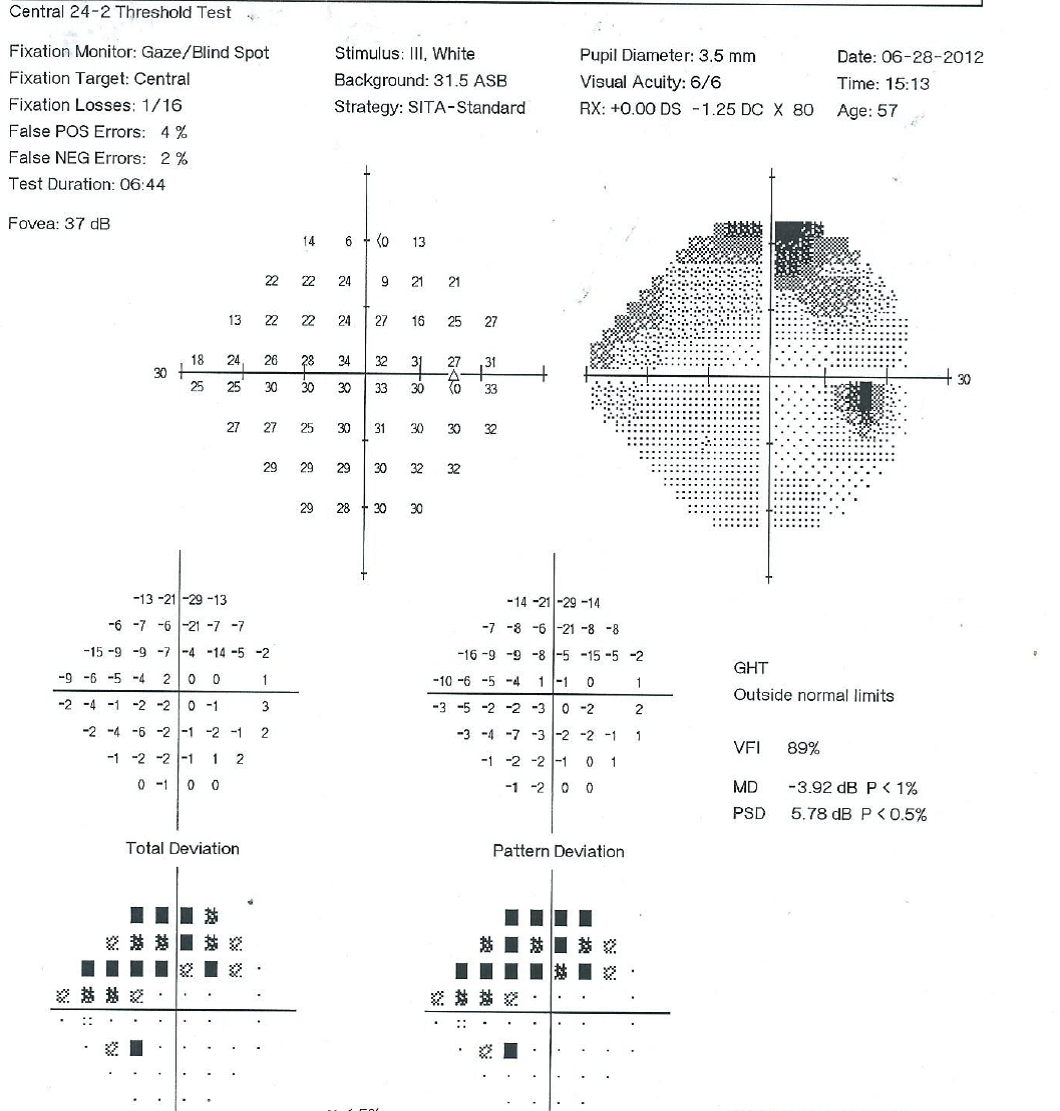
A single abnormal visual field does not confirm glaucoma. Visual fields depend on attention, fatigue, dry eye, cataract, and learning effect. Doctors usually repeat the test to confirm a pattern. Consistency over time matters more than one report.
3. Can OCT be normal but glaucoma still present?
Yes. No one test is infallible when it comes to glaucoma diagnosis.
Very early glaucoma can be missed on OCT, especially in normal-tension glaucoma or small optic nerves. This is why clinical examination and follow-up are important. Glaucoma diagnosis is a pattern seen over time, not one scan.
4. Can visual fields be normal if glaucoma is already present?
Yes. Structural nerve damage often occurs before functional loss. Patients may have normal visual fields but abnormal OCT or optic nerve appearance. Early detection focuses on protecting long-term vision before symptoms appear.
5. How often should OCT and visual field tests be repeated?
It depends on your risk of glaucoma progression or vision loss.
• Low risk: once a year • Glaucoma suspect: every 6–12 months • Established glaucoma: every 3–6 months
Your doctor decides based on progression risk. Regular comparison (and therefore, regular follow up) is the most important part of glaucoma care.
6. Why do my OCT numbers change between tests?
Small changes happen because of:
• machine differences • scan alignment and test retest variability • eye dryness • cataract • natural variation
Doctors thus look for consistent trends, not small fluctuations.
7. Can cataract affect visual field results?
Yes.
Cataract can cause diffuse depression on visual field testing. This may look like glaucoma but improves after cataract surgery. This is why reports must be interpreted carefully.
8. My eye pressure is normal. Why do I need OCT and Visual Field?
Many patients have normal-tension glaucoma. Pressure alone cannot rule out disease. OCT and visual field testing help detect subtle nerve damage. Glaucoma diagnosis needs multiple data points, eye pressure is only one of them.
9. Can glaucoma tests (OCT and Visual field) be wrong?
Tests are not “wrong,” but they can be misleading if taken in isolation. Machines measure data. Doctors interpret patterns. Also, visual fields can have fixation losses (you looked away from the fixation light), as well as false positives and false negatives. High rates of any of these can make your visual fields unreliable.
A structured review reduces unnecessary treatment and dangerous delay.
• You are advised surgery suddenly • Reports are confusing • Multiple drops are started without explanation • OCT and visual field results disagree • Strong family history exists
Clarity helps you make calm, informed decisions.
11. What is the most important glaucoma test?
The most important test is comparison over time. Glaucoma progression becomes visible only when reports are compared across months and years. Continuity of care is essential, and one all clear diagnosis does not mean you don’t need a follow up visit.
Glaucoma cannot be reversed. But early detection and regular care can preserve useful vision for life. The goal is not perfect tests today, but safe vision ten years from now, and always.
Closing Thought
Numbers do not treat glaucoma. Understanding does. Protecting vision requires careful interpretation over time. If you would like your OCT or visual field reports reviewed in a structured glaucoma second opinion:
This meta-analysis evaluated how panretinal laser treatment affects retinal nerve fibre layer thickness on OCT, helping clinicians interpret OCT changes accurately after diabetic retinopathy treatment.
This study compared two generations of OCT technology for retinal nerve fibre layer measurements, highlighting the importance of using consistent imaging when monitoring glaucoma patients over time.
This research examined the long-term impact of panretinal laser treatment on OCT measurements, improving our understanding of retinal nerve fibre layer changes following treatment for proliferative diabetic retinopathy.
This study investigated how myopia influences retinal nerve fibre layer measurements on OCT, emphasising the need to interpret scans carefully in highly myopic eyes to avoid misdiagnosis.
She has published peer-reviewed research on glaucoma management, examining how treatment decisions should balance medical evidence, patient preferences, and long-term vision outcomes.
Optic Neuritis is because of an inflammation of the optic nerve, which connects the eye to the brain. This swelling causes decreased vision.
It is characterized by inflammation affecting the optic nerve. This disrupts the seamless connection between the eyes and the brain. Eventually, this causes a breakdown of the transmission of visual information from the retina to the brain.