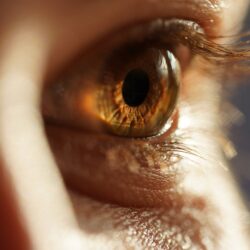
Vision that feels worse in dim light, busy markets, or crowded spaces, while clinic tests remain normal, is a real, assessable symptom. Subtle visual difficulty in low contrast or visually demanding situations can sometimes appear long before people describe “blurred vision” in everyday life, says Dr Shibal Bhartiya.
Your vision is fine in the clinic. The chart is clear. Your prescription is current. But step into a restaurant with low lighting, a busy market, a parking garage, or an overcast evening street, and something shifts. Edges are less defined. You hesitate before you step. You feel less certain of what you are seeing, even though you can technically see. In specialist practice, this pattern, normal chart, abnormal function, is one of the most commonly missed and most important diagnostic gaps.
This is real. It has specific causes. And it is rarely picked up in a standard daytime eye test.
👉 Read more: Night Driving Difficulty — Causes, Assessment, and What Helps; Vision Worse in Dim Light or Crowded Spaces, and Poor Night Vision
6 Reasons Vision Feels Worse in Dim Light or Busy Environments
1. Your Pupil Expands in Low Light — and That Changes Everything
In dim conditions, your pupil dilates to let in more light. A larger pupil also lets more of the peripheral lens into the optical path. The peripheral lens has more optical imperfections, called higher-order aberrations, than the central zone. The result is increased blur, halo, and reduced contrast, even with a correct prescription.
The reverse is true for small central cataracts. In bright light, the pupil constricts, and you can’t see anything as the light is blocked by the cataract.
This is why many people with otherwise normal vision notice glare around headlights at night, or find that low-light environments feel optically softer than bright ones.
2. Contrast Sensitivity Is Not the Same as Visual Acuity
The standard eye chart measures your ability to identify high-contrast black letters on a white background in a well-lit room. That is acuity. It tells you almost nothing about how your visual system performs at low contrast — the grey kerb against wet grey road, the step edge in a dimly lit corridor, the face across a shadowed room.
Contrast sensitivity — the ability to detect differences in light and shade — is a separate visual function. It is not measured in a routine eye test. It is often the first thing affected by early glaucoma, developing cataracts, and optic nerve disease — sometimes years before acuity changes.
3. Early Cataracts Scatter Light Internally
A developing cataract does not simply blur vision. It scatters light inside the eye, creating glare, halos, and a washed-out quality that is far worse in bright or low-light contrast situations than in controlled clinic lighting.
Many patients with early cataracts read the chart adequately in clinic but struggle significantly with driving at dusk, reading menus in dim restaurants, or navigating any environment without strong directional light. The chart does not replicate those conditions. The cataract does not disappear because the chart says 6/6.
4. Glaucoma Affects the Edges of Vision First
Glaucoma causes loss at the periphery of the visual field before it touches central acuity. In a quiet, well-lit clinic, with full attention on a fixed target, this peripheral loss is manageable. In a crowded market or busy street, peripheral vision is doing enormous work — detecting movement, processing spatial layout, warning of obstacles.
Patients with early glaucomatous field loss often describe crowded spaces as disorienting or overwhelming — not because they cannot see, but because they are unconsciously compensating for what is missing at the edges. This compensation is exhausting and easy to misattribute to anxiety, fatigue, or “getting older.”
Dr Bhartiya’s research, published in Journal of Current Glaucoma Practice in 2025, on quality of life concerns revealed that patients with moderate to severe glaucoma prioritize recognizing faces and finding dropped objects. The patients who reported greater difficulty in lighting-related tasks, as well as peripheral and distance vision, also gave it more importance.
5. Dry Eye and Tear Film Instability Worsen in Certain Environments
Air conditioning, wind, low humidity, and sustained visual attention in busy environments all accelerate tear film evaporation. The tear film is an optical surface. When it breaks down, image quality degrades — most noticeably in the form of fluctuating blur, light sensitivity, and a feeling that vision is “swimmy” or unstable.
Many patients notice this as a specific problem in shopping malls, on long drives, or in air-conditioned offices — not in clinic. This is real fatigue, not imagination, and it is treatable.
6. Your Visual System Is Under Greater Cognitive Load
In a busy or visually complex environment, your brain processes far more information simultaneously — movement, depth, peripheral threats, facial recognition, spatial navigation. When any part of the visual system is not functioning optimally, the cognitive effort required to compensate increases sharply.
This is why early visual problems often show up as fatigue, anxiety, or difficulty concentrating in complex environments before they show up as measurable vision loss. The eye is coping. The brain is working harder than it should have to.
Symptoms and Causes
| What You Notice | Likely Cause | When to Seek Evaluation |
|---|---|---|
| Halos or glare around headlights at night | Early cataract / higher-order aberrations | New onset or worsening |
| Vision feels “softer” in dim rooms | Pupil-related aberrations / early cataract | Affecting daily function |
| Difficulty navigating crowds or busy spaces | Peripheral field loss (glaucoma risk) | Any consistent difficulty |
| Vision fluctuates in air-conditioned spaces | Tear film instability / dry eye | Occurring regularly |
| Low light makes vision feel unreliable | Contrast sensitivity loss | Affecting confidence or safety |
| Disorientation in complex visual environments | Glaucoma / optic nerve involvement | Must be evaluated promptly |
What We Often Miss
Standard eye tests are performed in controlled environments — good lighting, fixed distance, single targets, no distraction. They are designed to detect the most common problems efficiently. They are not designed to replicate the visual demands of real life.
A patient can pass every test in a well-lit clinic and still be functionally impaired in the environments that matter most to them. The gap between clinic performance and real-world visual comfort is where early disease often hides.
Specific tests — contrast sensitivity testing, dilated examination, visual field assessment, and careful optic nerve evaluation — can identify problems that standard acuity testing misses entirely.
When to Worry
Book a specialist review if you notice any of the following:
- New or worsening halos or glare, particularly around lights at night
- Difficulty judging steps, kerbs, or spatial depth in low light
- A sense that peripheral vision feels narrowed or unreliable
- Any sudden change in how dim or complex environments feel
- Difficulty driving at dusk or night that is new or progressive
These are not normal ageing. They are symptoms. They need to be examined.
If routine tests have not explained your symptoms, a structured second opinion with specialist-level functional testing is a reasonable next step. This is precisely what a second opinion is for. Dr Shibal Bhartiya is a fellowship-trained glaucoma specialist and Mayo Clinic Research Collaborator with over 25 years of experience. Her approach focuses on identifying risk before damage is irreversible, simplifying treatment decisions, and protecting vision long-term. Emphasis on early detection, risk assessment, and continuity of care. She is rated 5 stars across 1,500+ patient reviews on Google.
📍 Gurgaon 📞 +91 88826 38735 | 🌐 Contact Us | Second Opinion Form for teleconsults
What This Means for You
If your vision feels unreliable in the real world but your clinic tests are normal, trust the real world. Your visual system is telling you something your eye chart is not designed to detect.
A thorough specialist evaluation in this situation includes contrast sensitivity testing, intraocular pressure measurement, optic nerve examination, dilated fundus assessment, and visual field testing where indicated. These tests look at how your visual system functions — not just what it can see on a white wall in a bright room.
Book an Appointment:
📍 Gurgaon 📞 +91 88826 38735 | 🌐 Contact Us | Second Opinion Form for teleconsults
Frequently Asked Questions
Is difficulty seeing at night a normal part of ageing?
Some reduction in night vision is a normal consequence of ageing — the pupil becomes less reactive and the lens less transparent over time. But significant difficulty with night driving, new glare, or halos around lights is not something to accept without evaluation. These symptoms can indicate early cataract, raised intraocular pressure, or corneal changes that are treatable.
Can glaucoma really affect how I feel in crowds before I notice vision loss?
Yes. Peripheral field loss — the earliest measurable change in glaucoma — reduces the visual information available at the edges of your vision. In a quiet, controlled environment this may be imperceptible. In a busy, visually complex environment, you compensate continuously and may experience this as disorientation, fatigue, or anxiety rather than a visual symptom per se.
My chart vision is 6/6. Can I still have a significant eye problem?
Yes. Visual acuity measures one narrow aspect of visual function. Contrast sensitivity, peripheral vision, colour perception, glare tolerance, and low-light performance are all separate functions that can be impaired while acuity remains intact. Several serious conditions — including glaucoma and early optic nerve disease — preferentially affect these functions first.
What is contrast sensitivity and how is it tested?
Contrast sensitivity is the ability to detect differences in light intensity between adjacent areas — the visual skill that lets you see a pale step against a pale floor, or read grey text in low light. It is tested using charts with letters or gratings of progressively lower contrast, typically in a clinical setting. It is not part of a standard refraction test and must be specifically requested.
When should I specifically ask for a visual field test?
Ask for visual field testing if you have a family history of glaucoma, are over 40, have noticed any difficulty with peripheral vision or complex environments, have elevated intraocular pressure on any previous measurement, or have unexplained visual symptoms that do not have an obvious refractive cause.
This page is part of the Vision Symptoms hub. Read more aboutNeuro-Ophthalmology and about our full approach to neurological vision conditions. Request an urgent appointment if you’ve experienced unexplained vision loss. Read more at Vision Feels Off — When Normal Tests Miss the Real Problem, One Eye Feels Different, Vision Not Clear But Tests Normal, Why Do I See Well in Clinic, but Struggle in Real Life? and Why Good Vision Does Not Always Mean Safe Vision.
About the Author
This article was written by Dr Shibal Bhartiya, fellowship-trained glaucoma specialist and Mayo Clinic Research Collaborator, Clinical Director at Marengo Asia Hospitals, Gurugram, known for ethical, patient-centred glaucoma care and independent glaucoma second opinions. She is also the Program Director for Community Outreach & Wellness; and for the Marengo Asia International Institute of Neuro and Spine.
She has published peer-reviewed research onglaucoma management, examining how treatment decisions should balance medical evidence, patient preferences, and long-term vision outcomes.
As Editor-in-Chief of Clinical and Experimental Vision and Eye Research and Executive Editor of the Journal of Current Glaucoma Practice (Pubmed Indexed, official journal of the International Society of Glaucoma Surgery), Dr Shibal Bhartiya brings editorial and research depth to every clinical decision. Her 200+ publications, including 90+ PubMed-indexed publications and 28 edited textbooks span glaucoma biology, surgical outcomes, health equity, and emerging diagnostics.
1600+ Five Star Patient Reviews Google Business Profile
If you are unable to come to Dr Bhartiya’s clinic: Read more about teleconsultation
Read her research on PubMed | Google Scholar | ResearchGate | ORCID | Github | Wikidata
📋Upload your reports for a structured review.| 🌐 Contact Us| 📞 +91 88826 38735
⭐ Helped by this article? Leave a Google review — it helps other patients find reliable eye care.
You may want to read these too, for more clarity
Screen Fatigue vs Real Eye Disease
Vision Not Clear But Tests Normal
Why Do I See Well in Clinic, but Struggle in Real Life?
Why Good Vision Does Not Always Mean Safe Vision
Can Extended Screen Time Damage Our Eyesight?
Double Vision or Diplopia: Warning Signs
Double Vision That Comes and Goes
Eye Floaters: Cause for Concern?
Eye Strain, Computers and Apps
Neurological Diseases and Eyes
Smartphones May Damage Your Eyes