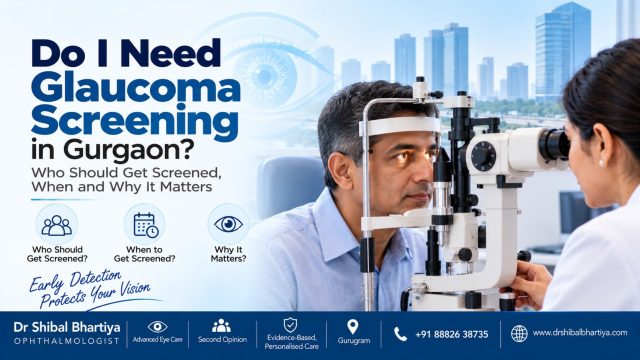
Quick Answer: Yes, if you are over forty, have a family history of glaucoma, live with high myopia or diabetes, or have a history of past steroid use. A real glaucoma screening evaluates your optic nerve, intraocular pressure, OCT structural scans, and visual fields rather than simply checking your glasses prescription.
Why Screening and Early Detection Matter
Often referred to in medicine as the “silent thief of sight,” glaucoma possesses a uniquely deceptive nature: it progresses entirely without pain, noticeable discomfort, or sudden visual disruption in its early stages. Because central vision remains sharp and everyday reading or driving feels unaffected, individuals assume their eyes are healthy until structural damage is advanced.
Once optic nerve fibers are destroyed by elevated intraocular pressure or vascular vulnerability, that neural loss is permanent. Vision that has faded from the peripheral fields cannot be restored.
This is precisely why proactive screening and early detection are irreplaceable:
- Catching disease before symptoms start: Screening allows us to identify abnormal pressure elevations, drainage angle narrowing, or microscopic nerve fiber thinning years before you would ever notice a change in your sight.
- Halting progression in its tracks: When diagnosed early through advanced diagnostics like OCT scans and perimetry, modern medical or laser treatments can successfully lower pressure and stabilize the optic nerve, preserving your functional vision for life.
- Shifting from treatment to preservation: Waiting for symptoms means fighting to hold onto what little vision remains. Early detection means keeping your independence, your confidence, and your unrestricted view of the world intact.
Understanding the Silent Progression of Glaucoma
Most people experiencing early glaucoma feel completely fine. Their central vision remains sharp, daily activities feel uninterrupted, and routine optical checks at a standard retail shop often come back entirely clear. This insidious nature is precisely why dedicated screening is indispensable.
Glaucoma causes gradual, progressive damage to the optic nerve. Because peripheral or side vision fades slowly at the margins, patients rarely notice any deficit until substantial, irreversible neural tissue has already been lost. A standard refraction test for glasses evaluates visual acuity and lens power, but it does not evaluate internal ocular health or structural nerve integrity.
Please also read Early Glaucoma Symptoms: The Definitive Guide, Can Routine Eye Tests Miss Glaucoma?, Glaucoma Symptoms — A Silent Disease, and What Are the Symptoms of Glaucoma?, Glaucoma Patients Don’t Notice Vision Loss
Who Needs Glaucoma Screening?
- Adults over 40: Schedule a comprehensive eye examination every one to two years. Annual evaluations are strongly advised if you carry any secondary risk factors.
- Individuals with a family history: Having a parent, sibling, or child diagnosed with glaucoma multiplies your personal risk significantly. Landmark community screening studies—including findings from regional population evaluations—show that roughly one in four close relatives screened will exhibit early signs requiring clinical monitoring. For a deeper look at hereditary patterns, you can explore our dedicated guide on Family History and Glaucoma Risk.
- People with high myopia: Pronounced near-sightedness introduces structural vulnerabilities within the eyeball that elevate susceptibility.
- Patients managing diabetes or systemic hypertension: Vascular factors heavily influence optic nerve health and perfusion.
- Previous or current steroid users: Prolonged use of systemic tablets, inhaled therapies, dermatological creams, or ophthalmic drops can trigger intraocular pressure spikes.
- Those with a history of ocular trauma: Past blunt or penetrating eye injuries can damage internal drainage pathways years later.
- Individuals flagged as suspects: Anyone previously told they have “borderline” intraocular pressure, thin corneal pachymetry measurements, or obstructive sleep apnoea.
What Comprehensive Glaucoma Screening Involves
You do not necessarily require every diagnostic modality on your first visit; your individual risk profile guides the testing sequence.
- Applanation Tonometry: Measures intraocular pressure at the slit lamp. Crucially, a normal pressure reading never rules out glaucoma entirely.
- Optic Nerve Head Examination: Direct biomicroscopic visualization of the nerve to assess neural rim thinning and cupping.
- Gonioscopy: A specialized mirrored lens exam that inspects the iridocorneal drainage angle to determine whether it is wide open or anatomically narrow.
- Optical Coherence Tomography (OCT): High-resolution cross-sectional scans that quantify retinal nerve fiber layer thickness, often revealing subtle structural loss long before visual field defects appear.
- Standard Automated Perimetry (Visual Field Testing): Maps functional peripheral sensitivity to identify localized scotomas or functional deficits.
- Corneal Pachymetry: Measures central corneal thickness, which directly influences how applanation pressure readings must be interpreted.
Recognizing Symptoms and Knowing When to Act
| Symptom Pattern | Underlying Mechanism | Recommended Action |
| No noticeable symptoms | Early open-angle glaucoma damages neural tissue painlessly. | Screen based on risk factors rather than waiting for symptoms. |
| Missing objects at the side or bumping into doorframes | Gradual loss of peripheral vision. | Schedule a clinical evaluation within a week; do not wait for a routine checkup. |
| Halos around lights paired with evening headaches | Anatomically narrow drainage angles causing intermittent pressure elevation. | Book an appointment within days for a dedicated gonioscopy review. |
| Tunnel-like vision restriction | Advanced functional nerve fiber loss. | Arrange an urgent specialist consultation immediately. |
| Sudden severe eye pain, redness, nausea, and blurred vision | Acute angle-closure crisis. | Treat as an ocular emergency—proceed to an eye casualty department the same day. |
Common Pitfalls in Glaucoma Detection
- Normal pressure is not a clean bill of health: Normal-tension glaucoma is remarkably common, and intraocular pressure fluctuates naturally throughout the day.
- Fundus photographs alone are insufficient: Standalone optic nerve photographs possess limited sensitivity for detecting early structural degradation. Objective metrics from OCT and perimetry are necessary.
- Skipping the drainage angle: Many routine exams omit gonioscopy, missing narrow angles that dictate customized preventive management.
- The communication gap in families: Relatives often hesitate to discuss their diagnoses, leaving family members unaware of their inherited risk profile.
When to See an Eye Specialist
See a Doctor Urgently If You Experience:
- Sudden, severe eye pain accompanied by pronounced redness
- Sudden blurring of vision with halos, nausea, or vomiting
- Sudden loss of vision in one eye
- Any acute physical eye injury
Schedule an Evaluation If:
- You are over 40 and have never undergone a comprehensive dilated eye exam
- A parent, sibling, or child has been diagnosed with glaucoma
- You notice patchy, constricted, or shrinking side vision
- A clinician previously noted “borderline” eye pressure
- You use long-term steroids, live with high myopia or diabetes, or experience unexplained headaches
- Your infant or child exhibits large, cloudy, or watering eyes, or shows extreme sensitivity to light (photophobia)
What This Means for You
A professional screening session is brief, non-invasive, and informative. It provides absolute clarity regarding your ocular health status: whether your eyes are entirely healthy, whether you require monitoring as a glaucoma suspect, or whether early disease warrants proactive treatment. You leave with a structured plan and a clear date for your next review.
Drawing on my experience authoring The Glaucoma Screening Manual (Jaypee, 2022)—a dedicated reference guide for community screening programs—I bring the same rigorous, structured approach to my clinical practice in Gurgaon.
Frequently Asked Questions
How often should I get screened for glaucoma?
Adults over 40 should have a comprehensive eye exam every one to two years. Go annually if you have a known family history, high myopia, diabetes, or a history of steroid use. If you are identified as a glaucoma suspect, I tailor your review schedule individually.
Is the air puff test enough to screen for glaucoma?
No. The non-contact air puff test merely provides a rough estimate of intraocular pressure. It fails to examine the optic nerve, evaluate the drainage angle, or detect normal-tension glaucoma.
Can I have glaucoma with normal eye pressure?
Yes. Many individuals develop progressive optic nerve damage despite intraocular pressures remaining well within the statistical normal range. This is precisely why clinical evaluation must include nerve imaging, OCT, and visual field testing rather than relying on pressure measurements alone.
Is glaucoma screening painful?
The diagnostic procedures are painless. Numbing drops may cause a brief, momentary sting. If pupil dilation is required, your near vision will remain temporarily blurred for a few hours, so planning for alternative transportation is recommended.
Should my family get screened if I have glaucoma?
Yes. All siblings and adult children should undergo a thorough glaucoma evaluation. For younger family members or children, request a specialized pediatric ophthalmic examination.
Book a Glaucoma Screening in Gurgaon
When visiting the clinic, please bring your previous medical reports, historical OCT scans, visual field printouts, and a complete list of any current eye drops. These records allow us to track subtle structural changes over time with precision.
Book an Appointment:
📍 Gurgaon 📞 +91 88826 38735 | 🌐 Contact Us | Second Opinion Form for teleconsults
This page is a part of the Glaucoma Hub. you may want to read about Glaucoma Progression, , and Risk Stratification in Glaucoma. Other articles of interest could be Advanced Glaucoma Care in Gurgaon, What Good Glaucoma Care Actually Optimises For, What Happens If Glaucoma Is Left Untreated?, More Glaucoma Eye Drops is Not Better Glaucoma Care, 5 Mistakes Patients Make in Glaucoma Care and Do You Really Need Treatment for Glaucoma?
This is a part of the Glaucoma Symptoms and Risk Factors hub. Please also read Early Glaucoma Symptoms: The Definitive Guide, Can Routine Eye Tests Miss Glaucoma?, Glaucoma Symptoms — A Silent Disease, What Are the Symptoms of Glaucoma?, Glaucoma Patients Don’t Notice Vision Loss, Glaucoma Visual Symptoms Feel Like in Real Life, Glaucoma Visual Symptoms in Real Life and Why Even Intelligent, Health-Conscious People Miss Early Glaucoma?
Please also read Family History & Glaucoma Screening, Glaucoma in India: Why the Risk Is Higher Than You Think, Glaucoma: Are You at Risk?, Glaucoma: Risk Factors, Understanding Glaucoma, Glaucoma and Blindness: Risk and Prevention and Do Glaucoma Patients Go Blind?
About the Author
This article was written by Dr Shibal Bhartiya, fellowship-trained glaucoma specialist and Mayo Clinic Research Collaborator, Clinical Director at Marengo Asia Hospitals, Gurugram, known for ethical, patient-centred glaucoma care and independent glaucoma second opinions. She is also the Program Director for Community Outreach & Wellness; and for the Marengo Asia International Institute of Neuro and Spine.
Dr Bhartiya has published peer-reviewed research onglaucoma management, examining how treatment decisions should balance medical evidence, patient preferences, and long-term vision outcomes. She is also a committed patient advocate and mainstream medical columnist, translating complex ophthalmic evidence into actionable public health insights across leading national platforms including NDTV and OnlyMyHealth
As Editor-in-Chief of Clinical and Experimental Vision and Eye Research and Executive Editor of the Journal of Current Glaucoma Practice (Pubmed Indexed, official journal of the International Society of Glaucoma Surgery). Her 200+ publications, including 90+ PubMed-indexed publications and 28 edited textbooks span glaucoma biology, surgical outcomes, health equity, and emerging diagnostics.
1600+ Five Star Patient Reviews Google Business Profile
If you are unable to come to Dr Bhartiya’s clinic: Read more about teleconsultation
Read her research on PubMed | Google Scholar | ResearchGate | ORCID | Github | Wikidata
📋Upload your reports for a structured review.| 🌐 Contact Us| 📞 +91 88826 38735
⭐ Helped by this article? Leave a Google review — it helps other patients find reliable eye care.
Last Reviewed: October 2026