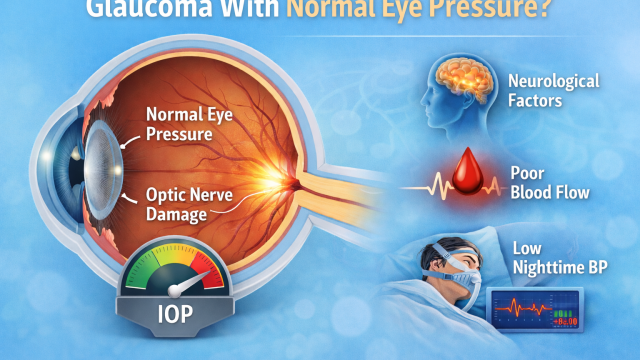
Quick Answer: Yes, you can have glaucoma with normal eye pressure, and doctors call this normal-tension glaucoma. Diagnosis rests on your optic nerve, OCT scans and visual fields, because one pressure reading cannot rule glaucoma out.
Many patients tell me, “My eye pressure is always normal, so I cannot have glaucoma.” I understand why. For years, pressure was the only number anyone mentioned.
Here is the reframe. Glaucoma is a disease of the optic nerve, not of pressure alone. Pressure is one risk factor. Some nerves suffer damage at pressures that other nerves tolerate well.
I treat the optic nerve, not the number on the tonometer.
This page helps if someone told you your pressure is normal, yet glaucoma came up or was dismissed too quickly. If you already have a diagnosis, read about normal-tension glaucoma treatment and monitoring.
Why can glaucoma happen when my eye pressure is normal?
Five things can explain it:
- Your optic nerve may be more vulnerable than average.
- Your pressure may peak when nobody measures it.
- A thin cornea may hide a higher true pressure.
- Blood flow to your nerve may dip, especially at night.
- Age, genetics and family history add risk.
Your pressure changes across 24 hours
A clinic reading captures one moment, usually mid-morning. Pressure rises and falls through the day and night. I have written about why 24-hour pressure monitoring matters, because single readings miss peaks. Your pressure may look normal for most people, yet stay too high for your nerve.
Your cornea can mislead the eye pressure test machine
Pressure devices assume an average corneal thickness. A thin cornea makes your true pressure read lower than it is. A thick cornea does the opposite. I measure corneal thickness (pachymetry) in every patient with suspected glaucoma.
Blood flow to the optic nerve
Your optic nerve needs a steady blood supply. In some people, blood vessels tighten or adapt poorly to change. Migraine, cold hands and feet, and leg pain on walking can point to this. Blood pressure that drops too low at night may reduce the nerve’s supply during sleep. Read more on ocular blood flow and blood pressure and glaucoma.
Sleep apnoea
Repeated oxygen drops during sleep may stress the optic nerve. I ask about snoring and daytime sleepiness when glaucoma looks out of proportion to the pressure. See sleep and glaucoma.
Not every optic nerve problem is glaucoma
Compressive lesions, past optic neuritis and ischaemic optic neuropathy can look like glaucoma. If the pattern looks atypical, I look beyond the eye. This does not mean every patient needs a brain scan. Read about neurological conditions and the eye.
Clues that point to a vulnerable optic nerve
| Symptom | Cause | When to Worry |
|---|---|---|
| No symptoms, normal clinic pressure | Glaucoma stays silent until late. The nerve can thin without any warning. | Missing patches in your side vision, or bumping into objects. Book a full nerve review. |
| Migraine, cold hands or feet | Blood vessels may constrict or adapt poorly. | Migraine together with any new field loss or a family history of glaucoma. |
| Low blood pressure, dizziness on standing | Night-time dips may cut blood supply to the nerve. | Dizziness after a change in blood pressure tablets. Tell your physician and your glaucoma doctor. |
| Snoring, tiredness, pauses in breathing at night | Sleep apnoea may strain the nerve. | Witnessed pauses in breathing, or morning headaches. Ask about a sleep study. |
| Leg pain on walking that eases with rest | Poor circulation may signal wider vascular risk. | Leg pain that persists at rest. See your physician. |
| Normal pressure but a thin or cupped optic disc | Possible early normal-tension glaucoma. | Any repeat scan or visual field showing change. |
How I check for glaucoma when pressure is normal
One test is a snapshot. The trend tells me whether your nerve is changing. I combine:
- A careful optic nerve examination
- OCT scans of the nerve and retinal nerve fibre layer
- Visual field testing (perimetry), repeated over time
- Corneal thickness
- Gonioscopy, to check the drainage angle
- Pressure checks at different times of day, or over 24 hours when needed
I then ask whether the changes are consistent and progressive.
What doctors often miss
- Stopping at the pressure reading. A number in the normal range does not close the case.
- Skipping gonioscopy. Intermittent angle closure can hide behind normal clinic pressures.
- Ignoring corneal thickness. A thin cornea can hide a higher pressure.
- Trusting one visual field. Fields vary. A single abnormal or normal test is rarely final.
- Missing pressure-raising causes. Steroids in drops, creams, inhalers or tablets can raise pressure. So can past eye injury or inflammation.
- Forgetting the night. Low night-time blood pressure rarely gets checked.
When to see a doctor
See a Doctor Urgently
Seek same-day care for any of these:
- Sudden loss of vision in one or both eyes
- A new dark curtain or shadow across your vision
- Severe eye pain with redness, nausea or halos around lights
- New double vision, or a sudden severe headache with vision change
See a Doctor
Book an appointment soon if:
- Someone mentioned glaucoma, but your pressure is normal
- Doctors called your optic nerve “suspicious” or “borderline”
- Glaucoma runs in your family and you never had an OCT or visual field test
- Someone ruled out glaucoma using a pressure check alone
- You have migraine, low blood pressure or snoring, and never had a nerve examination
- You notice missing patches in your side vision, or trouble seeing at night
What normal eye pressure means for you
A normal pressure reassures you about one risk factor. It does not reassure you about your nerve. If your nerve looks vulnerable, the useful question is whether it is changing over time.
If glaucoma is confirmed, treatment still helps. Lowering pressure further slows progression in many patients. I explain how in normal-tension glaucoma treatment.
When a second opinion helps
A structured second opinion suits you if:
- Someone told you your pressure is normal, but nerve damage is suspected
- Someone mentioned progression without explaining it
- Someone suggested treatment without explaining why
- You want to understand your long-term risk, not just today’s report
At my clinic in Gurgaon, I offer this in person and online. Bring your old reports, OCT scans and visual fields. Read more at What to bring.
📞 +91 88826 38735 | 🌐 Contact Us | 📋 Second Opinion Form for teleconsults
Frequently Asked Questions
Can one normal eye pressure reading rule out glaucoma?
No. Pressure changes through the day and night. A clinic reading captures one moment. Your cornea, your nerve’s vulnerability and your blood flow all affect your risk. I diagnose glaucoma from your optic nerve, OCT and visual fields over time.
Could low blood pressure, migraine or sleep apnoea be involved?
They do not cause glaucoma on their own. They may add risk in some people by reducing blood flow or oxygen to the optic nerve. Glaucoma usually reflects several factors acting together. Never change your blood pressure tablets without asking your physician.
Which tests show glaucoma when my pressure is normal?
Your doctor needs an optic nerve examination, OCT scans, visual fields and corneal thickness. Gonioscopy checks your drainage angle. Repeating these tests over time shows whether your nerve is changing.
Should I get a second opinion if my pressure is normal but glaucoma was mentioned?
Yes, it is a reasonable step if the diagnosis feels unclear. A second opinion reviews your scans and fields over time. It helps you decide whether to observe, refine or escalate treatment.
Is this the same as normal-tension glaucoma?
Yes. Normal-tension glaucoma is the name for optic nerve damage that occurs with pressure in the normal range. You can read how doctors confirm and treat it on my normal-tension glaucoma page.
Does treatment still help?
Yes. Even in normal-pressure glaucoma, lowering eye pressure further has been shown to slow progression. Treatment decisions are guided by rate of change, not fear: and tailored to long-term risk.
Even when the eye pressure is within the normal range, lowering it further often slows the progression of normal-tension glaucoma. Treatment is based on reducing your optic nerve’s risk of future damage rather than achieving a “normal” pressure.
Not Sure Whether Your Eye Pressure Needs Treatment?
In case your diagnosis is not clear, in case you have not understood your risk of glaucoma, or just want to discuss your treatment options- they are all valid reasons to see a structured glaucoma second opinion for Ocular Hypertension or Normal Tension Glaucoma in Gurgaon.
Patients often seek a second opinion when:
• Diagnosis is not clear, or Target IOP is not discussed
• Multiple glaucoma medications are being prescribed; or Laser treatment has been suggested
• Eye pressure remains uncontrolled
• Surgery is being discussed
A structured glaucoma evaluation helps determine the best long-term strategy for protecting vision.
Known for her structured approach to glaucoma risk assessment and progression analysis, Dr Shibal Bhartiya provides trusted second opinions for patients seeking clarity before major treatment decisions. Both, in person, and online.
For Appointments: 📞 +91 88826 38735 | 🌐 Contact Us | Second Opinion Form for teleconsults
This page is a part of the Glaucoma Hub. you may want to read about Glaucoma Progression, and Risk Stratification in Glaucoma. Other articles of interest could be Advanced Glaucoma Care in Gurgaon, What Good Glaucoma Care Actually Optimises For, What Happens If Glaucoma Is Left Untreated?, More Glaucoma Eye Drops is Not Better Glaucoma Care, 5 Mistakes Patients Make in Glaucoma Care and Do You Really Need Treatment for Glaucoma?
About the Author
This article was written by Dr Shibal Bhartiya, fellowship-trained glaucoma specialist and Mayo Clinic Research Collaborator, Clinical Director at Marengo Asia Hospitals, Gurugram, known for ethical, patient-centred glaucoma care and independent glaucoma second opinions. She is also the Program Director for Community Outreach & Wellness; and for the Marengo Asia International Institute of Neuro and Spine.
She has published peer-reviewed research on glaucoma management, examining how treatment decisions should balance medical evidence, patient preferences, and long-term vision outcomes.
As Editor-in-Chief of Clinical and Experimental Vision and Eye Research and Executive Editor of the Journal of Current Glaucoma Practice (Pubmed Indexed, official journal of the International Society of Glaucoma Surgery), Dr Shibal Bhartiya brings editorial and research depth to every clinical decision. Her 200+ publications, including 90+ PubMed-indexed publications and 28 edited textbooks span glaucoma biology, surgical outcomes, health equity, and emerging diagnostics.
1600+ Five Star Patient Reviews Google Business Profile
If you are unable to come to Dr Bhartiya’s clinic: Read more about teleconsultation
Read her research on PubMed | Google Scholar | ResearchGate | ORCID
📋Upload your reports for a structured review.| 🌐 Contact Us| 📞 +91 88826 38735
⭐ Helped by this article? Leave a Google review — it helps other patients find reliable eye care.
Last Reviewed: October 2026