Most people with glaucoma do not go blind if it is detected early and treated properly. But glaucoma can cause blindness if it is undetected, untreated, or poorly followed over time.
Both statements are true, and understanding the difference matters.
Dr Shibal Bhartiya is a fellowship-trained glaucoma specialist and Mayo Clinic Research Collaborator with over 25 years of experience. Her approach focuses on identifying risk before damage is irreversible, simplifying treatment decisions, and protecting vision long-term. Emphasis on early detection, risk assessment, and continuity of care. She is rated 5 stars across 1,500+ patient reviews on Google.
Why glaucoma has a frightening reputation
Glaucoma earned its reputation decades ago, when:
- It was diagnosed late
- Imaging did not exist, and tests were primitive and unable to pick up disease progression early
- Follow-up was irregular
- Treatment options were limited
Today, we can detect damage years before symptoms set in, and intervene far more precisely.
Blindness from glaucoma is now usually a marker of late presentation, not inevitability.
What actually happens to most patients
With:
- Early detection
- Regular monitoring
- Appropriate pressure control
- Willingness to adjust treatment over time
Most patients:
- Retain useful vision for life
- Continue reading, driving, and working
- Never experience complete vision loss
Glaucoma is typically a condition managed, not one that overtakes life.
Which Glaucoma Patients Go Blind
The better question: Who is at higher risk of severe vision loss?
Risk is higher when:
- Diagnosis occurs very late
- Follow-up is irregular
- Treatment is inconsistent
- Disease progresses unnoticed for years
Certain biological factors also matter, including:
- Strong family history
- Thin corneas
- Very high or eye pressures
- Vascular vulnerability
This is why glaucoma care is individualised, not formula-based.
What Glaucoma Blindness Usually Looks Like
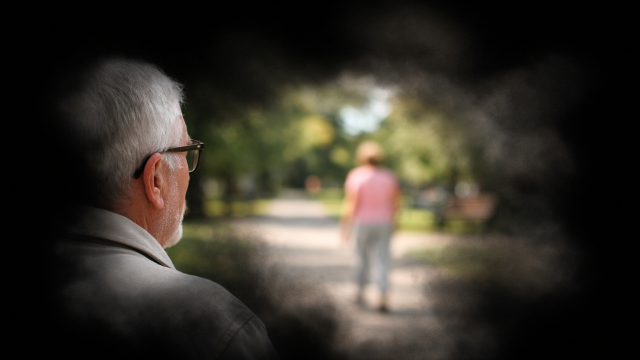
Glaucoma does not cause sudden darkness.
Vision loss is:
- Gradual
- Peripheral first
- Often unnoticed until advanced
Central vision is usually preserved until very late stages. Which is why early care is so effective.
In advanced glaucoma, vision loss is not only about missing areas of sight. Many patients experience reduced contrast sensitivity, making it harder to see edges, steps, or uneven surfaces, especially in low or dim lighting.
Depth perception may also be impaired, affecting judgment of distances while walking, using stairs, or navigating unfamiliar spaces. These changes are often subtle but can significantly increase the risk of trips and falls, particularly at night or in poorly lit environments.
This is why glaucoma care is not only about preserving vision on tests. It is also about protecting mobility, confidence, and safety in everyday life.
A Broader Lens: Not Just Eye Pressure
In some patients, progression relates to factors beyond pressure alone, such as:
- Reduced ocular blood flow
- Low nocturnal blood pressure
- Migraine or vascular dysregulation
- Sleep apnea
Recognising these contributors allows better long-term protection.
The Reassurance Most Patients Need to Hear
Glaucoma does not mean blindness.
It means commitment.
Commitment to:
- Monitoring
- Consistency
- Long-term thinking
When treated as a chronic, slow disease. It is not an emergency. Treatment outcomes are usually very good.
The Principle I Share with Patients
The goal of glaucoma care is not perfect reports.
It is preserving quality of vision and quality of life for decades.
That goal is achievable, quietly and steadily, for most people.
What preserved vision looks like in practice
Most patients with well-managed glaucoma continue to live fully normal lives. They read. They drive. They work. They travel. They do not think about glaucoma every day.
What they do is attend follow-up appointments. They use their drops consistently. They bring their old reports. They do not skip visual field tests because they feel fine.
That is the bargain glaucoma offers. It is not a dramatic one. It is quiet, steady, and entirely manageable for most people, provided the disease is taken seriously early enough.
The patients I worry about are not those who ask questions. They are those who stop coming.
Frequently Asked Questions: Glaucoma and Blindness
Do most glaucoma patients go blind?
No. Most glaucoma patients do not go blind. With early detection, regular monitoring, and appropriate treatment, the majority of patients retain useful vision for life. They continue reading, driving, and living normally. Blindness from glaucoma today is largely a marker of late diagnosis or inconsistent care, not an inevitable outcome of the disease itself.
Can glaucoma cause complete blindness?
Yes, it can: but this outcome is far less common than it once was. Glaucoma can cause complete blindness if it is undetected for years, if treatment is not taken consistently, or if follow-up is irregular over a long period. Modern imaging and monitoring tools allow us to detect progression far earlier than was possible even twenty years ago. When glaucoma is managed well, complete blindness is unusual.
What does vision loss from glaucoma actually look like?
Glaucoma does not cause sudden darkness. Vision loss is gradual, begins in the peripheral field, and is often unnoticed until it is moderately advanced. Central reading vision is usually preserved until very late stages. Many patients also notice reduced contrast sensitivity, difficulty seeing edges, steps, or surfaces in low light, and impaired depth perception. These changes can affect confidence, mobility, and safety before central vision is affected.
How quickly does glaucoma cause vision loss?
Glaucoma typically progresses slowly over years or decades. The rate varies significantly between patients: some progress rapidly despite treatment, while others remain stable for many years on minimal medication. This is why individualised monitoring matters. A single visual field test or pressure reading tells you very little. A trend over time tells you everything.
If I have glaucoma, will I still be able to drive?
Most patients with well-managed glaucoma continue to drive for many years. Driving requires adequate visual field in both eyes. If peripheral vision loss advances significantly, it may affect driving eligibility — but this is a late-stage concern, not an early one. Regular monitoring ensures that any field changes are detected and addressed before they affect daily function.
Which glaucoma patients are at highest risk of going blind?
Risk is highest when diagnosis occurs very late, when follow-up is irregular, when treatment is inconsistent, or when the disease is biologically aggressive. Certain factors increase risk: very high eye pressure, thin corneas, strong family history, vascular vulnerability, sleep apnea, and low nocturnal blood pressure. Identifying these factors early allows more intensive protection where it is needed most.
Is glaucoma blindness reversible?
No. Optic nerve damage caused by glaucoma is permanent. Once vision is lost, it cannot be recovered. This is precisely why the emphasis in glaucoma care is on prevention and early intervention, not on treatment after the fact. Protecting the vision you have is always more achievable than trying to restore what is gone.
What should I do if I have just been diagnosed with glaucoma?
Start by understanding your diagnosis clearly: what type of glaucoma, what stage, what your target pressure is, and what the monitoring plan looks like. Attend all follow-up appointments. Take prescribed drops consistently. Bring previous records to every visit. Ask questions. If anything is unclear, or if you want an independent view of your diagnosis and treatment plan, a structured glaucoma second opinion can give you the clarity and confidence to manage the condition well over the long term.
Read the research articles
This article was written by Dr Shibal Bhartiya, fellowship-trained glaucoma specialist and Mayo Clinic Research Collaborator, Clinical Director at Marengo Asia Hospitals, Gurugram, known for ethical, patient-centred glaucoma care and independent glaucoma second opinions. She is also the Program Director for Community Outreach & Wellness; and for the Marengo Asia International Institute of Neuro and Spine. This article was updated in April 2026.
She has published peer-reviewed research on glaucoma management, examining how treatment decisions should balance medical evidence, patient preferences, and long-term vision outcomes.
As Editor-in-Chief of Clinical and Experimental Vision and Eye Research and Executive Editor of the Journal of Current Glaucoma Practice (Pubmed Indexed, official journal of the International Society of Glaucoma Surgery), Dr Shibal Bhartiya brings editorial and research depth to every clinical decision. Her 200+ publications, including 90+ PubMed-indexed publications and 28 edited textbooks span glaucoma biology, surgical outcomes, health equity, and emerging diagnostics.
Access her work on Pubmed, Google Scholar, ResearchGate and ORCID.
Dr Shibal Bhartiya
Glaucoma • Second Opinion • Advanced Care
www.drshibalbhartiya.com
+91 88826 38735
1500+ Five Star Patient Reviews Google Business Profile
Upload your reports for a structured review.
If you are unable to come to Dr Bhartiya’s clinic: Read more about teleconsultation for glaucoma