Glaucoma in India: Why the Risk Is Higher Than You Think

Glaucoma is the most common cause of irreversible blindness in India, and 90% of cases remain undiagnosed. That means nine out of every ten people with glaucoma in this country do not know they have it. An estimated 11.2 million Indians aged 40 and above have glaucoma. And angle closure glaucoma is more common in India, than in the West, says Dr Shibal Bhartiya. Glaucoma in India is often missed or undertreated because it progresses silently, even when vision and eye pressure appear normal. Good glaucoma care focuses on early detection, risk-based monitoring, and long-term protection of vision, not just adding more eye drops.

Glaucoma does not give you a warning. You lose peripheral vision first. By the time you notice something is wrong, damage is already done. The good news is that glaucoma detected early is highly manageable. Blindness from glaucoma is largely preventable with timely diagnosis and consistent treatment.

In India, this story plays out every day at a scale that is hard to comprehend. Dr Shibal Bhartiya, fellowship trained glaucoma specialist in Gurgaon, explains more about Glaucoma in India, and Indians.

Dr Shibal Bhartiya is a fellowship-trained glaucoma specialist and Mayo Clinic Research Collaborator with over 25 years of experience. Her approach focuses on identifying risk before damage is irreversible, simplifying treatment decisions, and protecting vision long-term. Emphasis on early detection, risk assessment, and continuity of care. She is rated 5 stars across 1,500+ patient reviews on Google.


Why Indians Are at Higher Risk

Indians carry specific anatomical and genetic traits that raise their glaucoma risk. One of the most significant is a shallower anterior chamber angle. This makes angle-closure glaucoma far more common in Indian and South Asian eyes than in Western populations.

Primary angle-closure disease may affect as many as 27.6 million Indians. Patients with primary angle-closure glaucoma are twice as likely to go blind compared to those with open-angle glaucoma. Yet this form is frequently missed or misdiagnosed.

Indians also present with glaucoma at a younger age than patients in Western populations. Juvenile open-angle glaucoma, which begins between the ages of 16 and 40, is well documented in Indian tertiary centre data. A family history of glaucoma raises your personal risk significantly. If a parent or sibling has glaucoma, your chances of developing it are much higher.

Other risk factors specific to the Indian context include:

Steroid use without medical supervision, myopia (short-sightedness), diabetes, and a family history of glaucoma are all important risk factors to discuss with your doctor.


The Problem of Late Presentation

Most glaucoma in India is detected late. Very late.

In India, undetected and untreated glaucoma leads to faster progression, earlier visual impairment, and preventable blindness. The core reason is that glaucoma causes no pain and no blur in the early stages. People feel completely fine. They see no reason to visit an eye doctor.

By the time central vision is affected, up to 90% of peripheral nerve fibres may already be lost. That damage cannot be reversed. No surgery, no medication, and no intervention brings that vision back.

This is what makes early screening so critical. You cannot feel glaucoma coming. You can only catch it on examination.


The Scale of the Problem in India

Glaucoma prevalence among Indians aged 40 and above ranges between 2.7% and 4.3% across multiple population-based studies. In those over 70 years of age, the risk rises sharply. Studies show glaucoma affects over 8% of Indians in their seventies and over 14% of those above 80.

Glaucoma is a leading cause of irreversible blindness globally, and the burden in Asia and India is expected to grow substantially by 2040.

India does not have enough glaucoma specialists to manage this burden. Most patients are diagnosed and managed by general ophthalmologists. Structured, specialist-led care makes a real difference to outcomes.


What Makes Glaucoma in Indians Different to Manage

Treating glaucoma in an Indian patient requires a different approach than using a standard Western protocol.

Indian eyes tend to have thinner corneas. Corneal thickness affects how accurately we measure intraocular pressure (IOP). A thin cornea can make the pressure appear lower than it actually is. This leads to underdiagnosis and undertreatment. Also, thinner corneas are an independent risk factor for glaucoma progression.

Angle-closure disease needs gonioscopy, a specialised examination to assess the drainage angle of the eye. Studies have found that a significant proportion of patients in India are incorrectly treated for open-angle glaucoma when they actually have angle-closure disease.The treatment for these two types is fundamentally different.

Normal tension glaucoma (NTG), where optic nerve damage occurs despite normal eye pressure, is also seen in Indian patients. This form requires looking beyond IOP and addressing other risk factors including blood pressuresleep patterns, and vascular health.


How I Approach Glaucoma in Indian Patients

I have spent 25+ years specialising in glaucoma. I see this disease in its full Indian context, not through a textbook written for another population.

My clinical approach includes a full angle assessment with gonioscopy for every new patient, corneal thickness measurement to ensure accurate pressure readings, structural imaging with OCT to detect early nerve fibre loss, visual field analysis (with special emphasis on reliability criteria) and a detailed risk factor review including family history, steroid use, and systemic health.

Correct classification, open-angle versus angle-closure, changes treatment completely. Getting this right at the first visit prevents years of inadequate care.

I also believe in clear communication. Glaucoma is a lifelong condition. You need to understand what you have, why treatment matters, and what to monitor. I take the time to explain this at every visit.

If you have a family history of glaucoma, are over 40, have diabetes, are short-sighted, or use steroid eye drops, you need a glaucoma screening now.


Clinical Reality (What’s Not Always Obvious in Glaucoma Care in India)

  • Normal vision does not mean no glaucoma
    Many patients read 6/6 and still have significant optic nerve damage.
  • Symptoms are often absent until late
    Glaucoma is typically silent — by the time patients notice vision loss, it is often irreversible.
  • Eye pressure (IOP) alone is not enough
    Patients can progress despite “normal” pressures — especially in normal-tension glaucoma, which is common in India.
  • Tests in isolation can mislead
    A single OCT or visual field report cannot define disease. Progression over time is what matters.
  • Cataract and glaucoma often coexist — but are not interchangeable explanations
    Improving vision after cataract surgery does not mean glaucoma risk is gone.
  • More medications ≠ better control
    Multiple drops without a clear long-term plan often reflect escalation without strategy.
  • Follow-up gaps are a major cause of vision loss
    Irregular monitoring is one of the biggest real-world failures in glaucoma care.
  • Family history is under-recognised and under-screened
    Many high-risk individuals in India are never examined until damage has already occurred.

What Good Glaucoma Care Looks Like (Indian Context)

  • Early risk identification — even before symptoms
    Screening is guided by age, family history, corneal thickness, optic nerve appearance — not just complaints.
  • Baseline documentation and longitudinal tracking
    OCT and visual fields are used to establish a baseline and detect change, not just diagnose once.
  • Target pressure is individualised
    Treatment is tailored based on stage of disease, risk profile, and rate of progression — not a fixed number.
  • Medication strategy is structured, not reactive
    Each drop has a purpose. Escalation is thoughtful, not additive.
  • Patient understanding is prioritised
    Patients are told what to watch for: subtle visual changes, adherence issues, side effects.
  • Consistency over intensity
    Regular follow-up (every 3–6 months depending on risk) matters more than aggressive but irregular care.
  • Second opinions are used appropriately
    Especially when:
    • Disease is progressing despite treatment
    • Multiple medications are being used
    • Surgery is being considered
  • The goal is not just seeing clearly — but seeing safely for life
    Glaucoma care is long-term risk management, not short-term vision correction.

Remember

SituationWhat Patients Often AssumeClinical Reality (India Context)What Good Care Looks Like
Vision is normal“I can see clearly, so everything is fine”Glaucoma can cause optic nerve damage even with 6/6 visionRisk-based screening and optic nerve evaluation, even without symptoms
No symptoms“No discomfort means no disease”Glaucoma is silent until late stagesEarly detection through structured exams, not symptom-driven visits
Eye pressure (IOP)“My pressure is normal, so I’m safe”Progression can occur even at normal IOP (common in India)Individualised target IOP based on risk and progression
Single test reports“My OCT/field test is normal”One report is not enough — change over time mattersBaseline + serial comparison to detect progression
Cataract vs glaucoma“Cataract surgery fixed my vision, so I’m okay”Cataract improvement can mask underlying glaucomaParallel evaluation of optic nerve even in cataract patients
Multiple eye drops“More drops means stronger treatment”Overmedication may reflect lack of strategyStructured medication plan with defined goals
Follow-up gaps“I’ll come back if I feel a problem”Irregular follow-up is a major cause of preventable vision lossScheduled monitoring every 3–6 months based on risk
Family history“No one told me to get checked”High-risk individuals often remain unscreened in IndiaProactive screening for family members
Treatment approach“Doctor will adjust if needed”Reactive care often misses slow progressionLong-term planning with defined targets and timelines
Understanding disease“Drops are enough”Poor understanding leads to poor adherenceClear patient education on disease, risks, and expectations
Escalation decisions“Add another drop if pressure rises”Escalation without strategy leads to confusion and side effectsStepwise, purpose-driven escalation or de-escalation
Goal of care“I just need to see clearly”Vision clarity ≠ visual safetyFocus on lifelong preservation of functional vision

FAQs: Glaucoma in Indians

Is glaucoma more common in Indians?

Yes. Indians face a higher risk than many Western populations for two main reasons. First, Indian eyes tend to have a shallower drainage angle, which makes angle-closure glaucoma significantly more common. Second, glaucoma in Indians often develops at a younger age and is detected later, by which time substantial nerve damage has already occurred.


Can Indians get glaucoma even with normal eye pressure?

Yes. Normal tension glaucoma (NTG) occurs when the optic nerve is damaged despite intraocular pressure readings within the normal range. This form is well documented in Indian patients. It is one reason why pressure measurement alone is not enough. A full glaucoma evaluation includes optic nerve imaging and visual field testing.


What are the early signs of glaucoma in Indians?

In most cases, there are no early signs. Glaucoma is called the silent thief of sight because it causes no pain and no blurred vision until the disease is advanced. Peripheral vision goes first, and most people do not notice this until significant damage has occurred. The only reliable way to detect early glaucoma is a comprehensive eye examination.


Who should get screened for glaucoma in India?

Anyone over 40 should have a baseline glaucoma check. Screening is especially important if you have a family history of glaucoma, are short-sighted, have diabetes, use steroid eye drops, or have previously been told your eye pressure is elevated. Earlier screening is recommended if more than one risk factor applies.


How is glaucoma treated in Indian patients?

Treatment depends on the type of glaucoma. Angle-closure glaucoma, which is more common in Indians, often requires laser treatment (laser peripheral iridotomy) in addition to or instead of eye drops. Open-angle glaucoma is typically managed with pressure-lowering drops, laser, or surgery. The right treatment must be matched to the specific type of glaucoma you have, which is why correct diagnosis through gonioscopy and full assessment is essential.

If you have been told you have glaucoma but have not had gonioscopy or a visual field or OCT imaging, a structured second opinion can clarify your diagnosis and treatment plan.

Book a consultation with Dr Shibal Bhartiya:

Marengo Asia Hospitals, Gurugram

Phone: +91 88826 38735

Website: drshibalbhartiya.com

Google Business Profile: maps.app.goo.gl/mcfegmHTuhqV5hSp6

Read the research articles

Read the research articles

This article was written by Dr Shibal Bhartiya, fellowship-trained glaucoma specialist and Mayo Clinic Research Collaborator, Clinical Director at Marengo Asia Hospitals, Gurugram, known for ethical, patient-centred glaucoma care and independent glaucoma second opinions. This article was updated in May 2026.

She has published peer-reviewed research on glaucoma management, examining how treatment decisions should balance medical evidence, patient preferences, and long-term vision outcomes.

As Editor-in-Chief of Clinical and Experimental Vision and Eye Research and Executive Editor of the Journal of Current Glaucoma Practice (Pubmed Indexed, official journal of the International Society of Glaucoma Surgery), Dr Shibal Bhartiya brings editorial and research depth to every clinical decision. Her 200+ publications, including 90+ PubMed-indexed publications and 28 edited textbooks, span glaucoma biology, surgical outcomes, health equity, and emerging diagnostics.

Available on Pubmed and Google Scholar

Dr Shibal Bhartiya
Glaucoma • Second Opinion • Advanced Care

www.drshibalbhartiya.com
 +91 88826 38735

Patient reviews Google Business Profile

Upload your reports for a structured review.

If you are unable to come to Dr Bhartiya’s clinic: Read more about teleconsultation for glaucoma

More Glaucoma Eye Drops is Not Better Glaucoma Care

More glaucoma eye drops do not guarantee better control. Treatment must be individualised based on riskprogression, and tolerance. Overmedication can increase side effects, reduce adherence, and still fail to protect long-term vision, explains Dr Shibal Bhartiya. Adding more glaucoma medications does not always mean better care and may reflect disease progression requiring proper reassessment.

When glaucoma worsens, many patients assume the next step is simple: add more eye drops.
But glaucoma care is not about the number of medicines. It is about protecting the optic nerve safely over a lifetime.

Sometimes adding drops helps. Sometimes it harms. Good care depends on judgement, sequencing, and long-term strategy.

Dr Shibal Bhartiya is a fellowship-trained glaucoma specialist and Mayo Clinic Research Collaborator with over 25 years of experience. Her approach focuses on identifying risk before damage is irreversible, simplifying treatment decisions, and protecting vision long-term. Emphasis on early detection, risk assessment, and continuity of care. She is rated 5 stars across 1,500+ patient reviews on Google.


Glaucoma Is a Long-Arc Disease

Glaucoma damage is slow, silent, and irreversible.

Treatment must balance:

The goal is not perfect numbers. The goal is lifelong, stable vision.


What Is Target Eye Pressure?

Every patient has a target intraocular pressure (IOP), a level considered safe for their optic nerve.

This depends on:

Two patients with the same pressure may need very different treatment. Glaucoma care is about staying below your safe pressure consistently, not just lowering it once.

Dr Bhartiya, along with her colleagues in Australia and Switzerland, has published peer-reviewed research on current perspectives on Target IOP in glaucoma practice, examining how treatment decisions should balance medical evidence, patient preferences, and long-term vision outcomes. Her 2014 paper, Target Intraocular Pressure: Approaches and Options, examines how glaucoma specialists should set, communicate, and revise pressure targets, balancing clinical evidence, patient preferences, and long-term vision outcomes. It is cited by glaucoma surgeons internationally and is freely available on PubMed.


When More Eye Drops Are Not Better

Adding multiple medications can lead to:

  • Redness, burning, and irritation
  • Allergy and eyelid swelling
  • Severe dryness
  • Complex dosing schedules
  • Poor adherence

In some cases, pressure appears controlled, but damage continues.

More medication does not always mean better protection.


What Is Maximal Medical Therapy?

Maximal medical therapy refers to using the maximum safe combination of eye drops before considering laser or surgery.

But “maximum” is not always “optimal.”

It can result in:

  • Ocular surface damage
  • Poor compliance
  • Fluctuating eye pressure
  • Reduced quality of life

In many cases, laser or surgery may be safer than adding more drops. Glaucoma care is not reactive, it is risk-governed.


Fixed-Dose Combination Drops: A Smarter Approach

Fixed-dose combinations combine two medications in one bottle.

They help by:

  • Reducing the number of drops
  • Simplifying treatment
  • Improving adherence
  • Lowering preservative exposure

Often, simpler regimens protect vision better than complex ones.


What Is Preservative Load?

Many glaucoma drops contain preservatives. Using multiple medications increases cumulative preservative exposure, which can damage the eye surface.

This may cause:

Reducing drops, or using preservative-free options, can significantly improve comfort and safety.


Why More Glaucoma Drops is Not Better Glaucoma Care

SituationWhat Patients Often ThinkWhat Is Actually HappeningWhat Better Care Looks Like
Pressure still high“Add another drop”Target pressure may be wrong or disease is progressing despite treatmentReassess diagnosis, stage, and target pressure
Multiple drops prescribed“More medicines = stronger treatment”Overmedication increases side effects without improving outcomesRationalise drops, simplify regimen
Eyes becoming red / irritated“Drops are working but causing minor issues”Ocular surface damage from preservatives affecting adherenceSwitch to preservative-free or reduce drop burden
Vision feels worse despite “good reports”“Tests are normal, so everything is fine”Functional loss or fluctuation not captured in routine examsCorrelate symptoms with OCT + visual fields
Frequent drop changes“Doctor is trying different combinations”Lack of structured long-term planEstablish stable, personalised treatment pathway
Difficulty remembering drops“I just need to be more careful”Complex regimens reduce compliance and effectivenessSimplify treatment or consider laser (SLT)
Long-term progression“Glaucoma just gets worse over time”Inadequate monitoring or delayed escalationTimely escalation: laser or surgery when needed

Glaucoma Care Is Not Just About Pressure

Effective glaucoma management looks beyond numbers:

  • Optic nerve structure
  • OCT trends over time
  • Visual field progression
  •  Target IOP
  • Medication tolerance
  •  Lifestyle and adherence

More treatment is not always better treatment. The right treatment, at the right time, matters more.

Clinical Reality (What’s Not Always Obvious)

  1. More drops does not mean better control
    Adding medications can feel like escalation, but without reassessing the disease, it may not improve long-term outcomes.
  2. A “good” pressure reading can be misleading
    One normal reading does not guarantee stability—glaucoma damage can continue silently between visits.
  3. Treatment can become habit instead of strategy
    Over time, care may drift into simply adding or switching drops rather than redefining targets and plans.
  4. Side effects quietly affect outcomes
    Multiple preserved drops can irritate the ocular surface, making patients less consistent with treatment.
  5. Stable reports don’t always mean stable disease
    Individual tests may look fine, but progression often appears only when data is tracked over time.
  6. Complex regimens reduce adherence
    The more complicated the schedule, the harder it becomes to follow consistently—reducing real-world effectiveness.
  7. Escalation is often delayed
    Laser or surgery may be postponed because “something is being done,” even if it’s no longer enough.
  8. Follow-up gaps change the disease trajectory
    Longer intervals without structured review can allow subtle progression to go unnoticed.
  9. Targets are not always redefined
    As glaucoma advances, the required pressure often needs to be lower—but this isn’t always updated.
  10. Activity is mistaken for effectiveness
    More visits, more drops, more changes—these can create the illusion of control without actually protecting vision.

When Laser or Surgery May Be Safer

Laser or surgery may be recommended if:

  • Target pressure is not achieved
  • Drops cause significant side effects
  • Adherence is difficult
  • Disease continues to progress
  • Risk of vision loss is high

These decisions are about long-term safety, not treatment failure.


Signs Your Glaucoma Treatment Needs Review

Consider a second opinion if you notice:

  • Increasing number of medications
  • Persistent redness or irritation
  • Confusing or difficult schedules
  • “Normal” pressure but worsening tests
  • High cost or poor affordability
  • Reduced quality of life

Treatment should feel sustainable and tolerable.


Why an Independent Glaucoma Review Helps

Glaucoma decisions are complex and long-term.

structured second opinion can help:

  • Reconfirm diagnosis
  • Reassess target IOP
  • Simplify medications
  • Identify better options
  • Avoid overtreatment

Especially important if you are on 3 or more eye drops.


The Real Goal of Glaucoma Care

Not perfect pressure numbers. Not maximum medications.

The goal is:

  • Right treatment
  • Right timing
  • Minimal burden
  • Long-term stability

More eye drops do not always mean better care.


FAQs

1. Do more glaucoma eye drops mean better treatment?

No. More drops do not necessarily improve outcomes. Treatment must be tailored to your risk profile and disease progression, not just escalated.


2. How many glaucoma drops are too many?

There is no fixed number, but if you are on 3 or more medications, your treatment strategy should be reviewed for effectiveness, tolerance, and alternatives.


3. Why do glaucoma drops stop working?

Glaucoma may progress despite treatment, or medications may become less effective over time. Poor adherence and incorrect sequencing also play a role.


4. What are the side effects of multiple glaucoma drops?

Common side effects include redness, burning, dryness, allergy, blurred vision, and poor tolerance, especially with long-term use.


5. What is target eye pressure in glaucoma?

Target IOP is the pressure level considered safe for your optic nerve. It varies based on damage, age, and progression risk.


6. Are laser or surgery better than eye drops?

In some cases, yes. If drops are not effective or tolerated, laser or surgery may offer safer long-term control.


7. What are fixed combination glaucoma drops?

These combine two medications in one bottle, helping reduce drop burden, improve compliance, and lower preservative exposure.


8. When should I get a second opinion for glaucoma?

If you are on multiple drops, still progressing, or experiencing side effects, a second opinion can help optimise your treatment plan.

 Book a glaucoma care review

Known for her structured approach to glaucoma risk assessment and progression analysis, Dr Shibal Bhartiya provides trusted second opinions for patients seeking clarity before major treatment decisions. Both, in person, and online.

Dr Shibal Bhartiya
Glaucoma • Second Opinion • Advanced Care

Read the research articles

This article was written by Dr Shibal Bhartiya, fellowship-trained glaucoma specialist and Mayo Clinic Research Collaborator, Clinical Director at Marengo Asia Hospitals, Gurugram, known for ethical, patient-centred glaucoma care and independent glaucoma second opinions. She is also the Program Director for Community Outreach & Wellness; and for the Marengo Asia International Institute of Neuro and Spine. This article was updated in April 2026.

She has published peer-reviewed research on glaucoma management, examining how treatment decisions should balance medical evidence, patient preferences, and long-term vision outcomes.

As Editor-in-Chief of Clinical and Experimental Vision and Eye Research and Executive Editor of the Journal of Current Glaucoma Practice (Pubmed Indexed, official journal of the International Society of Glaucoma Surgery), Dr Shibal Bhartiya brings editorial and research depth to every clinical decision. Her 200+ publications, including 90+ PubMed-indexed publications and 28 edited textbooks span glaucoma biology, surgical outcomes, health equity, and emerging diagnostics.

Access her work on PubmedGoogle ScholarResearchGate and ORCID.

Dr Shibal Bhartiya
Glaucoma • Second Opinion • Advanced Care

www.drshibalbhartiya.com
 +91 88826 38735

1500+ Five Star Patient Reviews Google Business Profile

Upload your reports for a structured review.

If you are unable to come to Dr Bhartiya’s clinic: Read more about teleconsultation for glaucoma

5 Mistakes Patients Make in Glaucoma Care

The five most common mistakes glaucoma patients make are: stopping eye drops when vision feels stable, missing follow-up appointments, ignoring family risk, self-managing side effects without telling their doctor, and assuming normal eye pressure means they are safe. Each mistake can silently accelerate nerve damage before any symptom appears, explains Dr Shibal Bhartiya.

Dr Shibal Bhartiya is a fellowship-trained glaucoma specialist and Mayo Clinic Research Collaborator with over 25 years of experience. Her approach focuses on identifying risk before damage is irreversible, simplifying treatment decisions, and protecting vision long-term. Emphasis on early detection, risk assessment, and continuity of care. She is rated 5 stars across 1,500+ patient reviews on Google.

Glaucoma is called the silent thief of sight for a reason. Most patients feel nothing until the damage is severe. That silence is exactly what makes certain habits so dangerous. These five mistakes are not careless choices. They are logical responses to a disease that gives no pain, no blur, and no warning. Understanding why each mistake happens is the first step to avoiding it.


5 Mistakes Glaucoma Patients Commonly Make

Mistake 1: Stopping Eye Drops When Vision Feels Fine

What patients do: They use drops for a few weeks, vision feels unchanged, and the drops get quietly abandoned. Life gets busy. The bottle runs out. It feels pointless to medicate something that causes no symptoms.

Why this is dangerous: Glaucoma drops do not improve vision. They protect the optic nerve from further damage. Stopping them does not feel like anything in the short term. But intraocular pressure rises within days of missing doses, and nerve damage accumulates silently over months.

What doctors often miss saying: Patients are rarely told that the goal of treatment is preservation, not improvement. When that is not explained clearly, stopping drops feels like a rational choice.

Real-world picture: Studies show that over 50% of glaucoma patients have poor drop adherence within one year of diagnosis. Many do not tell their doctor. Pressure readings at clinic visits look normal because patients resume drops a few days before their appointment.


Mistake 2: Skipping Follow-Up Appointments

What patients do: They feel well, work is busy, travel is expensive, and the appointment gets pushed by a month, then three months, then indefinitely.

Why this is dangerous: Glaucoma progression is invisible to the patient. Visual field loss in early and moderate glaucoma occurs in the peripheral vision first. Patients do not notice it in daily life. Only structured testing at follow-up reveals whether the nerve is stable or declining.

What doctors often miss saying: The frequency of follow-up is not arbitrary. It is calibrated to the rate of progression risk. Missing two visits in a year can mean missing a window to escalate treatment before irreversible loss occurs.

Real-world picture: A patient who feels fine and delays follow-up for six months may arrive to find their visual field has worsened by a measurable step. That step cannot be reversed.


Mistake 3: Ignoring Family History as a Personal Risk Signal

What patients do: A parent or sibling has glaucoma. The patient assumes they will know if they develop it too. They wait for symptoms before seeking screening.

Why this is dangerous: A first-degree family history of glaucoma increases personal risk by four to nine times. Glaucoma runs in families and often presents a decade earlier in the next generation. Waiting for symptoms means waiting until 30 to 40 percent of nerve fibres are already gone.

What doctors often miss saying: Screening is not just for people who already have symptoms. It is most valuable precisely when there are no symptoms yet.

Real-world picture: Many patients present to a glaucoma clinic only after a family member goes blind. By that point their own disease is already moderate or advanced.


Mistake 4: Managing Side Effects Silently Instead of Telling the Doctor

What patients do: Eye drops cause redness, stinging, darkened lashes, or a persistent dry eye feeling. Patients tolerate it quietly or stop the drops without informing anyone. They assume this is just how glaucoma treatment feels.

Why this is dangerous: Side effects are one of the most common reasons for treatment failure. Patients who stop drops due to side effects but do not report it appear adherent on their records. Pressure goes uncontrolled. The doctor has no reason to switch the formulation or try a preservative-free option.

What doctors often miss saying: There are multiple drop classes, combination formulations, and preservative-free alternatives. No patient needs to tolerate a drop that makes their eyes miserable. Laser treatment is also a first-line option that removes the drop burden entirely for many patients.

Real-world picture: A switch from a preserved to a preservative-free prostaglandin analogue resolves surface irritation in most patients within four to six weeks. Many patients never knew this option existed.


Mistake 5: Believing Normal Eye Pressure Means No Glaucoma Risk

What patients do: They have an eye check, are told pressure is normal, and conclude they do not have glaucoma and never will.

Why this is dangerous: Normal tension glaucoma is a well-documented condition in which nerve damage progresses despite intraocular pressure within the statistically normal range. In South Asian and East Asian populations this pattern is particularly common. Additionally, what is normal for the population may not be safe for a specific individual nerve.

What doctors often miss saying: Glaucoma diagnosis requires examination of the optic nerve, retinal nerve fibre layer imaging, and visual field testing. Pressure alone does not rule it out.

Real-world picture: Normal tension glaucoma accounts for a significant proportion of glaucoma in India. Patients with a normal pressure reading and a cupped nerve need full evaluation, not reassurance.


What This Table Shows You

MistakeWhat Patients BelieveThe Clinical Reality
Stopping dropsVision is stable so drops are not neededDrops preserve nerve, not vision
Missing follow-upNo symptoms means no progressionProgression is invisible without testing
Ignoring family historySymptoms will warn them in timeRisk is high and silent from the start
Tolerating side effectsThis is how treatment always feelsAlternatives exist; tell your doctor
Trusting normal pressureNormal IOP means no glaucomaNormal tension glaucoma is common in India

When to Worry

Seek an urgent glaucoma review if you notice any of the following. Sudden eye pain or headache with blurred vision and halos around lights. A family member has been recently diagnosed with glaucoma. Your vision seems to have narrowed or you are missing objects at the side. You have been using drops irregularly for more than one month. You have not had an optic nerve assessment in over a year.


What This Means for You

Glaucoma is manageable. Most patients who lose vision do so not because treatment failed but because the disease was caught late, treatment was abandoned, or follow-up was missed. None of these are irreversible situations if caught in time. The single most protective thing you can do is stay engaged with your care even when everything feels normal.


Frequently Asked Questions

Can glaucoma get worse even if I use my drops every day?

Yes. Drops reduce intraocular pressure but progression can continue in some patients despite good pressure control. This is why regular follow-up and nerve imaging remain essential even with perfect adherence.

How often should a glaucoma patient see their doctor?

Most stable patients need review every three to six months. Patients with active progression or recent treatment changes may need monthly visits. Your doctor will set the schedule based on your specific risk.

Is glaucoma hereditary and should my children be tested?

Yes, glaucoma has a strong hereditary component. First-degree relatives of a glaucoma patient should have a full eye examination including optic nerve assessment from the age of 35, or earlier if they have other risk factors.

What should I do if my eye drops are causing side effects?

Tell your doctor at the next visit and do not stop drops without guidance. There are multiple formulations, preservative-free options, and laser alternatives that may suit you better. Side effects are a solvable problem.

Does normal eye pressure rule out glaucoma?

No. Normal tension glaucoma is well recognised and common in Indian patients. A complete glaucoma evaluation includes optic nerve examination and imaging, not pressure measurement alone.


Speak to a Glaucoma Specialist

If you have been diagnosed with glaucoma and are unsure whether your treatment is working, or if you have a family history and have never had a full nerve assessment, a second opinion is always appropriate. Early course correction protects what cannot be recovered.

📍 Dr Shibal Bhartiya — Marengo Asia Hospitals, Gurugram

📞 +91 88826 38735 | 🌐 www.drshibalbhartiya.com


About the Author

This article was written by Dr Shibal Bhartiya, fellowship-trained glaucoma specialist and Mayo Clinic Research Collaborator, Clinical Director at Marengo Asia Hospitals, Gurugram, known for ethical, patient-centred glaucoma care and independent glaucoma second opinions. She is also the Program Director for Community Outreach & Wellness; and for the Marengo Asia International Institute of Neuro and Spine.

She has published peer-reviewed research on glaucoma management, examining how treatment decisions should balance medical evidence, patient preferences, and long-term vision outcomes.

As Editor-in-Chief of Clinical and Experimental Vision and Eye Research and Executive Editor of the Journal of Current Glaucoma Practice (Pubmed Indexed, official journal of the International Society of Glaucoma Surgery), Dr Shibal Bhartiya brings editorial and research depth to every clinical decision. Her 200+ publications, including 90+ PubMed-indexed publications and 28 edited textbooks span glaucoma biology, surgical outcomes, health equity, and emerging diagnostics.

Access her work on PubmedGoogle ScholarResearchGate and ORCID.

Dr Shibal Bhartiya
Glaucoma • Second Opinion • Advanced Care

www.drshibalbhartiya.com
 +91 88826 38735

1500+ Five Star Patient Reviews Google Business Profile

Upload your reports for a structured review.

If you are unable to come to Dr Bhartiya’s clinic: Read more about teleconsultation for glaucoma

Related Reading

Get an Online Glaucoma Consult

Visual Field and OCT: Structure & Function Correlation

Glaucoma Diagnosis in Gurgaon

Risk Stratification in Glaucoma

Glaucoma Progression: What It Means and How to Slow It

Glaucoma treatment in Gurgaon

All About Glaucoma Medication

Glaucoma Lasers: SLT & LPI

Glaucoma surgery in Gurgaon

MIGS in Gurgaon

Get a Glaucoma Second Opinion in Gurgaon

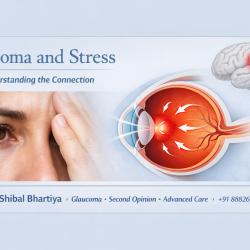
Glaucoma and Stress

Glaucoma and Stress: What the Research Actually Says, explains Dr Shibal Bhartiya. Most people know glaucoma damages vision. Fewer know…

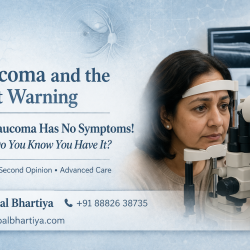
Glaucoma and the Silent Warning Symptoms

Early Glaucoma Has No Symptoms. So How Do You Know You Have It? Dr Shibal Bhartiya explains who is at…