What Happens If Glaucoma Is Left Untreated?

Untreated glaucoma causes permanent, irreversible vision loss, and in most cases, patients feel nothing until significant damage has already occurred. Glaucoma destroys the optic nerve silently. By the time you notice a change in your vision, up to 40% of nerve fibres may already be gone, explains Dr Shibal Bhartiya.

Many people discover glaucoma late because it causes no pain, no redness, and no early warning signs in its most common form. That silence is what makes it dangerous. If you have been told your eye pressure is high, or if glaucoma runs in your family, the question of what happens if you leave it alone is not academic. It is urgent.

Dr Shibal Bhartiya is a fellowship-trained glaucoma specialist and Mayo Clinic Research Collaborator with over 25 years of experience. Her approach focuses on identifying risk before damage is irreversible, simplifying treatment decisions, and protecting vision long-term. Emphasis on early detection, risk assessment, and continuity of care. She is rated 5 stars across 1,500+ patient reviews on Google.


7 Things That Happen When Glaucoma Goes Untreated

1. The Optic Nerve Keeps Deteriorating

Glaucoma damages the optic nerve, the cable that sends visual signals from your eye to your brain. Each day without treatment, elevated pressure continues to compress and starve nerve fibres of blood supply. Once a nerve fibre dies, it does not regenerate. There is no surgery, no medication, and no natural process that restores it.

Treatment slows or stops this process. No treatment means no brake on the damage.


2. Peripheral Vision Disappears First

The first field of vision to go is your peripheral vision, the edges of what you see. This happens so gradually that most patients do not notice. The brain fills in the gaps, masking the loss. You may be losing significant side vision for years before you register anything unusual.

By the time you notice you are bumping into things, misjudging doorframes, or struggling to see cars approaching from the side, the damage is already extensive.


3. Central Vision Is Eventually Affected

A common misconception is that glaucoma only affects side vision and central vision stays intact. This is true in early and moderate stages, but untreated glaucoma progresses. As more of the optic nerve is destroyed, the visual field loss closes in from the edges toward the centre. At advanced stages, the remaining central tunnel of vision narrows severely.

At end-stage glaucoma, even central vision is lost.


4. Blindness Becomes a Real Risk

Glaucoma is the leading cause of irreversible blindness worldwide. It is the number one cause of preventable blindness in India. The word “preventable” matters, because the blindness is not inevitable. It is the outcome of late diagnosis or no treatment.

Patients who are diagnosed early and treated consistently rarely go blind from glaucoma. Patients who ignore it, or who stop treatment because they feel well, are the ones who lose vision permanently.


5. Acute Angle-Closure Can Cause Sudden Blindness

Not all glaucoma is slow and silent. Acute angle-closure glaucoma is a medical emergency. Eye pressure spikes suddenly and severely. Patients experience intense eye pain, headache, nausea, vomiting, and blurred vision with coloured halos around lights.

If this is not treated within hours, it can cause permanent blindness in that eye. Many patients mistake it for a migraine or food poisoning and delay seeking care. This delay can cost them their sight.


6. Quality of Life Declines Significantly

Vision loss from untreated glaucoma is not just a medical number on a visual field report. It changes how you live. Driving becomes unsafe, then impossible. Reading becomes difficult. Recognising faces becomes unreliable. Falls and accidents become more frequent. Depression and anxiety are significantly more common in people with advanced glaucoma.

The impact is gradual enough that patients adapt, until they can no longer. At that point, the vision loss cannot be reversed.


7. Treatment Becomes Harder as Damage Advances

In early glaucoma, a single eye drop once daily may be all that is needed to control pressure and preserve vision. As glaucoma advances, more medications are required. Laser treatments may be needed. Surgery, with longer recovery times, higher risks, and no guarantee of reversing existing damage, becomes the only option.

Treating glaucoma early is simpler, cheaper, and far more effective than treating it late.


What Doctors Often Miss Telling Patients

Most patients are told they have high eye pressure or early glaucoma and are given drops. What they are not always told clearly is this: the drops do not make you feel better. They do not improve your vision. They work silently in the background to prevent future damage.

Because there is no immediate reward, no symptom that goes away, no vision that returns, many patients stop their drops after a few weeks. They feel the same. They assume they are fine. This is the most dangerous point in glaucoma care.

Stopping treatment does not mean the disease has stopped. It means the only thing slowing the damage has been removed.

As a glaucoma specialist, I have seen patients who were diagnosed years earlier, given drops, and told to return in six months. Life got busy. The drops ran out. The follow-up did not happen. When they finally return, sometimes years later, significant, irreversible vision loss has occurred in the interval.

This is preventable. Every time.


Symptom Progression: What to Watch For

StageWhat You May NoticeWhat Is Actually Happening
EarlyNothing at allPeripheral nerve fibres dying
ModerateOccasional blind spots at the edges30–50% nerve fibre loss
AdvancedBumping into objects, missing steps, tunnel vision70–80%+ nerve fibre loss
End-stageLoss of all but a sliver of central visionNear-total optic nerve destruction
Acute attack (angle-closure)Sudden severe eye pain, headache, halosMedical emergency — act within hours

When Act Immediately? If You Have


What This Means for You

Glaucoma is manageable. That is the truth that often gets lost in the fear around the diagnosis. The vast majority of patients who are diagnosed early, treated appropriately, and followed up consistently do not go blind. They live full, visually intact lives.

But glaucoma does not forgive neglect. It does not pause when life gets busy. It does not announce its progress. The only protection is a specialist who checks, measures, and adjusts your treatment over time, and a patient who shows up.

If you have been diagnosed with glaucoma, or if someone in your family has it, a comprehensive glaucoma evaluation is not something to delay. The damage happening right now is silent. The window to prevent it from becoming permanent is open, but it does not stay open forever.


Frequently Asked Questions

Can glaucoma be reversed if caught early?

The nerve damage already present cannot be reversed. However, early treatment stops further damage from occurring. Patients diagnosed early and treated consistently typically keep their functional vision for life.

Is it safe to stop glaucoma drops if I feel fine?

No. Glaucoma drops prevent damage, they do not treat symptoms, because there are none. Feeling well means the drops are working. Stopping them removes the only thing protecting your optic nerve.

How fast does untreated glaucoma progress?

This varies by type and individual. Some patients progress slowly over decades; others, particularly those with very high pressures or angle-closure glaucoma, can lose significant vision within months or years. There is no way to predict your rate without regular monitoring.

What is the difference between glaucoma suspects and glaucoma?

A glaucoma suspect has risk factors: high pressure, suspicious optic nerve appearance, or a family history, but no confirmed nerve damage yet. This group needs careful monitoring, as some will develop glaucoma. Not all glaucoma suspects need treatment, but all need regular follow-up.

Can I drive if I have glaucoma?

In early and moderate glaucoma, most patients can drive safely. In advanced glaucoma with significant peripheral field loss, driving may be unsafe and may not meet legal vision standards. This should be assessed with a formal visual field test.


Should You See a Glaucoma Specialist?

If you have been diagnosed with glaucoma, suspect you may have it, or have a parent or sibling with the condition, a specialist evaluation gives you information a general eye check cannot.

A glaucoma specialist will assess your optic nerve in detail, measure your visual field, perform OCT scanning of the nerve fibre layer, and build a personalised treatment and monitoring plan. The goal is not just to lower your eye pressure. The goal is to protect your vision for the rest of your life.

Book a glaucoma consultation at Marengo Asia Hospitals, Gurugram.

📞 +91 88826 38735 | 🌐 www.drshibalbhartiya.com

Upload your previous reports for a second opinion, a fresh set of expert eyes on your case can change the outcome.


About the Author

This article was written by Dr Shibal Bhartiya, fellowship-trained glaucoma specialist and Mayo Clinic Research Collaborator, Clinical Director at Marengo Asia Hospitals, Gurugram, known for ethical, patient-centred glaucoma care and independent glaucoma second opinions. She is also the Program Director for Community Outreach & Wellness; and for the Marengo Asia International Institute of Neuro and Spine. This article was updated in April 2026.

She has published peer-reviewed research on glaucoma management, examining how treatment decisions should balance medical evidence, patient preferences, and long-term vision outcomes.

As Editor-in-Chief of Clinical and Experimental Vision and Eye Research and Executive Editor of the Journal of Current Glaucoma Practice (Pubmed Indexed, official journal of the International Society of Glaucoma Surgery), Dr Shibal Bhartiya brings editorial and research depth to every clinical decision. Her 200+ publications, including 90+ PubMed-indexed publications and 28 edited textbooks span glaucoma biology, surgical outcomes, health equity, and emerging diagnostics.

Access her work on PubmedGoogle ScholarResearchGate and ORCID.

Dr Shibal Bhartiya
Glaucoma • Second Opinion • Advanced Care

www.drshibalbhartiya.com
 +91 88826 38735

1500+ Five Star Patient Reviews Google Business Profile

Upload your reports for a structured review.

If you are unable to come to Dr Bhartiya’s clinic: Read more about teleconsultation for glaucoma

5 Mistakes Patients Make in Glaucoma Care

The five most common mistakes glaucoma patients make are: stopping eye drops when vision feels stable, missing follow-up appointments, ignoring family risk, self-managing side effects without telling their doctor, and assuming normal eye pressure means they are safe. Each mistake can silently accelerate nerve damage before any symptom appears, explains Dr Shibal Bhartiya.

Dr Shibal Bhartiya is a fellowship-trained glaucoma specialist and Mayo Clinic Research Collaborator with over 25 years of experience. Her approach focuses on identifying risk before damage is irreversible, simplifying treatment decisions, and protecting vision long-term. Emphasis on early detection, risk assessment, and continuity of care. She is rated 5 stars across 1,500+ patient reviews on Google.

Glaucoma is called the silent thief of sight for a reason. Most patients feel nothing until the damage is severe. That silence is exactly what makes certain habits so dangerous. These five mistakes are not careless choices. They are logical responses to a disease that gives no pain, no blur, and no warning. Understanding why each mistake happens is the first step to avoiding it.


5 Mistakes Glaucoma Patients Commonly Make

Mistake 1: Stopping Eye Drops When Vision Feels Fine

What patients do: They use drops for a few weeks, vision feels unchanged, and the drops get quietly abandoned. Life gets busy. The bottle runs out. It feels pointless to medicate something that causes no symptoms.

Why this is dangerous: Glaucoma drops do not improve vision. They protect the optic nerve from further damage. Stopping them does not feel like anything in the short term. But intraocular pressure rises within days of missing doses, and nerve damage accumulates silently over months.

What doctors often miss saying: Patients are rarely told that the goal of treatment is preservation, not improvement. When that is not explained clearly, stopping drops feels like a rational choice.

Real-world picture: Studies show that over 50% of glaucoma patients have poor drop adherence within one year of diagnosis. Many do not tell their doctor. Pressure readings at clinic visits look normal because patients resume drops a few days before their appointment.


Mistake 2: Skipping Follow-Up Appointments

What patients do: They feel well, work is busy, travel is expensive, and the appointment gets pushed by a month, then three months, then indefinitely.

Why this is dangerous: Glaucoma progression is invisible to the patient. Visual field loss in early and moderate glaucoma occurs in the peripheral vision first. Patients do not notice it in daily life. Only structured testing at follow-up reveals whether the nerve is stable or declining.

What doctors often miss saying: The frequency of follow-up is not arbitrary. It is calibrated to the rate of progression risk. Missing two visits in a year can mean missing a window to escalate treatment before irreversible loss occurs.

Real-world picture: A patient who feels fine and delays follow-up for six months may arrive to find their visual field has worsened by a measurable step. That step cannot be reversed.


Mistake 3: Ignoring Family History as a Personal Risk Signal

What patients do: A parent or sibling has glaucoma. The patient assumes they will know if they develop it too. They wait for symptoms before seeking screening.

Why this is dangerous: A first-degree family history of glaucoma increases personal risk by four to nine times. Glaucoma runs in families and often presents a decade earlier in the next generation. Waiting for symptoms means waiting until 30 to 40 percent of nerve fibres are already gone.

What doctors often miss saying: Screening is not just for people who already have symptoms. It is most valuable precisely when there are no symptoms yet.

Real-world picture: Many patients present to a glaucoma clinic only after a family member goes blind. By that point their own disease is already moderate or advanced.


Mistake 4: Managing Side Effects Silently Instead of Telling the Doctor

What patients do: Eye drops cause redness, stinging, darkened lashes, or a persistent dry eye feeling. Patients tolerate it quietly or stop the drops without informing anyone. They assume this is just how glaucoma treatment feels.

Why this is dangerous: Side effects are one of the most common reasons for treatment failure. Patients who stop drops due to side effects but do not report it appear adherent on their records. Pressure goes uncontrolled. The doctor has no reason to switch the formulation or try a preservative-free option.

What doctors often miss saying: There are multiple drop classes, combination formulations, and preservative-free alternatives. No patient needs to tolerate a drop that makes their eyes miserable. Laser treatment is also a first-line option that removes the drop burden entirely for many patients.

Real-world picture: A switch from a preserved to a preservative-free prostaglandin analogue resolves surface irritation in most patients within four to six weeks. Many patients never knew this option existed.


Mistake 5: Believing Normal Eye Pressure Means No Glaucoma Risk

What patients do: They have an eye check, are told pressure is normal, and conclude they do not have glaucoma and never will.

Why this is dangerous: Normal tension glaucoma is a well-documented condition in which nerve damage progresses despite intraocular pressure within the statistically normal range. In South Asian and East Asian populations this pattern is particularly common. Additionally, what is normal for the population may not be safe for a specific individual nerve.

What doctors often miss saying: Glaucoma diagnosis requires examination of the optic nerve, retinal nerve fibre layer imaging, and visual field testing. Pressure alone does not rule it out.

Real-world picture: Normal tension glaucoma accounts for a significant proportion of glaucoma in India. Patients with a normal pressure reading and a cupped nerve need full evaluation, not reassurance.


What This Table Shows You

MistakeWhat Patients BelieveThe Clinical Reality
Stopping dropsVision is stable so drops are not neededDrops preserve nerve, not vision
Missing follow-upNo symptoms means no progressionProgression is invisible without testing
Ignoring family historySymptoms will warn them in timeRisk is high and silent from the start
Tolerating side effectsThis is how treatment always feelsAlternatives exist; tell your doctor
Trusting normal pressureNormal IOP means no glaucomaNormal tension glaucoma is common in India

When to Worry

Seek an urgent glaucoma review if you notice any of the following. Sudden eye pain or headache with blurred vision and halos around lights. A family member has been recently diagnosed with glaucoma. Your vision seems to have narrowed or you are missing objects at the side. You have been using drops irregularly for more than one month. You have not had an optic nerve assessment in over a year.


What This Means for You

Glaucoma is manageable. Most patients who lose vision do so not because treatment failed but because the disease was caught late, treatment was abandoned, or follow-up was missed. None of these are irreversible situations if caught in time. The single most protective thing you can do is stay engaged with your care even when everything feels normal.


Frequently Asked Questions

Can glaucoma get worse even if I use my drops every day?

Yes. Drops reduce intraocular pressure but progression can continue in some patients despite good pressure control. This is why regular follow-up and nerve imaging remain essential even with perfect adherence.

How often should a glaucoma patient see their doctor?

Most stable patients need review every three to six months. Patients with active progression or recent treatment changes may need monthly visits. Your doctor will set the schedule based on your specific risk.

Is glaucoma hereditary and should my children be tested?

Yes, glaucoma has a strong hereditary component. First-degree relatives of a glaucoma patient should have a full eye examination including optic nerve assessment from the age of 35, or earlier if they have other risk factors.

What should I do if my eye drops are causing side effects?

Tell your doctor at the next visit and do not stop drops without guidance. There are multiple formulations, preservative-free options, and laser alternatives that may suit you better. Side effects are a solvable problem.

Does normal eye pressure rule out glaucoma?

No. Normal tension glaucoma is well recognised and common in Indian patients. A complete glaucoma evaluation includes optic nerve examination and imaging, not pressure measurement alone.


Speak to a Glaucoma Specialist

If you have been diagnosed with glaucoma and are unsure whether your treatment is working, or if you have a family history and have never had a full nerve assessment, a second opinion is always appropriate. Early course correction protects what cannot be recovered.

📍 Dr Shibal Bhartiya — Marengo Asia Hospitals, Gurugram

📞 +91 88826 38735 | 🌐 www.drshibalbhartiya.com


About the Author

This article was written by Dr Shibal Bhartiya, fellowship-trained glaucoma specialist and Mayo Clinic Research Collaborator, Clinical Director at Marengo Asia Hospitals, Gurugram, known for ethical, patient-centred glaucoma care and independent glaucoma second opinions. She is also the Program Director for Community Outreach & Wellness; and for the Marengo Asia International Institute of Neuro and Spine. This article was updated in April 2026.

She has published peer-reviewed research on glaucoma management, examining how treatment decisions should balance medical evidence, patient preferences, and long-term vision outcomes.

As Editor-in-Chief of Clinical and Experimental Vision and Eye Research and Executive Editor of the Journal of Current Glaucoma Practice (Pubmed Indexed, official journal of the International Society of Glaucoma Surgery), Dr Shibal Bhartiya brings editorial and research depth to every clinical decision. Her 200+ publications, including 90+ PubMed-indexed publications and 28 edited textbooks span glaucoma biology, surgical outcomes, health equity, and emerging diagnostics.

Access her work on PubmedGoogle ScholarResearchGate and ORCID.

Dr Shibal Bhartiya
Glaucoma • Second Opinion • Advanced Care

www.drshibalbhartiya.com
 +91 88826 38735

1500+ Five Star Patient Reviews Google Business Profile

Upload your reports for a structured review.

If you are unable to come to Dr Bhartiya’s clinic: Read more about teleconsultation for glaucoma

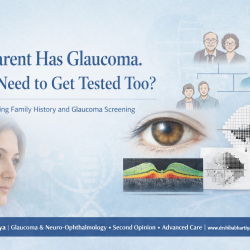
Family History & Glaucoma Screening

Family History & Glaucoma Screening– My Parent or Sibling Has Glaucoma. Do I Need to Get Tested Too? Short answer,…

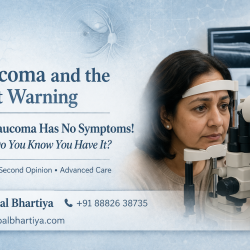
Glaucoma and the Silent Warning Symptoms

Early Glaucoma Has No Symptoms. So How Do You Know You Have It? Dr Shibal Bhartiya explains who is at…