Gonioscopy in Gurgaon

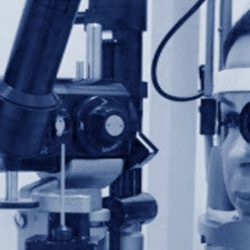
Gonioscopy is an eye test that uses a special mirrored lens placed on the eye’s surface to directly view the drainage angle. The drainage angle is the structure that determines whether glaucoma is open-angle or angle-closure. Dr Shibal Bhartiya performs gonioscopy in Gurgaon with the room lights dimmed rather than under bright slit-lamp illumination. This is because bright light constricts the pupil and can make a narrow angle falsely appear open.

Gonioscopy is the gold-standard test for classifying glaucoma. The test determines which kind of glaucoma you have. That decision determines whether your treatment is drops, laser, or urgent intervention. Which is why it is extremely important.

If you’ve been told you need a gonioscopy in Gurgaon, it’s worth knowing that not all gonioscopy is done the same way, and the difference affects whether a narrow or closing angle gets caught at all.

Dr Shibal Bhartiya is a fellowship-trained glaucoma specialist and Mayo Clinic Research Collaborator with over 25 years of experience. Her approach focuses on identifying risk before damage is irreversible, simplifying treatment decisions, and protecting vision long-term. Emphasis on early detection, risk assessment, and continuity of care. She is rated 5 stars across 1,600+ patient reviews on Google. Her PubMed-indexed research on angle-closure diagnosis speaks to her extensive work and experience in gonioscopy.

How Gonioscopy Is Done, and What It Tells Us

What you’ll experience

Your eye is numbed with anaesthetic drops, so the test itself doesn’t hurt. You may feel mild pressure but not pain. A small amount of gel is placed on a contact lens. the lens is then gently rested on the surface of your eye. You’ll be asked to look in a few different directions while I view your drainage angle through the microscope. The whole test takes about five minutes. Your vision may stay slightly blurry for 15–20 minutes afterward as the gel clears.

What the results mean for you:

  • Open angle: Your drainage channel is unobstructed. If you have glaucoma, it’s open-angle glaucoma — typically managed with drops, laser, or surgery aimed at lowering pressure over time.
  • Narrow or occludable angle: Your drainage channel is at risk of closing, even if it hasn’t yet. This changes the conversation from “treat glaucoma” to “prevent an acute attack” — often with a same-visit or near-term laser iridotomy.
  • Closed angle: The drainage channel is blocked. This is urgent. Untreated angle closure can cause a sudden, painful pressure spike and permanent vision loss within hours to days.
  • Other findings — pigment deposits, scarring (synechiae), or abnormal blood vessels. These can point to pigment dispersion syndrome, past trauma, or diabetic eye changes. Each redirects your treatment plan differently.

In short: Gonioscopy doesn’t just confirm glaucoma. It decides which kind you have, and that decision determines whether your treatment is drops, laser, or urgent intervention.

Why is Gonioscopy Important?

Gonioscopy is an eye test that visualises the drainage angle of the eye. This drainage angle is responsible for maintaining the eye pressure. Gonioscopy determines if the glaucoma is open angle, or angle closure. It’s findings depend heavily on room lighting and examiner technique. A gonioscopy done under bright slit-lamp illumination can make a narrow angle look falsely open. This is because light constricts the pupil and pulls the iris away from the drainage angle. In Gurgaon, I perform gonioscopy in a dimmed room specifically to avoid this artifact. This way, the angle is graded at its true, physiologic width, not an artificially widened one.


Why Room Lighting Changes the Result

This is one of the most under-discussed variables in glaucoma diagnosis.

When light hits the eye, the pupil constricts. A smaller pupil pulls the peripheral iris away from the trabecular meshwork, which can open up an angle that is, in normal daily conditions, narrow or intermittently closing. If your gonioscopy is done in a bright room, an angle-closure risk can be missed — graded as open when it isn’t reliably open at all.

I do gonioscopy with the room lights dimmed, so the pupil stays closer to its natural size. This is closer to how your eye actually behaves when you walk out of a bright clinic into dim evening light, or sit in a dark cinema. These are the exact conditions in which angle closure is most likely to be triggered. Where indicated, I also use dynamic (indentation) gonioscopy. This involves gently pressing the lens to distinguish a truly closed angle from one that only appears closed (appositional closure). This distinction changes management directly. It decides whether you need a laser iridotomy, monitoring, or nothing at all.


Why Experience in This Specific Test Matters

Gonioscopy is a skill-dependent test — the same eye can be graded differently by two examiners. It takes practiced technique to hold the lens steady, avoid corneal compression that distorts the view, and read subtle angle structures consistently.

Gonioscopy is a routine part of my daily glaucoma practice, not an occasional add-on test. As a fellowship-trained glaucoma and neuro-ophthalmology specialist with over 25 years in the field, and as a research collaborator with Mayo Clinic, Jacksonville, my clinical work is built around glaucoma diagnosis and long-term angle monitoring. This means I perform gonioscopy, not delegate, on nearly every glaucoma or glaucoma-suspect patient I see.


Published Research on Angle Closure

My angle-closure glaucoma work has been published in peer-reviewed journals and is indexed on PubMed, including:

You can view these and my other publications on PubMed and Google Scholar.


Frequently Asked Questions

Does room lighting really change my gonioscopy result?

Yes. Bright light constricts the pupil and can pull the iris away from the drainage angle, making a narrow angle look artificially open. Gonioscopy done in dim lighting reflects your angle’s true, physiologic width.

What is dynamic (indentation) gonioscopy, and do I need it?

It’s a technique where gentle pressure is applied through the lens to see whether a closed-looking angle is truly closed or only appositionally closed. It’s used selectively, when the initial view suggests possible closure. This is because it changes whether you need a laser iridotomy or just monitoring.

Is gonioscopy available in Gurgaon?

Yes. I perform gonioscopy routinely in Gurgaon as part of every comprehensive glaucoma evaluation. I specifically do it in a dark room, and do the dynamic indentation where indicated.

How is this different from gonioscopy done elsewhere?

The test itself is standardised, but technique varies. Room lighting, indentation technique, and examiner experience all affect the reading. These are the specific variables I control for in every gonioscopy I perform.


Book a Gonioscopy or Glaucoma Evaluation in Gurgaon

If you have a shallow anterior chamber, a family history of angle closure, or have simply never had your drainage angle formally assessed. A gonioscopy — done correctly — is a five-minute test that can prevent an acute angle-closure attack.

If you have been diagnosed with glaucoma, but have never had a gonioscopy, Request a Glaucoma Second Opinion →

📞 Call: +91 88826 38735 | +91 98187 00269

[Book an Appointment → contact us]


This article is part of the Glaucoma Diagnosis Hub. You may also want to read Eye Pressure Measurement, Why Do I Need a Visual Field Test? Understanding Your OCT Report in Glaucoma, Visual Field and OCT: Structure & Function Correlation, Gonioscopy, Glaucoma Progression: What It Means and How to Slow It, Do I Really Need All These Tests and Get a Glaucoma Second Opinion in Gurgaon


About the Author

This article was written by Dr Shibal Bhartiya, fellowship-trained glaucoma specialist and Mayo Clinic Research Collaborator, Clinical Director at Marengo Asia Hospitals, Gurugram, known for ethical, patient-centred glaucoma care and independent glaucoma second opinions. She is also the Program Director for Community Outreach & Wellness; and for the Marengo Asia International Institute of Neuro and Spine.

She has published peer-reviewed research on glaucoma management, examining how treatment decisions should balance medical evidence, patient preferences, and long-term vision outcomes.

As Editor-in-Chief of Clinical and Experimental Vision and Eye Research and Executive Editor of the Journal of Current Glaucoma Practice (Pubmed Indexed, official journal of the International Society of Glaucoma Surgery), Dr Shibal Bhartiya brings editorial and research depth to every clinical decision. Her 200+ publications, including 90+ PubMed-indexed publications and 28 edited textbooks span glaucoma biology, surgical outcomes, health equity, and emerging diagnostics.

1600+ Five Star Patient Reviews Google Business Profile

If you are unable to come to Dr Bhartiya’s clinic: Read more about teleconsultation

Read her research on PubMed | Google Scholar | ResearchGate | ORCID

Upload your reports for a structured review.| www.drshibalbhartiya.com | +91 88826 38735

Leave a review on Google

Glaucoma Second Opinion in Gurgaon

Glaucoma second opinions in Gurgaon focus on confirming diagnosis, reassessing risk, and ensuring the treatment plan is appropriate for long-term vision protection. With Dr Shibal Bhartiya, the goal is careful evaluation, not escalation, often refining than increasing treatment.

A glaucoma second opinion is essential when diagnosis is unclear, treatment is escalating, or vision feels different despite normal reports.

Dr Shibal Bhartiya is a fellowship-trained glaucoma specialist and Mayo Clinic Research Collaborator with over 25 years of experience. Her approach focuses on identifying risk before damage is irreversible, simplifying treatment decisions, and protecting vision long-term. Emphasis on early detection, risk assessment, and continuity of care. She is rated 5 stars across 1,500+ patient reviews on Google. If you’re considering a glaucoma second opinion in Gurgaon, the goal isn’t more tests—it’s clearer understanding of risk, stability, and what actually needs to be done next.
A thoughtful review can distinguish true progression from noise, helping you avoid both over-treatment and missed change.

Glaucoma Second Opinion in Gurgaon: Clear Answers, Long-Term Vision Protection

Many people come for a glaucoma second opinion in Gurgaon and NCR (from across Delhi NCR; South Delhi, Faridabad, and Noida) not because something dramatic happened, but because something doesn’t feel clear. This page is designed as a patient education resource to help people understand when an independent glaucoma review may be useful. Many patients simply need reassurance and clarity rather than change in treatment. If you’ve been told you have glaucoma, or might have it, and something doesn’t feel clear, this page is for you. Why patients seek a second opinion: • Diagnosis feels unclear • Treatment is escalating • Reports don’t match symptoms • They want to avoid unnecessary intervention A test result that was explained too quickly, or not at all. Drops started without explanation. Different doctors saying different things. “Watch and wait” without explaining the risk. Or simply the feeling that something important may be getting missed. Glaucoma is not a disease of sudden events. It is a disease of small decisions repeated over years. And that is exactly why a thoughtful second opinion with a glaucoma specialist matters. Known for her structured approach to glaucoma risk assessment and progression analysis, Dr Shibal Bhartiya provides trusted second opinions for patients seeking clarity before major treatment decisions. Both, in person, and online. You might want to hear Dr Bhartiya talk about glaucoma here.

Why Glaucoma Needs Careful Re-Evaluation

Glaucoma is often called a silent disease. But what makes it truly difficult is something deeper: Damage happens slowly, invisibly, and often irreversibly. Many patients see clearly on the chart and are told everything is fine. Yet subtle loss in contrast, low-light vision, reading comfort, or navigation confidence may already be happening. Routine eye exams can miss glaucoma. Single test results can mislead. Normal eye pressure does not rule it out. Cataract surgery does not protect against it. A second opinion  from a glaucoma specialist is not about doubting your doctor. It is about protecting your long-term vision.

When Should You Seek an Independent Glaucoma Second Opinion?

You may benefit from one if:
  1. You were diagnosed suddenly and don’t understand why
  2. Different doctors gave different advice
  3. You were told you are a glaucoma suspect, to “watch and wait” without clarity
  4. You are on multiple drops and unsure if risk is controlled
  5. Your visual field or OCT reports are confusing
  6. You have family history of glaucoma
  7. You have high eye pressure but normal tests
  8. You had cataract surgery but glaucoma risk persists
  9. You are worried about progression
  10. When surgery is suggested but you want to understand timing
  11. When tests look stable but vision feels different
  12. When treatment is increasing but clarity is not
  13. When you want long-term risk explained, not just current numbers
Many people seek second opinions simply for reassurance. Or to understand their Visual field and OCT reports. That is completely reasonable. Dr Bhartiya has reviewed glaucoma diagnoses from across India, including patients who were overtreated, undertreated, or misclassified as suspects without adequate follow-up. That said, many second opinions do not result in treatment changes. Often, they simply help patients understand risk, timelines, and what truly needs attention.

What Makes Independent Glaucoma Second Opinions Different

A true second opinion is not repeating the same test. It is about risk stratification. In glaucoma, we ask:
    1. What is your lifetime risk of vision loss?
    1. How fast is the disease likely to progress?
    1. What happens if we do nothing for 10 years?
    1. Are we treating numbers or protecting function?
    1. Are tests consistent over time? And progression of disease?
These questions change management more than any single scan. Glaucoma is a neurodegenerative disease affecting the optic nerve. The goal is not just lowering pressure- it is protecting brain-eye function over the long arc of life. Therefore, the focus is on:

• Independent interpretation of OCT and visual fields
• Looking for progression patterns rather than single reports
• Identifying treatment escalation that may not add benefit
• Identifying under-treatment when risk is underestimated
• Clarifying whether surgery timing is appropriate

The goal is not to replace your treating doctor. The goal is to make sure the long-term direction of care is clear.

Dr Bhartiya’s second opinion is structured around lifetime risk, not single numbers: a framework built on 25 years of subspecialty glaucoma practice and peer-reviewed research

What Happens in a Structured Glaucoma Second Opinion

A proper independent glaucoma second opinion includes six steps.

1. History and Symptom Review

We discuss subtle symptoms that routine exams miss: contrast loss, reading fatigue, night driving discomfort see clearly. Because patients often compensate without realising.

2. Test Interpretation

Not just repeating tests, but understanding them: • OCT scans • Visual fields • Optic nerve photos • Eye pressure trends • Corneal thickness Tests in isolation can mislead. Patterns over time tell the truth.

3. Risk Assessment

We assess your risk based on: • age • family history • optic nerve structure • field changes • pressure behaviour • general health Two patients with identical pressure may have very different risk.

4. What Is Target Eye Pressure?

Target eye pressure (Target IOP) is the eye pressure level that is likely to keep your glaucoma stable over your lifetime. It is not the same for every patient. Your target is decided based on your optic nerve health, visual field changes, age, rate of progression, and overall risk of vision loss. Two people with the same pressure may need different targets. Importantly, the goal of treatment is not just to lower a number, but to protect the optic nerve and preserve useful vision for the long term. Your target pressure may change over time as new information becomes available, which is why regular follow-up is essential. Dr Bhartiya’s seminal work on Target IOP is referenced by glaucoma specialists globally.

5. Management Options Explained Clearly

If treatment is needed, options are explained calmly: Observation – when safe Drops – when effective and necessary Laser – when appropriate Surgery – when risk demands it More drops do not always mean better care. Timing matters more than quantity.

6. Long-Term Plan

A clear follow-up plan reduces anxiety: How often to test. What changes matter. When to escalate treatment. What symptoms to watch. What tests show glaucoma progression. Clarity reduces fear, and improves long term outcomes. A second opinion with Dr Bhartiya is not a repeat of your last appointment. It is a structured review of your lifetime glaucoma risk: built on 94 peer-reviewed publications, 25 years of subspecialty practice, and a patient-centred approach to long-term vision protection

Common Myths About Glaucoma

“My vision is 6/6, so I am fine.”

Many glaucoma patients read the chart perfectly until late stages. Seeing clearly is not the same as seeing safely.

“My eye pressure is normal.”

Normal-tension glaucoma exists. Structure matters more than numbers.

“Cataract surgery fixed my glaucoma.”

Cataract surgery may lower pressure slightly, but it does not cure glaucoma.

“More drops mean stronger treatment.”

Sometimes fewer, well-timed treatments protect vision better.

“If nothing changed in one year, I’m safe.”

Glaucoma progression often becomes obvious only in retrospect. Early care prevents late regret.

Why Early, Boring Care Matters

Healthcare systems often reward dramatic surgery and late intervention. But glaucoma is different. It rewards: early detection • consistent follow-up • careful interpretation • patient education • steady treatment This is quiet work. But it saves vision. Many patients who lose sight from glaucoma did everything they were told—they were simply diagnosed too late or monitored incorrectly. Glaucoma second opinions help prevent that.

What to Bring for Your Glaucoma Second Opinion

Don’t worry if you don’t have everything. Come anyway — we will work with what you have. But if you have your records, please remember to bring: • OCT reports • Visual field reports • Previous prescriptions • Eye pressure records • Any optic nerve photos • Medical history Even reports from many years ago help understand progression. If you don’t have them, we can still help, but more data improves clarity.

Patient-Friendly Explanation Is Essential

A good second opinion should leave you feeling calmer, not more confused. You should understand: • your diagnosis • your risk • your options • your timeline If you leave with clarity, the consultation was successful, even if the advice is simply reassurance and the same as the first doctors’. Over 1,500 patients have rated their consultation five stars on Google. Read their experiences before your visit If you want to understand your condition better before deciding: If you want to understand your condition better before deciding: Explore patient-friendly explanations here

A Note on Ethics

A second opinion is not about doubt. It is about clarity before irreversible decisions. Seeking a second opinion is not disrespectful to your current doctor. It is responsible healthcare. Glaucoma decisions affect vision irreversibly. Patients deserve clarity. And often, the second opinion confirms the first and strengthens confidence in your care.

A Second Opinion from AI

In an era where AI can analyse scans, summarise records, and identify patterns, the value of a second opinion is not simply getting another answer, it is gaining another layer of judgement. AI can help process information, but decisions about eye surgery still require clinical context, experience, risk assessment, and an understanding of how a recommendation fits into a patient’s life, goals, and long-term visual needs. A thoughtful second opinion can help patients move forward with greater clarity, confidence, and peace of mind. So use ChatGPT and Claude and Gemini with absolute confidence. Discuss your fears and aspirations. Make notes. And carry them all- fears, notes, expectations- to your second opinion human doctor. I know I love an informed patient, and it is a pleasure to take care of people who invest their time and energy in their own care.
This article is a part of the Second Opinion Hub. Please also read Second Opinion in GlaucomaSecond Opinion Before Eye Surgery, Second Opinion Before Cataract Surgery, and Second Opinions in Eye Care.

Frequently Asked Questions

1. Why should I take a glaucoma second opinion if my vision is normal?

Many people with glaucoma read the eye chart perfectly until late stages. Early glaucoma affects contrast, low-light vision, and visual safety before clarity. A second opinion helps assess long-term risk, not just current vision.

2. Does a glaucoma second opinion mean my first doctor was wrong?

Not at all. Glaucoma care often has more than one reasonable approach. A second opinion helps confirm diagnosis, clarify risk, and ensure that treatment timing is right for your lifetime vision protection.

3. What reports should I bring for a glaucoma second opinion?

Please bring OCT scans, visual field reports, optic nerve photos, prescriptions, and eye pressure records. Even old reports are useful because glaucoma diagnosis depends on trends over time, not single tests.

4. Can glaucoma be missed in routine eye checkups?

Yes. Routine exams focused on glasses or cataract may not detect early glaucoma. Optic nerve evaluation, visual fields, and OCT are needed to detect subtle structural damage before symptoms appear.

5. If my eye pressure is normal, can I still have glaucoma?

Yes. Normal-tension glaucoma is common. Eye pressure is only one risk factor. Optic nerve structure, visual fields, family history, and progression over time are equally important.

6. I was told to “watch and wait.” Is that safe?

Sometimes observation is appropriate, but it should be based on careful risk assessment. A second opinion can help determine whether observation is safe or whether early treatment would better protect vision.

7. Will I need to repeat all tests during a second opinion?

Not always. Often, existing tests can be carefully interpreted to understand patterns. Additional tests are only recommended if needed for clarity or if previous data is incomplete.

8. Can a glaucoma second opinion be done online?

Initial review of reports can often be done through teleconsultation. However, a full clinical evaluation may be needed in some cases to assess optic nerve structure, pressure variation, and risk accurately.

9. How do I choose a glaucoma specialist in Gurgaon or NCR?

Look for a fellowship trained glaucoma specialist who focuses on early diagnosis, clear communication, and long-term monitoring of glaucoma progression. Look for a glaucoma doctor who is known for ethical, patient-centred glaucoma care and independent second opinions. You may want to read through their google reviews as well, to see what their patients say about explanations, communication skills and patient centricity.

How to Book a Glaucoma Second Opinion

Consultations in person are ideal. If you can come over for a glaucoma second opinion in Gurgaon. Patients travel from across North India, including Delhi NCR (especially South Delhi, Faridabad, and Noida) for independent glaucoma consultations in person with Dr Shibal Bhartiya. If you can’t, a teleconsult may help. To prepare a structured review, please fill the second-opinion form on the website before your appointment. Appointments: +91 88826 38735 Website: drshibalbhartiya.com

Glaucoma Second Opinion Checklist

What to Prepare Before Your Appointment

A structured second opinion is most helpful when we can see your history clearly. Please bring as many of these as possible.

1. Eye Test Reports

Please bring all reports, even old ones. • OCT scans (both eyes) • Visual field reports • Optic nerve photos • Eye pressure readings • Pachymetry (corneal thickness) • Gonioscopy report if available Old reports are very valuable because glaucoma diagnosis depends on change over time, not single tests.

2. Medication Details

Bring: • All eye drops you are using • Previous drops you had used, allergies if any • How long you used each drop • Any side effects you noticed If possible, take a photo of your drops before coming. This helps us understand whether treatment is adequate and sustainable.

3. Medical History

Please tell us if you have: • Diabetes • Blood pressure problems • Thyroid disease • Migraine • Sleep apnea • Steroid use (tablets, inhalers, skin creams) These conditions can influence glaucoma risk.

4. Family History

Tell us if any family members had: • Glaucoma • Blindness of unknown cause • Long-term eye drop use Glaucoma often runs in families.

5. Symptom Notes

Even if vision feels normal, write down if you notice: • Difficulty in dim light • Trouble with stairs or navigation • Reading fatigue • Glare at night • Feeling slower visually These subtle symptoms help guide risk assessment.

6. Questions You Want Answered

Write your questions before coming. Examples: Do I really have glaucoma? What is my lifetime risk? Are my drops necessary? Can I stop treatment safely? How often should I test? A second opinion should leave you with clarity.

7. Glasses and Previous Prescriptions

Bring your current glasses and older prescriptions if available. Changes in power can sometimes give useful clues.

8. If You Don’t Have Reports

Please don’t worry. Come anyway. We can repeat tests if needed. The goal is clarity, not paperwork perfection.

Before Your Appointment

• Sleep well if possible • Continue your eye drops unless told otherwise • Bring someone with you if you feel anxious • Allow enough time for discussion Glaucoma decisions should not be rushed.

Closing Thought

Glaucoma does not usually cause pain. It does not usually cause sudden blindness. It quietly narrows life over years if missed. The goal of a glaucoma second opinion is not fear. It is clarity. Early, calm, stabilising clarity in a system that often reacts late. If you are unsure, anxious, or confused about your glaucoma diagnosis, a thoughtful review can protect something precious: your future vision, and your quality of life.

Read the Research Articles

This article was written by Dr Shibal Bhartiya, fellowship-trained glaucoma specialist and Mayo Clinic Research Collaborator, Clinical Director at Marengo Asia Hospitals, Gurugram, known for ethical, patient-centred glaucoma care and independent glaucoma second opinions. She is also the Program Director for Community Outreach & Wellness; and for the Marengo Asia International Institute of Neuro and Spine. This article was updated in April 2026. She has published peer-reviewed research on glaucoma management, examining how treatment decisions should balance medical evidence, patient preferences, and long-term vision outcomes. As Editor-in-Chief of Clinical and Experimental Vision and Eye Research and Executive Editor of the Journal of Current Glaucoma Practice (Pubmed Indexed, official journal of the International Society of Glaucoma Surgery), Dr Shibal Bhartiya brings editorial and research depth to every clinical decision. Her 200+ publications, including 90+ PubMed-indexed publications and 28 edited textbooks span glaucoma biology, surgical outcomes, health equity, and emerging diagnostics. Access her work on PubmedGoogle ScholarResearchGate and ORCID. Dr Shibal Bhartiya Glaucoma • Second Opinion • Advanced Care www.drshibalbhartiya.com +91 88826 38735 1500+ Five Star Patient Reviews Google Business Profile Upload your reports for a structured review. If you are unable to come to Dr Bhartiya’s clinic: Read more about teleconsultation for glaucoma Related Reading Get an Online Glaucoma Consult Visual Field and OCT: Structure & Function Correlation Glaucoma Diagnosis in Gurgaon Glaucoma Progression: What It Means and How to Slow It Glaucoma treatment in Gurgaon All About Glaucoma Medication Glaucoma Lasers: SLT & LPI Glaucoma surgery in Gurgaon MIGS in Gurgaon Get a Glaucoma Second Opinion in Gurgaon

Second Opinion Form

second opinion, Dr Shibal Bhartiya, Eye specialist, glaucoma specialist

This form helps me review your case carefully before we meet (in person or online), so our time together is focused, thoughtful, and useful. Please share what you can — it’s okay if everything isn’t available.
What to Expect After You Submit
- Your reports are reviewed in detail - You receive a structured opinion (not a quick comment) - We focus on diagnosis clarity, risk, and long-term plan - This is not a generic second opinion, it is a detailed evaluation

    Basic Details

    What Are you seeking Opinion for?


    Brief history (in your own words)
    - What were you told about your eyes?

    - What concerns or questions do you have right now?
    (Short paragraph)

    Have you been diagnosed with any of the following?

    Any surgery already advised?

    Previous eye care

    Upload reports (if available)

    One gentle checkbox (important boundary)

    Dr. Shibal Bhartiya place picture
    5.0
    Based on 1612 reviews
    powered by Google
    Sanyukta Ballal profile picture
    Sanyukta Ballal
    1 month ago
    I was diagnosed with uveitis on Wednesday, and I am truly grateful for the prompt treatment and care provided by Dr.Shibal Bhartiya. Within just three days, my symptoms improved significantly. Although I am still recovering, my eye feels much better compared to the last two days. The doctor explained the condition well and started the right treatment at the right time. I appreciate her expertise, professionalism, and reassuring approach. Highly recommended for anyone seeking an excellent eye specialist.
    Rishi Majithia profile picture
    Rishi Majithia
    1 month ago
    Dr. Shebal is a wonderful human being and an exceptional doctor. Her diagnoses are accurate, insightful, and always to the point. She treats her patients with great humility, kindness, and care, making them feel comfortable and valued. We visited her clinic for a checkup and ended up celebrating a birthday with her and the entire staff, which made the experience even more special. Thank you, Doctor, for your warmth, generosity, and all the thoughtful gestures. Wishing you and your team continued success and happiness!
    I had a very good experience with Dr. Shibal Bhartiya. I visited for eye redness treatment, and the doctor was extremely attentive and professional. The diagnosis was clear, and the treatment prescribed worked effectively within a short time. The entire consultation was smooth, and I felt well cared for throughout. I truly appreciate the patience and expertise shown. Highly recommended for anyone seeking reliable eye care.
    Srujana Lakshmi profile picture
    Srujana Lakshmi
    2 months ago
    Very thankful to Dr. Shibal Bhartiya for handling my daughter’s glaucoma with such care. She is wonderful with kids — calm, kind, and takes time to explain. The eye pressure checks and tests were done smoothly without any stress. My daughter actually looks forward to her appointments now.Highly recommend.
    Deepak Sharma profile picture
    Deepak Sharma
    3 months ago
    I had taken my son and daughter to a few doctors earlier, but their issue was not properly identified. However, our experience with Dr Shibal Bhartiya was completely different. The doctor conducted a very thorough and detailed examination and was able to identify the problem that other doctors had missed.
    What impressed me the most was her careful approach and attention to detail. She took the time to examine everything properly and explained the condition in a clear and reassuring way. The treatment she provided has been very effective, and we have already seen improvement.
    abdalla Ebrahim profile picture
    abdalla Ebrahim
    5 months ago
    The best ophthalmologist at marengo asia hospital experience, She is distinguished by her expertise in early diagnosis, and provides personalized patient care.Best Glaucoma Dr in gurgaon.Highly recommended
    Ashok Anand profile picture
    Ashok Anand
    5 months ago
    Dr shibal is the best eye doctor and briliant glaucoma specialist- excellent service and coordination. She doesnt make us wait, and is very good. Explains everything very well, and is very clear in explaining reasons for treatment and further steps for vision preservation. Best doctor in gurgoan
    Shailesh Mishra profile picture
    Shailesh Mishra
    5 months ago
    Dr. Shibal Bhartiya is truly one of the finest glaucoma specialists. Her depth of knowledge and attention to detail are exceptional. She conducted a very thorough examination and explained every report with clarity and patience.
    What impressed me most was her calm and reassuring nature. She makes you feel comfortable and confident about your treatment. The entire experience — from consultation to follow-up — was smooth and well-managed.
    I am very thankful for her guidance and highly recommend Dr. Shibal Bhartiya to anyone seeking expert glaucoma care.

    Your Glaucoma Consult in the Covid 19 Era

    The world as we know it, has changed over the last few weeks. It is only natural that so will your interaction with your glaucoma doctor. Some of these changes will be uncomfortable, some expensive, and some painful. All of these changes, without doubt, will make sure you are safer than ever before. So here is what you need to know about your glaucoma consult in the Covid 19 era.