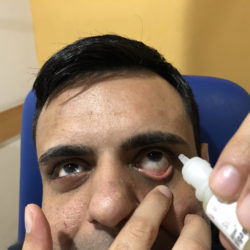
More glaucoma eye drops do not guarantee better control. Treatment must be individualised based on risk, progression, and tolerance. Overmedication can increase side effects, reduce adherence, and still fail to protect long-term vision, explains Dr Shibal Bhartiya. Adding more glaucoma medications does not always mean better care and may reflect disease progression requiring proper reassessment.
When glaucoma worsens, many patients assume the next step is simple: add more eye drops.
But glaucoma care is not about the number of medicines. It is about protecting the optic nerve safely over a lifetime.
Sometimes adding drops helps. Sometimes it harms. Good care depends on judgement, sequencing, and long-term strategy.
Dr Shibal Bhartiya is a fellowship-trained glaucoma specialist and Mayo Clinic Research Collaborator with over 25 years of experience. Her approach focuses on identifying risk before damage is irreversible, simplifying treatment decisions, and protecting vision long-term. Emphasis on early detection, risk assessment, and continuity of care. She is rated 5 stars across 1,500+ patient reviews on Google.
Glaucoma Is a Long-Arc Disease
Glaucoma damage is slow, silent, and irreversible.
Treatment must balance:
- Eye pressure control
- Optic nerve protection
- Side effects
- Quality of life
- Long-term safety
The goal is not perfect numbers. The goal is lifelong, stable vision.
What Is Target Eye Pressure?
Every patient has a target intraocular pressure (IOP), a level considered safe for their optic nerve.
This depends on:
- Existing nerve damage
- Age
- Rate of progression
- Family history
- Overall risk profile
Two patients with the same pressure may need very different treatment. Glaucoma care is about staying below your safe pressure consistently, not just lowering it once.
Dr Bhartiya, along with her colleagues in Australia and Switzerland, has published peer-reviewed research on current perspectives on Target IOP in glaucoma practice, examining how treatment decisions should balance medical evidence, patient preferences, and long-term vision outcomes. Her 2014 paper, Target Intraocular Pressure: Approaches and Options, examines how glaucoma specialists should set, communicate, and revise pressure targets, balancing clinical evidence, patient preferences, and long-term vision outcomes. It is cited by glaucoma surgeons internationally and is freely available on PubMed.
When More Eye Drops Are Not Better
Adding multiple medications can lead to:
- Redness, burning, and irritation
- Allergy and eyelid swelling
- Severe dryness
- Complex dosing schedules
- Poor adherence
In some cases, pressure appears controlled, but damage continues.
More medication does not always mean better protection.
What Is Maximal Medical Therapy?
Maximal medical therapy refers to using the maximum safe combination of eye drops before considering laser or surgery.
But “maximum” is not always “optimal.”
It can result in:
- Ocular surface damage
- Poor compliance
- Fluctuating eye pressure
- Reduced quality of life
In many cases, laser or surgery may be safer than adding more drops. Glaucoma care is not reactive, it is risk-governed.
Fixed-Dose Combination Drops: A Smarter Approach
Fixed-dose combinations combine two medications in one bottle.
They help by:
- Reducing the number of drops
- Simplifying treatment
- Improving adherence
- Lowering preservative exposure
Often, simpler regimens protect vision better than complex ones.
What Is Preservative Load?
Many glaucoma drops contain preservatives. Using multiple medications increases cumulative preservative exposure, which can damage the eye surface.
This may cause:
- Burning and redness
- Blurred or fluctuating vision
- Severe dryness
- Poor tolerance
Reducing drops, or using preservative-free options, can significantly improve comfort and safety.
Why More Glaucoma Drops is Not Better Glaucoma Care
| Situation | What Patients Often Think | What Is Actually Happening | What Better Care Looks Like |
|---|---|---|---|
| Pressure still high | “Add another drop” | Target pressure may be wrong or disease is progressing despite treatment | Reassess diagnosis, stage, and target pressure |
| Multiple drops prescribed | “More medicines = stronger treatment” | Overmedication increases side effects without improving outcomes | Rationalise drops, simplify regimen |
| Eyes becoming red / irritated | “Drops are working but causing minor issues” | Ocular surface damage from preservatives affecting adherence | Switch to preservative-free or reduce drop burden |
| Vision feels worse despite “good reports” | “Tests are normal, so everything is fine” | Functional loss or fluctuation not captured in routine exams | Correlate symptoms with OCT + visual fields |
| Frequent drop changes | “Doctor is trying different combinations” | Lack of structured long-term plan | Establish stable, personalised treatment pathway |
| Difficulty remembering drops | “I just need to be more careful” | Complex regimens reduce compliance and effectiveness | Simplify treatment or consider laser (SLT) |
| Long-term progression | “Glaucoma just gets worse over time” | Inadequate monitoring or delayed escalation | Timely escalation: laser or surgery when needed |
Glaucoma Care Is Not Just About Pressure
Effective glaucoma management looks beyond numbers:
- Optic nerve structure
- OCT trends over time
- Visual field progression
- Target IOP
- Medication tolerance
- Lifestyle and adherence
More treatment is not always better treatment. The right treatment, at the right time, matters more.
Clinical Reality (What’s Not Always Obvious)
- More drops does not mean better control
Adding medications can feel like escalation, but without reassessing the disease, it may not improve long-term outcomes. - A “good” pressure reading can be misleading
One normal reading does not guarantee stability—glaucoma damage can continue silently between visits. - Treatment can become habit instead of strategy
Over time, care may drift into simply adding or switching drops rather than redefining targets and plans. - Side effects quietly affect outcomes
Multiple preserved drops can irritate the ocular surface, making patients less consistent with treatment. - Stable reports don’t always mean stable disease
Individual tests may look fine, but progression often appears only when data is tracked over time. - Complex regimens reduce adherence
The more complicated the schedule, the harder it becomes to follow consistently—reducing real-world effectiveness. - Escalation is often delayed
Laser or surgery may be postponed because “something is being done,” even if it’s no longer enough. - Follow-up gaps change the disease trajectory
Longer intervals without structured review can allow subtle progression to go unnoticed. - Targets are not always redefined
As glaucoma advances, the required pressure often needs to be lower—but this isn’t always updated. - Activity is mistaken for effectiveness
More visits, more drops, more changes—these can create the illusion of control without actually protecting vision.
When Laser or Surgery May Be Safer
Laser or surgery may be recommended if:
- Target pressure is not achieved
- Drops cause significant side effects
- Adherence is difficult
- Disease continues to progress
- Risk of vision loss is high
These decisions are about long-term safety, not treatment failure.
Signs Your Glaucoma Treatment Needs Review
Consider a second opinion if you notice:
- Increasing number of medications
- Persistent redness or irritation
- Confusing or difficult schedules
- “Normal” pressure but worsening tests
- High cost or poor affordability
- Reduced quality of life
Treatment should feel sustainable and tolerable.
Why an Independent Glaucoma Review Helps
Glaucoma decisions are complex and long-term.
A structured second opinion can help:
- Reconfirm diagnosis
- Reassess target IOP
- Simplify medications
- Identify better options
- Avoid overtreatment
Especially important if you are on 3 or more eye drops.
The Real Goal of Glaucoma Care
Not perfect pressure numbers. Not maximum medications.
- Right treatment
- Right timing
- Minimal burden
- Long-term stability
More eye drops do not always mean better care.
FAQs
1. Do more glaucoma eye drops mean better treatment?
No. More drops do not necessarily improve outcomes. Treatment must be tailored to your risk profile and disease progression, not just escalated.
2. How many glaucoma drops are too many?
There is no fixed number, but if you are on 3 or more medications, your treatment strategy should be reviewed for effectiveness, tolerance, and alternatives.
3. Why do glaucoma drops stop working?
Glaucoma may progress despite treatment, or medications may become less effective over time. Poor adherence and incorrect sequencing also play a role.
4. What are the side effects of multiple glaucoma drops?
Common side effects include redness, burning, dryness, allergy, blurred vision, and poor tolerance, especially with long-term use.
5. What is target eye pressure in glaucoma?
Target IOP is the pressure level considered safe for your optic nerve. It varies based on damage, age, and progression risk.
6. Are laser or surgery better than eye drops?
In some cases, yes. If drops are not effective or tolerated, laser or surgery may offer safer long-term control.
7. What are fixed combination glaucoma drops?
These combine two medications in one bottle, helping reduce drop burden, improve compliance, and lower preservative exposure.
8. When should I get a second opinion for glaucoma?
If you are on multiple drops, still progressing, or experiencing side effects, a second opinion can help optimise your treatment plan.
Book a glaucoma care review
Known for her structured approach to glaucoma risk assessment and progression analysis, Dr Shibal Bhartiya provides trusted second opinions for patients seeking clarity before major treatment decisions. Both, in person, and online.
Dr Shibal Bhartiya
Glaucoma • Second Opinion • Advanced Care
Read the research articles
This article was written by Dr Shibal Bhartiya, fellowship-trained glaucoma specialist and Mayo Clinic Research Collaborator, Clinical Director at Marengo Asia Hospitals, Gurugram, known for ethical, patient-centred glaucoma care and independent glaucoma second opinions. She is also the Program Director for Community Outreach & Wellness; and for the Marengo Asia International Institute of Neuro and Spine. This article was updated in April 2026.
She has published peer-reviewed research on glaucoma management, examining how treatment decisions should balance medical evidence, patient preferences, and long-term vision outcomes.
As Editor-in-Chief of Clinical and Experimental Vision and Eye Research and Executive Editor of the Journal of Current Glaucoma Practice (Pubmed Indexed, official journal of the International Society of Glaucoma Surgery), Dr Shibal Bhartiya brings editorial and research depth to every clinical decision. Her 200+ publications, including 90+ PubMed-indexed publications and 28 edited textbooks span glaucoma biology, surgical outcomes, health equity, and emerging diagnostics.
Access her work on Pubmed, Google Scholar, ResearchGate and ORCID.
Dr Shibal Bhartiya
Glaucoma • Second Opinion • Advanced Care
www.drshibalbhartiya.com
+91 88826 38735
1500+ Five Star Patient Reviews Google Business Profile
Upload your reports for a structured review.
If you are unable to come to Dr Bhartiya’s clinic: Read more about teleconsultation for glaucoma