Travelling To India for Eye Care

Travelling to India for eye treatment? Travel for medical care is not simply about finding treatment. It is about finding the right diagnosis, understanding your options, and making important decisions with confidence. Dr Shibal Bhartiya provides specialist eye care for international patients seeking expert evaluation, second opinions, advanced diagnostics, and long-term management of complex eye conditions.

Dr Shibal Bhartiya is a fellowship-trained glaucoma specialist and Mayo Clinic Research Collaborator with over 25 years of experience. Her approach focuses on identifying risk before damage is irreversible, simplifying treatment decisions, and protecting vision long-term. Emphasis on early detection, risk assessment, and continuity of care. She is rated 5 stars across 1,500+ patient reviews on Google.

Expert Eye Care in India for Patients Seeking Clarity, Confidence, and Specialist Opinion

GlaucomaNeuro-OphthalmologyDry Eye & Ocular Surface DiseaseComplex Eye Care

Patients travel from the UK, USA, UAE, Singapore, Bangladesh, Nepal, East Africa, and across South Asia for consultations focused on careful assessment, evidence-based recommendations, and clear communication.

25+ Years Experience | 200+ Publications | 28 Textbooks | 1,500+ Five-Star Reviews | International Patients from 20+ Countries | 40000+ patients


Why International Patients Choose Dr Shibal Bhartiya

A Specialist Perspective for Complex Problems

Many patients seeking international consultations are not looking for another routine eye examination.

They are seeking answers to questions such as:

  • Am I actually progressing?
  • Do I really need surgery?
  • Why do my symptoms not match my test results?
  • Has something important been missed?
  • Why am I still struggling despite treatment?
  • Should I seek a second opinion before making a major decision?

Our consultations are designed to answer these questions through detailed evaluation, advanced diagnostics, and careful clinical interpretation.


Areas of Special Expertise

Glaucoma

Glaucoma is often diagnosed late because patients may continue seeing well while irreversible damage accumulates silently.

Dr Bhartiya’s glaucoma practice focuses on:

  • Early glaucoma diagnosis
  • Glaucoma suspects and risk assessment
  • Progression analysis
  • Normal tension glaucoma
  • Complex glaucoma management
  • Surgical decision-making
  • Second opinions before surgery
  • Long-term vision preservation strategies

Many international patients seek consultation after receiving conflicting advice or when they are uncertain whether treatment escalation is truly necessary.

You can read more about glaucoma here


Neuro-Ophthalmology

Neuro-ophthalmology bridges the gap between ophthalmology and neurology.

Common reasons for referral include:

  • Optic nerve disorders
  • Unexplained visual loss
  • Visual field abnormalities
  • Pituitary-related visual problems
  • Double vision
  • Intracranial hypertension
  • Neurological causes of visual symptoms
  • Complex diagnostic uncertainty

Patients are often referred after multiple consultations when symptoms, scans, and examinations do not fit together neatly.

You can read more about neuro-ophthalmology care here


Dry Eye & Ocular Surface Disease

Many patients with ocular surface disease have been treated repeatedly without understanding the underlying drivers of their symptoms.

Areas of focus include:

  • Chronic dry eye disease
  • Meibomian gland dysfunction
  • Ocular surface inflammation
  • Computer-related eye strain
  • Autoimmune ocular surface disease
  • Refractory dry eye
  • Ocular GVHD
  • Complex ocular discomfort syndromes

The goal is not simply prescribing more drops, but understanding why symptoms persist.

You can read more about ocular surface diseases including dry eye, and allergies, here


Comprehensive Ophthalmology & Diagnostic Second Opinions

Not every patient arrives with a diagnosis.

Many simply know that something is wrong.

We frequently evaluate patients seeking answers regarding:

  • Unexplained visual symptoms
  • Diagnostic uncertainty
  • Cataract and glaucoma overlap
  • Complex treatment decisions
  • Risk assessment before intervention
  • Long-term monitoring plans

Explore Our Specialist Eye Care Services

International patients often arrive with a diagnosis, a recommendation, or simply a concern that something is being missed.

While glaucoma, neuro-ophthalmology, and ocular surface disease are areas of particular expertise, every patient journey is different. Explore our specialist services below to better understand your condition and the options available.

Glaucoma Care

Glaucoma can cause permanent vision loss before symptoms become obvious. Learn about glaucoma diagnosis, risk assessment, progression monitoring, treatment options, and specialist second opinions.

Explore Glaucoma Care →


Neuro-Ophthalmology

Visual symptoms are not always caused by the eye itself. Neuro-ophthalmology evaluates disorders affecting the optic nerve, visual pathways, eye movements, and the connection between the eye and brain.

Explore Neuro-Ophthalmology →


Dry Eye & Ocular Surface Disease

Persistent irritation, burning, watering, fluctuating vision, and discomfort often require a deeper evaluation than routine eye examinations provide. Learn more about dry eye disease, meibomian gland dysfunction, ocular GVHD, and ocular surface disorders.

Explore Dry Eye & Ocular Surface Disease →


Second Opinions

Many patients seek reassurance before surgery, treatment escalation, or major decisions. A specialist second opinion can provide clarity, confirm a diagnosis, or identify alternative approaches.

Explore Second Opinions →


Advanced Diagnostic Testing

Accurate diagnosis depends on more than a single test result. Learn how OCT imaging, visual field analysis, optic nerve evaluation, and ocular surface assessment contribute to clinical decision-making.

Explore Advanced Diagnostics →


Comprehensive Eye Care

Not every patient arrives with a diagnosis. Some simply know that their vision has changed or that something does not feel right. Explore common eye conditions, symptoms, and specialist evaluation pathways.

Explore Comprehensive Eye Care →

Whether you are seeking a second opinion, treatment recommendations, or answers to a complex diagnostic question, our goal is to help you understand your condition clearly and make confident decisions about your eye health.

Popular Searches: glaucoma specialist India, neuro-ophthalmologist India, dry eye specialist India, glaucoma second opinion India, ocular surface disease specialist India, international eye specialist India, advanced eye care India, ophthalmologist for international patients.


International Patient Journey

Step 1: Send Your Records

Before travelling, patients may share:

  • Previous consultation notes
  • OCT scans
  • Visual field reports
  • MRI or CT reports
  • Surgical recommendations
  • Current medication lists

This allows preliminary review and helps ensure efficient use of consultation time.


Step 2: Pre-Visit Review

Records are reviewed before your appointment whenever possible.

This means consultations begin with context rather than starting from zero.


Step 3: Specialist Evaluation

Consultations may include:

  • Comprehensive examination
  • Advanced imaging
  • Functional testing
  • Risk assessment
  • Discussion of treatment options
  • Clarification of previous findings

Most investigations can be completed in a single visit.


Step 4: Written Clinical Opinion

Patients receive:

  • Detailed findings
  • Interpretation of investigations
  • Diagnosis (where possible)
  • Treatment recommendations
  • Follow-up strategy

Reports can be shared with treating doctors in the patient’s home country to support continuity of care.


Step 5: Ongoing Follow-Up

Many eye conditions require continuity rather than isolated intervention.

Where appropriate, follow-up planning may include:

  • Remote review of reports
  • Communication with local specialists
  • Monitoring recommendations
  • Long-term management planning

Why Patients Travel to India

India offers access to:

  • Advanced ophthalmic diagnostics
  • Internationally recognised specialists
  • Minimal waiting times
  • Comprehensive investigations in one location
  • Cost-effective care compared with many Western healthcare systems

Many patients are able to complete evaluation and decision-making within a short visit.


About Dr Shibal Bhartiya

Dr Shibal Bhartiya is a fellowship-trained glaucoma specialist with over 25 years of clinical experience. Her work combines clinical care, research, education, and international collaboration.

Highlights include:

  • Fellowship-Trained Glaucoma Specialist
  • Mayo Clinic Research Collaborator
  • 200+ Scientific Publications
  • 90+ PubMed-Indexed Papers
  • 28 Edited Textbooks
  • Editor-in-Chief, CLEVER
  • Executive Editor, Journal of Current Glaucoma Practice
  • International Speaker and Research Collaborator

Languages Spoken

To make complex medical discussions easier for international patients, consultations may be conducted with an interpreter, or facilitator if required. However, Dr Shibal Bhartiya speaks several languages:

  • English
  • Hindi
  • Urdu
  • French
  • Bangla (conversational)
  • Arabic (basic conversational)
  • Persian / Farsi (basic conversational)

Medical records and formal clinical documentation are provided in English, and may be provided in Hindi, French or Urdu on request .


Frequently Asked Questions

Can I send my reports before travelling?

Yes. Sharing reports beforehand helps determine what additional testing may be needed and allows more focused consultations.

Can I obtain a second opinion without surgery?

Absolutely. A large proportion of international patients seek clarity and confirmation before making treatment decisions.

How long should I stay in India?

Most second-opinion evaluations can be completed within 2–3 days. Surgical patients may require longer depending on the procedure.

Will my doctor at home receive a report?

Yes. With your permission, a detailed written opinion can be shared with your treating physician.

Do you assist with medical visa documentation?

Supporting medical documentation can be provided where required.


Send Your Reports Before You Travel

If you are considering travelling to India for glaucoma, neuro-ophthalmology, dry eye treatment, or a specialist second opinion, the process can begin before you leave home.

Send your reports, scans, or questions for review.

Dr Shibal Bhartiya
Glaucoma • Neuro-Ophthalmology • Advanced Eye Care • Second Opinion

🌐 www.drshibalbhartiya.com
📞 +91 88826 38735


About the Author

This article was written by Dr Shibal Bhartiya, fellowship-trained glaucoma specialist and Mayo Clinic Research Collaborator, Clinical Director at Marengo Asia Hospitals, Gurugram, known for ethical, patient-centred glaucoma care and independent glaucoma second opinions. She is also the Program Director for Community Outreach & Wellness; and for the Marengo Asia International Institute of Neuro and Spine.

She has published peer-reviewed research on glaucoma management, examining how treatment decisions should balance medical evidence, patient preferences, and long-term vision outcomes.

As Editor-in-Chief of Clinical and Experimental Vision and Eye Research and Executive Editor of the Journal of Current Glaucoma Practice (Pubmed Indexed, official journal of the International Society of Glaucoma Surgery), Dr Shibal Bhartiya brings editorial and research depth to every clinical decision. Her 200+ publications, including 90+ PubMed-indexed publications and 28 edited textbooks span glaucoma biology, surgical outcomes, health equity, and emerging diagnostics.

1500+ Five Star Patient Reviews Google Business Profile

If you are unable to come to Dr Bhartiya’s clinic: Read more about teleconsultation

Read her research on PubMed | Google Scholar | ResearchGate | ORCID

Upload your reports for a structured review.| www.drshibalbhartiya.com | +91 88826 38735

Leave a review on Google
Dry Eye Treatment in Gurgaon

Many people with dry eye are told their eyes are “normal” even while struggling with burning, fluctuating vision, eye strain, or discomfort during screen use. Advanced dry eye evaluation looks beyond redness alone to understand tear film instability, ocular surface disease, and the real-world visual symptoms affecting daily life.

Dry eye disease is not simply a lack of tears. It is a chronic condition of the ocular surface — driven by tear film instability, inflammation, meibomian gland dysfunction, or environmental exposure — that causes persistent discomfort, visual fluctuation, and in some cases, measurable damage to the surface of the eye. Effective management requires identifying which component is driving your symptoms, not simply prescribing lubricant drops.


Dry Eye Disease in Gurgaon: When Your Eyes Never Feel Quite Right

Dry eye is one of the most undertreated conditions in ophthalmology, not because treatment doesn’t exist, but because patients are routinely told that what they are experiencing is minor.

It is not minor. Eyes that burn, sting, water excessively, feel gritty by afternoon, blur when you are tired, or ache after two hours of screen time are not eyes that are functioning normally. And patients who have been handed a bottle of artificial tears and sent home, sometimes repeatedly, know exactly how inadequate that response feels.

Dry eye disease has a pathophysiology. It has subtypes. It has measurable signs. And it has a treatment pathway that goes considerably further than lubricant drops, when it is managed by someone who understands the full picture.

This practice takes dry eye seriously. Because your eyes deserve to feel comfortable.


What Dry Eye Disease Actually Is

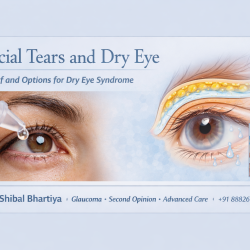
Dry eye disease is a multifactorial condition of the ocular surface. The tear film — the thin, layered fluid that coats your eye with every blink — requires three components to function correctly: an aqueous layer produced by the lacrimal gland, a lipid layer produced by the meibomian glands in your eyelids, and a mucin layer produced by goblet cells on the ocular surface.

When any of these components fails, the tear film becomes unstable. The surface dries between blinks. Inflammation follows. And a self-reinforcing cycle begins — surface damage drives more inflammation, which drives more surface damage.

Understanding which component is failing is the starting point of effective treatment.

Evaporative dry eye and meibomian gland dysfunction

The most common form of dry eye in urban Indian populations is evaporative — driven by meibomian gland dysfunction (MGD). The meibomian glands line the upper and lower eyelids and produce the lipid layer that prevents tear evaporation. When these glands become blocked or atrophied, tears evaporate too quickly regardless of how much aqueous is produced.

MGD is dramatically worsened by screen use, air conditioning, low humidity environments, and contact lens wear — the exact conditions that define urban professional life in Gurgaon and Delhi NCR.

Aqueous deficient dry eye

In some patients — particularly post-menopausal women, patients with autoimmune conditions like Sjögren’s syndrome, and those on certain systemic medications — the lacrimal gland simply does not produce enough aqueous tears. This form requires a different treatment approach and often warrants systemic investigation.

Mixed dry eye

Many patients have both components — inadequate lipid and inadequate aqueous — compounded by surface inflammation. These patients are frequently the ones who have tried multiple lubricant drops without relief, because no single drop addresses the full picture.

Ocular surface inflammation

Chronic inflammation is both a cause and a consequence of dry eye disease. In patients with significant inflammation, lubricant drops alone will never be sufficient. Anti-inflammatory therapy — whether topical cyclosporine, lifitegrast, or short-course steroids — is a necessary component of management.


Why Dry Eye Is Worse Than Ever in Urban India

The epidemiology of dry eye has shifted dramatically in the last decade. What was once considered a condition of older women is now presenting across all ages, genders, and occupations — and the drivers are environmental and behavioural.

Risk FactorWhy It Matters
Screen timeBlink rate drops by up to 60% during screen use; tear film destabilises
Air conditioningLow humidity environments accelerate tear evaporation
Contact lens wearDisrupts tear film distribution and lipid layer integrity
Glaucoma dropsPreservatives in long-term glaucoma medications cause surface toxicity
Post-surgical drynessLASIK, cataract surgery, and other procedures transiently or persistently disrupt corneal nerves and surface
Hormonal changesMenopause significantly reduces aqueous and lipid tear production
Antihistamines and antidepressantsMany systemic medications reduce tear secretion as a side effect
Urban air pollutionParticulate matter and pollutants directly damage the ocular surface

Gurgaon sits at the intersection of several of these factors simultaneously — screen-intensive professional culture, year-round air conditioning, high ambient pollution, and one of the highest LASIK procedure rates in North India.


What We Often Miss in Dry Eye Management

Meibomian gland dysfunction goes unexamined. Most dry eye consultations do not include eyelid margin assessment or meibomian gland expression. Without examining the glands, evaporative dry eye — the most common subtype — is routinely misidentified as aqueous deficiency and treated with the wrong drops.

Post-surgical dryness is underestimated. Dry eye after LASIK, SMILE, or cataract surgery can persist for twelve to eighteen months, and in some patients becomes a chronic condition. Patients are frequently told their symptoms will resolve on their own — without a structured management plan being put in place.

Glaucoma patients’ ocular surface is neglected. Patients on long-term preserved glaucoma drops develop surface toxicity at a rate that is well-documented in the literature but poorly addressed in clinical practice. If you have glaucoma and dry eye, the two conditions must be managed together.

Inflammation is not addressed. Patients cycling through artificial tear brands without improvement almost always have a significant inflammatory component. Without anti-inflammatory therapy, the cycle does not break.

Screen habits are not discussed. Behavioural modification — structured blink exercises, the 20-20-20 rule, screen positioning, humidifier use — forms a critical part of dry eye management that is rarely covered in a brief consultation.


What to Expect at a Dry Eye Consultation

A structured dry eye assessment goes beyond asking how your eyes feel and prescribing drops.

At this practice, assessment includes tear film evaluation, tear break-up time, meibomian gland assessment, corneal and conjunctival staining, and a detailed history of your screen habits, contact lens use, surgical history, and systemic medications. Where indicated, additional investigations including meibography — imaging of the meibomian glands — may be recommended.

Treatment is then built around your specific subtype and severity. This may include targeted lubricants, lipid-containing drops, warm compress and lid hygiene protocols, anti-inflammatory therapy, punctal plugs, or in-office procedures. You will leave with a structured plan — not a single bottle and a follow-up in six months.


Dry Eyes and Digital Eye Strain in Gurgaon

Many people in Gurgaon spend long hours on computers, phones, and other digital devices. Reduced blinking during screen use can contribute to dry eyes, eye strain, headaches, blurred vision, burning, watering, and difficulty focusing.

These symptoms may be further aggravated by factors common in Gurgaon, including air-conditioned office environments, long working hours, dry weather, air pollution, dust, and ongoing construction activity. Together, these factors can affect the stability of the tear film and make the eyes feel tired, irritated, or uncomfortable throughout the day.

A comprehensive eye examination can help determine whether symptoms are related to dry eye disease, digital eye strain, an uncorrected vision problem, or a combination of factors. Early assessment can often improve comfort, productivity, and visual quality.

Dr Shibal Bhartiya works with corporates, professionals, and frequent screen users in Gurgaon on the diagnosis and management of dry eye disease, digital eye strain, and healthy screen-use habits. To book an eye examination or arrange an eye health awareness session for your organisation, call +91 88826 38735 or visit drshibalbhartiya.com.


Dry Eye Topics Covered in This Practice

Understanding Dry Eye

Specific Populations

Treatment and Management

  • Dry eye drops: which one is right for your subtype
  • Anti-inflammatory treatment for chronic dry eye
  • Punctal plugs: what they are and when they help
  • Warm compresses and lid hygiene: the evidence base
  • Treatment-resistant dry eye: what to do when drops aren’t enough

Second Opinions

  • Getting a dry eye second opinion in Gurgaon
  • When dry eye symptoms mean something more serious

Here is what you can read, to understand your symptoms

Dry Eye Is Not Just Dryness

Dry Eye Specialist in Gurgaon

Natural remedies

Omega-3 and Dry Eye

Why Do Women Get Dry Eye More Often?

Women’s Eye Health

Why Dry Eye Is Worse in Air Conditioning and on Flights

Screen time and fatigue

Eyes hurt after screen use

Why Your Eyes Water Constantly

Diabetes and Eye Complications

Eye Health After 60

Eye Care During Pregnancy

Dry Eye

Autologous Serum Eye Drops for Severe

Dry Eye

Dry Eye Disease: A Chronic Eye Disease

Dry Eyes: Natural Remedies

Dry Eyes: Tips to Soothe Sore Eyes

Managing Glaucoma Eye Drop Side Effects

Menopause and Dry Eyes

Ocular GVHD & Its Implications

PROWL: Listening to LASIK Patients

Why Are Your Dry Eye Drops Not Working

Why Dry Eye Symptoms and Tests Don’t Match


When to Come In

Book a dry eye assessment if:

  • Your eyes burn, sting, or feel gritty — especially by afternoon or after screen use
  • Your vision fluctuates and clears when you blink
  • Your eyes water excessively — paradoxical tearing is a common dry eye sign
  • You wear contact lenses and your comfortable wearing time has reduced
  • You have had LASIK, SMILE, or cataract surgery and your eyes have not felt normal since
  • You are on long-term glaucoma drops and your eyes feel uncomfortable
  • You have been using lubricant drops for months without meaningful relief
  • You have been diagnosed with an autoimmune condition and have eye symptoms

Dry eye is a chronic condition — but it is a manageable one. The patients who do best are those who receive an accurate subtype diagnosis early and follow a structured management plan. Lubricant drops are a starting point, not a solution.


Frequently Asked Questions

What is the best treatment for dry eye disease?

There is no single best treatment — because dry eye has multiple subtypes that require different approaches. Evaporative dry eye from meibomian gland dysfunction is treated with warm compresses, lid hygiene, and lipid-containing drops. Aqueous deficient dry eye may require anti-inflammatory therapy and punctal plugs. Inflammatory dry eye requires targeted anti-inflammatory treatment. Accurate subtype diagnosis is the essential first step.

Can dry eye be cured permanently?

In most patients, dry eye disease is a chronic condition that requires ongoing management rather than a one-time cure. However, with consistent and correctly targeted treatment, the majority of patients achieve significant and sustained relief. Some causes — such as post-surgical dryness or medication-related dryness — may resolve once the underlying cause is addressed.

Why do my eyes water if I have dry eye?

Paradoxical tearing — excessive watering in a dry eye patient — is one of the most common and confusing symptoms of dry eye disease. When the ocular surface becomes irritated from tear film instability, the lacrimal gland produces reflex tears as a protective response. These reflex tears do not replace the stable tear film and do not relieve the underlying dryness.

Is dry eye worse in Gurgaon and Delhi NCR?

Yes. Urban environments with high screen use, year-round air conditioning, significant ambient pollution, and low outdoor humidity create conditions that are particularly hostile to tear film stability. Gurgaon’s professional demographic — high screen exposure, frequent air travel, contact lens use — compounds these environmental factors significantly.

Can dry eye damage my vision permanently?

In mild to moderate dry eye, vision fluctuates but does not sustain permanent damage. In severe, untreated dry eye — particularly in aqueous deficient conditions or after significant surface damage — corneal scarring and permanent visual reduction can occur. This is rare but preventable with appropriate management.

I have been using artificial tears for months with no improvement. What should I do?

This is the most common presentation at a dry eye second opinion consultation. Patients cycling through lubricant drop brands without relief almost always have either an unaddressed inflammatory component, undertreated meibomian gland dysfunction, or a subtype mismatch between the drops they are using and the dry eye they actually have. A structured reassessment — including eyelid examination and tear film evaluation — usually identifies the gap quickly.


You may also want to read this article written by Dr Bhartiya for NDTV online. And listen to her talk about dry eyes here.


About the Author

This article was written by Dr Shibal Bhartiya, fellowship-trained glaucoma specialist and Mayo Clinic Research Collaborator, Clinical Director at Marengo Asia Hospitals, Gurugram, known for ethical, patient-centred glaucoma care and independent glaucoma second opinions. She is also the Program Director for Community Outreach & Wellness; and for the Marengo Asia International Institute of Neuro and Spine.

She has published peer-reviewed research on glaucoma management, examining how treatment decisions should balance medical evidence, patient preferences, and long-term vision outcomes.

As Editor-in-Chief of Clinical and Experimental Vision and Eye Research and Executive Editor of the Journal of Current Glaucoma Practice (Pubmed Indexed, official journal of the International Society of Glaucoma Surgery), Dr Shibal Bhartiya brings editorial and research depth to every clinical decision. Her 200+ publications, including 90+ PubMed-indexed publications and 28 edited textbooks span glaucoma biology, surgical outcomes, health equity, and emerging diagnostics.

1500+ Five Star Patient Reviews Google Business Profile

If you are unable to come to Dr Bhartiya’s clinic: Read more about teleconsultation for glaucoma

Read her research on PubMed | Google Scholar | ResearchGate | ORCID

Upload your reports for a structured review.| www.drshibalbhartiya.com | +91 88826 38735

Leave a review on Google


Dry Eye Is Not Just Dryness: Managing It as a Chronic Condition

Dry eye disease is a chronic condition caused by an unstable or insufficient tear film. It does not go away with occasional lubricating drops. Left unmanaged, it causes progressive surface damage, worsening discomfort, and, in some cases, permanent corneal scarring. Long-term management, not short-term relief, is the correct approach, says Dr Shibal Bhartiya.

Dry eye is one of the most common eye conditions seen in clinical practice. Most patients manage it with over-the-counter drops and expect it to resolve. It rarely does.

Dry eye disease is a multifactorial condition of the ocular surface. The tear film is complex. When it breaks down, the result is inflammation, epithelial damage, and a cycle that perpetuates itself without targeted treatment.

Understanding dry eye as a chronic disease changes how patients manage it, and how much vision and comfort they can preserve over time.

Dr Shibal Bhartiya is a fellowship-trained glaucoma specialist and Mayo Clinic Research Collaborator with over 25 years of experience. Her approach focuses on identifying risk before damage is irreversible, simplifying treatment decisions, and protecting vision long-term. Emphasis on early detection, risk assessment, and continuity of care. She is rated 5 stars across 1,500+ patient reviews on Google.

What Is Dry Eye Disease?

Dry eye disease (DED) is defined by the TFOS DEWS II report as a multifactorial disease of the ocular surface. It involves loss of tear film stability and is accompanied by symptoms and signs of varying severity.

The tear film has three layers: a mucin layer anchoring tears to the eye surface, an aqueous (watery) layer providing nutrients and oxygen, and a lipid (or oil) layer produced by the meibomian glands that prevents evaporation. A problem in any one layer causes disease.

Two Main Types of Dry Eye

Aqueous Deficient Dry Eye

This type involves insufficient tear production. The lacrimal gland does not produce enough aqueous fluid. It is common in post-menopausal women, patients with Sjogren’s syndrome, and those on antihistamines, antidepressants, or blood pressure medications.

Evaporative Dry Eye

This is the more common type, accounting for roughly 85 percent of all dry eye cases. Meibomian gland dysfunction (MGD) is the primary cause. Blocked or abnormal meibomian glands fail to secrete a healthy lipid layer, and tears evaporate too quickly.

Many patients have both types simultaneously. Treatment must address the dominant mechanism.

FeatureAqueous Deficient DEDEvaporative DED
Primary causeReduced lacrimal gland outputMeibomian gland dysfunction
Proportion of casesApproximately 15%Approximately 85%
Key risk factorsSjogren’s, medications, ageScreen use, blepharitis, rosacea
Tear break-up timeReducedVery short (under 5 seconds)
Treatment focusTear supplementationLid hygiene, heat, omega-3
Inflammation presentOften yesYes, secondary

Why Dry Eye Becomes Chronic

The tear film and ocular surface exist in a feedback loop. When the tear film is unstable, the surface desiccates. This triggers inflammation. Inflammation damages goblet cells and lacrimal tissue. Damaged tissue produces less stable tears. The cycle continues.

Without breaking this cycle, not just lubricating the surface, dry eye worsens over months and years. This is why patients who only use drops often find their symptoms returning or intensifying.

Chronic untreated dry eye can cause corneal epithelial breakdown, punctate keratitis, subepithelial scarring, and, in severe cases, corneal ulcers. These are not trivial outcomes.

Risk Factors That Drive Progression

  • Screen use of more than four hours daily reduces blink rate and increases evaporation.
  • Contact lens wear disrupts the tear film and accelerates meibomian gland dropout.
  • Hormonal changes — especially menopause — reduce lacrimal and meibomian secretions.
  • Systemic medications including antihistamines, SSRIs, diuretics, and isotretinoin reduce tear production.
  • Autoimmune conditions such as rheumatoid arthritis, lupus, and thyroid disease affect the lacrimal gland.
  • Rosacea is a strong risk factor for meibomian gland dysfunction and is frequently undiagnosed.
  • Air conditioning, low humidity, and air travel accelerate tear evaporation.
  • Prior LASIK or refractive surgery causes corneal nerve damage and temporarily reduces reflex tearing.

How Dry Eye Is Diagnosed

Diagnosis requires more than a symptom questionnaire. A structured assessment includes the OSDI (Ocular Surface Disease Index) score, tear break-up time (TBUT), Schirmer’s test, corneal and conjunctival staining with fluorescein and lissamine green, and meibomian gland evaluation.

Meibography — infrared imaging of the meibomian glands — shows the degree of gland dropout and guides treatment intensity. Patients with significant gland loss need early and aggressive intervention to preserve remaining function.

Tear osmolarity testing measures the salt concentration of tears. Elevated osmolarity confirms tear film instability and is useful for monitoring treatment response objectively.

Diagnostic TestWhat It MeasuresClinical Significance
TBUT (tear break-up time)Tear film stabilityUnder 10 seconds is abnormal
Schirmer’s testAqueous tear productionUnder 10 mm in 5 min is reduced
Corneal fluorescein stainingEpithelial surface damageConfirms active disease severity
MeibographyMeibomian gland structure and dropoutGuides long-term prognosis
Tear osmolarityTear salt concentrationOver 308 mOsm/L confirms DED
OSDI scoreSymptom burdenTracks treatment response over time

If screen-related eye pain is affecting your work or daily life, a full assessment takes under an hour. Dr Shibal Bhartiya — dry eye specialist and glaucoma specialist in Gurgaon — will identify whether this is screen strain or something that needs treatment. 📞 +91 88826 38735 | www.drshibalbhartiya.com


This article is part of the Dry Eye Hub. Please also read Basics of Dry Eye, Dry Eye Second Opinion and Dry Eye: A Chronic Disease. Why Vision Becomes Blurred After Reading or Screen Use, and Why Are Your Dry Eye Drops Not Working may also help you understand your problem better.

You may also want to read this article written by Dr Bhartiya for NDTV online. And listen to her talk about dry eyes here.


Treatment: A Layered Approach

Dry eye treatment is not one-size-fits-all. It is matched to disease type, severity, and the dominant mechanism driving symptoms.

Step 1: Environmental and Behavioural Changes

Reduce screen time or use the 20-20-20 rule — every 20 minutes, look at something 20 feet away for 20 seconds. Increase blink frequency consciously. Use a humidifier in air-conditioned environments. Wear wraparound glasses in wind and dry air.

Step 2: Lid Hygiene and Warm Compresses

Warm compresses applied for 10 minutes daily soften meibomian secretions and improve gland expressibility. Lid massage after warming clears blocked glands. Lid scrubs with baby shampoo or commercially prepared wipes reduce bacterial load on the lid margin.

Consistency matters more than intensity. Daily lid hygiene over months produces measurable improvement in tear film quality.

Step 3: Lubricating Eye Drops

Not all lubricants are equivalent. Drops containing carboxymethylcellulose, sodium hyaluronate, or polyethylene glycol provide longer contact time. Preservative-free formulations are essential for patients using drops more than four times daily — preservatives accelerate the surface damage they are meant to relieve.

Gel formulations and ointments provide longer relief but blur vision temporarily and are best used at night.

Step 4: Omega-3 Fatty Acid Supplementation

Omega-3 supplements — particularly EPA and DHA from fish oil or re-esterified triglyceride formulations — improve meibomian secretion quality and reduce ocular surface inflammation. The DREAM study showed that high-dose omega-3 did not significantly outperform olive oil placebo, but clinical practice and other evidence support a role for supplementation in evaporative dry eye.

A daily dose of 2000 to 3000 mg EPA+DHA for at least three months is typically recommended.

Step 5: Anti-Inflammatory Therapy

When inflammation is driving symptoms, lubricants alone are insufficient. Cyclosporine eye drops (0.05% or 0.1%) reduce T-cell mediated inflammation on the ocular surface and restore goblet cell density over three to six months of use. They are not a quick fix — patients must be counselled on the time course.

Lifitegrast 5% is an integrin antagonist that blocks the LFA-1 to ICAM-1 interaction driving ocular surface inflammation. It offers symptom relief somewhat faster than cyclosporine.

Short-term topical corticosteroids are used to rapidly break the inflammatory cycle, particularly at disease onset or during flares. They are not for long-term use.

Step 6: Procedural Treatments

Intense Pulsed Light (IPL) therapy targets abnormal blood vessels on the lid margin that drive meibomian gland inflammation. It also applies heat that melts obstructed meibum. Multiple sessions spaced three to four weeks apart produce sustained improvement in many patients with moderate to severe MGD.

Thermal pulsation devices (LipiFlow) deliver controlled heat and pressure to the inner eyelid to express inspissated meibum. The effect can last six to twelve months and is repeatable.

Punctal plugs block the drainage of tears from the ocular surface. They are appropriate for aqueous deficient dry eye when lubrication alone is inadequate. Dissolvable collagen plugs are trialled before permanent silicone plugs are inserted.

TreatmentBest ForTime to Effect
Preservative-free lubricantsAll types, daily useImmediate symptom relief
Lid hygiene + warm compressesEvaporative / MGD4 to 8 weeks of daily use
Omega-3 supplementationEvaporative / MGD8 to 12 weeks
Cyclosporine dropsInflammatory DED3 to 6 months
Lifitegrast dropsInflammatory DED2 to 4 weeks for symptoms
IPL therapyModerate to severe MGDAfter 3 to 4 sessions
Punctal plugsAqueous deficient DEDDays to weeks

Monitoring Dry Eye Over Time

Dry eye is managed, not cured. Follow-up visits every three to six months allow the specialist to assess treatment response, adjust the regimen, and monitor for corneal surface deterioration.

Objective tests — TBUT, osmolarity, staining scores — are more reliable than symptoms alone. Patients often adapt to chronic discomfort and underreport severity. Imaging guides clinical decisions even when symptoms appear stable.

Meibomian gland dropout is irreversible. Preventing further loss is the priority once significant atrophy is identified.

Dry Eye and Systemic Disease

Dry eye is frequently a signal of systemic disease. Sjogren’s syndrome, rheumatoid arthritis, lupus, thyroid eye disease, and graft-versus-host disease all affect the ocular surface. Patients with unexplained severe dry eye — particularly younger women — should be evaluated for autoimmune conditions.

Conversely, patients already diagnosed with these conditions should have formal ocular surface assessments. Dry eye in this context needs co-management with the treating physician.

When to See a Glaucoma and Ocular Surface Specialist

Many patients with dry eye also have glaucoma or glaucoma suspect status. Glaucoma drops — particularly those with preservatives — are a significant cause of ocular surface disease. The benzalkonium chloride (BAK) in most preserved glaucoma drops is toxic to goblet cells and the corneal epithelium.

If you use glaucoma drops and have dry eye symptoms, your specialist needs to review both conditions together. Switching to preservative-free formulations or fixed-combination drops can reduce surface toxicity without compromising IOP control.

A specialist with expertise in both conditions can optimise your glaucoma management while actively protecting the ocular surface.

Known for her structured approach to glaucoma risk assessment and progression analysis, Dr Shibal Bhartiya provides trusted second opinions for patients seeking clarity before major treatment decisions. Both, in person, and online.

Frequently Asked Questions

Can dry eye disease be cured?

There is no permanent cure for most forms of dry eye disease. However, it can be very well controlled with the right treatment strategy. Many patients achieve significant symptom relief and stable ocular surface health with long-term management.

Are lubricating drops enough to treat dry eye?

For mild disease, lubricants provide adequate relief. For moderate to severe dry eye — or evaporative disease driven by meibomian gland dysfunction — drops manage symptoms but do not address the underlying cause. Lid hygiene, anti-inflammatory therapy, and sometimes procedural treatment are needed.

How do I know if my dry eye is getting worse?

Worsening symptoms, increased frequency of drop use, morning grittiness, light sensitivity, and fluctuating vision are all signs of progression. Objective worsening on TBUT, staining, or osmolarity testing confirms it. Do not wait for significant discomfort before seeking review.

Can diet help with dry eye?

Yes. Omega-3 fatty acids from oily fish, flaxseed, and walnuts support meibomian gland secretion quality. Adequate hydration matters. Foods high in omega-6 fatty acids and processed vegetable oils may worsen inflammation. A Mediterranean-style diet is broadly supportive of ocular surface health.

Is dry eye related to screen use?

Yes. Screen use reduces spontaneous blink rate from a normal 15 to 17 blinks per minute to as few as 3 to 5 blinks per minute. Reduced blinking causes tear film instability and accelerates evaporation. Deliberate blinking exercises and regular screen breaks are first-line recommendations for screen-related dry eye.

Can I wear contact lenses if I have dry eye?

Some patients with well-managed mild dry eye can wear contacts with modifications — daily disposable lenses, lubricating drops compatible with contact wear, and reduced wearing time. Patients with moderate to severe dry eye are advised to avoid contact lenses until surface health is restored. Scleral lenses are a specialist option for severe cases.

Does menopause cause dry eye?

Yes. Oestrogen and androgen deficiency after menopause reduces both aqueous and meibomian secretion. Dry eye prevalence in post-menopausal women is significantly higher than in age-matched men. Hormone replacement therapy has a complex relationship with dry eye — some studies show benefit, others do not. Ocular surface assessment after menopause is advisable.

Book a Dry Eye Assessment in Gurgaon

Dry eye responds best to early, structured management. A thorough ocular surface assessment — including meibography, osmolarity, and staining — identifies the cause and guides a treatment plan that works long-term.

If you are using lubricating drops daily and still struggling, the underlying mechanism has not yet been addressed. A specialist review changes that.

About the Author

This article was written by Dr Shibal Bhartiya, fellowship-trained glaucoma specialist and Mayo Clinic Research Collaborator, Clinical Director at Marengo Asia Hospitals, Gurugram, known for ethical, patient-centred glaucoma care and independent glaucoma second opinions. She is also the Program Director for Community Outreach & Wellness; and for the Marengo Asia International Institute of Neuro and Spine.

She has published peer-reviewed research on glaucoma management, examining how treatment decisions should balance medical evidence, patient preferences, and long-term vision outcomes.

As Editor-in-Chief of Clinical and Experimental Vision and Eye Research and Executive Editor of the Journal of Current Glaucoma Practice (Pubmed Indexed, official journal of the International Society of Glaucoma Surgery), Dr Shibal Bhartiya brings editorial and research depth to every clinical decision. Her 200+ publications, including 90+ PubMed-indexed publications and 28 edited textbooks span glaucoma biology, surgical outcomes, health equity, and emerging diagnostics.

Access her work on PubmedGoogle ScholarResearchGate and ORCID.

Dr Shibal Bhartiya
Glaucoma • Second Opinion • Advanced Care

www.drshibalbhartiya.com
 +91 88826 38735

1500+ Five Star Patient Reviews Google Business Profile

Upload your reports for a structured review.

If you are unable to come to Dr Bhartiya’s clinic: Read more about teleconsultation

Read More

Basics of Dry Eye

Dry Eye Second Opinion

Dry Eye: A Chronic Disease

Why Do Women Get Dry Eye More Often?

Menopause and Dry Eye

Dry Eyes: Natural Remedies

Dry Eyes: Tips to Soothe Sore Eyes

Why Dry Eye Is Worse in Air Conditioning and on Flights

Why Vision Becomes Blurred After Reading or Screen Use

Screen Fatigue

Why Your Eyes Water Constantly

Omega-3 and Dry Eye

Why Are Your Dry Eye Drops Not Working

Autologous Serum Eye Drops for Severe Dry Eye

Glaucoma and Dry Eye

Artificial Tears: Why the Wrong Eye Drop Can Make Things Worse

The wrong artificial tear eye drops can actually worsen your dry eye. Eye drops with preservatives, or low viscosity, or…

Why Vision Becomes Blurred After Reading or Screen Use

Many people notice an unusual pattern with their vision, and wonder why vision becomes blurred after reading or screen use….