Glaucoma Diagnosis: First 90 Days

A glaucoma diagnosis can feel overwhelming, but the first 90 days are crucial for understanding your condition, starting treatment, and establishing a plan to protect your vision long term. Early follow-up, regular eye pressure monitoring, and clear communication with your glaucoma specialist can make a significant difference in preserving sight.

Your First 90 Days With Glaucoma: A Step-by-Step Action Plan

Many patients ask me: I have been diagnosed with glaucoma. What do I do now. Here is what I tell them: A glaucoma diagnosis does not mean you are going blind. It means you now have information most people get too late. The next 90 days are the most important window — not because the disease moves fast, but because the habits you build now protect your vision for the next 30 years.

This guide, written by Dr Shibal Bhartiya, tells you exactly what to do, in order.

Dr Shibal Bhartiya is a fellowship-trained glaucoma specialist and Mayo Clinic Research Collaborator with over 25 years of experience. Her approach focuses on identifying risk before damage is irreversible, simplifying treatment decisions, and protecting vision long-term. Emphasis on early detection, risk assessment, and continuity of care. She is rated 5 stars across 1,500+ patient reviews on Google.


Day 1–7 of Glaucoma Diagnosis: Get the Basics Right

Learn to put in your eye drops correctly

This is the single most important skill you will learn. Studies show that over 60% of patients use eye drops incorrectly — and incorrect technique means the drop misses the eye, or drains immediately into the tear duct and does nothing.

Do this:

Wash your hands. Tilt your head back. Pull your lower eyelid gently down to form a pocket. Hold the bottle above the eye without touching it. Squeeze one drop into the pocket — not onto the eyeball directly. Close your eye gently. Press the inner corner of your eye (near the nose) firmly with one finger for 60 seconds. This blocks the tear duct and keeps the drug in the eye where it belongs. Do not blink vigorously. Do not wipe.

If you use more than one drop type, wait five minutes between them. The first drop dilutes and flushes out the second if you use them together.

Ask your doctor or optometrist to watch you do it once. Ask for a correction if your technique needs adjustment.

Here’s a video demostration:

Set your alarms — and take them seriously

Glaucoma drops work only when taken on time, every day, for life. A single missed day matters less than a pattern of casual delays.

Most drops are once daily, ideally at night. Set a recurring alarm on your phone with a label — “Left eye drop, right eye drop, press corner.” Place the bottle next to your toothbrush. The habit links to the existing habit.

If you use drops twice daily, set both alarms. Never rely on memory alone.

File your papers before they disappear

You walked out of the clinic with reports. Photograph or scan every one of them today — the visual field test, the OCT nerve scan, the IOP readings, the prescription. Put them in a dedicated folder on your phone or email them to yourself with the subject line “Glaucoma Records — [your name].”

You will need these at your next visit, at any second opinion, and if you travel and need emergency eye care. Doctors cannot make good decisions without your baseline.


Week 2–4 of Glaucoma Diagnosis: Build the Follow-Up Structure

Your 30-day appointment is not optional

Glaucoma drops take four to six weeks to show their full pressure-lowering effect. Your doctor needs to see you at 30 days to measure whether the drop is working — and to catch side effects early. Do not skip this.

At this visit, your doctor will check:

  • Your intraocular pressure (IOP) against your baseline
  • Whether the drop is causing redness, allergy, or discomfort
  • Whether you need a dose adjustment or a switch to a different medication

Set a calendar reminder for this appointment the day you are diagnosed. If the appointment was not scheduled, call the clinic and schedule it yourself before the week is over.

Know what side effects to watch for

Most glaucoma drops are well-tolerated. But some cause changes you should know about.

Prostaglandin analogues (bimatoprost, travoprost, latanoprost) can darken the iris over time in some patients, and may cause eyelash growth or mild redness. These are cosmetic and not dangerous — but tell your doctor.

Beta-blockers (timolol) can slow your heart rate and cause breathlessness in patients with asthma or heart disease. If you feel unusually short of breath or very tired after starting drops, contact your doctor the same day.

Alpha agonists (brimonidine) sometimes cause an allergic reaction with marked redness and discharge, usually within weeks of starting. Stop the drop and call your doctor if this happens.

None of these mean you must stop treatment. They mean the treatment may need adjustment.


Month 1–2 of Glaucoma Diagnosis: Tell Your Family

Your siblings and children need an eye check — now

Glaucoma has a strong genetic component. First-degree relatives of a glaucoma patient have a four to nine times higher risk of developing the disease. Most of them will have no symptoms at all until damage is advanced.

Tell your siblings and adult children this week. Ask them to see an ophthalmologist for a baseline pressure check, optic nerve assessment, and field test. This is not alarmist. It is the most useful thing your diagnosis can do for your family.


Month 1–3: Address the Controllable Risk Factors

Stop smoking — this one is not negotiable

Smoking constricts blood vessels and reduces blood flow to the optic nerve. It worsens the vascular risk that many glaucoma patients already carry. The damage from smoking adds to the damage from pressure — and your nerve cannot absorb both.

If you smoke, speak to your doctor about cessation support. This is as important as the drops.

Get your metabolic parameters checked

High blood pressure, diabetes, thyroid disease, and sleep apnoea all affect glaucoma progression through vascular and metabolic pathways. If these are uncontrolled, your optic nerve faces risk from two directions simultaneously.

Ask your physician to check your blood pressure, fasting glucose, HbA1c, and thyroid function if these have not been done recently. If you snore heavily or feel exhausted in the mornings, mention it — untreated sleep apnoea is a recognised glaucoma risk factor that is almost always missed.

Exercise — the right kind

Moderate aerobic exercise (brisk walking 30 minutes, five days a week) lowers intraocular pressure by a clinically meaningful amount in most patients. Avoid high-resistance head-down exercises like heavy weightlifting or inverted yoga poses — these transiently spike IOP.


Month 2–3: Ask About Laser Treatment

SLT — Selective Laser Trabeculoplasty

If your glaucoma is open-angle type, your doctor may recommend SLT as a first-line treatment or as a supplement to drops. SLT uses a laser to improve fluid drainage from the eye. It is done in the clinic in five to ten minutes, is painless, and works in approximately 75 to 80% of patients.

The effect lasts three to five years and can be repeated. SLT does not burn tissue — it sends a gentle energy pulse that stimulates the drainage cells to work better.

Ask your doctor at the 30-day or 90-day visit: “Am I a candidate for SLT?”

LPI — Laser Peripheral Iridotomy

If your glaucoma is narrow-angle or angle-closure type, LPI is a preventive procedure that creates a small opening in the iris to prevent a sudden pressure spike (acute angle-closure attack). LPI is typically recommended before an attack happens — it takes three to four minutes per eye and prevents one of the most painful ophthalmic emergencies.

If your doctor mentioned narrow angles at any point, ask specifically whether you need LPI. Do not wait.


Throughout: Keep Your Perspective

Do not search the internet at 2am

Glaucoma outcomes in treated patients are overwhelmingly good. The disease moves slowly in the vast majority of cases. Patients who take their drops, attend follow-ups, and manage their risk factors maintain useful vision for life in most cases.

The stories of severe vision loss you will find online mostly involve patients who were never diagnosed, or who stopped treatment. You are neither.

Reach out if you need support

A new diagnosis changes how you think about your body. Some patients find this unsettling, and that is entirely normal. Several Indian and international glaucoma patient forums, and online communities run by ophthalmologists offer peer support from people at every stage of the same journey.

You do not have to figure this out alone.


Your 90-Day Checklist

  • Eye drop technique confirmed by a doctor or technician
  • Alarm set — every day, same time
  • All reports photographed and filed digitally
  • 30-day follow-up appointment booked
  • Side effects list saved on your phone
  • Siblings and adult children informed and booked for screening
  • Smoking cessation initiated if applicable
  • Blood pressure, glucose, HbA1c, thyroid checked
  • SLT or LPI discussion had with your doctor
  • One support resource bookmarked

Frequently Asked Questions

Do I have to take eye drops for life?

In most cases, yes. Glaucoma is a chronic condition and eye drops control pressure — they do not cure the disease. Stopping drops allows pressure to rise again and damage to resume. Some patients reduce or stop drops after successful laser treatment (SLT), but this is a decision made with your doctor based on your pressure readings, not independently.

What if I forget a drop one day?

Take it as soon as you remember, unless it is almost time for the next dose. Do not double up. One missed dose will not cause a crisis. A habit of casual misses will. Reset the alarm and continue.

Can I drive after putting in my eye drops?

Most glaucoma drops do not affect vision significantly. Some patients notice mild blurring for a few minutes immediately after instillation — wait for this to clear before driving. If your doctor has dilated your pupils at a clinic visit, do not drive until dilation wears off, typically three to four hours.

My pressure was normal at diagnosis. Do I still have glaucoma?

Yes — this is called normal-tension glaucoma (NTG). Roughly 30 to 40% of glaucoma patients in India have pressures within the statistical normal range. The diagnosis is made on optic nerve appearance and visual field changes, not pressure alone. NTG is treated the same way — the target is to lower pressure further from your individual baseline.

Is glaucoma hereditary? Do I need to tell my family?

Yes, and yes. First-degree relatives — parents, siblings, children — have a four to nine times higher risk. Most will have no symptoms. Tell them this week and ask them to see an ophthalmologist for a baseline check that includes pressure, nerve assessment, and a visual field test.

Will I go blind?

Treated glaucoma in a compliant patient who attends follow-up carries a very low risk of blindness. The risk is real only when the disease is undiagnosed, undertreated, or ignored. You have been diagnosed. That is the most important step already taken.

What is SLT and should I ask about it?

Selective Laser Trabeculoplasty (SLT) is a five-minute clinic procedure that improves fluid drainage from the eye. It works in approximately 75 to 80% of open-angle glaucoma patients and can reduce or eliminate the need for drops for three to five years. Ask your doctor at the 30-day visit whether you are a candidate.

Can I exercise with glaucoma?

Yes — moderate aerobic exercise is actively beneficial and lowers IOP. Brisk walking, cycling, and swimming are all good. Avoid heavy resistance training with breath-holding (Valsalva manoeuvre) and inverted positions, both of which spike pressure transiently. If exercise is a regular part of your routine, tell your doctor so they can factor it into your pressure readings.

My drops are making my eyes red. Should I stop?

Do not stop without speaking to your doctor first. Redness is common with several drop classes and is often manageable — a preservative-free formulation or a switch in medication resolves it in most cases. Stopping drops independently allows pressure to rise. Call the clinic and describe the symptom.

How often will I need follow-up forever?

Once stable on treatment, most patients are reviewed every three to six months. This includes a pressure check and, once yearly or more often if needed, a repeat visual field test and OCT nerve scan to confirm the disease is not progressing. Glaucoma never becomes self-managing — the follow-up rhythm continues for life, but it is not onerous once the initial titration phase is complete.


This page is part of the Glaucoma Hub hub. Read about our full approach to glaucoma care and monitoring. Please also read our guide to Understanding Your Visual Field Test. You may want to read a patient’s experience with glaucoma eye drops, and of one with SLT.


About the Author

This article was written by Dr Shibal Bhartiya, fellowship-trained glaucoma specialist and Mayo Clinic Research Collaborator, Clinical Director at Marengo Asia Hospitals, Gurugram, known for ethical, patient-centred glaucoma care and independent glaucoma second opinions. She is also the Program Director for Community Outreach & Wellness; and for the Marengo Asia International Institute of Neuro and Spine.

She has published peer-reviewed research on glaucoma management, examining how treatment decisions should balance medical evidence, patient preferences, and long-term vision outcomes.

As Editor-in-Chief of Clinical and Experimental Vision and Eye Research and Executive Editor of the Journal of Current Glaucoma Practice (Pubmed Indexed, official journal of the International Society of Glaucoma Surgery), Dr Shibal Bhartiya brings editorial and research depth to every clinical decision. Her 200+ publications, including 90+ PubMed-indexed publications and 28 edited textbooks span glaucoma biology, surgical outcomes, health equity, and emerging diagnostics.

1500+ Five Star Patient Reviews Google Business Profile

If you are unable to come to Dr Bhartiya’s clinic: Read more about teleconsultation

Read her research on PubMed | Google Scholar | ResearchGate | ORCID

Upload your reports for a structured review.| www.drshibalbhartiya.com | +91 88826 38735

Leave a review on Google


Glaucoma and Blindness: Risk and Prevention

Most people with glaucoma do not go blind. Blindness from glaucoma is preventable when you detect it early, treat it consistently, and monitor it regularly, says Dr Shibal Bhartiya.

That is the direct answer. But it comes with an important condition: the outcome is not automatic. It depends on what you do. This article explains what shapes your prognosis, what progression looks like before you feel it, and what you can control right now.


Can Glaucoma Cause Blindness If Treated?

Yes — but it is uncommon when treatment is consistent and pressure is well controlled.

Untreated glaucoma is one of the leading causes of irreversible blindness worldwide. Treated glaucoma is a very different situation. Patients who are diagnosed early, treated promptly, and monitored regularly retain functional vision for life in the great majority of cases.

Glaucoma is a slow disease. It takes years, often decades, to cause significant damage. That time is your opportunity. Treatment buys you that time.

The risk of blindness rises sharply when treatment is missed, delayed, or inadequate. Consistent drops, regular reviews, and early escalation when needed change the outcome.


How Long Can You Live With Glaucoma?

Glaucoma does not shorten your lifespan. It is a chronic eye condition, not a systemic illness. Many patients live full, active, visually productive lives for decades after diagnosis.

How well you see over those decades depends on four things:

Age at diagnosis. Younger patients have more years of disease ahead. They need closer monitoring and more aggressive pressure targets.

Type of glaucoma. Open-angle glaucoma typically progresses slowly. Normal-tension glaucoma can be less predictable.

Baseline damage. Eyes with significant damage at diagnosis have less reserve. Protecting what remains becomes the priority.

IOP control. Consistently low intraocular pressure is the strongest predictor of long-term stability.

With modern treatment, glaucoma is a manageable condition. It is not an inevitable sentence to blindness.


Is My Glaucoma Getting Worse?

Glaucoma is a silent disease. Most patients feel nothing as it progresses. Vision loss starts in the periphery, where you are least likely to notice it. By the time central vision is affected, damage is advanced.

This is why monitoring matters more than symptoms.

Signs that glaucoma may be progressing include:

  • Worsening visual field test results
  • Increasing optic nerve thinning on OCT scans
  • Rising intraocular pressure despite drops
  • New or enlarged optic nerve cupping

Can glaucoma worsen even when pressure looks normal? Yes. Some patients progress with well-controlled pressure, a pattern seen in normal-tension glaucoma. This is why OCT and visual field tests are both essential — not just IOP measurements.

Do not rely on symptoms alone. Come for scheduled follow-up visits. That is when progression is caught before you notice it.


Glaucoma Stable, Not Progressing: What Does This Mean?

Stable glaucoma means your optic nerve and visual field have not changed since your last review. Your current treatment is working.

It is good news. It is not a signal to relax.

Continue your drops. Stopping drops breaks the protection. Stability disappears quickly without treatment.

Keep all follow-up appointments. Stability can change without warning. Regular OCT and visual field tests are the only way to confirm it continues.

Watch for new symptoms. Sudden eye pain, redness, halos, or blurred vision need urgent attention.

Manage systemic health. Blood pressure, diabetes, and sleep apnoea can affect glaucoma progression independently of eye pressure.


Glaucoma Progression Despite Drops: What Happens Next?

Glaucoma that progresses despite drops means drops alone are not enough. A change in strategy is needed. There are effective next steps.

Selective Laser Trabeculoplasty (SLT). A quick, safe laser procedure that lowers pressure without surgery. It can be used before or alongside drops. It works for 3 to 5 years in many patients.

MIGS — Minimally Invasive Glaucoma Surgery. Small procedures often combined with cataract surgery. Lower risk, faster recovery, meaningful pressure reduction.

Trabeculectomy. The gold-standard filtering surgery for advanced or uncontrolled glaucoma. It creates a new drainage pathway for fluid.

Tube shunt surgery. Used when trabeculectomy has failed or is unlikely to succeed.

Progression despite drops is not the end of the road. It is a signal to escalate — and escalation works.

Remember
Important: Glaucoma progression despite drops is not the end of the road. It is a signal to escalate treatment. Effective next steps exist.

Glaucoma Blindness Prevention: What You Can Do Today

Blindness from glaucoma is largely preventable. These are the steps that matter most.

1. Take Your Drops Every Day

Consistent treatment is the single most important intervention. Skipping drops, even occasionally, raises intraocular pressure and accelerates damage. Set a phone alarm. Make it a non-negotiable part of your routine.

2. Never Miss a Follow-Up

Glaucoma can progress silently for months before tests detect it. Regular visual field tests and OCT scans catch changes early, when adjustments can still make a difference.

3. Know Your Target Pressure

Ask your doctor: what is my target IOP? Every patient has a different safe pressure range. Knowing yours keeps you informed and accountable.

4. Manage Your Blood Pressure

Low blood pressure — especially at night — reduces blood flow to the optic nerve and is a risk factor for progression. Keep systemic pressure in a healthy range.

5. Screen Your Family

Glaucoma has a strong genetic component. First-degree relatives have a 4 to 9 times higher risk. If you have glaucoma, encourage your siblings and children to get screened. Early detection in family members is one of the most powerful preventive steps available.

6. Ask About Laser

Many patients who struggle with drops are good candidates for SLT. It is painless, safe, and can provide years of sustained pressure control.

7. Avoid Unauthorised Eye Drops

Steroid eye drops — even over-the-counter ones — can raise intraocular pressure dangerously in glaucoma-susceptible eyes. Always check with your specialist before starting any new eye drop.


What Determines Glaucoma Prognosis?

You cannot change your age or your family history. You can control everything else.

Factors that worsen prognosis: high IOP at diagnosis, advanced optic nerve damage at presentation, young age, strong family history, thin corneas, exfoliation syndrome or pigment dispersion, and poor treatment adherence.

Factors that improve prognosis: early detection, IOP consistently at or below target, regular monitoring with OCT and visual fields, healthy lifestyle, controlled blood pressure, and access to specialist-level care.

Treatment adherence, lifestyle, and consistent follow-up are the variables most within your control. They matter enormously.


When to Seek a Second Opinion

If your glaucoma is progressing despite treatment, or if you are uncertain about your diagnosis or plan, a second opinion from a glaucoma specialist is always appropriate.

Glaucoma management has evolved rapidly. MIGS procedures, advanced OCT imaging, and newer IOP-lowering agents have changed what is possible. A specialist review confirms whether your current plan is optimal for your specific situation — and what the alternatives are.

Book a second opinion consultation — in person or online.


What Prevents Vision Loss in Glaucoma

Preventing blindness in glaucoma is less about dramatic treatment and more about early detection, consistent monitoring, and timely escalation. The patients who do well are not those with “mild disease,” but those whose disease is seen early and tracked properly over time.

What actually protects vision:

  • Early diagnosis before functional loss
    Structural damage often begins before visual field loss is obvious. Waiting for symptoms delays care.
  • Reliable baseline + trend tracking
    One “normal” test means very little. Progression is detected across multiple visual fields and OCTs over time.
  • Correct risk stratification
    Not all glaucoma behaves the same. Age, pressure levels, optic nerve structure, and rate of change matter more than a single number.
  • Appropriate treatment—not just more drops
    More medications ≠ better care. The goal is stable disease, not maximal prescription.
  • Timely intervention (laser/surgery when needed)
    Delaying escalation in a progressing patient is one of the most common causes of avoidable vision loss.
  • Follow-up discipline
    Irregular follow-up is one of the biggest silent risks—especially when patients feel “fine.”

Why People Still Lose Vision Despite Treatment

Most vision loss from glaucoma does not happen because treatment doesn’t exist—it happens because disease behaviour and system gaps are misunderstood.

Common reasons:

  • Late presentation
    Patients often come in after significant optic nerve damage has already occurred.
  • False reassurance from “normal” tests
    Early glaucoma can be missed if tests are interpreted in isolation.
  • Symptom absence
    Glaucoma is typically painless and silent—patients don’t realise progression is happening.
  • Fragmented care
    Changing doctors, inconsistent testing protocols, or lack of longitudinal comparison leads to missed progression.
  • Over-reliance on intraocular pressure (IOP) alone
    Stable IOP does not always mean stable disease.
  • Treatment fatigue
    Long-term drop use, cost, or inconvenience leads to poor adherence.
  • “Watch and wait” without structure
    Observation without defined progression criteria delays necessary intervention.

Glaucoma and Blindness — What Matters Most

FactorWhat Patients Often AssumeWhat Actually Matters
Vision“I can see clearly, so I’m fine”Clear vision ≠ safe vision; early loss is peripheral and unnoticed
Symptoms“I’ll know if it’s getting worse”Glaucoma progression is silent
Eye Pressure“My pressure is normal, so I’m okay”Damage can occur even at “normal” pressures
Tests“My last test was normal”Single tests are unreliable; trends matter
Treatment“I’m on drops, so I’m protected”Stability depends on response, not just treatment
Follow-up“I’ll come if I notice a problem”Delayed follow-up = delayed detection of progression
Surgery“Surgery means things are bad”Timely surgery can prevent irreversible loss

Frequently Asked Questions

Will glaucoma definitely make me blind?

No. Most people with glaucoma do not go blind. Blindness is the outcome when glaucoma is undetected, untreated, or poorly managed. With early diagnosis and consistent care, the great majority of patients retain functional vision for life.

Can glaucoma cause blindness even if I take my drops?

In rare cases, yes — particularly in severe or advanced disease. But consistent treatment dramatically reduces that risk. The risk of blindness is highest when drops are skipped, follow-up is missed, or disease is diagnosed late.

Is glaucoma curable?

No. Glaucoma cannot be cured, and optic nerve damage that has already occurred cannot be reversed. But it can be controlled. Treatment stops or slows progression and protects the vision that remains.

What does it feel like when glaucoma gets worse?

Usually nothing. Glaucoma is a silent disease. Peripheral vision loss happens slowly and symmetrically, so the brain compensates and patients often do not notice until damage is significant. This is why regular monitoring — not waiting for symptoms — is essential.

How often should I see my glaucoma doctor?

This depends on your disease stage and stability. Newly diagnosed or unstable patients typically need review every 3 to 6 months. Stable, well-controlled patients may be reviewed every 6 to 12 months. Your doctor sets your follow-up schedule based on your specific risk profile.

Can glaucoma run in families?

Yes. Glaucoma has a strong genetic component. First-degree relatives of a glaucoma patient have a 4 to 9 times higher risk of developing the condition. If you have glaucoma, encourage your siblings and children to get screened — even if they have no symptoms.

Is surgery necessary for glaucoma?

Not always. Most patients are managed with drops, and some with laser. Surgery is recommended when drops and laser are insufficient to control pressure and prevent further progression. The decision is based on your target IOP, current damage, and response to medical treatment.

What you can control

Glaucoma is serious. But it is not a death sentence for your vision. Most patients who are diagnosed, treated, and monitored properly retain good vision for life. Take your treatment seriously. Keep every follow-up appointment. Ask your doctor: is my glaucoma getting worse? Know when to seek a second opinion. Screen your family. Your vision is worth protecting. With the right care, protection is possible.

About the Author

This article was written by Dr Shibal Bhartiya, fellowship-trained glaucoma specialist and Mayo Clinic Research Collaborator, Clinical Director at Marengo Asia Hospitals, Gurugram, known for ethical, patient-centred glaucoma care and independent glaucoma second opinions. She is also the Program Director for Community Outreach & Wellness; and for the Marengo Asia International Institute of Neuro and Spine. This article was updated in May 2026.

She has published peer-reviewed research on glaucoma management, examining how treatment decisions should balance medical evidence, patient preferences, and long-term vision outcomes.

As Editor-in-Chief of Clinical and Experimental Vision and Eye Research and Executive Editor of the Journal of Current Glaucoma Practice (Pubmed Indexed, official journal of the International Society of Glaucoma Surgery), Dr Shibal Bhartiya brings editorial and research depth to every clinical decision. Her 200+ publications, including 90+ PubMed-indexed publications and 28 edited textbooks span glaucoma biology, surgical outcomes, health equity, and emerging diagnostics.

Access her work on PubmedGoogle ScholarResearchGate and ORCID.

Dr Shibal Bhartiya
Glaucoma • Second Opinion • Advanced Care

www.drshibalbhartiya.com
 +91 88826 38735

1500+ Five Star Patient Reviews Google Business Profile

Upload your reports for a structured review.

If you are unable to come to Dr Bhartiya’s clinic: Read more about teleconsultation for glaucoma

Related Reading

Related Reading

Get an Online Glaucoma Consult

Visual Field and OCT: Structure & Function Correlation

Glaucoma Diagnosis in Gurgaon

Risk Stratification in Glaucoma

Glaucoma Progression: What It Means and How to Slow It

Glaucoma treatment in Gurgaon

All About Glaucoma Medication

Glaucoma Lasers: SLT & LPI

Glaucoma surgery in Gurgaon

MIGS in Gurgaon

Get a Glaucoma Second Opinion in Gurgaon

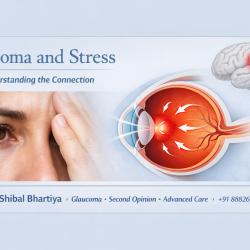
Glaucoma and Stress

Glaucoma and Stress: What the Research Actually Says, explains Dr Shibal Bhartiya. Most people know glaucoma damages vision. Fewer know…

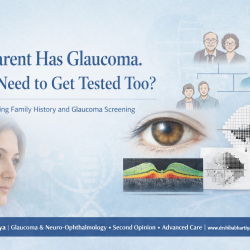
Family History & Glaucoma Screening

Family History & Glaucoma Screening– My Parent or Sibling Has Glaucoma. Do I Need to Get Tested Too? Short answer,…

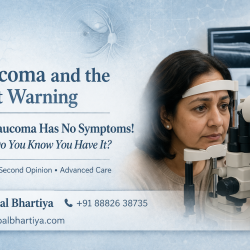
Glaucoma and the Silent Warning Symptoms

Early Glaucoma Has No Symptoms. So How Do You Know You Have It? Dr Shibal Bhartiya explains who is at…