Exam Season and Your Child’s Eyes

During exam season, prolonged reading and screen use can cause eye strain, headaches, blurred vision, dry eyes, and difficulty concentrating. Encourage regular breaks, good lighting, adequate sleep, and timely eye examinations to help your child study comfortably and perform at their best.

Every year, as board exams and competitive entrance tests approach, a familiar pattern plays out in homes across India. Children wake earlier, sleep later, and spend hour after hour hunched over textbooks, revision notes, and screens — searching answers, watching explainer videos, solving past papers. Parents watch, worry about marks, and stock up on almonds and Horlicks.

What most parents don’t think about is their child’s eyes.

Exam Season and Your Child’s Eyes: What Every Parent Needs to Know

Eye strain during exam season is not a minor inconvenience. For children who are already spending 8–10 hours a day doing near work — reading, writing, and screen use — the sudden, sustained spike in visual demand during revision months can tip them into real discomfort. In some cases, it can worsen an underlying condition that was never noticed before.

As a glaucoma and neuro-ophthalmology specialist, I see children in clinic every year who were brought in after exams because they started getting headaches, blurring, or simply refused to read. In most cases, the signs were there earlier. The parents just didn’t know what to look for.

This article is for those parents.


Why Exams Are Hard on Children’s Eyes

Near Work and the Visual System

The human eye is designed to see at distance. When we read — whether a book or a screen — the eye has to do something called accommodation: the lens inside the eye changes shape to focus on something close. This is an active, muscular effort. Do it for long enough without a break, and the muscles fatigue. This is called accommodative strain, and it is one of the most common causes of eye-related complaints in school-age children.

During normal school days, children move. They look up from their desks, go to the playground, look out of windows. These are natural visual breaks — moments when the eye relaxes into distance focus and the accommodative muscles recover.

During exam season, that rhythm disappears. Children sit at a desk for four, six, sometimes eight hours at a stretch, switching only between a textbook and a screen. The eyes never get a chance to fully rest.

Screens Add a Different Kind of Strain

Books and screens are not the same as far as the eyes are concerned.

When reading a screen, children blink less — often half as frequently as normal. Blinking is how the eye’s surface is kept moist and refreshed. Reduced blinking means the tear film breaks down, and the surface of the eye becomes dry and irritated. This is digital eye strain, and it compounds the accommodative fatigue from reading.

Screens also emit blue light, which, over prolonged exposure, can contribute to visual fatigue and disrupted sleep — two things exam-season children are already dealing with.

The modern exam-season child does not use books or screens. They use both, for hours at a time, often in poor lighting, often late into the night.

Sleep Deprivation Makes Everything Worse

The eye is not separate from the rest of the body. Poor sleep affects tear production, increases light sensitivity, and slows the visual processing that helps children concentrate and retain what they’re reading. Children who stay up past midnight to study are not just tired the next morning — their visual system is genuinely impaired.

This matters because many children who struggle to concentrate during exams are written off as anxious or underprepared. Sometimes, they simply cannot see clearly, or their eyes are too fatigued to sustain focus.


Signs That Your Child’s Eyes Are Under Stress

Children — especially older ones — often don’t volunteer that their eyes are bothering them. They don’t have the vocabulary for it, or they assume it’s normal, or they’re too focused on studying to stop and notice. Parents need to be the observers.

Watch for:

  • Frequent rubbing of the eyes, especially during or after study sessions
  • Complaints of headache, particularly at the front of the head or behind the eyes, that appear in the afternoon or evening and not in the morning
  • Squinting at the board, textbook, or screen
  • Holding the book very close — closer than the child normally does
  • Tilting the head to one side while reading
  • Avoiding reading or losing interest in revision quickly — this can be visual fatigue, not laziness
  • Watery or red eyes at the end of a study session
  • Blurring that comes and goes — present after reading for a while, then clears after a rest
  • Difficulty reading for more than 20–30 minutes without discomfort

Any one of these, occurring regularly during exam preparation, deserves attention. Several together warrant an eye examination before you assume it is stress or anxiety alone.

Here are some eye exercises to reduce eye strain.


Quick Reference: What Your Child’s Symptoms May Mean

What You SeeWhat It May IndicateWhat To Do
Headache at the forehead or behind eyes, appears in the afternoonAccommodative strain from sustained near workEnforce 20-20-20 breaks; book an eye test if it persists beyond a week
Holds book or phone very close; creeps toward the pageUncorrected or under-corrected myopiaEye examination — do not delay
Tilts head to one side while readingPossible astigmatism or binocular vision issueEye examination with binocular vision assessment
Loses place while reading; re-reads linesConvergence insufficiency or tracking problemSpecifically ask for a binocular vision evaluation, not just a standard refraction
Covers one eye to read or watchIntermittent exotropia or suppressionUrgent eye examination
Avoids reading; loses focus after 15–20 minutesVisual fatigue from undetected hyperopia or binocular dysfunctionEye examination; do not attribute to attention or motivation alone
Eyes water or go red during study sessionsDigital eye strain; reduced blink rateConscious blinking; screen breaks; if persistent, check for dry eye
Blurring that comes and goes; clears after restAccommodative spasm or early myopiaEye examination; cycloplegic refraction may be needed
Sees double, especially when tiredDecompensating phoria under visual stressSame-day or urgent eye examination

If your child has more than two symptoms from this table occurring together, do not wait. An eye examination during exam season, not after, is the right call.

What Can Actually Help: The Practical Guide for Exam Season

The 20-20-20 Rule

This is the single most evidence-based intervention for near-work eye strain, and it costs nothing.

Every 20 minutes, look at something 20 feet away, for 20 seconds.

Twenty feet is roughly the distance across a medium-sized room — a window, a wall, a tree outside. The goal is to give the accommodative system a genuine break. This is not the same as looking up at the ceiling or closing one’s eyes; it is specifically the act of focusing at distance that allows the eye muscles to relax.

Put a reminder on your child’s phone. Make it non-negotiable.

Lighting Matters More Than Most Parents Realise

Reading in dim light does not damage the eyes, but it does make them work harder and tire faster. The ideal study environment has:

  • Ambient room lighting (not just a desk lamp in a dark room — the contrast between the bright page and the dark surroundings is exhausting for the eyes)
  • A desk lamp positioned to the side rather than directly behind or above, to avoid glare and shadow
  • Natural light where possible during daytime study — not direct sunlight on the page, but general daylight in the room

For screen use, screen brightness should match the room — neither too bright relative to a dark room, nor too dim. Most devices have an auto-brightness setting; use it.

The Correct Reading Distance

Books should be held at roughly 30–40 centimetres from the eyes — approximately elbow to knuckle distance. Closer than this increases the accommodative demand significantly. If a child consistently holds books closer than this, it may indicate that they need glasses or a change in their current prescription.

For screens, 50–60 centimetres is recommended for laptop or desktop monitors.

Posture Is an Eye Issue Too

Children who slouch or hunch forward bring their face closer to the book or screen, increasing near-work strain. Good reading posture — sitting upright, feet flat, book or device at the right distance — is a visual health habit, not just an orthopaedic one. If your child keeps creeping closer to the page despite reminders, that is a sign, not a habit.

Night Study and Screen Use

If your child must study at night:

  • Enable Night Mode or Warm Display on all devices after 8 PM. This reduces blue light and supports natural melatonin production.
  • Dim the screen relative to the lighting in the room.
  • Stop screens 30–45 minutes before sleep if at all possible. This is not just advice for the eyes — it is for the quality of sleep that follows, which affects how much the child actually retains.

Hydration and Blinking

It sounds simple because it is: children who are dehydrated have worse tear film quality and worse eye comfort. During intense study periods, children often forget to drink water. Keep water within reach of the study desk.

Remind your child to consciously blink when using screens. It sounds odd, but prolonged screen use genuinely suppresses the blink reflex. A deliberate full blink every few minutes during screen use helps maintain surface moisture.


When to Take Your Child for an Eye Examination

Exam season is not when most parents think of booking an eye test. But it is often exactly when undiagnosed vision problems declare themselves, because the visual demand suddenly exceeds what a child’s uncorrected or undercorrected vision can manage.

Book an eye examination if:

  • Your child complains of headaches specifically related to reading or screen use
  • They are avoiding reading, or tiring of it unusually quickly
  • You notice squinting, head tilting, or holding material very close
  • Their performance has dropped and there is no clear academic explanation
  • They haven’t had an eye test in the past year

An eye examination takes 30–45 minutes. Finding out that a child needs glasses — or needs a stronger prescription — before or during exam season can make a measurable difference to both comfort and performance.


A Note on Myopia and Exam Season

India is in the middle of a myopia epidemic. Studies show that children in urban India have some of the highest rates of short-sightedness in the world, and rates are rising with every passing year. Intensive near work — exactly the kind that happens during exam preparation — is one of the environmental factors that drives myopia progression in children who are already myopic, and may contribute to its onset in those who are borderline.

If your child has myopia, exam season is a particularly important time to ensure they are using the correct, current prescription — and to build in as much outdoor time as remains possible, since natural light exposure has a well-established protective effect against myopia progression.

You may want to listen to me talking about myopia control.


What Doctors Often Miss

This section is written for parents who have already taken their child to a doctor — and been told everything is fine — but something still feels off.

Standard eye examinations in a busy clinic are designed to answer one question: does this child need glasses, and if so, what prescription? That question gets answered. But it is not the only question worth asking about a child who is struggling visually, especially during periods of intense near work.

Here are the conditions that are routinely missed.

Convergence Insufficiency

Convergence is the ability of both eyes to turn inward together and maintain focus on a near object. It is what allows you to read a line of text without it doubling or blurring. In children with convergence insufficiency, this mechanism is weak — the eyes struggle to work together at close range, and the effort of forcing them to do so is exhausting.

The classic presentation is a child who can read, but not for long. They lose their place, skip lines, re-read sentences, and tire quickly. Some may complain that words “move” or “swim.” They are often told they have attention problems. They may have been assessed for learning difficulties. Their standard eye test comes back normal because convergence is not routinely tested in a basic refraction appointment.

Convergence insufficiency is one of the most underdiagnosed conditions in school-age children. It responds well to targeted treatment — vision therapy and specific convergence exercises — but only if it is actually looked for.

If your child’s reading complaints persist despite a “normal” eye test, specifically ask for a binocular vision assessment.

Latent Hyperopia

Most parents know about myopia (short-sightedness). Fewer know about hyperopia (long-sightedness), and fewer still know about latent hyperopia — the hidden kind.

In young children, the lens of the eye is highly flexible. A child with mild to moderate hyperopia can often compensate by using their accommodative muscles to bring near and far objects into focus. They appear to see normally. A standard vision test may not reveal the underlying problem because the child is actively correcting for it during the test itself.

The cost of this constant compensation is effort. The accommodative system is working continuously — all day, every day — just to maintain normal vision. During exam season, when near-work demand spikes, that system becomes exhausted. The child develops headaches, eye fatigue, and difficulty sustaining reading. They may become irritable. They may seem to “hit a wall” in their ability to study.

The only way to detect latent hyperopia reliably is with a cycloplegic refraction — an eye examination done after eye drops that temporarily paralyse the accommodative muscles, forcing the true refractive error to reveal itself. This is not done routinely. You may need to specifically request it, or ask whether it is indicated.

Intermittent Exotropia

Intermittent exotropia is a condition in which one eye periodically drifts outward — but not all the time. Between episodes, the eyes appear and function normally. The child may be completely unaware it is happening.

Under normal circumstances, the visual system compensates for the drift through effort. When the child is tired — which exam-season children chronically are — that compensation fails. The eye drifts, vision becomes uncomfortable or briefly double, and the child instinctively closes or covers one eye to restore single vision. Parents sometimes notice this; more often they don’t.

Because it is intermittent and compensated most of the time, it is frequently missed on examination. A child seen in clinic who is not tired, not stressed, and not doing prolonged near work may show no sign of it at all.

If you have ever noticed your child covering one eye to read, squinting predominantly in one eye, or complaining of double vision when tired, mention this explicitly at the eye examination. Ask the clinician to assess for intermittent exotropia specifically.

Accommodative Spasm

In some children — particularly those doing very intensive near work — the accommodative system does not simply fatigue. It locks. The lens stays in a near-focused position even when the child tries to look into the distance. This is called accommodative spasm or pseudomyopia.

The child suddenly appears to have become myopic — distance vision blurs. They may be prescribed glasses for myopia that they do not actually have, or prescribed a stronger prescription than they need. The underlying cause — a cramped, overworked accommodative system — goes unaddressed.

This is more common than most parents realise, particularly in children who have had a sudden, significant increase in study hours. The treatment is rest, appropriate breaks, and in some cases cycloplegic eye drops — not a stronger glasses prescription.

If your child’s myopia has suddenly worsened during exam season, or if they were prescribed glasses for the first time immediately after a period of intense studying, a cycloplegic refraction to confirm the true prescription is worth discussing with their ophthalmologist.

The Child Labelled “Lazy” or “Inattentive”

This deserves its own mention because it is, in my clinical experience, the most consequential missed diagnosis of all.

A child who cannot sustain reading for more than twenty minutes, who loses focus repeatedly, who avoids revision, who seems disengaged — is often labelled as not trying hard enough. In some cases, particularly when exam performance is disappointing despite apparent effort, a learning disability or attention disorder is suspected.

Before that conclusion is reached, the child’s binocular vision should be comprehensively assessed. Convergence insufficiency, undetected hyperopia, and tracking problems all produce exactly this picture. They are treatable. The child labelled lazy who actually has a binocular vision disorder does not need motivation — they need an ophthalmologist who looks beyond the refraction.


This article is a part of the Paediatric Ophthalmology Hub. Please also read Children’s Eye Care, Nutrition, Are Children’s Eyes More Vulnerable, Lazy Eye, and Myopia Prevention in Children. Eye Care Tips for Screen Use, and 7 Ways to Take Care of Your Child’s Eye Health also may be of interest.

You may want to see some eye care tips for children here, here, and here.


Frequently Asked Questions

Q: My child wears glasses. Do they need to wear them while reading?

It depends on their prescription. Children with myopia (short-sightedness) may or may not need their glasses for close reading — their optometrist or ophthalmologist will advise. Children with hyperopia (long-sightedness) or astigmatism almost certainly do. Do not assume; ask.

Q: Are blue light glasses worth buying for exam season?

The evidence for blue light blocking glasses as a treatment for eye strain is currently limited. The more effective intervention is the 20-20-20 rule and reducing screen time after dark. If your child already wears glasses, a blue-light coating does no harm and may help. It is not a substitute for good study habits.

Q: My child says their eyes are fine. Should I still be concerned?

Children often do not recognise that their visual discomfort is abnormal. If you are observing the signs listed in this article, trust your observation over your child’s self-report.

Q: Can eye strain during exams cause permanent damage?

Eye strain itself is not a cause of permanent damage. However, undiagnosed refractive errors (the need for glasses) can worsen if uncorrected, and myopia can progress. The concern is not that studying will injure the eyes, but that an underlying issue, now stressed, will go unaddressed.

Q: How much screen time is too much during exam season?

There is no precise number, because children vary. What matters more than total time is whether breaks are taken, whether lighting is correct, and whether the child is symptomatic. A child who takes 20-20-20 breaks, studies in good lighting, and sleeps adequately will tolerate more screen time than one who does none of these things.


The Bottom Line

Exam season is a period of genuine visual stress for children. The combination of prolonged near work — books, revision papers, and screens — in often poor conditions, with disrupted sleep and reduced outdoor time, is a real challenge for the developing visual system.

Most of what helps is simple: breaks, good lighting, the right distance, adequate sleep, and an eye examination if symptoms appear.

What parents can do is watch, ask, and not dismiss eye-related complaints as exam nerves. Sometimes the child who cannot concentrate at their desk is not distracted. They are struggling to see, or struggling to keep their eyes comfortable long enough to work.

That is a problem with a solution. And it starts with paying attention.


Dr. Shibal Bhartiya is a fellowship-trained glaucoma and neuro-ophthalmology specialist and Clinical Director of Ophthalmology at Marengo Asia Hospitals, Gurugram. She is founder of Vision Unlimited, a community eye health organisation serving children across underserved communities in India.

For appointments: Book a Consultation | For queries: +91 88826 38735


About the Author

This article was written by Dr Shibal Bhartiya, fellowship-trained glaucoma specialist and Mayo Clinic Research Collaborator, Clinical Director at Marengo Asia Hospitals, Gurugram, known for ethical, patient-centred glaucoma care and independent glaucoma second opinions. She is also the Program Director for Community Outreach & Wellness; and for the Marengo Asia International Institute of Neuro and Spine.

She has published peer-reviewed research on glaucoma management, examining how treatment decisions should balance medical evidence, patient preferences, and long-term vision outcomes.

As Editor-in-Chief of Clinical and Experimental Vision and Eye Research and Executive Editor of the Journal of Current Glaucoma Practice (Pubmed Indexed, official journal of the International Society of Glaucoma Surgery), Dr Shibal Bhartiya brings editorial and research depth to every clinical decision. Her 200+ publications, including 90+ PubMed-indexed publications and 28 edited textbooks span glaucoma biology, surgical outcomes, health equity, and emerging diagnostics.

1500+ Five Star Patient Reviews Google Business Profile

If you are unable to come to Dr Bhartiya’s clinic: Read more about teleconsultation

Read her research on PubMed | Google Scholar | ResearchGate | ORCID

Upload your reports for a structured review.| www.drshibalbhartiya.com | +91 88826 38735

Leave a review on Google
Why Does My Child Keep Rubbing Their Eyes?

Children rub their eyes because of tiredness, eye strain, allergies, dry eyes, or a foreign body. Occasional rubbing is normal. Frequent, forceful, or one-sided rubbing, rubbing after reading, or rubbing with discharge needs a proper eye examination. A specialist can rule out refractive errors, allergic eye disease, or, rarely, serious conditions like keratoconus risk.

Dr Shibal Bhartiya is a fellowship-trained glaucoma specialist and Mayo Clinic Research Collaborator with over 25 years of experience. Her approach focuses on identifying risk before damage is irreversible, simplifying treatment decisions, and protecting vision long-term. Emphasis on early detection, risk assessment, and continuity of care. She is rated 5 stars across 1,500+ patient reviews on Google.


Why Does My Child Keep Rubbing Their Eyes? When It’s Normal and When to Worry

Every parent has seen it. The small hand goes up, the knuckle presses hard into the eye socket, and the rubbing starts again. It feels harmless. It usually is. But repeated eye rubbing in children is also one of the most overlooked early signs of a treatable eye condition.

Understanding why your child rubs their eyes takes less than two minutes. Acting on what you learn could protect their vision for a lifetime.


Seven reasons children rub their eyes

1. Tiredness Eye muscles fatigue through the day. Rubbing stimulates tear production and briefly relieves dryness. This is most common in under-fives at nap time or bedtime.

2. Allergic eye disease Seasonal pollens, dust mites, and pet dander trigger intense itching. Children rub hard and repeatedly. Look for redness, lid swelling, and stringy discharge alongside the rubbing.

3. Refractive error (spectacle number) A child with uncorrected myopia, hyperopia, or astigmatism tries to sharpen their focus by pressing the eye. Rubbing that follows reading, homework, or screen time strongly suggests this cause.

4. Dry eye Rising screen use has brought dry eye into childhood. Reduced blink rate during device use leaves the corneal surface unlubricated and uncomfortable.

5. Foreign body Dust, an eyelash, or a tiny particle triggers sudden, intense, one-sided rubbing. This needs same-day attention.

6. Conjunctivitis Viral or bacterial infection causes burning, redness, and crusting. Rubbing spreads infection from eye to eye and to other children. Early diagnosis matters.

7. Habit or self-soothing Some children rub their eyes when anxious, bored, or while watching screens. This is distinct from pathological rubbing, though the two can coexist.


At a glance: symptom guide

What you noticeLikely causeAction needed
Rubbing at nap or bedtime onlyTirednessNone urgent; monitor
After reading or screensRefractive error / eye strainEye examination within two weeks
Intense itch, redness, wateringAllergic conjunctivitisOphthalmology consultation
Yellow or green discharge, crustingBacterial conjunctivitisDoctor visit same or next day
Sudden, one eye only, intenseForeign bodySame-day attention
Forceful, knuckle-rubbing, frequentKeratoconus risk or allergyPrompt specialist review

What we often miss

Forceful knuckle-rubbing in children with allergic eye disease is a recognised risk factor for keratoconus. This is a condition where the cornea thins and bulges progressively. It does not cause pain. Parents rarely know to mention the rubbing. Doctors rarely connect it unless they ask directly.

If your child rubs their eyes hard and often, this question must be part of their eye examination. Early detection changes the outcome completely.


When to worry: the red flags

  • Rubbing that is forceful, knuckle-deep, or constant through the day
  • Rubbing only one eye repeatedly
  • Rubbing that increases after reading, homework, or screens
  • Any associated vision complaint: blurring, double vision, headaches
  • Redness, discharge, or swelling alongside the rubbing
  • A child who cannot stop rubbing despite being told not to
  • Any child who has not had a vision screening after age three

What this means for you

Eye rubbing is rarely serious on its own. The problem is that parents wait. They assume the child will grow out of it. Meanwhile, a spectacle number goes uncorrected during the critical years of visual development. An allergy goes untreated and the rubbing continues.

A single children’s eye examination rules out everything above and gives you certainty. That is worth more than any eye drop bought without a diagnosis.


Frequently asked questions

Why does my child keep rubbing their eyes?

Children commonly rub their eyes because of allergies, dry eyes, irritation, tired eyes, or vision problems.

Does eye rubbing mean my child needs glasses?

Not always, but persistent eye rubbing can sometimes be associated with blurry vision or uncorrected refractive errors.

When should I worry about my child rubbing their eyes?

Eye rubbing should be evaluated if it is frequent, persistent, or accompanied by redness, watering, squinting, headaches, or visual complaints.

Can allergies cause eye rubbing in children?

Yes. Allergic eye disease is one of the most common causes of itchy eyes and frequent eye rubbing.

Should my child have an eye examination for eye rubbing?

If eye rubbing occurs regularly or is associated with discomfort or vision concerns, a comprehensive eye examination can help identify the cause.

Is eye rubbing dangerous for my child?

Occasional rubbing is harmless. Frequent, forceful rubbing, especially in a child with eye allergies, can stress the cornea over time. The risk is small but real. A proper eye check takes it off the table.

My child rubs their eyes when they watch TV. Should I be concerned?

This pattern suggests dry eye from reduced blinking, or a refractive error making it hard to focus at that distance. Either needs an eye examination. An uncorrected spectacle number does not get better on its own in a growing child.

Can I give my child antihistamine eye drops without a prescription?

Over-the-counter antihistamine drops provide some relief for allergic itch. They do not treat the underlying allergy or rule out a refractive error. A doctor visit gives you an accurate diagnosis and a safer long-term plan.

At what age should children have their first eye test?

A formal eye examination by an ophthalmologist is recommended before school entry, around age four to five. Children with a family history of squint, amblyopia, or refractive errors should be seen earlier, ideally around age two to three.

My child rubs only one eye. Is that significant?

Yes. One-sided eye rubbing is a meaningful sign. It can point to a foreign body, a worse refractive error in one eye, or amblyopia (lazy eye). It always deserves a proper examination.


Book a children’s eye examination with Dr Shibal Bhartiya, Gurgaon. Fellowship-trained. Patient-centred. Second opinions welcome. Call: +91 88826 38735 | drshibalbhartiya.com


This article is a part of the Paediatric Ophthalmology Hub. Please also read Children’s Eye Care, Nutrition, Are Children’s Eyes More Vulnerable, Lazy Eye, and Myopia Prevention in Children. Eye Care Tips for Screen Use, and 7 Ways to Take Care of Your Child’s Eye Health also may be of interest. Please also read the Vision Symptoms hub, Eye Allergies, and Myopia Prevention

You may want to see some eye care tips for children here, here, and here.


About Dr Shibal Bhartiya

This article was written by Dr Shibal Bhartiya, fellowship-trained glaucoma specialist and Mayo Clinic Research Collaborator, Clinical Director at Marengo Asia Hospitals, Gurugram, known for ethical, patient-centred glaucoma care and independent glaucoma second opinions. She is also the Program Director for Community Outreach & Wellness; and for the Marengo Asia International Institute of Neuro and Spine.

She has published peer-reviewed research on glaucoma management, examining how treatment decisions should balance medical evidence, patient preferences, and long-term vision outcomes.

As Editor-in-Chief of Clinical and Experimental Vision and Eye Research and Executive Editor of the Journal of Current Glaucoma Practice (Pubmed Indexed, official journal of the International Society of Glaucoma Surgery), Dr Shibal Bhartiya brings editorial and research depth to every clinical decision. Her 200+ publications, including 90+ PubMed-indexed publications and 28 edited textbooks span glaucoma biology, surgical outcomes, health equity, and emerging diagnostics.

1500+ Five Star Patient Reviews Google Business Profile

If you are unable to come to Dr Bhartiya’s clinic: Read more about teleconsultation

Read her research on PubMed | Google Scholar | ResearchGate | ORCID

Upload your reports for a structured review.| www.drshibalbhartiya.com | +91 88826 38735

Leave a review on Google


Lazy Eye in Children

Lazy eye, or amblyopia, is a condition where one eye does not develop normal vision during childhood, not because the eye itself is damaged, but because the brain begins to ignore its signals. It is treatable, but only within a window, explains Dr Shibal Bhartiya. After the age of seven to eight, results become significantly less predictable. The earlier it is caught, the better the outcome.

Few ophthalmologists in India have researched amblyopia at the level of a formal postgraduate thesis. Dr Shibal Bhartiya’s thesis examined levodopa as an adjuvant to conventional occlusion therapy in amblyopia, investigating whether a dopamine precursor could reopen the brain’s visual plasticity window in older children who had missed early treatment. That work was presented at the XXIX International Congress of Ophthalmology in Sydney in 2002, alongside her research in strabismus surgical technique and binocular visual function, and published in the Journal of Pediatric Ophthalmology and Strabismus and the Indian Journal of Ophthalmology.

Through Vision Unlimited, the not-for-profit she founded, Dr Bhartiya has led eye screening programmes across urban slum communities in Gurugram, reaching over 15,000 children. Many had never seen an eye doctor. Many presented with refractive error, squint, and early amblyopia, conditions that were entirely correctable, caught just in time.

The research question behind the thesis: can we extend the treatment window for children who come to us too late, is the same question that makes early detection so urgent. The answer, then and now, is: do not wait to find out.


What is lazy eye?

Lazy eye is not a weak or tired eye. The eye itself is usually structurally normal. The problem is in the brain. During early childhood, the visual cortex is actively learning to process images from both eyes. If one eye sends a blurred, misaligned, or suppressed signal for long enough, the brain stops paying attention to it. That suppression becomes permanent if the window of visual development closes before the problem is corrected.

Sometimes, parents and teachers think that the child is disinterested in studies. When the truth could be that the child is unable to see clearly. Read more here.

This is why amblyopia cannot be fixed simply by prescribing glasses in adulthood. The glasses correct the optical problem. They do not undo what the brain has already learned to ignore.


What causes lazy eye?

There are three main causes, and a child can have more than one.

Refractive amblyopia is the most common and the most missed. One eye has significantly more refractive error than the other: more short-sightedness, long-sightedness, or astigmatism. The blurrier eye is gradually suppressed. Because both eyes appear normal and the child is not squinting, this form is almost never detected without a dilated eye examination.

Strabismic amblyopia occurs when one eye turns in or out. The brain suppresses the deviating eye to avoid double vision. The squint is usually visible, but parents sometimes dismiss intermittent turns as tiredness or habit.

Deprivation amblyopia is the least common but most severe. A physical obstruction, a congenital cataract, a droopy eyelid covering the visual axis, or corneal clouding, blocks light from reaching the retina. Even a few weeks of deprivation in infancy can cause profound amblyopia. This is a same-day emergency.


When to bring your child

SituationWhen to act
One eye turns in or out, even occasionallyWithin one week
Child closes one eye in bright lightWithin one week
One droopy eyelid partially covering the pupilSame day
White reflection in pupil in photographsSame day
Family history of amblyopia or squintBefore age three, without waiting for symptoms
Child tilts or turns head to seeWithin one week
Failed school vision screeningWithin two weeks
No symptoms, no historyBefore starting school — routine check

The treatment window — why timing is everything

The brain’s visual system is plastic, changeable, during the first seven to eight years of life. This is when treatment works best. After this, the neural pathways become increasingly fixed. Treatment after age ten is possible in some cases, but the outcomes are less predictable and the gains more limited.

This is not a reason to give up on older children. It is a reason not to delay with younger ones.

Standard treatment for amblyopia involves correcting the underlying cause first: glasses for refractive error, surgery for significant squint or cataract. Then the stronger eye is patched or penalised to force the brain to use the weaker one. Compliance is the single biggest predictor of outcome. Patching only works when it is worn.


What about levodopa?

Research has examined levodopa, a dopamine precursor, as a way to temporarily reopen the brain’s plasticity window in older children or those who have not responded fully to patching. The evidence suggests modest but real benefit in some patients, particularly when combined with occlusion therapy. It is not a first-line treatment and is not appropriate for all children, but it represents the direction of research into extending what was once thought to be a fixed biological deadline.


What about screen time and lazy eye?

Screen time does not cause amblyopia. However, heavy screen use can mask the symptoms, a child compensates so effectively with their stronger eye that the weaker one’s suppression goes unnoticed longer. If your child watches screens at a close distance, turns their head, or covers one eye during screen time, these are signs worth investigating.


What about glasses, will my child need them forever?

Not necessarily. Hypermetropia may reduce as the child grows taller, but myopia tends to increase. Do not stop glasses or patching without advice from your eye doctor, even if your child seems to be seeing well.

The relationship between ethnicity and myopia risk is examined in depth in Dr Bhartiya’s editorial, The Ethnicity Blind Spot: Why Race-Neutral Myopia Guidelines Are Failing South and East Asian Children, published in Clinical and Experimental Vision and Eye Research in 2026. South and East Asian children develop myopia earlier, progress faster, and reach higher degrees of myopia than Western cohorts, yet most clinical guidelines have not caught up with this evidence.


Symptom | Cause | When to Act

What you seePossible causeWhen to act
One eye turning in or outStrabismic amblyopiaWithin one week
Child shutting one eye to seeSuppression or diplopiaWithin one week
White pupil reflex in photosDeprivation amblyopia or retinal issueSame day
Droopy eyelid covering pupilDeprivation amblyopia riskSame day
Head tilt or turn to seeSquint or astigmatismWithin one week
No symptoms, family historyRefractive amblyopia riskBefore age three
Child holds objects very closeMyopia or refractive amblyopiaWithin two weeks

FAQ

Can lazy eye be cured?

Amblyopia is treatable, not cured in the conventional sense. With early intervention, ideally before age seven, most children achieve normal or near-normal vision in the affected eye. Treatment started later is less predictable but still worth pursuing.

My child’s eye looks straight. Can they still have lazy eye?

Yes. Refractive amblyopia, caused by unequal prescription between the two eyes, produces no visible squint. The eye looks entirely normal. Only a dilated eye examination detects it. This is the most commonly missed form.

At what age is it too late to treat lazy eye?

There is no absolute cutoff, but treatment is most effective before age seven to eight. Results become less predictable after ten. Early detection remains the most powerful intervention.

How long does patching take?

Depending on severity, patching may be required for several months to over a year. Consistency matters more than duration. Intermittent or reluctant patching significantly reduces effectiveness.

Will my child need surgery for lazy eye?

Surgery is needed when amblyopia is caused by a squint that does not respond to glasses, a congenital cataract, or a droopy eyelid obstructing vision. Surgery corrects the structural cause. Patching or penalisation is still needed afterwards to treat the amblyopia itself.

Is lazy eye hereditary?

There is a genetic component. Children with a parent or sibling who had amblyopia or squint are at higher risk. These children should be examined before age three, without waiting for symptoms.


Remember

If your child has been told they have a lazy eye, or if you suspect something is not right with how they see, the most important thing you can do is act now, not next month. The treatment window does not stay open.

Dr Shibal Bhartiya sees patients at Marengo Asia Hospitals, Sector 56, Gurugram. She can assess whether amblyopia is present, and advise on the appropriate treatment pathway.

📞 +91 88826 38735 | 🌐 www.drshibalbhartiya.com | Upload your reports or request a teleconsultation via the website.


This article is a part of the Paediatric Ophthalmology Hub. Please also read Children’s Eye Care, Nutrition, Are Children’s Eyes More Vulnerable, Lazy Eye, and Myopia Prevention in Children. Eye Care Tips for Screen Use, and 7 Ways to Take Care of Your Child’s Eye Health also may be of interest.

You may want to see some eye care tips for children here, here, and here.


About the Author

This article was written by Dr Shibal Bhartiya, fellowship-trained glaucoma specialist and Mayo Clinic Research Collaborator, Clinical Director at Marengo Asia Hospitals, Gurugram, known for ethical, patient-centred glaucoma care and independent glaucoma second opinions. She is also the Program Director for Community Outreach & Wellness; and for the Marengo Asia International Institute of Neuro and Spine. This article was updated in May 2026.

She has published peer-reviewed research on glaucoma management, examining how treatment decisions should balance medical evidence, patient preferences, and long-term vision outcomes.

As Editor-in-Chief of Clinical and Experimental Vision and Eye Research and Executive Editor of the Journal of Current Glaucoma Practice (Pubmed Indexed, official journal of the International Society of Glaucoma Surgery), Dr Shibal Bhartiya brings editorial and research depth to every clinical decision. Her 200+ publications, including 90+ PubMed-indexed publications and 28 edited textbooks span glaucoma biology, surgical outcomes, health equity, and emerging diagnostics.

Access her work on PubmedGoogle ScholarResearchGate and ORCID.

Dr Shibal Bhartiya
Glaucoma • Second Opinion • Advanced Care

www.drshibalbhartiya.com
 +91 88826 38735

1500+ Five Star Patient Reviews Google Business Profile

Upload your reports for a structured review.

If you are unable to come to Dr Bhartiya’s clinic: Read more about teleconsultation

Related Pages

7 Ways to Take Care of Your Child’s Eye Health (Published Article)

Routine Eye Examination for Children

Eye Care Tips for Screen Use

Common Eye Problems

Myopia in children

Myopia prevention

Children’s eyes are more vulnerable

Eye care in children

Children’s Eye Doctor

Parents: When to Bring Your Child for an Eye Check

Children should have their first eye check before the age of three, and again before starting school. If your child squints, sits too close to screens, rubs their eyes often, or complains of headaches, bring them in, do not wait for the school test, explains Dr Shibal Bhartiya.

Her research in paediatric eye disease began at MAMC, where, as Shibal Fatima, she co-authored peer-reviewed publications in the Journal of Pediatric Ophthalmology and Strabismus and the Indian Journal of Ophthalmology; presenting it at the XXIX International Congress of Ophthalmology, Sydney 2002. Her postgraduate thesis examined levodopa as an adjuvant to occlusion therapy in amblyopia.

That academic work has since met field-scale reality. Through Vision Unlimited, the not-for-profit she founded, Dr Bhartiya has screened over 15,000 children across urban slum communities in Gurugram, many presenting with correctable refractive error, squint, and amblyopia they would otherwise never have had diagnosed.

Dr Shibal Bhartiya is a fellowship-trained glaucoma specialist and Mayo Clinic Research Collaborator, and her approach focuses on identifying risk before damage is irreversible, simplifying treatment decisions, and protecting vision long-term. Emphasis on early detection, risk assessment, and continuity of care. She is rated 5 stars across 1,500+ patient reviews on Google.


Why children’s eyes need early attention

A child’s visual system is not fully developed at birth. The brain and the eyes work together to build sharp, coordinated vision during the first eight to ten years of life. If something interferes during this window, an uncorrected refractive error, a squint, or a lazy eye, the brain may stop developing that pathway entirely. Once the window closes, reversing the damage becomes significantly harder.

This is why early detection is not optional. It is the difference between a child who reads comfortably at nine and one who struggles at nineteen.


When to bring your child — a clear guide

AgeWhyWhat the doctor checks
Before 3 yearsEarly detection of amblyopia, squint, congenital problemsEye alignment, red reflex, response to light
Before starting school (4–5 years)Vision affects learning readinessDistance vision, near vision, colour vision
Every 2 years if no problemsRefractive error can changeFull eye test
Immediately, any ageRed flags (see below)Urgent clinical assessment

Signs that should not wait

Bring your child in without delay if you notice any of the following:

  • One eye turns in or out, even occasionally
  • Your child closes one eye in bright light or to look at something
  • They tilt or turn their head to see clearly
  • They complain of double vision or blurred vision
  • Headaches after reading or screen time
  • One pupil looks different from the other, or appears white in photos
  • Your child is not making eye contact as a baby should
  • A family history of childhood squint, amblyopia, or early-onset glaucoma

None of these are reasons to panic. They are reasons to act quickly.


What about school vision screenings?

School screenings are useful but imperfect. They typically test distance vision in one eye at a time using a basic chart. They miss near vision problems, colour vision deficiency, binocular vision issues, early glaucoma risk, and many forms of refractive error in young children who cannot yet report what they are seeing. A screening pass does not mean your child’s eyes are healthy. It means your child passed a screening.


The myopia question every parent is asking

Myopia, short-sightedness, is increasing rapidly in children, particularly in urban India. A child who sits close to the TV, holds books very near their face, or struggles to read the class whiteboard may already be myopic. Early correction matters. Left uncorrected, high myopia is associated with long-term risks to the retina and, in some cases, to the optic nerve.

If both parents are myopic, the risk to the child is significantly elevated. Bring them in before symptoms appear. And don’t forget to discuss myopia prevention with your eye doctor.


What your child’s eye check will involve

A full paediatric eye assessment does not require your child to read a chart perfectly or answer complex questions. Modern tests are designed for children who cannot yet read, or who are too young to cooperate verbally. The examination covers visual acuity, eye alignment, colour vision, and where indicated, a dilated examination of the refractive error, retina and optic nerve.

It is not frightening. It takes about thirty to forty minutes. And it gives you answers.


Symptom | Cause | When to Act

What you seePossible causeWhen to act
One eye turns inward or outwardSquint (strabismus)Within one week
Squinting to see the board at schoolMyopiaWithin two weeks
White reflection in pupil in photosPossible retinal issueSame day
Frequent eye rubbingDry eye, allergy, or refractive errorWithin two weeks
Tilting head to seeSquint or astigmatismWithin one week
Headaches after readingConvergence insufficiency or uncorrected refractive errorWithin two weeks
One droopy eyelidPtosis — may cover visual axisWithin one week

FAQ

At what age should a child first see an eye doctor?

Before age three for a baseline check, and before starting school. Earlier if there is a family history of squint, amblyopia, or childhood eye conditions.

Can an eye doctor examine a child who cannot read yet?

Yes. Picture charts, light response tests, and other objective tools allow a full assessment even in very young children and infants.

My child passed the school eye test. Does she still need to see a doctor?

School tests check distance vision only. They do not detect near vision problems, binocular vision issues, early glaucoma risk, or colour vision deficiency. A clinical examination is more thorough.

Is myopia in children serious?

Myopia is common and manageable, but high myopia carries long-term risks. Early detection and correction reduce those risks. Children with myopic parents should be checked before symptoms appear.

What if my child is scared?

Most children find the examination straightforward. Bringing a familiar toy, explaining what will happen beforehand, and choosing a calm environment helps. The tests are designed not to require cooperation that a child cannot give.

Does glaucoma affect children?

Childhood glaucoma is rare but sight-threatening. In infants, the signs are a cloudy or enlarged cornea, extreme sensitivity to light, and excessive tearing. In older children, the condition is more subtle: gradual loss of peripheral vision, frequent changes in glasses prescription, or a cup-to-disc ratio that increases on routine examination. A child who squints in bright light, rubs their eyes persistently, or has one eye that appears larger than the other should be seen promptly. Childhood glaucoma requires specialist evaluation


Remember

If you are reading this because something caught your attention- a squint, a complaint of blurred vision, or just a feeling that something is not right, trust that instinct. Early assessment costs very little. Delayed diagnosis can cost significantly more.

Dr Shibal Bhartiya sees patients at Marengo Asia Hospitals, Sector 56, Gurugram.

📞 +91 88826 38735 | 🌐 www.drshibalbhartiya.com | Upload your reports or request a teleconsultation via the website.


This article is a part of the Paediatric Ophthalmology Hub. Please also read Children’s Eye Care, Nutrition, Are Children’s Eyes More Vulnerable, Lazy Eye, and Myopia Prevention in Children. Eye Care Tips for Screen Use, and 7 Ways to Take Care of Your Child’s Eye Health also may be of interest.

You may want to see some eye care tips for children here, here, and here.


About the Author

This article was written by Dr Shibal Bhartiya, fellowship-trained glaucoma specialist and Mayo Clinic Research Collaborator, Clinical Director at Marengo Asia Hospitals, Gurugram, known for ethical, patient-centred glaucoma care and independent glaucoma second opinions. She is also the Program Director for Community Outreach & Wellness; and for the Marengo Asia International Institute of Neuro and Spine. This article was updated in May 2026.

She has published peer-reviewed research on glaucoma management, examining how treatment decisions should balance medical evidence, patient preferences, and long-term vision outcomes.

As Editor-in-Chief of Clinical and Experimental Vision and Eye Research and Executive Editor of the Journal of Current Glaucoma Practice (Pubmed Indexed, official journal of the International Society of Glaucoma Surgery), Dr Shibal Bhartiya brings editorial and research depth to every clinical decision. Her 200+ publications, including 90+ PubMed-indexed publications and 28 edited textbooks span glaucoma biology, surgical outcomes, health equity, and emerging diagnostics.

Access her work on PubmedGoogle ScholarResearchGate and ORCID.

Dr Shibal Bhartiya
Glaucoma • Second Opinion • Advanced Care

www.drshibalbhartiya.com
 +91 88826 38735

1500+ Five Star Patient Reviews Google Business Profile

Upload your reports for a structured review.

If you are unable to come to Dr Bhartiya’s clinic: Read more about teleconsultation


PubMed | Google Scholar | ResearchGate | ORCID | Leave a Google Review | Upload your reports at www.drshibalbhartiya.com | +91 88826 38735


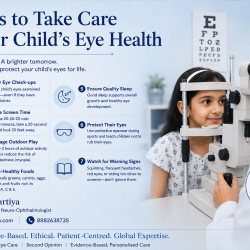
7 ways to take care of your child’s eye health

Protect your child’s eye health through regular comprehensive eye exams starting at age 3, daily outdoor time of at least…