Prepare your child by explaining the exam in simple, honest language, scheduling it when they are well-rested and not hungry, bringing a comfort object if needed, and avoiding promises that nothing will happen. Most eye exams are painless; eye drops used for dilation can sting briefly and blur vision for a few hours afterward.
Parents often worry more about the exam than the child does, especially before a first visit. Eye drops, bright lights, and an unfamiliar room can feel overwhelming to a young child who does not understand why any of it is happening.
In my practice, the children who cooperate best are not the ones who are told nothing will hurt, but the ones who know exactly what will happen, step by step, before they sit in the chair. This article walks through how to prepare a child for a routine eye exam, and what changes when the child has additional needs.
Dr Shibal Bhartiya is a fellowship-trained glaucoma specialist and Mayo Clinic Research Collaborator with over 25 years of experience. She especially takes care of the eye health of children. Her approach focuses on identifying risk before damage is irreversible, simplifying treatment decisions, and protecting vision long-term. Emphasis on early detection, risk assessment, and continuity of care. She is rated 5 stars across 1,500+ patient reviews on Google.
Quick Answer: Explain the exam in simple, honest language. Schedule it when they are well-rested and not hungry. Bring a comfort object or toy if needed. Avoid promises that nothing will happen. Most exams are painless; tell them no injections. Eye drops used for dilation can sting briefly and blur vision for a few hours afterward.
What to Expect and How to Prepare
| Symptom | What It Means | What To Do About It |
| Child anxious about an unfamiliar place | Most fear comes from not knowing what will happen, not the exam itself | Use simple words in advance: ‘The doctor will shine a small light and ask you to look at pictures’ |
| Reluctance to sit still for the vision chart | Long, abstract instructions confuse young children | Practice ‘look and point’ games at home with letters or shapes beforehand |
| Resistance to eye drops for dilation | Drops can sting briefly and blur vision temporarily, which feels unfamiliar and unsettling | Explain it will feel like a cool drop and blur for a little while, then go away |
| Tiredness or irritability during the visit | Appointments scheduled around nap time or close to meals increase fussiness | Book the exam when your child is usually most alert, and feed them beforehand |
| Overstimulation from waiting room noise or bright lights | Sensory overload before the exam even starts reduces cooperation | Arrive a few minutes early and use a quiet corner or headphones if needed |
| Fear based on a previous medical visit (injections, dentist) | Children generalise past discomfort to any clinical setting | Clarify that an eye exam does not involve injections or pain |
| Difficulty answering ‘which is clearer’ style questions | Young children often do not understand comparative instructions yet | Use picture-matching or shape identification instead of letters if your child is very young |
Why Preparation Changes the Outcome
An anxious, unprepared child often gives inconsistent results, not because their vision is unclear, but because fear interferes with their ability to follow instructions. This can lead to a repeat visit or an exam that under-represents what the child can actually see.
A child gives the most accurate eye exam when they arrive calm, rested, and briefly told what to expect in simple words. Most resistance during an exam comes from unfamiliarity and fear, not the test itself, and a few minutes of preparation at home prevents most of it.
Important: Never tell a child ‘it won’t hurt at all’ if dilating drops are planned. The brief sting is real, even if mild, and a broken promise damages trust for future visits more than the discomfort itself.
A Note on Children who may Require Special Attention
Children with autism, sensory processing differences, ADHD, or developmental delays often need a different approach, not a lesser one. The goal is still an accurate exam, but the path to cooperation looks different.
- Request the first or last appointment slot of the day to reduce waiting room time and crowd exposure
- Bring a familiar comfort object, weighted item, or noise-cancelling headphones if your child uses them
- Use the same words and sequence you use at home for medical visits, consistency reduces anxiety more than novelty does
- Tell the clinic in advance about sensory sensitivities, so lighting or pacing can be adjusted where possible
- Allow extra time. A rushed exam increases resistance; a paced one, even if longer, usually succeeds
- If your child cannot tolerate drops or verbal instructions, ask about alternative testing methods designed for non-verbal or sensory-sensitive children
Patient tip: If a previous eye exam went badly for your child, mention this specifically when booking. A clinic that has prepared for it in advance will manage the visit very differently from one that is caught off guard.
When To See a Doctor
- Your child squints, tilts their head, or sits unusually close to screens or books
- One eye appears to drift or turn at any age
- Frequent eye rubbing, light sensitivity, or watering without an obvious cause
- Complaints of headaches, especially after reading or screen time
- A family history of childhood vision problems, strabismus, or amblyopia
- No eye exam has been done by the recommended screening ages, even with no obvious symptoms
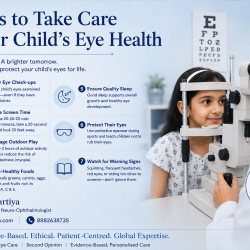
This article is a part of the Paediatric Ophthalmology Hub. Please also read How to Choose an Eye Doctor for Your Child, How to Prepare Your Child for an Eye Exam, Nutrition, Are Children’s Eyes More Vulnerable, Lazy Eye, How Much Screen Time is Safe in Children, and Myopia Prevention in Children. Eye Care Tips for Screen Use, and 7 Ways to Take Care of Your Child’s Eye Health also may be of interest. Myopia in Teenagers.
You may want to see some eye care tips for children here, here, and here.
Frequently Asked Questions
At what age should my child have their first eye exam?
Most children benefit from a first formal eye exam between three and five years old, earlier if there is a family history of eye conditions or any visible concern noticed sooner.
Will my child’s eyes be dilated at every visit?
Not necessarily. Dilation depends on the reason for the visit and what the doctor needs to examine. When used, it temporarily blurs near vision and increases light sensitivity for a few hours.
My child refuses to keep still during exams. What can I do?
Practising the vision chart routine at home with simple shapes, scheduling the visit when your child is rested, and giving short, concrete instructions during the exam usually improves cooperation significantly.
How is an eye exam different for a non-verbal child?
Non-verbal children can still be examined using preferential looking tests, picture-based charts, and behavioural observation, which do not require spoken answers to assess vision accurately.
Can I stay in the room during my child’s eye exam?
Yes, parental presence is usually encouraged for young children and is essential for children who need special attention, since a familiar voice nearby reduces anxiety and improves cooperation.
What should I bring to my child’s first eye exam?
Bring any glasses your child currently wears, a list of concerns or symptoms you have noticed, a comfort item or a toy, if your child uses one, and a small snack for after the visit if drops are planned.
Key Takeaways
- Honest, simple preparation reduces fear more than vague reassurance
- Schedule the exam around your child’s natural energy and mood patterns
- Never promise zero discomfort if dilating drops are part of the visit
- Children who need extra attention may benefit from advance notice to the clinic, not a different standard of care
- A calm, well-prepared child gives a more accurate, useful eye exam
Book a Consultation
If your child is due for their first eye exam, or a previous visit was difficult, a paediatric eye check can be planned in a way that works for your child specifically.
Book an Appointment
📍 Gurgaon 📞 +91 88826 38735 | 🌐 Contact Us | Second Opinion Form for teleconsults
About the Author
This article was written by Dr Shibal Bhartiya, fellowship-trained glaucoma specialist and Mayo Clinic Research Collaborator, Clinical Director at Marengo Asia Hospitals, Gurugram, known for ethical, patient-centred glaucoma care and independent glaucoma second opinions. She is also the Program Director for Community Outreach & Wellness; and for the Marengo Asia International Institute of Neuro and Spine.
She has published peer-reviewed research onglaucoma management, examining how treatment decisions should balance medical evidence, patient preferences, and long-term vision outcomes.
As Editor-in-Chief of Clinical and Experimental Vision and Eye Research and Executive Editor of the Journal of Current Glaucoma Practice (Pubmed Indexed, official journal of the International Society of Glaucoma Surgery), Dr Shibal Bhartiya brings editorial and research depth to every clinical decision. Her 200+ publications, including 90+ PubMed-indexed publications and 28 edited textbooks span glaucoma biology, surgical outcomes, health equity, and emerging diagnostics.
1600+ Five Star Patient Reviews Google Business Profile
If you are unable to come to Dr Bhartiya’s clinic: Read more about teleconsultation
Read her research on PubMed | Google Scholar | ResearchGate | ORCID | Github | Wikidata
📋Upload your reports for a structured review.| 🌐 Contact Us| 📞 +91 88826 38735
⭐ Helped by this article? Leave a Google review — it helps other patients find reliable eye care.