Glaucoma Second Opinion in Gurgaon

Glaucoma Second Opinion

Glaucoma Second Opinion in Gurgaon: Clear Answers, Long-Term Vision Protection

Many people come for a glaucoma second opinion in Gurgaon and NCR (from across Delhi NCR; South Delhi, Faridabad, and Noida) not because something dramatic happened, but because something doesn’t feel clear

This page is designed as a patient education resource to help people understand when an independent glaucoma review may be useful. Many patients simply need reassurance and clarity rather than change in treatment.

If you’ve been told you have glaucoma, or might have it, and something doesn’t feel clear, this page is for you.

A test result that was explained too quickly, or not at all. Drops started without explanation. Different doctors saying different things. “Watch and wait” without explaining the risk. Or simply the feeling that something important may be getting missed.

Glaucoma is not a disease of sudden events. It is a disease of small decisions repeated over years. And that is exactly why a thoughtful second opinion with a glaucoma specialist matters.

Dr Shibal Bhartiya is a fellowship-trained glaucoma specialist and Mayo Clinic Research Collaborator with over 25 years of experience. Her approach focuses on identifying risk before damage is irreversible, simplifying treatment decisions, and protecting vision long-term. Emphasis on early detection, risk assessment, and continuity of care.


Why Glaucoma Needs Careful Re-Evaluation

Glaucoma is often called a silent disease. But what makes it truly difficult is something deeper:

Damage happens slowly, invisibly, and often irreversibly. Many patients see clearly on the chart and are told everything is fine. Yet subtle loss in contrast, low-light vision, reading comfort, or navigation confidence may already be happening.

Routine eye exams can miss glaucoma. Single test results can mislead. Normal eye pressure does not rule it out. Cataract surgery does not protect against it.

A second opinion  from a glaucoma specialist is not about doubting your doctor. It is about protecting your long-term vision.


When Should You Seek an Independent Glaucoma Second Opinion?

You may benefit from one if:

  1. You were diagnosed suddenly and don’t understand why
  2. Different doctors gave different advice
  3. You were told you are a glaucoma suspect, to “watch and wait” without clarity
  4. You are on multiple drops and unsure if risk is controlled
  5. Your visual field or OCT reports are confusing
  6. You have family history of glaucoma
  7. You have high eye pressure but normal tests
  8. You had cataract surgery but glaucoma risk persists
  9. You are worried about progression
  10. When surgery is suggested but you want to understand timing
  11. When tests look stable but vision feels different
  12. When treatment is increasing but clarity is not
  13. When you want long-term risk explained, not just current numbers

Many people seek second opinions simply for reassurance. Or to understand their Visual field and OCT reports. That is completely reasonable. 

Dr Bhartiya has reviewed glaucoma diagnoses from across India, including patients who were overtreated, undertreated, or misclassified as suspects without adequate follow-up. 

That said, many second opinions do not result in treatment changes. Often, they simply help patients understand risk, timelines, and what truly needs attention.


What Makes Independent Glaucoma Second Opinions Different

A true second opinion is not repeating the same test. It is about risk stratification.

In glaucoma, we ask:

    1. What is your lifetime risk of vision loss?

    1. How fast is the disease likely to progress?

    1. What happens if we do nothing for 10 years?

    1. Are we treating numbers or protecting function?

    1. Are tests consistent over time? And progression of disease?

These questions change management more than any single scan. Glaucoma is a neurodegenerative disease affecting the optic nerve. The goal is not just lowering pressure- it is protecting brain-eye function over the long arc of life.

Therefore, the focus is on:

• Independent interpretation of OCT and visual fields
• Looking for progression patterns rather than single reports
• Identifying treatment escalation that may not add benefit
• Identifying under-treatment when risk is underestimated
• Clarifying whether surgery timing is appropriate

The goal is not to replace your treating doctor. The goal is to make sure the long-term direction of care is clear.

Dr Bhartiya’s second opinion is structured around lifetime risk, not single numbers: a framework built on 25 years of subspecialty glaucoma practice and peer-reviewed research


What Happens in a Structured Glaucoma Second Opinion

A proper independent glaucoma second opinion includes six steps.

1. History and Symptom Review

We discuss subtle symptoms that routine exams miss: contrast loss, reading fatigue, night driving discomfort see clearly.

Because patients often compensate without realising.

2. Test Interpretation

Not just repeating tests, but understanding them:

• OCT scans
• Visual fields
• Optic nerve photos
Eye pressure trends
• Corneal thickness

Tests in isolation can mislead. Patterns over time tell the truth.

3. Risk Assessment

We assess your risk based on:

• age
• family history
• optic nerve structure
• field changes
• pressure behaviour
• general health

Two patients with identical pressure may have very different risk.

4. What Is Target Eye Pressure?

Target eye pressure (Target IOP) is the eye pressure level that is likely to keep your glaucoma stable over your lifetime. It is not the same for every patient. Your target is decided based on your optic nerve health, visual field changes, age, rate of progression, and overall risk of vision loss. Two people with the same pressure may need different targets.

Importantly, the goal of treatment is not just to lower a number, but to protect the optic nerve and preserve useful vision for the long term. Your target pressure may change over time as new information becomes available, which is why regular follow-up is essential.

5. Management Options Explained Clearly

If treatment is needed, options are explained calmly:

Observation – when safe
Drops – when effective and necessary
Laser – when appropriate
Surgery – when risk demands it

More drops do not always mean better care. Timing matters more than quantity.

6. Long-Term Plan

A clear follow-up plan reduces anxiety: How often to test. What changes matter. When to escalate treatment. What symptoms to watch. What tests show glaucoma progression.

Clarity reduces fear, and improves long term outcomes.

A second opinion with Dr Bhartiya is not a repeat of your last appointment. It is a structured review of your lifetime glaucoma risk: built on 94 peer-reviewed publications, 25 years of subspecialty practice, and a patient-centred approach to long-term vision protection


Common Myths About Glaucoma

“My vision is 6/6, so I am fine.”

Many glaucoma patients read the chart perfectly until late stages.

Seeing clearly is not the same as seeing safely.

“My eye pressure is normal.”

Normal-tension glaucoma exists. Structure matters more than numbers.

“Cataract surgery fixed my glaucoma.”

Cataract surgery may lower pressure slightly, but it does not cure glaucoma.

“More drops mean stronger treatment.”

Sometimes fewer, well-timed treatments protect vision better.

“If nothing changed in one year, I’m safe.”

Glaucoma progression often becomes obvious only in retrospect.

Early care prevents late regret.


Why Early, Boring Care Matters

Healthcare systems often reward dramatic surgery and late intervention. But glaucoma is different.

It rewards:

early detection
• consistent follow-up
• careful interpretation
• patient education
steady treatment

This is quiet work. But it saves vision. Many patients who lose sight from glaucoma did everything they were told—they were simply diagnosed too late or monitored incorrectly. Glaucoma second opinions help prevent that.


What to Bring for Your Glaucoma Second Opinion

Don’t worry if you don’t have everything. Come anyway — we will work with what you have. But if you have your records, please remember to bring:

• OCT reports
• Visual field reports
• Previous prescriptions
• Eye pressure records
• Any optic nerve photos
• Medical history

Even reports from many years ago help understand progression. If you don’t have them, we can still help, but more data improves clarity.


Patient-Friendly Explanation Is Essential

A good second opinion should leave you feeling calmer, not more confused.

You should understand:

• your diagnosis
• your risk
• your options
• your timeline

If you leave with clarity, the consultation was successful, even if the advice is simply reassurance and the same as the first doctors’.

Over 1,500 patients have rated their consultation five stars on Google. Read their experiences before your visit


A Note on Ethics

Seeking a second opinion is not disrespectful to your current doctor. It is responsible healthcare.

Glaucoma decisions affect vision irreversibly. Patients deserve clarity. And often, the second opinion confirms the first and strengthens confidence in your care.


Frequently Asked Questions

1. Why should I take a glaucoma second opinion if my vision is normal?

Many people with glaucoma read the eye chart perfectly until late stages. Early glaucoma affects contrast, low-light vision, and visual safety before clarity. A second opinion helps assess long-term risk, not just current vision.


2. Does a glaucoma second opinion mean my first doctor was wrong?

Not at all. Glaucoma care often has more than one reasonable approach. A second opinion helps confirm diagnosis, clarify risk, and ensure that treatment timing is right for your lifetime vision protection.


3. What reports should I bring for a glaucoma second opinion?

Please bring OCT scans, visual field reports, optic nerve photos, prescriptions, and eye pressure records. Even old reports are useful because glaucoma diagnosis depends on trends over time, not single tests.


4. Can glaucoma be missed in routine eye checkups?

Yes. Routine exams focused on glasses or cataract may not detect early glaucoma. Optic nerve evaluation, visual fields, and OCT are needed to detect subtle structural damage before symptoms appear.


5. If my eye pressure is normal, can I still have glaucoma?

Yes. Normal-tension glaucoma is common. Eye pressure is only one risk factor. Optic nerve structure, visual fields, family history, and progression over time are equally important.


6. I was told to “watch and wait.” Is that safe?

Sometimes observation is appropriate, but it should be based on careful risk assessment. A second opinion can help determine whether observation is safe or whether early treatment would better protect vision.


7. Will I need to repeat all tests during a second opinion?

Not always. Often, existing tests can be carefully interpreted to understand patterns. Additional tests are only recommended if needed for clarity or if previous data is incomplete.


8. Can a glaucoma second opinion be done online?

Initial review of reports can often be done through teleconsultation. However, a full clinical evaluation may be needed in some cases to assess optic nerve structure, pressure variation, and risk accurately.

9. How do I choose a glaucoma specialist in Gurgaon or NCR?

Look for a fellowship trained glaucoma specialist who focuses on early diagnosis, clear communication, and long-term monitoring of glaucoma progression. Look for a glaucoma doctor who is known for ethical, patient-centred glaucoma care and independent second opinions. You may want to read through their google reviews as well, to see what their patients say about explanations, communication skills and patient centricity.

How to Book a Glaucoma Second Opinion

Consultations in person are ideal. If you can come over for a glaucoma second opinion in Gurgaon. Patients travel from across North India, including Delhi NCR (especially South Delhi, Faridabad, and Noida) for independent glaucoma consultations in person with Dr Shibal Bhartiya. If you can’t, a teleconsult may help.

To prepare a structured review, please fill the second-opinion form on the website before your appointment.

Appointments: +91 88826 38735
Website: drshibalbhartiya.com


Glaucoma Second Opinion Checklist

What to Prepare Before Your Appointment

A structured second opinion is most helpful when we can see your history clearly. Please bring as many of these as possible.


1. Eye Test Reports

Please bring all reports, even old ones.

• OCT scans (both eyes)
• Visual field reports
• Optic nerve photos
• Eye pressure readings
• Pachymetry (corneal thickness)
• Gonioscopy report if available

Old reports are very valuable because glaucoma diagnosis depends on change over time, not single tests.


2. Medication Details

Bring:

• All eye drops you are using
• Previous drops you had used, allergies if any
• How long you used each drop
• Any side effects you noticed

If possible, take a photo of your drops before coming. This helps us understand whether treatment is adequate and sustainable.


3. Medical History

Please tell us if you have:

• Diabetes
• Blood pressure problems
• Thyroid disease
• Migraine
• Sleep apnea
• Steroid use (tablets, inhalers, skin creams)

These conditions can influence glaucoma risk.


4. Family History

Tell us if any family members had:

• Glaucoma
• Blindness of unknown cause
• Long-term eye drop use

Glaucoma often runs in families.


5. Symptom Notes

Even if vision feels normal, write down if you notice:

• Difficulty in dim light
• Trouble with stairs or navigation
• Reading fatigue
• Glare at night
• Feeling slower visually

These subtle symptoms help guide risk assessment.


6. Questions You Want Answered

Write your questions before coming.

Examples:

Do I really have glaucoma?
What is my lifetime risk?
Are my drops necessary?
Can I stop treatment safely?
How often should I test?

A second opinion should leave you with clarity.


7. Glasses and Previous Prescriptions

Bring your current glasses and older prescriptions if available. Changes in power can sometimes give useful clues.


8. If You Don’t Have Reports

Please don’t worry.

Come anyway. We can repeat tests if needed. The goal is clarity, not paperwork perfection.


Before Your Appointment

• Sleep well if possible
• Continue your eye drops unless told otherwise
• Bring someone with you if you feel anxious
• Allow enough time for discussion

Glaucoma decisions should not be rushed.

Closing Thought

Glaucoma does not usually cause pain. It does not usually cause sudden blindness. It quietly narrows life over years if missed.

The goal of a glaucoma second opinion is not fear. It is clarity.

Early, calm, stabilising clarity in a system that often reacts late.

If you are unsure, anxious, or confused about your glaucoma diagnosis, a thoughtful review can protect something precious: your future vision, and your quality of life.

Dr Shibal Bhartiya is a glaucoma specialist in Gurgaon known for patient-centred glaucoma care and independent glaucoma second opinions. She has published peer-reviewed research on the ethics of glaucoma practice, examining ethical decision-making in long-term glaucoma management. This research is indexed on PubMed and reflects her focus on transparent treatment discussions and responsible care for patients with glaucoma. Read the publications: here and here.

She has published peer-reviewed research on glaucoma management, examining how treatment decisions should balance medical evidence, patient preferences, and long-term vision outcomes.

As Editor-in-Chief of Clinical and Experimental Vision and Eye Research and Executive Editor of the Journal of Current Glaucoma Practice (Pubmed Indexed, official journal of the International Society of Glaucoma Surgery), Dr Shibal Bhartiya brings editorial and research depth to every clinical decision. Her 200+ publications, including 94 PubMed-indexed publications and 28 edited textbooks span glaucoma biology, surgical outcomes, health equity, and emerging diagnostics.

Available on Pubmed and Google Scholar

For Second Opinions:

www.drshibalbhartiya.com

Tel: 8882638735

Upload your reports for a structured review.

Glaucoma Suspect

A glaucoma suspect is someone who has a risk of developing glaucoma. This includes higher pressure in the eye, evidence of optic nerve damage or vision loss. Glaucoma can cause irreversible vision loss, and usually has no early symptoms.

Types of Glaucoma: Open Angle, Closed Angle, Normal Tension, and More

Types of Glaucoma: Open Angle, Closed Angle, Normal Tension, and More, explained by Dr Shibal Bhartiya, glaucoma specialist in Gurgaon.

Glaucoma is not a single disease. It is a family of conditions, each with different causes, risk factors, and treatment approaches. What they share is a common outcome: damage to the optic nerve, leading to progressive and irreversible vision loss if untreated.

Understanding which type of glaucoma you have helps you ask better questions and follow your treatment plan with more confidence. This page explains the main types, from the most common to the less well known, written for patients rather than clinicians.

Dr Shibal Bhartiya is a fellowship-trained glaucoma specialist and Mayo Clinic Research Collaborator with over 25 years of experience. Her approach focuses on identifying risk before damage is irreversible, simplifying treatment decisions, and protecting vision long-term. Emphasis on early detection, risk assessment, and continuity of care. She is rated 5 stars across 1,500+ patient reviews on Google.

Not all glaucomas behave the same way, and the treatment that is right for open-angle glaucoma may be wrong for angle-closure or normal tension glaucoma. Getting the diagnosis right, and the type right, is where good glaucoma care begins.

If you are uncertain about your diagnosis, a structured second opinion can bring clarity.

THE TWO MAIN TYPES OF GLAUCOMA

Q1. What is the difference between open-angle and closed-angle glaucoma?

Most glaucomas fall into one of two broad categories, determined by the anatomy of the drainage angle of the eye.

Open-angle glaucoma is by far the more common type of glaucoma. The drainage angle is open and appears normal, but fluid drains too slowly, causing pressure to build gradually over months and years. It has no symptoms in the early stages. Patients typically lose peripheral vision first, and the brain compensates so well that many people do not notice the loss until the disease is advanced. This is why regular screening is essential, particularly for those with risk factors.

Closed-angle glaucoma occurs when the drainage angle is narrow or blocked, preventing fluid from draining. It can occur suddenly (acute angle closure) or gradually (chronic angle closure). The acute form is a medical emergency with symptoms including severe eye pain, redness, blurred vision, and nausea. The chronic form is subtler and may mimic open-angle glaucoma.

Note: The distinction between the two types of glaucoma (open and closed angle) is made using a test called gonioscopy. This single test shapes all subsequent treatment decisions.

CLOSED-ANGLE GLAUCOMA

Q2. I have been diagnosed with angle-closure glaucoma. What does that mean for me?

In angle-closure glaucoma, the iris (the coloured part of the eye) is too close to the drainage angle, narrowing or blocking it. When the angle closes, fluid cannot drain and eye pressure rises sharply.

The acute form causes a sudden, severe rise in pressure. Symptoms include a red, painful eye with blurred vision, coloured halos around lights, headache, and nausea. This is an eye emergency; seek immediate medical help if this happens.

The chronic form builds more slowly, with few symptoms other than occasional coloured halos and mild headaches. It can go undetected for years without a formal eye examination.

Treatment for angle-closure glaucoma starts with a laser procedure called laser peripheral iridotomy (LPI). This creates a small opening in the iris to provide an alternative drainage pathway. After LPI, some patients require no further treatment; others need long-term eye drops. Your doctor will monitor your pressure and angle anatomy over time.

Note: Family members of patients with angle-closure glaucoma have a higher risk of the same condition. Preventive laser iridotomy can be offered to at-risk relatives before any acute episode occurs.

NORMAL TENSION GLAUCOMA

Q3. My doctor says I have glaucoma, but my eye pressures are normal. How is that possible?

This is understandably confusing. Between 10 and 25 percent of people with glaucoma have eye pressures that fall within the normal range (below 21 mmHg). This is called normal tension glaucoma (NTG), or low tension glaucoma.

The exact cause is not fully understood. Two leading theories are that the optic nerve is unusually sensitive to pressure and sustains damage even at pressures that would be harmless in most people, or that the blood supply to the optic nerve is compromised, making it vulnerable to damage independent of pressure. Of all the types of glaucoma, this is perhaps the most confusing for patients.

Conditions associated with normal tension glaucoma include:

  • Japanese ancestry (NTG is significantly more common in East Asian populations)
  • A family history of normal tension glaucoma
  • Migraines and vasospastic disorders such as Raynaud’s disease
  • Sleep apnoea
  • Alzheimer’s disease

Treatment still focuses on lowering eye pressure, like all other types of glaucoma. Even when eye pressure is within the normal range to start with, clinical trials have shown this slows progression. Eye drops, laser, or surgery may be used depending on the rate of progression and individual risk factors.

Note: Normal tension glaucoma often progresses more slowly than high-pressure glaucoma, but regular monitoring is still essential. Missing follow-up appointments is the most common reason for avoidable vision loss.

OCULAR HYPERTENSION

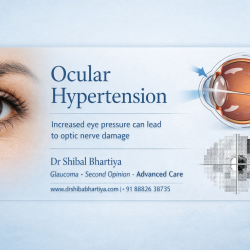
Q4. My eye pressures are high but my doctor says I do not have glaucoma. What is ocular hypertension?

If your eye pressure is above the normal range but your optic nerve and visual field show no signs of damage, you have ocular hypertension (OHT). It is not glaucoma, but it is a significant risk factor for developing glaucoma.

Not everyone with high eye pressure will develop glaucoma. Your individual risk depends on your age, ethnicity, family history, and corneal thickness (thicker corneas can give falsely high pressure readings).

Your doctor will weigh your risk profile before deciding whether to treat. Options include eye drops or selective laser trabeculoplasty (SLT). In lower-risk patients, careful monitoring without treatment is often appropriate, since all glaucoma medications carry some side effect burden.

Whether or not you receive treatment, regular eye checks are essential. The goal is to detect any optic nerve or visual field changes before significant vision is lost. Knowing your risk early is one of the best things you can do for your vision.

GLAUCOMA SUSPECT

Q5. My doctor says I am a glaucoma suspect. My tests were normal. Why do I still need annual monitoring?

A glaucoma suspect is someone whose optic nerve appearance raises concern, even when eye pressure and visual field tests are currently normal.

The most common reason is a larger than average cup-to-disc ratio (the proportion of the optic nerve head occupied by the central cup). A ratio above 0.5, or a difference of 20 percent or more between the two eyes, warrants closer monitoring. Other reasons include borderline eye pressures or a strong family history of glaucoma.

This does not mean you have glaucoma. It means your doctor wants a baseline record to compare against over time. If the optic nerve or visual field changes, that change can be detected early and treatment started before significant vision is lost.

Most glaucoma suspects are asked to return for annual or biannual testing. Once several years of stable results have been recorded, the interval between visits may be extended.

Note: The value of being labelled a glaucoma suspect is that it keeps you in the system. Early detection is the single most powerful tool for preventing glaucoma blindness.

SECONDARY GLAUCOMA

Q6. What is secondary glaucoma, and what causes it?

Secondary glaucoma is glaucoma caused by another identifiable condition or event, rather than arising on its own. It is managed in the same way as primary glaucoma (eye drops, laser, or surgery), but the underlying cause must also be addressed.

The most common secondary types of glaucoma include:

  • Pseudoexfoliation glaucoma: A protein-like material deposits on the lens and drainage structures of the eye, blocking outflow. This is one of the most common secondary glaucomas in India and tends to cause higher pressures and faster progression than primary open-angle glaucoma. It requires close monitoring and often more aggressive treatment.
  • Pigmentary glaucoma: Pigment granules shed from the back of the iris clog the drainage angle. It typically affects younger, myopic (short-sighted) patients and is often missed because these patients are not in the standard high-risk age group for glaucoma screening.
  • Steroid-induced glaucoma: Long-term use of steroid eye drops, nasal sprays, skin creams, or oral steroids can raise eye pressure in susceptible individuals. If you are on any form of steroid medication for any condition, ask your doctor whether your eye pressure has been checked.
  • Traumatic glaucoma: An injury to the eye can damage the drainage angle and cause pressure to rise, sometimes years after the original injury. Any history of significant eye trauma should be disclosed to your eye doctor.
  • Neovascular glaucoma: New, abnormal blood vessels grow over the drainage angle, blocking outflow. It is most commonly associated with poorly controlled diabetes and retinal vein occlusion. It is one of the more difficult types to manage and often requires surgery.

Note: If you have a systemic condition such as diabetes, or are on long-term steroid medication, make sure your eye doctor is aware. These are glaucoma risk factors that are often overlooked.

CONGENITAL AND CHILDHOOD GLAUCOMA

Q7. My child has been diagnosed with glaucoma. How is that possible, and what should I expect?

Glaucoma can affect any age group, though it is most common in adults over 40. In children, the most common cause is a structural defect in the drainage angle that is present from birth; this is called congenital glaucoma or primary infantile glaucoma.

Signs that parents typically notice first include:

  • Cloudy or hazy eyes
  • Unusual sensitivity to light; the child may turn away from bright light or bury their face
  • Excessive tearing
  • Eyes that appear larger than normal (because raised pressure causes the infant eye to expand)

Eye drops may be started initially to control pressure, but surgery is almost always required for congenital glaucoma. Early surgical intervention gives the best chance of preserving good vision throughout the child’s life.

Some children also have a co-existing cataract or other eye abnormality that needs to be managed alongside the glaucoma. Glasses, patching therapy for amblyopia (lazy eye), and follow-up surgeries may all be part of the long-term plan.

Children with glaucoma can lead fully independent lives. Even where some vision has been lost, tailored rehabilitation and visual aids allow children to participate in all age-appropriate activities. As a parent, remaining engaged with the care team and encouraging the child’s independence are the most important things you can do.

Note: Congenital glaucoma is rare. If your child has been diagnosed, seek care from a specialist with specific paediatric glaucoma experience. Early and consistent follow-up is critical.

Read the research articles

This article was written by Dr Shibal Bhartiya, fellowship-trained glaucoma specialist and Mayo Clinic Research Collaborator, Clinical Director at Marengo Asia Hospitals, Gurugram, known for ethical, patient-centred glaucoma care and independent glaucoma second opinions. This article was edited in April 2026.

She has published peer-reviewed research on glaucoma management, examining how treatment decisions should balance medical evidence, patient preferences, and long-term vision outcomes.

As Editor-in-Chief of Clinical and Experimental Vision and Eye Research and Executive Editor of the Journal of Current Glaucoma Practice (Pubmed Indexed, official journal of the International Society of Glaucoma Surgery), Dr Shibal Bhartiya brings editorial and research depth to every clinical decision. Her 200+ publications, including 90+ PubMed-indexed publications and 28 edited textbooks span glaucoma biology, surgical outcomes, health equity, and emerging diagnostics.

Available on Pubmed and Google Scholar

Dr Shibal Bhartiya
Glaucoma • Second Opinion • Advanced Care

www.drshibalbhartiya.com
+91 88826 38735

Patient reviews Google Business Profile

Upload your reports for a structured review.