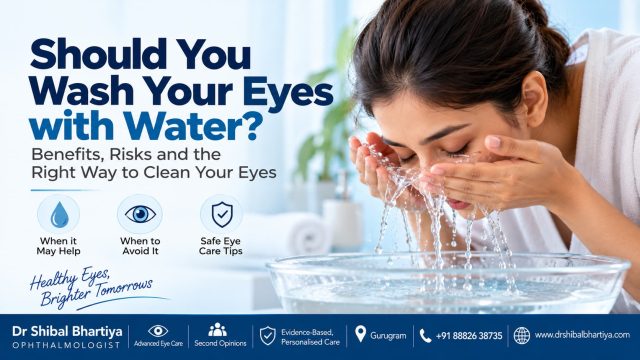
You should not wash your eyes with water. Eyes are self-cleaning through blinking and natural tear flow, so washing them is not required for hygiene. In fact, splashing washes away the protective tear film. This can dry out or irritate the eye over time. It can also cause injuries and infections. Washing your eyes, it offers a feeling of temporary freshness, not an actual cleaning benefit.
If something gets into your eye, gently rinse it with clean drinking water. You can cup water in your hands and blink several times while your eye is in the water.
If a chemical, cleaning product, or other harmful substance gets into your eye, start washing it immediately with a steady stream of clean water. You can use a shower, tap, or a bottle of water. Keep rinsing for at least 15–20 minutes and seek medical attention as soon as possible.
You do not need to splash water in your eyes to clean them. Doing it repeatedly through the day is not harmless. The eye already has its own continuous cleaning system, built into every blink. Frequent splashing disrupts this system rather than supporting it.
Why This Belief Persists
Splashing water on the face is a habit most people learn in childhood. It is tied to washing up in the morning, cooling off, or feeling presentable before stepping out. Because the same motion touches the eyes along with the rest of the face, it gets bundled into the idea of “cleaning” them too. The visible act of rinsing, and the immediate sensation of freshness, feels like it must be doing something useful. However, it is not like rinsing your hands or face to remove grime.
What The Science Actually Says
The eye is already equipped with a highly efficient, continuous cleaning mechanism. Every blink spreads a fresh layer of tears across the surface. This traps dust, debris, and microscopic particles and sweeps them toward the inner corner of the eye. From here, they drain through the tear duct into the nose. This happens roughly every few seconds, all day, without any conscious effort. Alongside this, tears contain enzymes and antibodies that help control bacteria on the eye’s surface. In healthy eyes, this system needs no outside help.
Strips the tear film
Splashing water in the eyes interrupts this process rather than assisting it. As with any water rinse, it strips away the structured tear film, the layered mix of oil, water, and mucus that keeps the eye lubricated and protected. It is replaced temporarily with plain, non-sterile water that evaporates quickly and offers no lasting protection. Done two or three times a day, every day, this repeated stripping can leave the ocular surface persistently drier and more vulnerable to irritation, as well as infections.
Blinking removes debris continuously
There is also no meaningful debris removal advantage. Normal blinking already clears the kind of everyday dust and particles that water splashing is meant to address. Splashing does not reach or remove anything blinking hasn’t already cleared, except in cases of an actual foreign body or chemical exposure, which call for proper sterile eyewash, not routine tap water.
Washing upsets the delicate balance of tear film
Tap or non-sterile water is also hypotonic compared to your natural tears and can contain trace minerals, chlorine, or microscopic organisms (such as Acanthamoeba, which is particularly hazardous for contact lens wearers). Exposing the ocular surface to untreated water disrupts the delicate lipid-aqueous balance of the tear film and can introduce pathogens directly into the eye.
What Actually Helps
- Trust natural blinking as the primary, sufficient cleaning mechanism for everyday use
- Wash hands before touching the eyes or removing contact lenses, since hand contact is a far more common source of contamination than the eye’s own surface
- Use sterile saline or an eyewash station only for actual foreign bodies, chemical exposure, or as specifically advised by a doctor
- Address dryness or irritation with preservative-free artificial tears, not repeated water splashing
- Remove eye makeup gently at night with a proper cleanser rather than water alone
Avoid using water splashing to wash off eye makeup like mascara, eyeliner, or kajal. Water alone cannot dissolve cosmetic oils and waxes; instead, it tends to smear pigment directly into the meibomian gland openings along your eyelid margins. This clogs these vital oil-producing glands, leading directly to evaporative dry eye and chronic blepharitis. Use a dedicated, gentle eyelid cleanser instead.
When To See a Doctor
- Eyes that feel persistently dry, gritty, or irritated despite frequent splashing
- Redness that doesn’t improve or keeps returning
- A sensation of something stuck in the eye that doesn’t clear with blinking
- Any chemical splash or injury, which needs proper flushing and urgent assessment, not routine rinsing
- No eye check in the last 12 months
📍 Gurgaon 📞 +91 88826 38735 | 🌐 Contact Us | Second Opinion Form for teleconsults
Frequently Asked Questions
Isn’t it good hygiene to wash away dust or pollution from the eyes?
No. Doctors do not recommend that you should wash your eyes. Blinking already clears everyday dust and airborne particles continuously through the day. Splashing does not add meaningful debris removal and instead disrupts the tear film that was already managing this.
What should I do if something actually gets in my eye?
Use clean water or sterile saline to flush it out promptly in that specific situation, and seek medical attention if irritation, pain, or redness persists afterward. This is different from routine daily splashing as a general habit. Do not try to take it out yourself using a tissue or towel. Get medical assistance as soon as possible.
Can splashing water in the eyes cause any harm over time?
Yes, done repeatedly it can contribute to a persistently disrupted tear film, dryness, and irritation. It is not typically dangerous as an occasional habit, but it offers no benefit and can add up to real discomfort as a daily routine. It can also lead to splash injuries.
Can contact lens wearers wash their eyes or lenses with tap water?
No. Contact lenses act like a sponge, trapping tap water against the cornea. This significantly increases the risk of severe, vision-threatening corneal infections like microbial keratitis. Never expose contact lenses or your eyes to tap water.
Book a Consultation
If your eyes feel dry or irritated despite regular rinsing, it’s worth finding out what’s actually causing it.
Book an Appointment →
📍 Gurgaon 📞 +91 88826 38735 | 🌐 Contact Us | Second Opinion Form for teleconsults
This article is a part of the Myths about Eyes Hub. Read on more to understand more about your eye health. Also read Do Almonds Improve Vision, Can Carrots Improve Vision or Remove Glasses, Should We Wash Eyes, and Nutrients for Eye Health, Glaucoma Myths Debunked, Myths About Cataract. Please also read Myths About Eye Pressure, Complementary and Alternate Medication for Glaucoma, and Marijuana for Glaucoma.
This article is also a part of the Dry Eye Hub. Please also read Basics of Dry Eye, Dry Eye Second Opinion and Dry Eye: A Chronic Disease.
About the Author
This article was written by Dr Shibal Bhartiya, fellowship-trained glaucoma specialist and Mayo Clinic Research Collaborator, Clinical Director at Marengo Asia Hospitals, Gurugram, known for ethical, patient-centred glaucoma care and independent glaucoma second opinions. She is also the Program Director for Community Outreach & Wellness; and for the Marengo Asia International Institute of Neuro and Spine.
She has published peer-reviewed research onglaucoma management, examining how treatment decisions should balance medical evidence, patient preferences, and long-term vision outcomes.
As Editor-in-Chief of Clinical and Experimental Vision and Eye Research and Executive Editor of the Journal of Current Glaucoma Practice (Pubmed Indexed, official journal of the International Society of Glaucoma Surgery), Dr Shibal Bhartiya brings editorial and research depth to every clinical decision. Her 200+ publications, including 90+ PubMed-indexed publications and 28 edited textbooks span glaucoma biology, surgical outcomes, health equity, and emerging diagnostics.
1600+ Five Star Patient Reviews Google Business Profile
If you are unable to come to Dr Bhartiya’s clinic: Read more about teleconsultation
Read her research on PubMed | Google Scholar | ResearchGate | ORCID | Github | Wikidata
📋Upload your reports for a structured review.| 🌐 Contact Us| 📞 +91 88826 38735
⭐ Helped by this article? Leave a Google review — it helps other patients find reliable eye care.