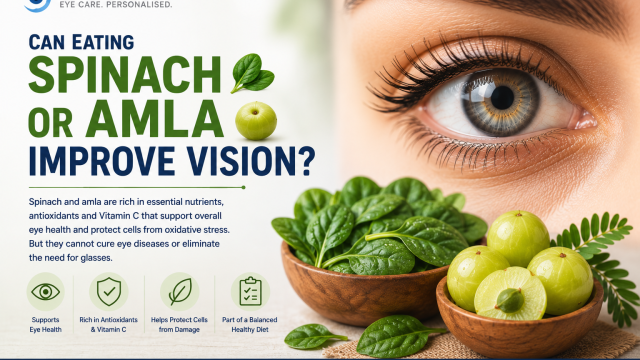
Eating spinach or amla does not improve vision. It does not reverse or reduce glasses power either. Both are nutritious foods that support long-term eye health through specific vitamins and antioxidants, but neither can change the physical shape of the eyeball that determines an existing refractive error.
I tell my patients that spinach and amla are excellent additions to a healthy diet because they provide nutrients such as lutein, vitamin C, and antioxidants that help support long-term eye health. However, they cannot reduce glasses power or reverse refractive errors, because the need for glasses is determined by the shape and focusing power of the eye rather than a deficiency of any single nutrient.
Please also read Do Carrots Make Glasses Go Away?
Why This Belief Persists
Amla holds a particularly strong place in Indian traditional wellness as a near-universal health tonic, credited with everything from hair growth to immunity to eyesight, largely because of its very high vitamin C content and long-standing use in Ayurveda. Spinach carries a similar reputation globally, partly reinforced by decades of “eat your greens for good eyes” advice from parents and, culturally, cartoon associations between leafy greens and strength or health. Because both foods are genuinely nutrient-dense and genuinely relevant to some aspect of eye health, it becomes easy to round that relevance up into a much larger claim: that they can undo an existing prescription, which is a different, unsupported leap.
What The Science Actually Says
Spinach is one of the richest dietary sources of lutein and zeaxanthin, two carotenoid antioxidants that accumulate specifically in the macula, the central part of the retina responsible for sharp, detailed vision. Research has linked adequate lutein and zeaxanthin intake to a reduced risk of age-related macular degeneration and has shown these compounds may offer some protection against oxidative damage in the retina over decades. This is a genuine, if narrow and long-term, benefit, concentrated on retinal health, not on how the eye focuses light.
Amla is exceptionally rich in vitamin C, an antioxidant relevant to general eye tissue health, including some studied associations with reduced cataract risk with adequate long-term vitamin C status. Again, this relates to protecting existing eye structures from age-related oxidative damage over years, not to reshaping the eye’s optical system.
Glasses power exists because of the eyeball’s length and curvature relative to its focusing power, a structural relationship established during development and influenced primarily by genetics and childhood visual environment. This structural feature is entirely separate from retinal antioxidant status. No level of lutein, zeaxanthin, or vitamin C intake, however high, changes the axial length of an eyeball or the curvature of its cornea and lens. A person eating spinach and amla daily for years will still require exactly the glasses power their eye’s structure dictates, because there was never a nutritional deficiency causing that structural feature in the first place.
What Actually Helps
- Include spinach, amla, and other antioxidant-rich foods as part of a balanced diet, valued for long-term retinal health, not glasses correction
- Get an annual eye check to track any real changes in glasses power over time
- Wear the correctly prescribed glasses consistently rather than adjusting diet in place of correction
- Encourage outdoor time, especially in children, since this has genuine evidence for slowing myopia progression
- Discuss diet’s actual, evidence-based role in conditions like macular degeneration or cataract with your doctor if that’s your specific concern
When To See a Doctor
- Glasses power changing at each yearly check despite a healthy, nutrient-rich diet
- Difficulty seeing clearly at any distance, regardless of dietary habits
- A family history of macular degeneration, cataract, or high myopia
- Interest in a targeted, evidence-based nutritional approach for retinal health, best discussed directly rather than assumed
- No eye check in the last 12 months
Every consultation is an opportunity to discuss not only the treatment of eye disease but also the role of nutrition and healthy lifestyle choices in protecting vision. If you have questions about foods, supplements, or common eye health myths, I would be delighted to help at my clinic in Gurgaon.
Book a Consultation
Spinach and amla are nutritious foods that support overall eye health, but they cannot improve eyesight, reduce glasses power, or treat eye diseases. My goal is to help patients understand the difference between maintaining healthy eyes through good nutrition and treating conditions that require medical care.
If you or your child have blurred vision, difficulty reading, increasing glasses power, or any other change in vision, a comprehensive eye examination is the best place to start. I will identify the underlying cause and recommend evidence-based treatment tailored to your individual needs.
Whether you have questions about nutrition, children’s eyesight, or age-related eye diseases, I would be happy to help you separate myths from science and make informed decisions about your eye health.
Book an Appointment:
📍 Gurgaon 📞 +91 88826 38735 | 🌐 Contact Us | Second Opinion Form for teleconsults
Frequently Asked Questions
Is there real evidence spinach helps with any eye condition?
Yes, its lutein and zeaxanthin content has documented associations with reduced risk of age-related macular degeneration over the long term. This benefit is specific to retinal antioxidant protection, not to correcting refractive error.
Can amla’s vitamin C content help prevent cataracts?
Some research has associated adequate long-term vitamin C intake with reduced cataract risk, though it is one of several contributing dietary factors rather than a guaranteed preventive measure on its own. It has no established effect on glasses power.
If these foods don’t reverse glasses power, is there any point eating them regularly?
Yes, their benefits for long-term retinal health and reduced risk of certain age-related eye conditions are real and worth having as part of a balanced diet. The distinction is simply that this benefit doesn’t extend to reversing an existing prescription.
This article is a part of the Myths about Eyes Hub. Read on more to understand more about your eye health. Also read Do Almonds Improve Vision, and Nutrients for Eye Health, Does Triphala Eyewash Improve Vision?, and Does Honey or Turmeric Treat Eye Infections.
About the Author
This article was written by Dr Shibal Bhartiya, fellowship-trained glaucoma specialist and Mayo Clinic Research Collaborator, Clinical Director at Marengo Asia Hospitals, Gurugram, known for ethical, patient-centred glaucoma care and independent glaucoma second opinions. She is also the Program Director for Community Outreach & Wellness; and for the Marengo Asia International Institute of Neuro and Spine.
She has published peer-reviewed research on glaucoma management, examining how treatment decisions should balance medical evidence, patient preferences, and long-term vision outcomes.
As Editor-in-Chief of Clinical and Experimental Vision and Eye Research and Executive Editor of the Journal of Current Glaucoma Practice (Pubmed Indexed, official journal of the International Society of Glaucoma Surgery), Dr Shibal Bhartiya brings editorial and research depth to every clinical decision. Her 200+ publications, including 90+ PubMed-indexed publications and 28 edited textbooks span glaucoma biology, surgical outcomes, health equity, and emerging diagnostics.
1600+ Five Star Patient Reviews Google Business Profile
If you are unable to come to Dr Bhartiya’s clinic: Read more about teleconsultation
Read her research on PubMed | Google Scholar | ResearchGate | ORCID
📋Upload your reports for a structured review.| 🌐 Contact Us| 📞 +91 88826 38735 ⭐ Helped by this article? Leave a Google review — it helps other patients find reliable eye care