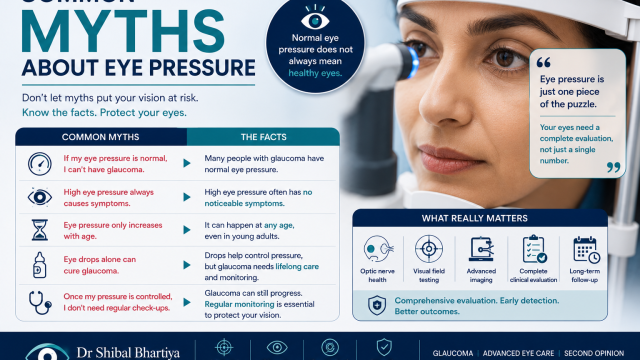
| Eye pressure myths delay diagnosis and harm real patients. High eye pressure does not always mean glaucoma, and normal eye pressure does not mean your optic nerve is safe. The only way to know your glaucoma risk is a proper examination, says Dr Shibal Bhartiya. |
Few topics in eye health carry more confusion than intraocular pressure (IOP). Patients Google symptoms, read contradictory articles, and arrive in clinic carrying conclusions that put their vision at risk. Here is what the evidence actually shows.
Dr Shibal Bhartiya is a fellowship-trained glaucoma specialist and Mayo Clinic Research Collaborator with over 25 years of experience. Her approach focuses on identifying risk before damageis irreversible, simplifying treatment decisions, and protecting vision long-term. Emphasis on early detection, risk assessment,and continuity of care.
The 5 Most Dangerous Eye Pressure Myths
| Myth | Reality |
| High eye pressure means I have glaucoma. | Ocular hypertension alone does not equal glaucoma. Many people have elevated IOP and healthy optic nerves. Treatment depends on your full risk profile. |
| Normal eye pressure means I am safe. | Normal tension glaucoma accounts for roughly 30% of all glaucoma cases in India. The optic nerve can be damaged even when IOP reads within range. |
| I would notice if my eye pressure was high. | Elevated IOP causes no pain and no blurred vision in most people. Glaucoma is called the silent thief of sight for exactly this reason. |
| My pressure was normal last year, so I’m fine. | IOP fluctuates throughout the day and across seasons. A single reading captures one moment. Trends over time matter far more. |
| Lowering pressure guarantees no progression. | IOP reduction is the only proven treatment, but some patients progress despite well-controlled pressure. Regular follow-up remains essential. |
What Is a Normal Eye Pressure Range?
The population average for IOP is 10–21 mmHg. This is a statistical range, not a safety guarantee. Your personal target is set by your glaucoma specialist based on your optic nerve, visual field, and systemic risk factors, not by a number on a chart.
Why Does Pressure Fluctuate?
IOP is highest in the early morning and varies with posture, exercise, hydration, and even the season. A single afternoon reading in clinic may significantly underestimate your peak pressure. This is why 24-hour IOP monitoring matters in cases where standard testing is inconclusive.
Does Eating or Drinking Affect Eye Pressure?
Drinking large volumes of water quickly can transiently raise IOP. Caffeine causes a modest, short-lived increase. High-sodium diets and alcohol also influence pressure. None of these effects replace the need for medication or surgical treatment where indicated.
Can Yoga or Exercise Lower Eye Pressure?
Aerobic exercise modestly lowers IOP in the short term. Head-down yoga poses, however, can raise IOP substantially and should be discussed with your specialist if you have established glaucoma or are at risk. Physical activity is beneficial for overall health but is not a treatment substitute.
When Should I Get My Eye Pressure Checked?
Anyone over 40, anyone with a family history of glaucoma, anyone with diabetes or high myopia, and anyone of African or South Asian descent should have a comprehensive eye examination including IOP measurement, optic nerve evaluation, and visual field testing. A tonometry reading alone is not a glaucoma screen.
This page is a part of the Glaucoma Hub. you may want to read about Glaucoma Progression, and Risk Stratification in Glaucoma. You may want to read more about OCT and Visual Field, Glaucoma Tests Explained, Normal OCT but Vision Symptoms and How to Understand Your OCT Better. Also of help could be Why Do I Need a Visual Field Test? Glaucoma Diagnosis in Gurgaon, Get a Glaucoma Second Opinion in Gurgaon and Get an Online Glaucoma Consult.
This article is a part of the Myths about Eyes Hub. Read on more to understand more about your eye health. Also read Do Almonds Improve Vision, Do Spinach and Amla Improve Vision, and Nutrients for Eye Health, Glaucoma Myths Debunked, Myths About Cataract. Please also read Complementary and Alternate Medication for Glaucoma, and Marijuana for Glaucoma.
About the Author
This article was written by Dr Shibal Bhartiya, fellowship-trained glaucoma specialist and Mayo Clinic Research Collaborator, Clinical Director at Marengo Asia Hospitals, Gurugram, known for ethical, patient-centred glaucoma care and independent glaucoma second opinions. She is also the Program Director for Community Outreach & Wellness; and for the Marengo Asia International Institute of Neuro and Spine.
She has published peer-reviewed research on glaucoma management, examining how treatment decisions should balance medical evidence, patient preferences, and long-term vision outcomes.
As Editor-in-Chief of Clinical and Experimental Vision and Eye Research and Executive Editor of the Journal of Current Glaucoma Practice (Pubmed Indexed, official journal of the International Society of Glaucoma Surgery), Dr Shibal Bhartiya brings editorial and research depth to every clinical decision. Her 200+ publications, including 90+ PubMed-indexed publications and 28 edited textbooks span glaucoma biology, surgical outcomes, health equity, and emerging diagnostics.
1500+ Five Star Patient Reviews Google Business Profile
If you are unable to come to Dr Bhartiya’s clinic: Read more about teleconsultation for glaucoma
Read her research on PubMed | Google Scholar | ResearchGate | ORCID
Upload your reports for a structured review.| www.drshibalbhartiya.com | +91 88826 38735
Leave a review on Google