Yes, many patients of toxic epidermal necrolysis, TEN, and Stevens-Johnson syndrome (SJS) do recover well. Some eye problems after SJS or TEN may require treatment for long, and some scarring may remain. Preservative-free lubricants, autologous serum drops, scleral lenses and long-term follow-up can improve comfort and protect the cornea in selected patients.
My TEN Patient on Autologous Serum Drops: A Five Year Story of Grit and Resilience
Five years ago, the intensive care team asked me to examine a young woman named Meera*. She was in her early twenties. A rare, life-threatening illness had stripped much of the skin from her body. It was toxic epidermal necrolysis.
Her eyelids were swollen and raw. She could barely open her eyes. When I lifted the lids, I found fine strands of tissue joining each lid to the eye. The clear front surface of the eye had many tiny breaks. The edges of her eyelids were already scarring.
Her recovery took months, not weeks. We used lubricants, antibiotics, and anti-inflammatory drops to protect her eyes. Her eyes still felt dry and sore. No single treatment changed things overnight. Her eyes ranged from comfortable, to extremely red and irritated.
About a year ago, we added eye drops made from her own blood serum. She is now far more comfortable. Her eyelid edges are still scarred, so her corneas were getting vascularised, that is new blood vessels were growing into the cornea. So now, she wears Scleral Contact Lenses to protect her corneas.
Meera works as an architect overseas. She still returns every three months to collect her drops and have her eyes checked. Her best-corrected vision is 6/6 in both eyes.
In the ICU, I could not picture any of this. The scars remain, and she still needs specialist care. But she works, travels and lives independently. She also helps other TEN/ SJS survivors. Her eyes no longer set the limits of her life.
I saw many patients in my three years as Senior Research Associate in the Cornea & Ocular Surface Services at Dr R P Centre for Ophthalmic Sciences, AIIMS, New Delhi, and all of them continue to inspire me with their grit and resilience. Of them all, Meera’s story is exceptional in how she manages to balance her life overseas, her family in Gurgaon, and her advocacy for TEN/ SJS survivors.
*Patient details have been changed to protect privacy.
Meera’s case shows what toxic epidermal necrolysis can leave behind in the eyes long after the skin heals. The illness is rare. Yet when it involves the eyes, the damage can last for years. Once the skin recovers, attention often moves away from the eye. Below, I explain how it harms the eye, which treatments help years later, and when to see a specialist.
How Toxic Epidermal Necrolysis and Stevens-Johnson Syndrome Cause Long-Term Eye Damage
Eye damage from toxic epidermal necrolysis often continues long after the skin heals. Toxic epidermal necrolysis (TEN) and Stevens-Johnson syndrome (SJS) are one disease spectrum. Both are rare, severe reactions that medicines most often trigger. Doctors grade them by how much skin detaches. Less than 10% of body surface is SJS, 10 to 30% is overlap, and more than 30% is TEN.
The reaction does not stop at the skin. It also inflames the lining of the mouth, nose, genitals and eyes. In the eye, it injures the conjunctiva, the cornea and the eyelid edges. Skin severity does not always predict eye severity. Some patients with limited skin loss still develop serious eye problems.
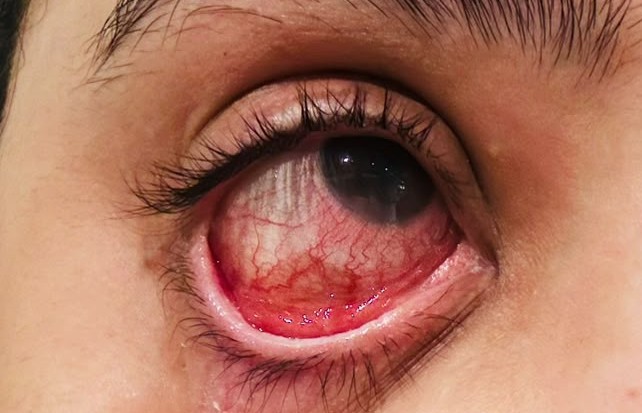
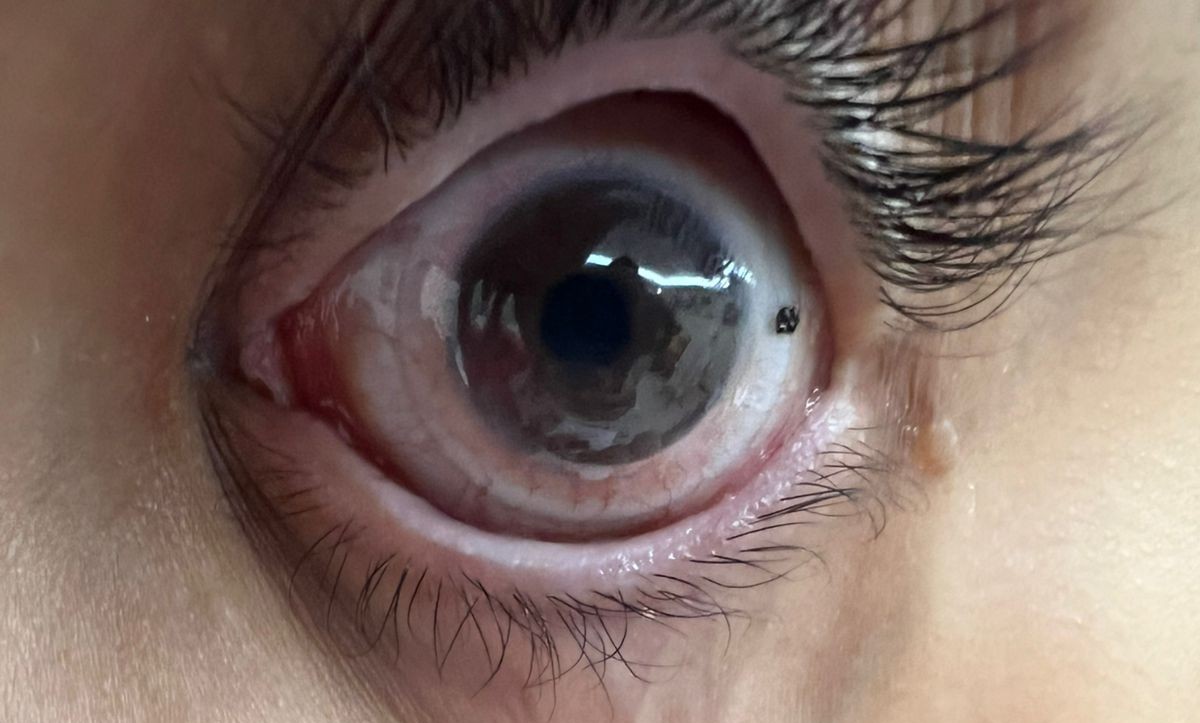
Months later, a pattern of chronic damage emerges. The tear film fails, so the eye stays dry. Scar bands called symblepharon can tether the lid to the eyeball. The eyelid edge can turn into hard, skin-like keratinised tissue. Lashes can also grow inwards. Each blink then drags this rough edge across the cornea. Over time, this can cause repeated surface breakdown, ulcers, scarring and loss of vision.
What Helps TEN/ SJS Patients
Treatment aims to wet the surface, release scar bands and protect the cornea from friction. Preservative-free lubricants form the base. Autologous serum drops add growth factors and proteins from the patient’s own blood. They suit severe dry eye that ordinary lubricants cannot control. Evidence comes mostly from smaller studies, so specialists choose patients carefully.
Long-term follow-up covers more than comfort. Some patients need a mild steroid drop to calm surface inflammation. Steroid drops can raise eye pressure in susceptible people, so the specialist checks it regularly. The team also watches the cornea for ulcers and infection, because a damaged surface is easy to infect. Surgery has a role in selected cases of scarring or structural damage.
Eyelid edge keratinisation deserves special mention. Drops cannot reverse it. A scleral lens can shield the cornea from the rough edge. A specialist must fit and review the lens, because poor fit or poor hygiene raises infection risk.
Autologous mucosal membrane grafting, limbal stem cell transplantation procedures, keratoplasty and keratoprosthesis are important for patients with severe scarring and vision loss.
How to Tell Ordinary Dry Eye From TEN-Related Eye Damage
TEN survivors can use this table to match a symptom to the next step.
| Symptom | What It Suggests | What To Do |
|---|---|---|
| Dry, gritty eyes that ordinary lubricants do not settle | Tear film failure from surface damage | Book an ocular surface assessment with a cornea specialist within two weeks. Ask about autologous serum drops. |
| The lid feels stuck to the eye, or eye movement feels limited | Symblepharon, scar bands between lid and eyeball | Get a slit-lamp examination within one week. A specialist can release bands and plan treatment. |
| Lashes touch the eye, or each blink feels sharp | Misdirected lashes or keratinised eyelid edge | Get a slit-lamp examination with fluorescein staining within one week. Ask about lash and lid margin treatment. |
| Redness and light sensitivity lasting more than a few days | Corneal surface breakdown or inflammation | Get an eye examination within 48 hours, including corneal staining. |
| Sudden pain, a white spot on the cornea, or falling vision | Corneal ulcer or infection | Go to an eye emergency the same day. Do not wait for a routine appointment. |
| Stinging, tiring eyes despite 6/6 vision on the chart | Persistent surface disease with clear central vision | Keep regular follow-up, often every three to six months. Ask whether scleral lenses could help. |
Why This Diagnosis Is So Critical
The acute illness takes all the attention. In intensive care, survival, fluids and skin care come first. Eye checks can slip down the list, yet early eye care is crucial.
Patients also learn to live with discomfort. Many accept dry, sore eyes as the price of survival. They stop mentioning symptoms that deserve review.
Good chart vision can mislead. A patient can read 6/6 and still have a failing eye surface. Acuity testing checks central vision. It does not measure tear quality, lid edge friction or scarring under the lids.
Scar changes also creep in slowly. Keratinised lid edges and inward lashes may show only under a slit lamp. They are easy to miss without a close look.
Finally, dry eye care often stops too early. Lubricants alone rarely control severe surface disease. These patients need a clinician who recognises the pattern and escalates treatment.
When to See an Eye Specialist
See a Doctor Urgently
If you are a TEN survivor, go to an eye emergency the same day if you have any of these.
- Sudden eye pain, especially with a white spot on the cornea
- A sudden drop in vision
- Red, light-sensitive eyes with discharge
See a Doctor
Book a visit with a cornea or ocular surface specialist if you have any of these.
- Dry, sore eyes that continue despite regular lubricants
- Lashes that rub the eye, or a lid that feels stuck
- A history of TEN or SJS and no eye review in the past year
- Symptoms that continue after you were told everything was fine
For a structured second look, read about my C.L.E.A.R. dry eye second opinion framework. Please also read about Autoimmune Diseases and the Eye.
Frequently Asked Questions
What is toxic epidermal necrolysis, and what is Stevens-Johnson syndrome? How do they affect the eyes?
Toxic epidermal necrolysis (TEN) is a rare, life-threatening reaction, usually to a medicine, that detaches skin and inflames mucous membranes. Stevens-Johnson syndrome is the milder end of the same spectrum, with under 10% skin detachment, while TEN exceeds 30%. In the eyes, TEN can scar the conjunctiva, dry the surface and damage the eyelid edges. These changes can persist for years after the skin heals.
Can eye damage from TEN or SJS be treated years after the illness?
Often, yes. Scarring may be permanent, but many problems still respond to treatment. Options include preservative-free lubricants, autologous serum drops, management of lid and lash problems, and scleral lenses in selected patients. A specialist builds a plan around the damage found on examination.
What are autologous serum eye drops, and how do they help severe dry eye?
Autologous serum eye drops come from the patient’s own blood. Trained staff prepare and store the serum under strict protocols. Serum contains growth factors and proteins that can support healing of the corneal surface. Specialists use the drops when ordinary lubricants fail to control severe dry eye. They support comfort and epithelial health but do not erase scars.
Can scleral contact lenses help after TEN?
Scleral lenses can help selected patients with severe surface disease after TEN. These large lenses vault over the cornea and hold a fluid layer against it. That layer cushions the cornea from a rough, keratinised eyelid edge. Fitting needs a specialist, and follow-up checks reduce the risk of infection and lens problems.
Book a Consultation
I will be happy to help you draw up a treatment plan if you have had toxic epidermal necrolysis or Stevens-Johnson syndrome and still have dry, sore or light-sensitive eyes. I will also be happy to help you with a second opinion if lashes rub your cornea, or if someone told you nothing more can be done.
At your consultation, I examine the eyelid edges, lashes, conjunctiva and cornea under a slit lamp. We review your current drops and check your eye pressure if you use steroids. We then discuss options such as autologous serum drops or scleral lenses. In case you need ocular surface reconstruction, keratoplasty or a keratoprosthesis, I will refer you to my colleagues who specialise in this.
Book an Appointment:
📍 Gurgaon 📞 +91 88826 38735 | 🌐 Contact Us | Second Opinion Form for teleconsults
At our Dry Eye Clinic & Treatment Centre in Gurgaon, persistent dry eye is evaluated through The C.L.E.A.R.™ Framework — Comprehensive Etiology Sub-Classification, Lipid & Meibomian Gland Mapping, Environmental & Systemic Triaging, Advanced Inflammation Profiling, and Root-Cause Targeted Rehabilitation. Based on meibography, NIBUT and osmolarity, it maps your exact subtype to design targeted therapy beyond artificial tears, including IPL / thermal pulsation when indicated. Learn more about our dry eye clinic →
Useful Resources:
Ocular involvement in Stevens-Johnson syndrome and toxic epidermal necrolysis: A review of current management and changing trends– to know more about SJS and TEN
Autologous serum eye drops in dry eye disease: Preferred practice pattern guidelines– specific to India
Autologous Serum Eye Drops for Dry Eye: Systematic Review– to understand the evidence that exists
This article is part of the Dry Eye Hub. Please also read Basics of Dry Eye, Dry Eye Second Opinion, Dry Eye: A Chronic Disease, Why Dry Eye Symptoms and Tests Don’t Match, and Why Are Your Dry Eye Drops Not Working may also help you understand your problem better.
You may also want to read this article written by Dr Bhartiya for NDTV online. And listen to her talk about dry eyes here.
About the Author
This article was written by Dr Shibal Bhartiya, fellowship-trained glaucoma specialist and Mayo Clinic Research Collaborator, Clinical Director at Marengo Asia Hospitals, Gurugram, known for ethical, patient-centred glaucoma care and independent glaucoma second opinions. She is also the Program Director for Community Outreach & Wellness; and for the Marengo Asia International Institute of Neuro and Spine.
Dr Bhartiya has published peer-reviewed research onglaucoma management, examining how treatment decisions should balance medical evidence, patient preferences, and long-term vision outcomes. She is also a committed patient advocate and mainstream medical columnist, translating complex ophthalmic evidence into actionable public health insights across leading national platforms including NDTV and OnlyMyHealth
As Editor-in-Chief of Clinical and Experimental Vision and Eye Research and Executive Editor of the Journal of Current Glaucoma Practice (Pubmed Indexed, official journal of the International Society of Glaucoma Surgery). Her 200+ publications, including 90+ PubMed-indexed publications and 28 edited textbooks span glaucoma biology, surgical outcomes, health equity, and emerging diagnostics.
1700+ Five Star Patient Reviews Google Business Profile
If you are unable to come to Dr Bhartiya’s clinic: Read more about teleconsultation
Read her research on PubMed | Google Scholar | ResearchGate | ORCID | Github | Wikidata
📋Upload your reports for a structured review.| 🌐 Contact Us| 📞 +91 88826 38735
⭐ Helped by this article? Leave a Google review — it helps other patients find reliable eye care.
Last Reviewed: November 2026