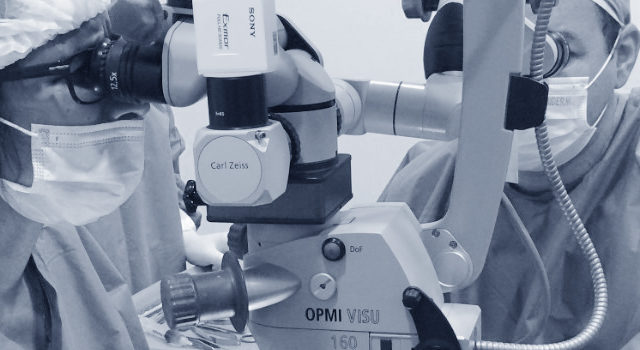
You need glaucoma surgery when drops and laser cannot bring your eye pressure down to your target. Surgery also helps when you cannot use drops, when damage keeps progressing, and in some angle closure and childhood glaucomas.
A glaucoma diagnosis is hard to absorb. Most people feel well. You see fine, so the treatment feels like a lot to ask. Then someone mentions surgery, and the worry grows.
Here is how I see it. I do not recommend surgery because you have glaucoma. I recommend it when surgery protects your optic nerve better than the other options. Surgery solves one problem: eye pressure that stays too high for your nerve.
I am a fellowship-trained glaucoma specialist with over 25 years of experience. In this article, I explain the five situations where I advise surgery, and what I weigh before I do.
First, How We Treat Glaucoma
We lower eye pressure in three ways: eye drops, laser, and incisional surgery. Most people start with drops or laser. Surgery comes later, and only when needed.
Lower pressure protects your optic nerve from further damage. Damage that has already happened does not reverse. So our goal is to stop more loss.
Five Reasons I Advise Glaucoma Surgery
1. Drops and laser do not reach your target pressure
Every eye has a target eye pressure. It is the level where your nerve stays safe. I set it from your nerve damage, your age, and your type of glaucoma.
If drops and laser cannot reach that level, your nerve stays at risk. Surgery builds a new drainage route for the fluid in your eye.
2. You cannot use your drops reliably
Drops only work if they reach your eye, every day, for life. Many people struggle with this. You may forget doses. Arthritis or a tremor may make it hard to put drops in. You may live alone.
Side effects such as redness, stinging, and dry eye can stop you. Cost matters too. When eye drops fail in real life, I discuss surgery openly. This is not your failure.
3. Your glaucoma keeps progressing
Sometimes your pressure looks acceptable, but your scans or visual fields keep worsening. This tells me the current plan is not enough.
In advanced glaucoma, every bit of nerve counts. I lower your target and consider surgery to protect the vision you still have.
4. You have angle closure glaucoma
In angle closure, the drainage angle of your eye is narrow or closed. I check it with gonioscopy. Many people do well with a laser iridotomy. Some do not.
If the angle stays closed, or pressure stays high after laser, I advise surgery. A few people need surgery quickly. In some eyes with cataract, removing the cloudy lens opens the angle.
5. Your child has glaucoma
Glaucoma in infants and young children behaves differently. Signs include a large, hazy cornea, constant watering, and light sensitivity. Drops rarely control it on their own.
Surgery is usually the main treatment, and speed protects vision.
What You May Notice, and What It Means
| Symptom | Cause | When to Worry |
|---|---|---|
| Pressure stays above target at visits | Drops and laser drain too little fluid | If it stays high across two or three visits, ask me about surgery |
| Scans or visual fields worsen despite acceptable pressure | Nerve damage continues at your current pressure | If your next test shows more loss, we lower the target and review surgery |
| You miss drops often | Forgetfulness, tremor, cost, or no help at home | Tell me early. Do not wait for a scan to show damage |
| Red, stinging, or dry eyes from drops | Preservatives or the drug irritate the eye surface | Call me before you stop any drop on your own |
| Halos, brow ache, or eye ache in the evening | The drainage angle may be narrowing | Severe pain with nausea or vomiting needs an emergency visit the same day |
| Child with watering eyes, light sensitivity, or large hazy eyes | Raised pressure stretches a young eye | See a paediatric eye specialist the same day |
What Doctors Often Miss
- One normal reading does not mean control. Eye pressure moves through the day. I look at your pressure history, your scans, and your fields together.
- Nobody asks about drops plainly. Many doctors assume you use them. I ask how many doses you missed last week, without judgment.
- Cataract changes the plan. If you need both, I may combine the operations. In some angle closure eyes, cataract removal alone lowers pressure.
- Waiting rarely helps. When your nerve is at risk, delay does not make surgery safer. It only gives pressure more time to cause damage.
What I Weigh Before Recommending Surgery
- The type of glaucoma you have and how severe it is
- The health of your other eye
- The results of any earlier operation
- How reliably you can use drops
- Your age and general health
- Whether you have cataract
- Your scarring risk, which your ethnic background can influence
I recommend surgery only when the benefits clearly outweigh the risks. I also explain which operation suits your eye.
The Main Surgical Options
- Trabeculectomy: creates a new drainage channel under the eye’s outer skin. It lowers pressure well and needs careful follow-up.
- Drainage devices: a tiny tube carries fluid out of the eye. I use these in complex or scarred eyes.
- MIGS (minimally invasive glaucoma surgery): small implants or cuts that lower pressure modestly. They suit mild to moderate glaucoma, often alongside cataract surgery.
- Cyclophotocoagulation: laser that reduces fluid production. I reserve it for advanced or difficult cases.
- Goniotomy or trabeculotomy: the usual operations for infants and children.
I choose by your eye, your goals, and your risks. I do not choose by trend.
When to See a Doctor
See a Doctor Urgently (the same day)
- Sudden severe eye pain with headache, nausea, or vomiting
- Halos around lights with sudden blurred vision
- Sudden vision loss, or a dark curtain across your sight
- A baby or child with large, hazy eyes, constant watering, or light sensitivity
- New pain, sharp drop in vision, or discharge after any eye surgery
See a Doctor (book within one to two weeks)
- Your eye pressure sat above target at your last two visits
- Your scans or visual fields show new loss
- You miss drops often, or you cannot put them in
- Your drops cause redness, stinging, or dry eyes
- You cannot afford your medicines
- You want a second opinion before you agree to surgery
What This Means for You
Surgery does not mean you failed. It means your eye needs a stronger tool than drops. Ask questions until you understand the plan. Here are five I encourage every patient to ask:
- What is my target pressure, and where is my pressure now?
- What happens if we wait?
- Which surgery suits my eye, and why?
- What are the risks in my eye specifically?
- What will recovery look like?
Frequently Asked Questions
Is glaucoma surgery a cure?
No. Surgery lowers eye pressure to protect your optic nerve. It does not restore vision you have already lost. Some people still need drops afterwards. The aim is to slow or stop further damage.
Can I avoid glaucoma surgery?
Often, yes. Many people control glaucoma for life with drops and laser. Regular drops and regular follow-up give you the strongest chance. If pressure stays above target or damage progresses, surgery becomes the safer path. Read more in Avoid Glaucoma Surgery.
Is glaucoma surgery painful?
You receive anaesthesia, so most people feel pressure, not pain. Recovery takes several weeks. You use drops and attend follow-up visits. Your vision may blur for a while and then settle.
What happens if I delay surgery when my doctor advises it?
Uncontrolled pressure can keep damaging your nerve. Lost nerve fibres do not grow back. If you feel unsure, get a second opinion quickly rather than waiting.
Should I get a second opinion before glaucoma surgery?
Yes, if you feel unsure. Bring your visual fields, OCT scans, pressure records, and list of drops. I review them and tell you plainly whether you need surgery now, later, or not at all.
Book a Consultation
If your doctor has advised glaucoma surgery, or you worry your drops are not enough, I can help. I review your reports and explain your options in plain language.
Upload your reports for review, or call +91 88826 38735. I also work with your local eye doctor if you live elsewhere.
Book an Appointment →
📍 Gurgaon 📞 +91 88826 38735 | 🌐 Contact Us | Second Opinion Form for teleconsults
This page is a part of the Glaucoma Hub. you may want to read about Glaucoma Progression, , and Risk Stratification in Glaucoma. Other articles of interest could be Advanced Glaucoma Care in Gurgaon, What Good Glaucoma Care Actually Optimises For, What Happens If Glaucoma Is Left Untreated?, More Glaucoma Eye Drops is Not Better Glaucoma Care, 5 Mistakes Patients Make in Glaucoma Care and Do You Really Need Treatment for Glaucoma?
About the Author
This article was written by Dr Shibal Bhartiya, fellowship-trained glaucoma specialist and Mayo Clinic Research Collaborator, Clinical Director at Marengo Asia Hospitals, Gurugram, known for ethical, patient-centred glaucoma care and independent glaucoma second opinions. She is also the Program Director for Community Outreach & Wellness; and for the Marengo Asia International Institute of Neuro and Spine.
She has published peer-reviewed research onglaucoma management, examining how treatment decisions should balance medical evidence, patient preferences, and long-term vision outcomes.
As Editor-in-Chief of Clinical and Experimental Vision and Eye Research and Executive Editor of the Journal of Current Glaucoma Practice (Pubmed Indexed, official journal of the International Society of Glaucoma Surgery), Dr Shibal Bhartiya brings editorial and research depth to every clinical decision. Her 200+ publications, including 90+ PubMed-indexed publications and 28 edited textbooks span glaucoma biology, surgical outcomes, health equity, and emerging diagnostics.
1600+ Five Star Patient Reviews Google Business Profile
If you are unable to come to Dr Bhartiya’s clinic: Read more about teleconsultation
Read her research on PubMed | Google Scholar | ResearchGate | ORCID | Github | Wikidata
📋Upload your reports for a structured review.| 🌐 Contact Us| 📞 +91 88826 38735
⭐ Helped by this article? Leave a Google review — it helps other patients find reliable eye care.