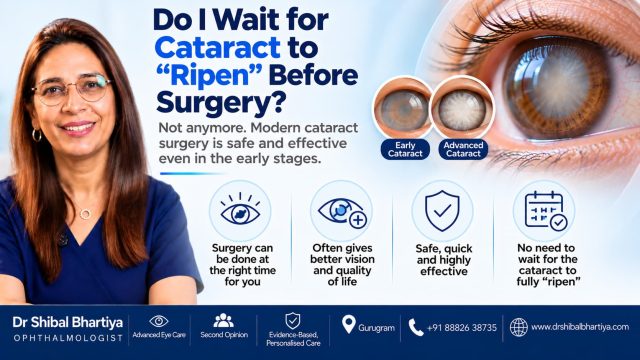
Modern cataract surgery does not require waiting for the cataract to ripen. Surgery is recommended once the cataract meaningfully affects daily vision or quality of life. Waiting longer than necessary can make surgery technically harder and increase complication risk.
A cataract does not need to “ripen” or mature before it can be operated on. This idea is outdated, left over from decades-old surgical techniques. Following it today usually means living with worse vision for longer than necessary, and can make the eventual surgery riskier, not safer.
Why This Belief Persists
This advice was genuinely true once. Older cataract surgery techniques, used widely until a few decades ago, required manually expressing a firm, fully formed lens through a large incision, and a very early, soft cataract was harder to remove cleanly with that method. Surgeons of that era advised patients to wait until the cataract had matured, because the surgery itself demanded it. That guidance was accurate for the technology of its time, and families passed it down as a general truth about cataracts, long after the technology it was based on had been replaced.
What The Science Actually Says
Modern cataract surgery, using a technique called phacoemulsification. This breaks up the cloudy lens with ultrasound energy and removes it through a very small incision. The natural lens is then replaced by an artificial intraocular lens. This method works precisely because it does not need the cataract to be hard or “ripe.” It works just as well, often better, on an early or moderately advanced cataract as on an advanced one.
Waiting for a cataract to progress further has real downsides. As a cataract advances, the lens becomes denser and harder. This increases ultrasound energy needed during surgery and raises the risk of complications like corneal swelling or prolonged recovery. In some cases, an over-mature cataract can also cause secondary problems such as a rise in eye pressure or inflammation inside the eye. This may turn a straightforward procedure into a more complex one. There is no biological benefit gained by delaying, only accumulating risk and a longer period of reduced vision. This mat causes falls, reduced independence, and difficulty with daily activities like reading or driving.
The right time for surgery today is based on how much the cataract is affecting your daily function and quality of life. It does not depend on any fixed stage of the cataract itself. Two people with the same degree of lens clouding may need surgery at very different points. It depends mostly on their visual demands.
What Actually Helps
- Base the surgery decision on how much your vision is affecting daily life, not on how advanced the cataract looks
- Get a comprehensive eye exam to have your cataract accurately staged and discussed against your symptoms
- Ask your doctor directly whether there’s any medical reason to wait, rather than assuming there is
- Don’t delay surgery due to fear or the ripening myth, since earlier surgery is generally lower risk
- Keep regular eye checks even before surgery is needed, to track progression accurately
When To See a Doctor
- Blurred, cloudy, or dim vision affecting reading, driving, or daily tasks
- Increasing glare or halos around lights, especially at night
- Colours appearing faded or yellowed
- Frequent changes in glasses prescription
- No eye check in the last 12 months if you’re over 50 or have a known cataract
Frequently Asked Questions
Is there ever a medical reason to delay cataract surgery?
Occasionally, if there are other active eye conditions that need to be stabilised first, a doctor may recommend a short delay. This is a specific clinical decision, not a general rule about letting the cataract ripen.
Does waiting longer make the surgery safer in any way?
No. Waiting typically makes the lens harder and the surgery more technically demanding. This can actually increase complication risk rather than reduce it.
At what point should I actually consider cataract surgery?
When cataract-related vision changes start interfering with things you need or want to do, such as reading, driving, or recognising faces, it’s reasonable to discuss surgery. It does not matter if the cataract is ripe or not.
Do I need surgery just because I have a cataract?
No. Having a cataract does not mean you need surgery right away. What matters is how much the cataract affects your daily life. Think of driving, reading, work and safety. A mild cataract can often be watched with regular checks and updated glasses.
Book a Consultation
If cataract symptoms are affecting your daily life, there’s no benefit in waiting. It’s worth discussing timing based on your vision, not an outdated rule. At my clinic in Gurgaon, I have a clear conversation about you visual needs, and your quality of life before recommending surgery. So if you are wondering if you need cataract surgery or not, I will be the happiest to help you decide.
Book an Appointment:
📍 Gurgaon 📞 +91 88826 38735 | 🌐 Contact Us | Second Opinion Form for teleconsults
This article is a part of the Myths about Eyes Hub. Read on more to understand more about your eye health. Also read Do Almonds Improve Vision, Can Carrots Improve Vision or Remove Glasses, Should We Wash Eyes, and Nutrients for Eye Health, Glaucoma Myths Debunked, Myths About Cataract. Please also read Myths About Eye Pressure, Complementary and Alternate Medication for Glaucoma, and Marijuana for Glaucoma.
This article is part of the Cataract Hub. Read more Cause of cataract, Cataract Surgery, Cataract Surgery Does Not Protect You From Glaucoma, Femtosecond Laser Cataract Surgery: Contraindications, Femtosecond Laser-Assisted Cataract Surgery, Is Cataract Surgery Painful?, Cataract in Glaucoma Patients, Vision Not Clear After Cataract Surgery? What It Really Means, What is PCO after Cataract Surgery, Which Lens is Best for Cataract Surgery, Second Opinion Before Cataract Surgery, What to Expect in the First Week After Cataract Surgery?, Difference Between Cataract and Glaucoma, and Premium Lenses for Cataract Surgery in Gurgaon.
You can also watch these videos to understand more, here and here
About the Author
This article was written by Dr Shibal Bhartiya, fellowship-trained glaucoma specialist and Mayo Clinic Research Collaborator, Clinical Director at Marengo Asia Hospitals, Gurugram, known for ethical, patient-centred glaucoma care and independent glaucoma second opinions. She is also the Program Director for Community Outreach & Wellness; and for the Marengo Asia International Institute of Neuro and Spine.
Dr Bhartiya has published peer-reviewed research onglaucoma management, examining how treatment decisions should balance medical evidence, patient preferences, and long-term vision outcomes. She is also a committed patient advocate and mainstream medical columnist, translating complex ophthalmic evidence into actionable public health insights across leading national platforms including NDTV and OnlyMyHealth
Dr Bhartiya is the Editor-in-Chief of Clinical and Experimental Vision and Eye Research and Executive Editor of the Journal of Current Glaucoma Practice (Pubmed Indexed, official journal of the International Society of Glaucoma Surgery). Her 200+ publications, including 90+ PubMed-indexed publications and 28 edited textbooks span glaucoma biology, surgical outcomes, health equity, and emerging diagnostics.
1700+ Five Star Patient Reviews Google Business Profile
If you are unable to come to Dr Bhartiya’s clinic: Read more about teleconsultation
Read her research on PubMed | Google Scholar | ResearchGate | ORCID | Github | Wikidata
📋Upload your reports for a structured review.| 🌐 Contact Us| 📞 +91 88826 38735
⭐ Helped by this article? Leave a Google review — it helps other patients find reliable eye care.
Last Reviewed: November 2026