Premium does not mean better for every eye. The best lens is the one that matches your eye health, lifestyle and expectations, not necessarily the one with the highest price.
Premium Lens Options for Cataract Surgery in Gurgaon: A Patient’s Guide
Most patients who come to me for cataract surgery ask the same question in different words: “Which lens should I choose?” It’s a fair question, and often a confusing one, because the choice isn’t really about brand names — it’s about how you use your eyes every day, and what you’re willing to trade off.
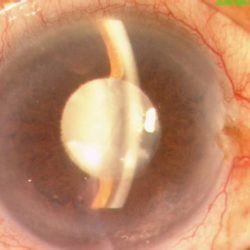
Cataract surgery removes your eye’s clouded natural lens and replaces it with an artificial intraocular lens (IOL). The lens you choose at that point is permanent, so it’s worth fifteen minutes of real thought rather than a rushed decision on the morning of surgery. Premium IOLs — multifocal, extended depth-of-focus (EDOF), and toric lenses — can reduce or remove your dependence on glasses after surgery, but they suit some lifestyles and eye profiles better than others.
This guide walks through what each lens type actually does, who tends to benefit, and the questions worth asking before you decide.
Types of Lenses Used in Cataract Surgery
| Lens Type | What It Offers | Who It’s Best For |
|---|---|---|
| Monofocal (standard) | Sharp vision at one distance, usually far; reading glasses needed for near work | Patients who prioritise the clearest possible distance vision and don’t mind glasses for reading |
| Monofocal + monovision | One eye set for distance, one for near, to reduce glasses use overall | Patients already comfortable with contact lens monovision, or who accept some depth-perception trade-off |
| Toric | Corrects astigmatism in addition to distance vision | Patients with meaningful corneal astigmatism (usually 1.0 D or more) who want sharper uncorrected distance vision |
| Extended depth-of-focus (EDOF) | A continuous range of intermediate and distance vision with fewer night-glare symptoms than multifocal lenses | Patients who spend a lot of time on screens or driving and want fewer glasses, with a lower tolerance for visual side effects |
| Multifocal / trifocal | Distinct focal points for near, intermediate, and distance vision | Patients strongly motivated to be glasses-free for reading, screens, and distance, who have healthy retinas and realistic expectations of night-vision trade-offs |
| Toric multifocal / toric EDOF | Combines astigmatism correction with multifocal or EDOF range | Patients who have both astigmatism and a strong preference for glasses independence |
No IOL, however premium, guarantees complete freedom from glasses. Multifocal and EDOF lenses reduce dependence for most patients, but a small percentage still need glasses occasionally for fine print or specific tasks. I discuss this openly with every patient before surgery, because managing expectations matters as much as the surgery itself.
Who Tends to Benefit Most from Premium Lenses
- Patients with healthy retinas, healthy corneas, and no significant glaucoma or macular disease, since these conditions can limit how well a premium lens performs
- Patients with an active lifestyle who want to minimise glasses for driving, reading, and screen work
- Patients with astigmatism who want that corrected at the same time as their cataract, rather than needing glasses afterward regardless of lens type
- Patients who are comfortable with a small amount of night glare or halos in exchange for daytime glasses independence
- Patients without high-precision night-driving demands (long-haul drivers or those with significant pre-existing night-vision sensitivity are usually better served by monofocal or EDOF lenses over trifocal)
Who Should Be Cautious with Multifocal or Trifocal Lenses
Patients with:
- Macular degeneration, diabetic retinopathy, or other retinal disease
- Advanced glaucoma or significant optic nerve damage
- Irregular corneas or a history of corneal surgery
- Who drive at night frequently for work and are highly sensitive to glare
- With unrealistic expectations of “perfect vision with zero glasses” — a conversation I have honestly with every patient, because satisfaction after premium IOL surgery tracks closely with how well expectations were set beforehand
An EDOF or toric lens is often a better fit than a trifocal for patients who want reduced glasses dependence but have any of the caution points above. This is a conversation, not a checklist. Your specific eye anatomy and history determine what’s actually appropriate for you.
Note: Dry eye is extremely common before cataract surgery and can affect the accuracy of lens measurements. If the ocular surface is unhealthy, we often treat that first before finalising the lens calculation.
Premium Lenses and Glaucoma
Many patients with early, well-controlled glaucoma can still be suitable candidates for certain premium lenses. However, because glaucoma can reduce contrast sensitivity, multifocal lenses are not always the best choice. The decision depends on the stage of glaucoma, visual field status, OCT findings and your individual visual needs.
As a glaucoma specialist, I frequently see patients seeking a second opinion before cataract surgery. One of the commonest questions is whether a premium lens is the right choice. I explain that the decision is never based on the lens alone. It depends on how your glaucoma has behaved over time, whether it is likely to progress, the quality of your optic nerve and retinal imaging, and the visual demands of your daily life. My goal is not simply to maximise your independence from glasses, but to recommend the lens that is most likely to provide clear, comfortable, and reliable vision for many years to come.
What the Decision Actually Involves
Choosing a lens isn’t a single decision made in the consultation room — it starts with diagnostic testing that tells us whether your eyes are even suitable candidates for a premium lens.
Pre-Surgery Assessment
- Corneal topography to check for irregular astigmatism or early corneal disease
- Macular OCT scan to rule out retinal disease that would limit multifocal or EDOF performance
- Pupil size measurement, since larger pupils can increase glare and halo symptoms with multifocal lenses
- Biometry (precise eye measurements) to calculate the correct lens power
- A detailed conversation about how you use your eyes — your work, hobbies, driving habits, and how much glasses use genuinely bothers you
After Surgery
Most patients notice meaningful improvement within a few days, with vision continuing to settle over 4–6 weeks. Night glare and halos, when present, typically ease over the first few months as the brain adapts (a process called neural adaptation). If symptoms don’t ease or significantly affect daily function, that’s worth discussing at a follow-up visit rather than assuming it’s permanent.
When to See a Doctor
- Vision that isn’t improving as expected by 4–6 weeks after surgery
- New floaters, flashes of light, or a curtain-like shadow in your vision (these need same-day assessment, not a routine follow-up)
- Persistent pain, redness, or increasing light sensitivity
- Night glare or halos that are significantly interfering with driving or work well beyond the expected adaptation period
- Any sudden drop in vision in either eye after surgery
Frequently Asked Questions
Is a premium lens worth the extra cost over a standard monofocal lens?
It depends on how much glasses dependence bothers you and whether your eyes are good candidates. If you’re comfortable wearing reading glasses and prioritise the sharpest possible distance vision, a monofocal lens is a completely reasonable choice. If glasses independence matters to you and your eye examination supports it, a premium lens can be a good investment — but it’s a personal decision, not one where a more expensive lens is automatically “better” for everyone.
Can I get a premium lens in only one eye?
Yes, though most surgeons recommend matching lens types in both eyes for consistent visual quality, since mismatched lenses can sometimes cause the brain to favour one eye over the other. This is assessed case by case.
Will I still need glasses at all with a trifocal lens?
Most patients achieve good functional vision at near, intermediate, and distance without glasses for most tasks, but a small number still need glasses occasionally, particularly for very fine print in low light. I discuss this realistic range of outcomes with every patient before surgery.
Does a toric lens fix astigmatism permanently?
Yes, a toric IOL corrects existing astigmatism at the time of cataract surgery, and that correction is permanent unless the cornea’s shape changes significantly afterward (which is uncommon).
How do I know if my eyes are suitable for a premium lens?
This is determined through corneal topography, a macular OCT scan, pupil measurement, and a detailed eye examination. Conditions like macular degeneration, advanced glaucoma, or irregular corneas can make a premium lens less suitable, even if you’re otherwise a good surgical candidate for cataract removal.
What’s the recovery time after premium IOL surgery?
Recovery is generally similar to standard cataract surgery — most patients resume normal activities within a few days, with full visual settling over 4–6 weeks. Night-vision side effects, if they occur, usually improve over the following months.
Key Takeaways
- Premium IOLs (multifocal, EDOF, toric) can reduce glasses dependence after cataract surgery, but no lens guarantees complete glasses independence
- The right lens depends on your corneal health, retinal health, pupil size, and daily visual demands — not just personal preference
- Toric lenses correct astigmatism; multifocal and EDOF lenses address distance-independence from glasses; some lenses combine both
- Night glare and halos are a real trade-off with multifocal and trifocal lenses, usually easing over a few months
- A proper pre-surgical work-up (topography, OCT, pupil measurement) is essential before choosing a premium lens
- This is a personalised decision best made after a detailed conversation with your surgeon, not a default upgrade
How I Help Patients Choose a Lens
During your consultation, we don’t begin by asking which premium lens you want.
We begin by understanding how you use your eyes.
• Do you read for long periods?
• Do you spend hours on a computer?
• How often do you drive at night?
• Is perfect distance vision more important than reading without glasses?
Your examination, OCT, corneal measurements, ocular surface health and lifestyle together determine which lens is likely to give you the best long-term satisfaction—not the most expensive lens.
Cataract surgery is one of the most successful operations in medicine. Choosing the lens is not about buying the most advanced technology; it is about matching that technology to the person sitting in front of us. The right choice is the one that lets you live your everyday life comfortably, confidently, and with realistic expectations.
Book a Consultation
If you’re weighing lens options ahead of cataract surgery, the most useful next step is a proper eye examination and an honest conversation about what matters most to you day to day — reading, screens, driving, or simply the clearest distance vision possible.
I go through your test results and lifestyle needs together with you before recommending any lens, so you’re choosing based on your own eyes and your own priorities.
Book an Appointment →📞 +91 88826 38735 | 🌐 Contact Us | Second Opinion Form for teleconsults
This article is part of the Cataract Hub. Read more Cause of cataract, Cataract Surgery, Cataract Surgery Does Not Protect You From Glaucoma, Femtosecond Laser Cataract Surgery: Contraindications, Femtosecond Laser-Assisted Cataract Surgery, Is Cataract Surgery Painful?, Cataract in Glaucoma Patients and Vision Not Clear After Cataract Surgery? What It Really Means, as well as Multifocal Lenses.
You can also watch these videos to understand more, here and here
About the Author
This article was written by Dr Shibal Bhartiya, fellowship-trained glaucoma specialist and Mayo Clinic Research Collaborator, Clinical Director at Marengo Asia Hospitals, Gurugram, known for ethical, patient-centred glaucoma care and independent glaucoma second opinions. She is also the Program Director for Community Outreach & Wellness; and for the Marengo Asia International Institute of Neuro and Spine.
She has published peer-reviewed research on glaucoma management, examining how treatment decisions should balance medical evidence, patient preferences, and long-term vision outcomes.
As Editor-in-Chief of Clinical and Experimental Vision and Eye Research and Executive Editor of the Journal of Current Glaucoma Practice (Pubmed Indexed, official journal of the International Society of Glaucoma Surgery), Dr Shibal Bhartiya brings editorial and research depth to every clinical decision. Her 200+ publications, including 90+ PubMed-indexed publications and 28 edited textbooks span glaucoma biology, surgical outcomes, health equity, and emerging diagnostics.
1600+ Five Star Patient Reviews Google Business Profile
If you are unable to come to Dr Bhartiya’s clinic: Read more about teleconsultation
Read her research on PubMed | Google Scholar | ResearchGate | ORCID
📋Upload your reports for a structured review.| 🌐 Contact Us| 📞 +91 88826 38735
⭐ Helped by this article? Leave a Google review — it helps other patients find reliable eye care.