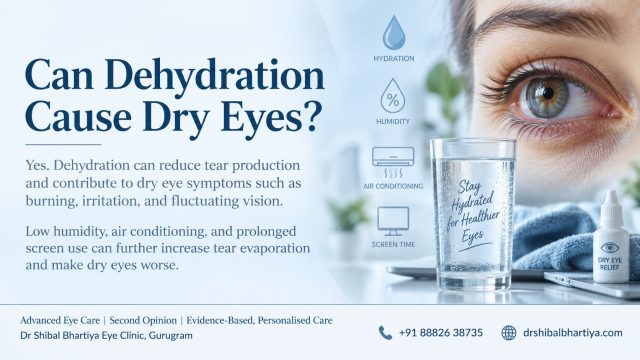
Dehydration can cause dry eyes by reducing tear production. Dehydration also contributes to dry eye symptoms such as burning, irritation, and fluctuating vision. Low humidity, air conditioning, and prolonged screen use can further increase tear evaporation and worsen eye discomfort.
Humidity, Dehydration and Dry Eyes: What’s the Connection?
Low humidity can increase tear evaporation, making dry eye symptoms worse even if your eyes are otherwise healthy. Staying well hydrated and using measures to maintain a comfortable indoor humidity level can help support a healthier tear film and improve eye comfort. Low humidity and dehydration speed up tear evaporation, destabilising the thin tear film that protects your eye surface. This shows up as burning, grittiness, and fluctuating vision, especially in air-conditioned rooms, heated winter spaces, and after long dry spells without enough water. Keeping indoor humidity between 40 and 60 percent and staying consistently hydrated through the day reduces symptoms in most people within one to two weeks.
Most of my patients blame their dry, gritty eyes on screens. Screen time plays a role, but I often find a simpler culprit sitting quietly in the background: the air around them. Air conditioning, ceiling fans, heaters, and low fluid intake all pull moisture away from the eye faster than the body can replace it.
I have practised in Gurgaon for over 15 of my 25+ years in clinical practice, through scorching, dry summers and heated, closed-up winters. The pattern is consistent. Patients who fix their environment and their hydration often see real improvement before they even start medicated drops.
This article walks through how humidity and dehydration cause dry eyes, the signs that your environment is the real driver, and the specific changes that make a measurable difference.
Environmental & Occupational Triggers
| Symptom | What It Means | What To Do About It |
|---|---|---|
| Burning eyes near an AC vent or fan | Direct airflow across the eye accelerates tear evaporation | Redirect vents away from your face; use a desk shield or reposition your chair |
| Worse symptoms in closed, heated rooms in winter | Room heaters strip humidity from indoor air | Run a cool-mist humidifier set to 40 to 60 percent relative humidity |
| Eyes feel fine at home but flare up at the office | Office HVAC systems often run drier air than homes | Keep a bottle of preservative-free lubricating drops at your desk |
| Symptoms worsen on flights | Cabin air runs at 10 to 20 percent humidity, well below comfortable levels | Use lubricating drops before, during, and after the flight; avoid contact lenses if flying more than two hours |
| Gritty, red eyes on high-pollution or high-dust days | Airborne particles combine with a thinner tear film to irritate the surface | Wear wraparound sunglasses outdoors and rinse eyes with saline after exposure |
| Discomfort during Gurgaon’s peak summer heat | Hot, dry outdoor air increases evaporation before you even notice thirst | Increase fluid intake proactively in summer rather than waiting for thirst |
Dehydration-Related Signs You Might Be Missing
| Symptom | What It Means | What To Do About It |
|---|---|---|
| Dry eyes paired with dark yellow urine or headache | General body dehydration reduces the water available for tear production | Aim for at least 2 to 3 litres of water daily, more in hot weather |
| Symptoms worse after coffee, tea, or alcohol | Caffeine and alcohol both have a mild diuretic effect | Match each caffeinated or alcoholic drink with an extra glass of water |
| Dryness after a workout or long outdoor walk | Sweating increases fluid loss without a matching increase in intake | Hydrate before and after exercise, not only during it |
| Eyes feel dry despite normal water intake | Tear volume depends on overall hydration status, but also on tear quality, not water alone | If hydration alone does not help within two weeks, this points to a tear-quality issue rather than pure dehydration |
| Symptoms improve noticeably by evening after a full day of fluids | Confirms hydration was a meaningful contributing factor | Continue consistent daily intake rather than catching up in the evening |
When To See a Doctor
Environmental and hydration measures help many patients, but some situations need a proper eye examination rather than home management alone:
- Symptoms affecting one eye only, rather than both
- Pain, significant redness, warmth, or fever alongside eye discomfort
- Any change in vision, including blurring that does not clear with blinking
- Bulging or protrusion of one or both eyes
- Persistent eye rubbing, redness, or discomfort in a child
- Dryness that began soon after starting a new medication
- Dry eyes alongside dry mouth, joint pain, or other systemic symptoms
If your symptoms persist beyond two to three weeks despite consistent home care, book a proper evaluation. Chronic untreated dry eye can affect the corneal surface over time.
Home Measures That Actually Help
- Target 40 to 60 percent indoor humidity. Use a hygrometer, not guesswork, to check your room. Below 30 percent, tear evaporation accelerates sharply.
- Clean your humidifier weekly. A humidifier that grows mould or bacteria can worsen eye and airway irritation, undoing the benefit.
- Redirect airflow. Reposition AC vents, car vents, and fans so they do not blow directly across your face.
- Build a hydration rhythm. Small, regular sips through the day maintain tear volume better than large amounts taken infrequently.
- Blink fully and often, especially during screen use. Incomplete blinking leaves the upper part of the tear film unrenewed.
- Take screen breaks. Follow the 20-20-20 rule: every 20 minutes, look at something 6 metres away for 20 seconds.
- Protect your eyes outdoors. Wraparound sunglasses reduce wind and dust exposure during Gurgaon’s dry and dusty months.
When Home Measures Are Not Enough
If humidity control and hydration do not resolve symptoms within two weeks, the underlying issue is often tear quality rather than tear quantity. This is common in meibomian gland dysfunction, contact lens wear, or after years of screen-heavy work. At that point, preservative-free artificial tears become the next step, and in more persistent cases, medicated anti-inflammatory therapy.
Frequently Asked Questions
Can dehydration cause dry eyes?
Yes. Dehydration can reduce the water component of the tear film, making the eyes feel dry, irritated, or uncomfortable. When your body does not have enough fluids, tear production may be affected, contributing to dry eye symptoms.
What are the symptoms of dry eyes caused by dehydration?
Common symptoms include burning, stinging, redness, grittiness, watery eyes, fluctuating vision, and eye fatigue. Some people may notice that their eyes feel more uncomfortable at the end of the day or after prolonged screen use.
Does drinking more water help dry eyes?
Staying well hydrated supports overall eye health and healthy tear production. While drinking more water may help some people, dry eye disease often has multiple causes and may require additional treatment such as lubricating eye drops or management of underlying conditions.
Can air conditioning make dry eyes worse?
Yes. Air conditioning can reduce indoor humidity and increase tear evaporation. This can make dry eye symptoms worse, especially if you spend long hours in air-conditioned environments.
Can low humidity cause dry eyes?
Yes. Low humidity can cause tears to evaporate more quickly, leading to dryness, irritation, and discomfort. Dry climates, heated indoor spaces, and air-conditioned rooms can all contribute to dry eye symptoms.
How can I prevent dehydration-related dry eyes?
Drink adequate fluids throughout the day, avoid excessive caffeine or alcohol intake, take regular breaks from screens, blink frequently, and consider using lubricating eye drops if recommended by your eye doctor. Using a humidifier may also help in dry indoor environments.
Can dry eyes cause blurry vision?
Yes. An unstable tear film can affect the smooth optical surface of the eye, leading to temporary blurred or fluctuating vision. Vision often improves after blinking or using lubricating eye drops.
When should I see an eye doctor for dry eyes?
You should see an eye doctor if symptoms are persistent, worsening, affecting your daily activities, or associated with pain, significant redness, or changes in vision. A comprehensive eye examination can help identify the underlying cause and guide appropriate treatment.
How much water should I drink to help with dry eyes?
Most adults benefit from 2 to 3 litres of water daily, adjusted upward in hot weather or with heavy sweating. There is no single correct number for everyone. Watch for dark urine or headaches as signs you need more.
What humidity level is best for eye comfort?
Indoor relative humidity between 40 and 60 percent supports comfortable tear film stability for most people. Below 30 percent, tear evaporation increases noticeably, especially during sleep with eyes partially open.
Can a humidifier really make a difference for dry eyes?
Yes, particularly for symptoms that are worse indoors, in air-conditioned rooms, or during winter heating months. A humidifier will not fix tear-quality problems like meibomian gland dysfunction, but it meaningfully reduces evaporation-driven dryness.
Does air conditioning cause dry eyes?
Air conditioning itself does not damage the eye, but it reduces indoor humidity and often creates direct airflow across the face. Both effects speed up tear evaporation, which is why AC-heavy environments consistently worsen dry eye symptoms.
Can dehydration alone cause dry eyes without any other cause?
Yes, mild dehydration can reduce tear production temporarily. However, if dryness persists despite good hydration and humidity control, a tear-quality issue such as meibomian gland dysfunction is more likely, and needs an eye examination.
How do I know if my dry eyes are environmental or something more serious like Sjögren’s syndrome?
Environmental dry eye typically improves within one to two weeks of humidity and hydration correction. If it does not, or if it comes with dry mouth, joint pain, or fatigue, ask your doctor to screen for autoimmune causes such as Sjögren’s syndrome.
Please read Dry Eye Not Improving With Artificial Tears to understand the relationship between dry eyes and inflammation.
Key Takeaways
- Low humidity and poor hydration both speed up tear evaporation and destabilise the tear film
- Indoor humidity of 40 to 60 percent meaningfully reduces symptoms, especially in AC-heavy or heated environments
- Hydration alone will not fix tear-quality problems like meibomian gland dysfunction
- Redirecting airflow away from your face is a simple, often-overlooked fix
- If symptoms persist beyond two to three weeks of good home care, book an eye examination
- One-sided symptoms, pain, vision changes, or systemic symptoms need prompt evaluation, not home management
Book a Consultation
If your dry eyes are not responding to humidity and hydration changes within a couple of weeks, it is worth finding out why. A proper evaluation identifies whether the issue is environmental, tear-quality related, or something that needs targeted treatment.
I offer detailed dry eye evaluations and second opinions for patients in Gurgaon and beyond. The C.L.E.A.R Framework, devised by me especially for Indian patients, systematically evaluates each factor to create an individualised treatment plan.
Book an Appointment →
📍 Gurgaon 📞 +91 88826 38735 | 🌐 Contact Us | Second Opinion Form for teleconsults
This article is part of the Dry Eye Hub. Please also read Basics of Dry Eye, Dry Eye Second Opinion and Dry Eye: A Chronic Disease. Why Vision Becomes Blurred After Reading or Screen Use, and Why Are Your Dry Eye Drops Not Working may also help you understand your problem better.
You may also want to read this article written by Dr Bhartiya for NDTV online. And listen to her talk about dry eyes here.
About the Author
This article was written by Dr Shibal Bhartiya, fellowship-trained glaucoma specialist and Mayo Clinic Research Collaborator, Clinical Director at Marengo Asia Hospitals, Gurugram, known for ethical, patient-centred glaucoma care and independent glaucoma second opinions. She is also the Program Director for Community Outreach & Wellness; and for the Marengo Asia International Institute of Neuro and Spine.
She has published peer-reviewed research on glaucoma management, examining how treatment decisions should balance medical evidence, patient preferences, and long-term vision outcomes.
As Editor-in-Chief of Clinical and Experimental Vision and Eye Research and Executive Editor of the Journal of Current Glaucoma Practice (Pubmed Indexed, official journal of the International Society of Glaucoma Surgery), Dr Shibal Bhartiya brings editorial and research depth to every clinical decision. Her 200+ publications, including 90+ PubMed-indexed publications and 28 edited textbooks span glaucoma biology, surgical outcomes, health equity, and emerging diagnostics.
1600+ Five Star Patient Reviews Google Business Profile
If you are unable to come to Dr Bhartiya’s clinic: Read more about teleconsultation
Read her research on PubMed | Google Scholar | ResearchGate | ORCID | Github | Wikidata
📋Upload your reports for a structured review.| 🌐 Contact Us| 📞 +91 88826 38735
⭐ Helped by this article? Leave a Google review — it helps other patients find reliable eye care.