Ocular GVHD is an eye condition that can develop after bone marrow or stem cell transplant, causing dry eyes, irritation, and fluctuating vision even after the main illness stabilises. Long-term follow-up helps protect the ocular surface, support daily function, and prevent slow, quiet damage from becoming permanent.
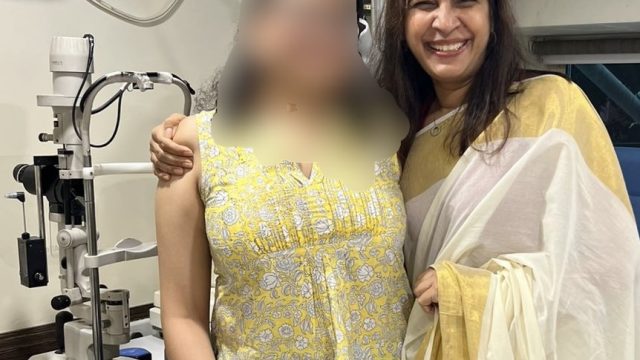
Here’s the story of a young girl’s grit and determination, as she battle GVHD. She is now a DOCTOR herself!!
She Came Back Every Holiday
A clinical story about ocular GVHD, dry eyes, and what it means to stay
Some patients stay in your memory because the diagnosis was rare.
Others stay because you realise, years later, that you were not just treating a condition. You were quietly watching somebody become who they were going to be.
I first met her when she was fifteen or sixteen. She had already been through more than most adults carry in a lifetime. She had undergone a bone marrow transplant. And afterwards, she developed ocular graft-versus-host disease — ocular GVHD.
Families who arrive after transplantation carry a particular kind of relief. The worst has happened. Treatment happened. Something enormous has been crossed. But uncertainty travels with them, because the body does not always stop at the finish line of the illness that was treated.
Then the eyes become part of the story.
What Ocular GVHD Feels Like From the Inside
Most people imagine ocular GVHD as something visibly dramatic. Sometimes it is. But for many patients, it arrives quietly.
Dryness that feels like something is always wrong, even on a good day. Burning that begins before the rest of the body feels tired. Vision that stays technically normal but no longer feels effortless.
Reading that becomes work. Studying that becomes slower. Screen time that was once easy and now costs something.
She was fifteen. She was trying to get back to school. She was trying to become a teenager again, the way teenagers are supposed to be — carelessly occupied with the future. And every day, her eyes made that harder.
Managing Ocular GVHD: What Actually Helps
Over the months that followed, we worked through treatment together. We managed her ocular surface carefully. We adjusted care as her symptoms changed. The active ocular GVHD gradually settled. Her vision got better. The comfort improved. Her reading improved. She got back to school.
But as so often happens with ocular GVHD, the story did not simply end when the acute phase resolved. She continued to have dry eyes. Frequent inflammation, sudden flare ups. Good months and difficult ones. The kind of low-grade, persistent vulnerability that does not make headlines but shapes ordinary days.
Steroids, in varying strengths, and frequency; lubricating eyedrops. Her BMT specialist and I, spoke about her thrice a day on some days, and some times, not even once a month.
She lived in Lucknow. Not nearby. And yet she kept coming back. Every few months. Then every holiday. Keeping in touch over the phone. Sometimes, just to talk. And we kept titrating her treatment to her symptoms, and to the disease activity.
Not because something dramatic was happening. Not because her vision was deteriorating. She came because follow-up had quietly become part of how she looked after herself. She understood, at sixteen, what many adults take years to learn: that a condition managed well is a condition you stop noticing.
Dr Shibal Bhartiya is a fellowship-trained glaucoma specialist and Mayo Clinic Research Collaborator with over 25 years of experience. Her approach focuses on identifying risk before damage is irreversible, simplifying treatment decisions, and protecting vision long-term. Emphasis on early detection, risk assessment, and continuity of care. She is rated 5 stars across 1,500+ patient reviews on Google
What Patients Actually Remember
Doctors tend to think patients remember the treatment.
Patients usually remember something else. They remember whether someone recognised them the next time they walked in. They remember not having to explain everything from the beginning. They remember the quality of continuity more than the quality of any single intervention.
She sat her Class 12 examinations. Then she prepared for medical entrance exams.
One day she came to see me with her parents. Her eyes were stable. Her vision was good. She had come not because she needed treatment, but because she had received a medical school offer and wanted advice.
Which college. Which city. Whether to go far from home. We sat and talked. Years earlier we had been discussing tear films and corneal staining and drop regimens. Now we were discussing hostels and futures and what she wanted her life to look like.
She chose South India. She started medical school. Her parents were apprehensive because it was far away. Dr Shibal, she said, you can take care of me long distance, can’t you? I gave her a hug.
Your medical college will have an eye doctor, love. Yes, she said, but they’ll not be you.
And she still comes back. Every six months. Every holiday.
At one visit, she smiled and said something I still think about.
My vision is pristine.
I had to pause with that for a moment.
Because I do not think patients become doctors because someone cured them. I think sometimes they become doctors because someone stayed. Because someone showed them, over years of ordinary appointments, what it looks like to pay close attention to a person who is quietly carrying something.
This Is Not a Story About a Perfect Outcome
Her eyes still need looking after. She still struggles in difficult stretches. And is on medication. She still follows up.
But she built a life. She studied. And left home. She entered medicine. And every time she walks back into my clinic, I am reminded that the most important things in practice do not happen in the moments of diagnosis or surgery or crisis.
They happen in the reviews. The adjustments. The small, ordinary appointments where someone walks in and you already know who they are.
That is where medicine actually changes lives.
Last month, she graduated from medical school.
What Is Ocular GVHD?
Ocular graft-versus-host disease (ocular GVHD) is an eye condition that can develop after bone marrow or stem cell transplant. Donor immune cells may attack the tear glands and ocular surface, causing dryness, inflammation, and changes in visual comfort that persist long after the transplant itself has stabilised.
Symptoms can continue, fluctuate, or remain low-grade for years. Because of this, patients often benefit from long-term ophthalmic follow-up even when their systemic illness is well controlled and their measured vision remains good.
Symptoms of Ocular GVHD include:
Dry eyes, burning, irritation, fluctuating vision, redness, light sensitivity, watering, eye fatigue, difficulty reading or using screens for extended periods, and persistent ocular surface sensitivity that worsens with study, work, or environmental change.
How is Ocular GVHD classified?
Acute ocular GVHD develops during or soon after systemic acute GVHD and is characterized by sudden inflammation, redness, pain, tearing, photophobia, and conjunctival involvement.
Chronic ocular GVHD is a long-term immune-mediated disease that typically presents with persistent dry eye, burning, grittiness, fluctuating vision, meibomian gland dysfunction, and progressive ocular surface damage.
Acute-on-chronic ocular GVHD occurs when a patient with established chronic ocular GVHD experiences a sudden inflammatory flare, causing a rapid worsening of symptoms such as redness, pain, light sensitivity, and ocular surface inflammation on top of their baseline chronic dry eye disease.
When Should You See an Eye Specialist?
If you or your child has undergone a bone marrow or stem cell transplant and you notice persistent dryness, redness, fluctuating vision, burning, or discomfort — do not assume this is simply part of recovery.
The ocular surface can remain affected even after systemic disease feels far behind you. Early evaluation may preserve comfort, function, and long-term visual quality.
Known for her structured approach to vision risk assessment and progression analysis, Dr Shibal Bhartiya provides trusted second opinions for patients seeking clarity before major treatment decisions. Both, in person, and online.
This page is part of the Dry Eye Disease hub . Read about our full approach to GVHD, Dry Eyes and children’s eye care. Please also read Pediatric Eye Care hub
Here’s another heartening patient story: A young boy and his love for trucks
FAQs:
What is ocular GVHD?
Ocular GVHD is a complication that can develop after bone marrow or stem cell transplant. Donor immune cells affect the tear glands and eye surface, causing dryness, inflammation, and visual discomfort that may persist long after the main transplant illness stabilises.
What are the common symptoms?
Dry eyes, burning, fluctuating vision, redness, irritation, light sensitivity, watering, difficulty reading, and visual fatigue that worsens with screens or study.
Can ocular GVHD improve over time?
Yes. Many patients improve significantly, particularly with consistent treatment and close follow-up. Some continue to experience low-grade dryness or surface sensitivity for years. This does not mean the condition is untreatable — it means it requires sustained attention rather than a single course of treatment.
Can patients with ocular GVHD study, work, and live normally?
Many can, particularly when symptoms are identified early and managed consistently. The goal of treatment is not only to protect vision but to restore the quality of everyday life — reading, screens, study, and all the things that ordinary days are made of.
Why is long-term follow-up important?
Symptoms and underlying ocular surface health do not always change in parallel. A patient may feel stable and still have ongoing surface changes that benefit from monitoring. Regular review allows treatment to be adjusted before problems compound.
Does ocular GVHD affect children and young people differently?
The condition affects children and adolescents at a time when study load, screen use, and daily reading demands are high. Symptoms that an adult might manage around can significantly affect a young person’s academic performance and sense of normalcy. Recognising this early changes what the follow-up plan should look like.
About the Author
This article was written by Dr Shibal Bhartiya, fellowship-trained glaucoma specialist and Mayo Clinic Research Collaborator, Clinical Director at Marengo Asia Hospitals, Gurugram, known for ethical, patient-centred glaucoma care and independent glaucoma second opinions. She is also the Program Director for Community Outreach & Wellness; and for the Marengo Asia International Institute of Neuro and Spine.
She has published peer-reviewed research on glaucoma management, examining how treatment decisions should balance medical evidence, patient preferences, and long-term vision outcomes.
As Editor-in-Chief of Clinical and Experimental Vision and Eye Research and Executive Editor of the Journal of Current Glaucoma Practice (Pubmed Indexed, official journal of the International Society of Glaucoma Surgery), Dr Shibal Bhartiya brings editorial and research depth to every clinical decision. Her 200+ publications, including 90+ PubMed-indexed publications and 28 edited textbooks span glaucoma biology, surgical outcomes, health equity, and emerging diagnostics.
1500+ Five Star Patient Reviews Google Business Profile
If you are unable to come to Dr Bhartiya’s clinic: Read more about teleconsultation
Read her research on PubMed | Google Scholar | ResearchGate | ORCID
Upload your reports for a structured review.| www.drshibalbhartiya.com | +91 88826 38735
Leave a review on Google