Ocular GVHD (Graft-versus-Host Disease) can cause severe dry eyes, burning, fluctuating vision, light sensitivity, and damage to the eye surface after a bone marrow or stem cell transplant. Early diagnosis and long-term eye care may help protect comfort, vision, and quality of life.
Managing these cases requires specialised corneal expertise, strict protective isolation compliance, and a deeply trauma-informed approach to pediatric clinical examination. Scientific precision alone is not enough — the child must feel safe enough to let you in.
Beyond the Sterile Barrier: Pediatric Ocular Graft-Versus-Host Disease
There are moments in a pediatric ophthalmologist’s career that anchor you for life.
During my time at Fortis, I cared for a tiny boy fighting for his life after a bone marrow transplant. Severe, acute Ocular GVHD had left his corneas damaged, covered in countless microscopic raw spots — Superficial Punctate Keratitis — causing blinding pain and extreme light sensitivity. He lived in the ICU, unable to open his eyes, afraid of every sound.
His immune system was almost non-existent. Anyone entering his space had to be covered head to toe in sterile gowns and masks. He could not see my face. He was terrified. Some days, he was too weak to cry.
To help him recognise me without triggering fear, I started a routine. Every time I entered his isolation pod, I whistled softly. He learned quickly. The whistle meant safety. No needles. It meant the person coming was not going to hurt him.
I would apply a careful drop of anaesthetic to numb the intense surface pain just enough to let me examine his corneas and adjust his treatment. And I kept talking. Through every protocol, every follow-up, every barrier-gowned visit, a bond formed between us.
His parents would quietly hold him. Silently, patiently, with all the love in the world.
Can GVHD be cured?
That was the only question they asked. For the pain to go away. I would say yes, he will be fine. And pray, silently.
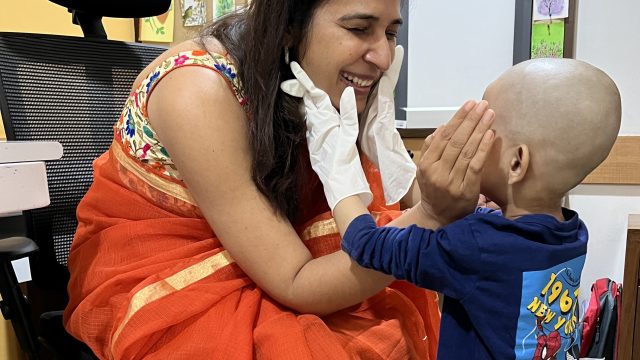
And then one day, instead of crying, he started talking. About trucks, and JCBs and construction. All of five. And bright. And happy. Like any other five year old.
The drops continued, but he was now walking into my OPD, showing off his toys, his jeans, his shoes which have red and blue lights. And one day, we didn’t need any medication at all.
Today, he is completely cured — a bright, healthy boy, a handful and a half. Goes to big school. And to Goa with his grandparents. Collects toy trucks, especially likes yellow ones.
When he walks into my clinic, he does not see masks or sterile gowns. He sees a friend. He spots me from across the waiting room and runs full tilt into my arms. And talks till my ears hurt. And my face hurts. From smiling so much.
His parents recently told me that when they return to his BMT hospital for follow-ups, he looked up at the first floor where my old OPD used to be and insisted: “Let’s go meet Dr Shibal.” They had to remind him gently that I have moved. When he visited me at Marengo Asia after that, he looked around the new clinic and said, with complete satisfaction: “Dr Shibal, you always own the first floor.”
He is entirely right. Just like he owns my entire heart.
PS: Two of his classmates have come to me to get their glasses checked. Apparently he tells everyone about “My doctor” who has a hundred toffees. My little advertising blitzkreig he is 🙂
FAQs
What is Ocular GVHD in children, and what are the symptoms?
Ocular GVHD occurs when donor immune cells after a bone marrow transplant attack the recipient’s lacrimal glands and corneal surface. In children, symptoms include severe eye pain, redness, a gritty sensation, extreme light sensitivity, and refusal to open the eyes due to corneal surface damage. Early specialist intervention is critical to prevent permanent scarring.
What are the most common symptoms of ocular GVHD in adults?
Symptoms may include dry eyes, burning, redness, watering, irritation, light sensitivity, fluctuating vision, eye fatigue, and a feeling of grit or sand in the eyes.
Can ocular GVHD affect vision permanently?
If untreated, ocular GVHD can lead to chronic surface damage, discomfort, and vision changes. Early treatment and regular follow-up may reduce the risk of long-term complications.
How is ocular GVHD diagnosed?
Diagnosis is based on symptoms, eye examination, tear film assessment, evaluation of the eye surface, and correlation with transplant history and systemic GVHD status.
What treatments are available for ocular GVHD?
Treatment may include preservative-free lubricants, medicines to reduce inflammation, tear conservation strategies, ocular surface support, and long-term monitoring depending on severity.
How is severe pain and photophobia managed in post-transplant pediatric patients?
Management is multi-layered and highly specialised. It includes preservative-free lubricants, autologous serum eye drops, therapeutic scleral or bandage contact lenses, and targeted topical immunomodulators. During acute flares, topical anaesthetics are used carefully during examination by the specialist — never for unsupervised home use — to allow assessment without causing further distress to the child.
This article is a part of the Paediatric Ophthalmology Hub. Read about our full approach to children’s ophthalmology. Please also read Children’s Eye Care, Nutrition, Are Children’s Eyes More Vulnerable, Lazy Eye, and Myopia Prevention in Children. Eye Care Tips for Screen Use, and 7 Ways to Take Care of Your Child’s Eye Health also may be of interest. You may want to see some eye care tips for children here, here, and here.
Please also read Dry Eye Disease
Here’s another heartening patient story: the young girl who is now a doctor herself!
About the Author
This article was written by Dr Shibal Bhartiya, fellowship-trained glaucoma specialist and Mayo Clinic Research Collaborator, Clinical Director at Marengo Asia Hospitals, Gurugram, known for ethical, patient-centred glaucoma care and independent glaucoma second opinions. She is also the Program Director for Community Outreach & Wellness; and for the Marengo Asia International Institute of Neuro and Spine.
She has published peer-reviewed research on glaucoma management, examining how treatment decisions should balance medical evidence, patient preferences, and long-term vision outcomes.
As Editor-in-Chief of Clinical and Experimental Vision and Eye Research and Executive Editor of the Journal of Current Glaucoma Practice (Pubmed Indexed, official journal of the International Society of Glaucoma Surgery), Dr Shibal Bhartiya brings editorial and research depth to every clinical decision. Her 200+ publications, including 90+ PubMed-indexed publications and 28 edited textbooks span glaucoma biology, surgical outcomes, health equity, and emerging diagnostics.
1500+ Five Star Patient Reviews Google Business Profile
If you are unable to come to Dr Bhartiya’s clinic: Read more about teleconsultation
Read her research on PubMed | Google Scholar | ResearchGate | ORCID
Upload your reports for a structured review.| www.drshibalbhartiya.com | +91 88826 38735
Leave a review on Google