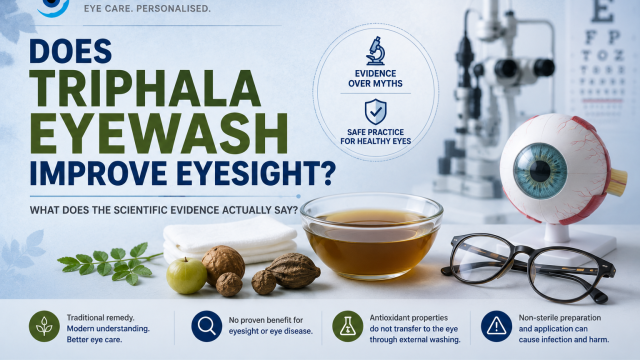
Triphala eyewash does not improve eyesight. There is no reliable clinical evidence that washing the eyes with triphala water treats or reverses any refractive error, cataract, or glaucoma. It carries the same infection and irritation risks as any non-sterile liquid applied to the eye, regardless of its traditional standing.
Patients occasionally ask whether triphala eyewash can improve eyesight or treat eye disease. Based on the available scientific evidence, it has no proven benefit for refractive errors or eye diseases. As an ophthalmologist, my advice is simple: never put anything into your eyes unless it is specifically designed and prepared for ophthalmic use. This is because non-sterile preparations may increase the risk of irritation, infection, and even sight-threatening complications. Whatever antioxidant properties triphala has when taken orally do not transfer meaningfully to the eye through external washing.
One evidence nuance worth keeping in mind: there are small studies of Triphala-based ophthalmic preparations for specific conditions such as computer vision syndrome and dry eye, but they do not demonstrate that Triphala eyewash improves eyesight or reverses refractive errors, and they do not support the use of homemade, non-sterile eye washes.
Why This Belief Persists
Triphala has a long, well-established place in Ayurvedic medicine as an oral preparation. It is often used for digestion and general wellness. This genuine traditional standing lends credibility to other uses attributed to it, including as an eyewash. Because it is a respected herbal remedy in one context, it is easy to assume its benefits extend to any application, including one the original tradition may not have intended in the same way modern marketing suggests. The idea is also reinforced by anecdote, people who use it and later feel their eyes are fine attribute that to the wash, without a way to know their eyes would have been equally fine without it.
What The Science Actually Says
Triphala is a combination of three dried fruits, amla, bibhitaki, and haritaki, valued in Ayurveda mainly for oral use. Its antioxidant compounds are absorbed through digestion. Applying triphala externally as an eyewash is a different route of exposure entirely. There is no robust clinical trial evidence showing that topical triphala washing improves visual acuity, slows cataract formation, or affects glaucoma progression in humans. Some laboratory and animal studies have examined triphala’s antioxidant properties in isolated eye tissue. But this is not proof that rinsing a human eye with triphala water produces any real-world visual benefit.
The larger, more immediate concern is safety rather than effectiveness. A triphala eyewash, whether homemade or commercially prepared, is not manufactured to sterile ophthalmic standards. It is typically prepared by soaking or boiling the herbal mixture in water at home. This introduces variable, uncontrolled exposure to plant particulate matter, potential microbial contamination, and inconsistent concentration. Applying this directly to the eye’s surface, particularly with repeated use, carries a real risk of irritation, allergic reaction, or infection. This is the same category of risk seen with other non-sterile home eyewashes.
Real eye conditions like early cataract, glaucoma, or refractive error require diagnosis and treatment based on the eye’s actual structure and function. No external wash, herbal or otherwise, can alter.
What Actually Helps
- Rely on sterile, doctor-approved lubricating drops for genuine dryness or irritation, not herbal washes
- Get any early cataract or glaucoma symptoms evaluated and monitored medically, since these conditions need structural treatment, not eyewashes
- If interested in triphala for general wellness, use it in its traditional oral form rather than as an eye application
- See a doctor rather than a home remedy if experiencing redness, blurred vision, or eye discomfort
- Prioritise regular eye checks for early detection, since this is what actually catches treatable eye disease early
When To See a Doctor
- Redness, irritation, or discharge following use of any herbal eyewash
- Gradual blurring of vision, glare, or difficulty with night driving, which may indicate cataract
- No noticeable symptoms but no eye check in over a year, since conditions like glaucoma often progress silently
- Any known family history of glaucoma or cataract
- Persistent eye discomfort that a home remedy hasn’t resolved
A few small studies have evaluated Triphala-based ophthalmic preparations for conditions such as dry eye and computer vision syndrome. However, these studies do not show that Triphala improves eyesight, reduces glasses power, or treats common eye diseases, and they do not support the use of homemade, non-sterile Triphala eyewashes. You can read the study here
I enjoy helping patients understand how nutrition, lifestyle, and everyday habits influence eye health. If you have questions about diet, supplements, or evidence-based ways to protect your vision, I would be happy to discuss them during a consultation at my clinic in Gurgaon.
Book a Consultation
If you have redness, irritation, watering, pain, blurred vision, or any persistent eye symptoms, it is important to identify the underlying cause rather than relying on home remedies. My goal is to provide evidence-based care while helping patients understand which traditional practices are safe, which are ineffective, and which may actually harm the eyes.
A comprehensive eye examination can determine whether your symptoms are due to dry eye, allergy, infection, inflammation, glaucoma, or another eye condition requiring treatment. I will recommend a personalised management plan based on the cause of your symptoms, not just the symptoms themselves.
Whether you have questions about triphala eyewash, natural remedies, or any other aspect of eye health, I would be happy to help you make informed, evidence-based decisions for your vision.
Book an Appointment
📍 Gurgaon 📞 +91 88826 38735 | 🌐 Contact Us | Second Opinion Form for teleconsults
This article is a part of the Myths about Eyes Hub. Read on more to understand more about your eye health. Also read Do Almonds Improve Vision, and Nutrients for Eye Health, Does Triphala Eyewash Improve Vision?, and Does Honey or Turmeric Treat Eye Infections.
Frequently Asked Questions
Is there any evidence triphala eyewash helps with cataract specifically?
No robust clinical evidence supports triphala eyewash preventing, slowing, or reversing cataract in humans. Cataract results from structural changes in the lens that a topical herbal wash cannot address.
Can using triphala eyewash regularly cause harm even if it doesn’t help?
Yes, non-sterile application to the eye carries a real risk of irritation, allergic reaction, or infection, independent of whether any benefit is present.
Does taking triphala orally have any eye-related benefit?
Triphala’s antioxidant properties are studied in a general wellness context when taken orally. But this is separate from any specific benefit to eye disease or vision when applied externally as an eyewash.
About the Author
This article was written by Dr Shibal Bhartiya, fellowship-trained glaucoma specialist and Mayo Clinic Research Collaborator, Clinical Director at Marengo Asia Hospitals, Gurugram, known for ethical, patient-centred glaucoma care and independent glaucoma second opinions. She is also the Program Director for Community Outreach & Wellness; and for the Marengo Asia International Institute of Neuro and Spine.
She has published peer-reviewed research on glaucoma management, examining how treatment decisions should balance medical evidence, patient preferences, and long-term vision outcomes.
As Editor-in-Chief of Clinical and Experimental Vision and Eye Research and Executive Editor of the Journal of Current Glaucoma Practice (Pubmed Indexed, official journal of the International Society of Glaucoma Surgery), Dr Shibal Bhartiya brings editorial and research depth to every clinical decision. Her 200+ publications, including 90+ PubMed-indexed publications and 28 edited textbooks span glaucoma biology, surgical outcomes, health equity, and emerging diagnostics.
1600+ Five Star Patient Reviews Google Business Profile
If you are unable to come to Dr Bhartiya’s clinic: Read more about teleconsultation
Read her research on PubMed | Google Scholar | ResearchGate | ORCID
📋Upload your reports for a structured review.| 🌐 Contact Us| 📞 +91 88826 38735 ⭐ Helped by this article? Leave a Google review — it helps other patients find reliable eye care