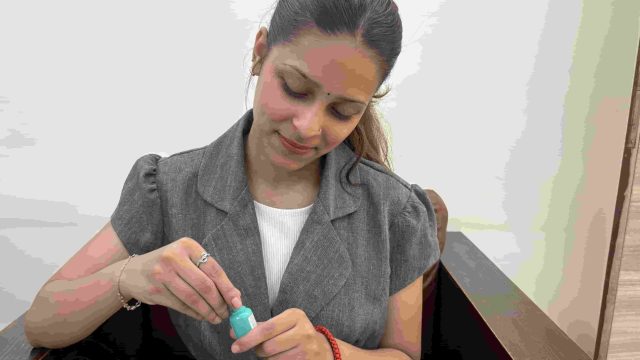
Open eye drop bottles are safe for about one month, regardless of the printed expiry date, because the seal that kept them sterile is broken once opened. Preservative-free single-use vials must be discarded within 24 hours of opening, or immediately after one use.
Do Eye Drops Really Expire One Month After Opening?
Yes, most multi-dose eye drop bottles should be discarded one month after you first open them, even if the printed expiry date is still months away. This is a sterility rule, not a potency rule. There are important exceptions, especially for preservative-free drops and certain glaucoma medications.
Why This Belief Persists
Most patients look only at the printed expiry date on the box and assume that date applies no matter when the bottle was opened. It makes sense. Almost every other medicine in the house, from tablets to syrups, is judged mainly by that one printed date. Eye drops look no different from the outside, so people carry on using a bottle for months, sometimes topping up a glaucoma prescription that was opened long ago without a second thought.
What The Science Actually Says
The printed expiry date tells you how long the drop remains chemically stable while the bottle is sealed and untouched. It says nothing about what happens after the tip has touched an eyelash, a finger, or the eye surface itself. Each time you use the bottle, tiny amounts of bacteria from the ocular surface and surrounding skin can enter the tip. Most multi-dose bottles contain a preservative, commonly benzalkonium chloride, that controls this contamination for a limited window. After roughly four weeks, that preservative can no longer reliably keep the growing bacterial load in check.
This is why the one-month rule exists. It is a contamination limit, not a chemical breakdown limit. Using drops past this point raises the risk of introducing bacteria directly onto the eye surface, which matters far more for an organ with no barrier as forgiving as skin.
The exceptions follow the same logic. Preservative-free vials have no antimicrobial protection at all. So they are designed for one use, or at most 24 hours. After that, they must be discarded. Some specialised drops, including certain post-surgical antibiotics and compounded medications, are formulated without standard preservatives and carry shorter windows. Refrigerated drops and reconstituted antibiotic suspensions often have their own separate, shorter expiry. This can be from when they are mixed or opened. This is printed on the label rather than the outer box.
What Actually Helps
- Check expiry date BEFORE opening the bottle.
- Write the date you opened each bottle directly on the label, so you are not relying on memory. One month from this date is the expiry date of an opened bottle.
- Discard multi-dose bottles one month after opening, even if drops remain inside
- Use preservative-free single-use vials within 24 hours, or ideally right after opening
- Avoid letting the dropper tip touch your eyelid, lashes, or fingers during use
- Check pharmacist instructions on any drop that has been refrigerated, reconstituted, or compounded specifically for you. These usually have shorter rules than standard bottles
When To See a Doctor
- Redness, discomfort, or discharge that starts after switching to a new or older bottle of drops
- Any drop that has changed colour, become cloudy, or developed visible particles
- Reduced effect from a glaucoma drop you suspect may be past its safe window
- Eye pain, blurred vision, or light sensitivity after using any eye drop
- Uncertainty about whether a prescribed drop is preservative-free or standard, especially after eye surgery
Frequently Asked Questions
Does the one-month rule apply to all eye drops?
It applies to most standard multi-dose bottles that contain a preservative. Preservative-free vials and certain specialised or compounded drops follow different use guidelines. Please confirm with your pharmacist or prescribing doctor.
What happens if I use eye drops after the one-month mark?
The drops may still be chemically active, but the risk of bacterial contamination rises sharply. This can lead to eye infections. The latter is a more serious concern than a slight drop in medication strength.
How do I know if my eye drops are preservative-free?
Check the label or box for the term “preservative-free” or “unit-dose.” These usually come as small individual vials rather than a single reusable bottle. They must be discarded much sooner than standard multi-dose bottles.
Book a Consultation
If you use daily eye drops for a condition like glaucoma or dry eye and are unsure whether your current bottle is still safe to use, it is better to check with your doctor than guess. Getting this right protects both the medication’s effectiveness and your eye’s health.
Book an Appointment →
📍 Gurgaon 📞 +91 88826 38735 | 🌐 Contact Us | Second Opinion Form for teleconsults
This article is part of a series of articles on Using Eyedrops, which aim to help you use your eye drops as required. You may want to read How to remember your glaucoma medication, Tips and tricks on how to use your eye drops, Whether refrigerating eye drops helps, How to manage side effects of glaucoma drops, Why my dry eye drops are not working, How to reduce glaucoma drops, Glaucoma drops not working, and Glaucoma progressing despite eye drops. This page is also a part of the Myths About Eye Health Hub.
You may also want to learn how to put eyedrops here.
I was recently invited by NDTV to share my insights on a question many patients ask: Do eye drops expire after opening? In the discussion, I explained how the safety, effectiveness, and shelf life of eye drops can change once a bottle is opened, and why following the recommended usage period is important for protecting eye health.
Quoting from the article: “A simple tip I give all my patients: Look at the expiry date on the bottle BEFORE opening it. Not after that. Write down the date of opening your eye drops bottle on the bottle itself, and discard it one month after that date because that is the expiry date for an open bottle. Don’t rely on your memory for this.”
About the Author
This article was written by Dr Shibal Bhartiya, fellowship-trained glaucoma specialist and Mayo Clinic Research Collaborator, Clinical Director at Marengo Asia Hospitals, Gurugram, known for ethical, patient-centred glaucoma care and independent glaucoma second opinions. She is also the Program Director for Community Outreach & Wellness; and for the Marengo Asia International Institute of Neuro and Spine.
She has published peer-reviewed research onglaucoma management, examining how treatment decisions should balance medical evidence, patient preferences, and long-term vision outcomes.
As Editor-in-Chief of Clinical and Experimental Vision and Eye Research and Executive Editor of the Journal of Current Glaucoma Practice (Pubmed Indexed, official journal of the International Society of Glaucoma Surgery), Dr Shibal Bhartiya brings editorial and research depth to every clinical decision. Her 200+ publications, including 90+ PubMed-indexed publications and 28 edited textbooks span glaucoma biology, surgical outcomes, health equity, and emerging diagnostics.
1600+ Five Star Patient Reviews Google Business Profile
If you are unable to come to Dr Bhartiya’s clinic: Read more about teleconsultation
Read her research on PubMed | Google Scholar | ResearchGate | ORCID | Github
📋Upload your reports for a structured review.| 🌐 Contact Us| 📞 +91 88826 38735
⭐ Helped by this article? Leave a Google review — it helps other patients find reliable eye care.