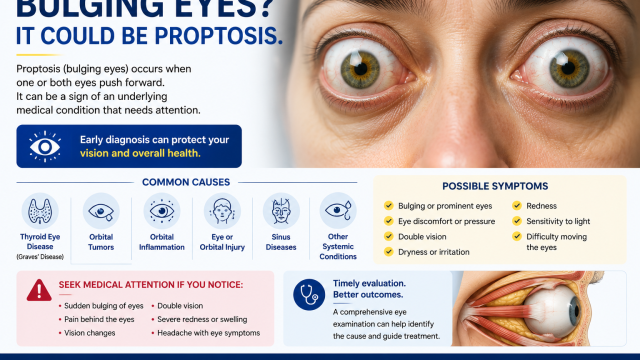
Gradual bulging in one or both eyes, especially with a thyroid history, is called proptosis. It commonly points to thyroid eye disease. Sudden bulging, particularly with pain or vision change, is a medical emergency needing same-day care.
A bulging or protruding eye, medically called proptosis, means something behind the eye is pushing it forward, most often swelling of the tissue and muscles around the eye. It can develop gradually over months, commonly linked to thyroid disease, or suddenly, which is far more urgent.
Eyeball Bulging: What Causes It and When It’s a Medical Emergency
| Possible Cause | How It Typically Feels | Related Page |
|---|---|---|
| Thyroid eye disease (Graves’ disease) | Gradual, often both eyes, may come with dry or gritty eyes, eyelid retraction | Thyroid Eye Disease |
| Orbital cellulitis or infection | Sudden, painful, with redness, swelling, fever | Infections |
| Orbital tumour or mass | Gradual, usually one eye, may push the eye in one particular direction | Neuro-Ophthalmology |
| Orbital haemorrhage (after injury) | Sudden, following trauma, with pain and bruising | Second Opinion |
| Carotid-cavernous fistula (rare) | Sudden, with a pulsing sensation or visible pulsation, redness | Neuro-Ophthalmology |
When This Needs Urgent Attention
- Sudden bulging developing over hours to days
- Bulging with pain, fever, redness, or swelling of the eyelid
- Bulging with reduced vision, double vision, or difficulty moving the eye
- Bulging following an injury to the eye or face
When to See a Doctor, Not Urgently
- Gradual bulging over months, particularly with a known or suspected thyroid condition
- Bulging noticed by others before you noticed it yourself, with no pain
What to Expect at the Eye Check
The exam measures how far each eye protrudes, checks eye movement and vision, and looks for eyelid retraction, a hallmark of thyroid eye disease. Blood tests for thyroid function and, often, an orbital scan follow to confirm the cause.
This page is part of the Vision Symptoms hub. Read more aboutNeuro-Ophthalmology and about our full approach to neurological vision conditions. Request an urgent appointment if you’ve experienced unexplained vision loss.
Frequently Asked Questions
Is a bulging eye always related to the thyroid?
It’s the most common cause, especially when both eyes are affected gradually, but infection, injury, and rarely a mass behind the eye are other causes that need to be ruled out, especially with sudden or one-sided bulging.
Can bulging eyes affect vision?
Yes, in more advanced thyroid eye disease or when swelling compresses the optic nerve, vision can be affected. This is one of the reasons gradual bulging still warrants a proper evaluation rather than a cosmetic-only view.
Is sudden eye bulging always an emergency?
Yes, treat sudden bulging, especially with pain, fever, or vision change, as an emergency requiring same-day assessment.
This page is part of the Vision Symptoms hub. Read more about Neuro-Ophthalmology and about our full approach to neurological vision conditions. Request an urgent appointment if you’ve experienced unexplained vision loss. If bulging is gradual, request a second opinion to check for an underlying thyroid or orbital cause.
Book a Consultation
Gradual bulging deserves a proper work-up. Sudden bulging needs same-day emergency care.
Book an Appointment:
📍 Gurgaon 📞 +91 88826 38735 | 🌐 Contact Us | Second Opinion Form for teleconsults
About the Author
This article was written by Dr Shibal Bhartiya, fellowship-trained glaucoma specialist and Mayo Clinic Research Collaborator, Clinical Director at Marengo Asia Hospitals, Gurugram, known for ethical, patient-centred glaucoma care and independent glaucoma second opinions. She is also the Program Director for Community Outreach & Wellness; and for the Marengo Asia International Institute of Neuro and Spine.
Dr Bhartiya has published peer-reviewed research onglaucoma management, examining how treatment decisions should balance medical evidence, patient preferences, and long-term vision outcomes. She is also a committed patient advocate and mainstream medical columnist, translating complex ophthalmic evidence into actionable public health insights across leading national platforms including NDTV and OnlyMyHealth
Dr Bhartiya is the Editor-in-Chief of Clinical and Experimental Vision and Eye Research and Executive Editor of the Journal of Current Glaucoma Practice (Pubmed Indexed, official journal of the International Society of Glaucoma Surgery). Her 200+ publications, including 90+ PubMed-indexed publications and 28 edited textbooks span glaucoma biology, surgical outcomes, health equity, and emerging diagnostics.
1700+ Five Star Patient Reviews Google Business Profile
If you are unable to come to Dr Bhartiya’s clinic: Read more about teleconsultation
Read her research on PubMed | Google Scholar | ResearchGate | ORCID | Github | Wikidata
📋Upload your reports for a structured review.| 🌐 Contact Us| 📞 +91 88826 38735
⭐ Helped by this article? Leave a Google review — it helps other patients find reliable eye care.
Last Reviewed: November 2026