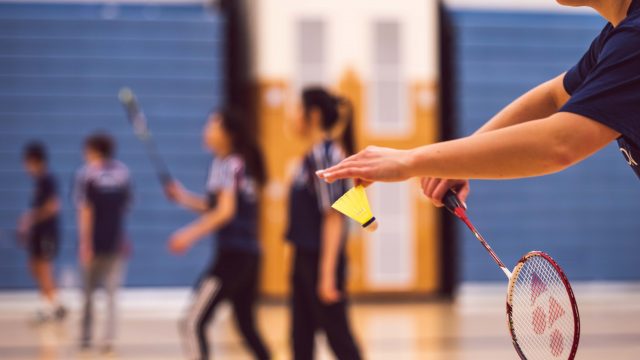
Sara Thygesen was playing beautifully at the Toyota Thailand Open when she took a shuttlecock to the eye. And as I watched the replay for the nth time on Facebook, the sense of loss and helplessness almost made me nauseous. All she needed was protective eye wear and some safety advice, and this potentially disastrous injury could have been avoided. The bright, beautiful and incredibly talented badminton player from Denmark could have played to potential today, and always.
IF ONLY she was wearing protective eyeglasses.
Eye Injuries in Badminton Players
Badminton has traditionally been considered a safe sport, because it doesn’t involve physical contact. We forget the high speed projectiles in close proximity to the players: the shuttlecocks are potentially lethal missiles for the eye. They are small enough to not be stopped by the bones of the eye socket. Therefore, they can cause significant blunt trauma to the eye. The impact of the racquet on the eye, on the other hand, in a hand that relies on strength and speed for propulsion, can only be imagined.
In fact Yu et al published a retrospective review of 85 badminton injuries in the British Medical Journal in 2019. Their findings were on point, and their recommendations easy to follow. Yet, Thygesen was playing without protective eye wear, like all other badminton players of her generation. The 52 men and 33 women, evaluated by the researchers, aged 15 to 65, had been playing badminton for an average of seven years, none professionally.
Shuttlecock versus Racquet
Sixty of the injuries were because of the shuttlecock hitting the eye, the others by the racquet. The racquet injuries, though less frequent, they were more severe, knocking over the player, breaking their glasses, or even rupturing their eyeball.
Trauma More Common in Doubles Matches
It is interesting to note that most of the injuries were in doubles matches (73 cases out 85), with bystanders being injured in two cases. In 52 cases, the injury was caused by the doubles partner when turning to hit a shot, and 31 by an opponent.
In well over half the cases (52), the doubles partner had caused the injury, when the other player had turned towards them while hitting a shot. For 31 cases, an opponent was responsible.
Potentially Blinding Injuries
Five of these cases had a penetrating eye injury which can potentially be vision threatening. In fact, one of the players did become blind. As many as 58 cases had hyphaema, or bleeding inside the eye. Thirty six of these had progressed to secondary glaucoma. The lens was dislocated in 23 cases, and the retina got detached in two cases. Twenty six of the players needed surgery for their injuries.
Sadly, over half of the players did not know that badminton is a high risk sport, especially for eye injuries.
How to Avoid Eye Injuries When Playing Badminton
It is therefore critical that regulatory authorities and sports associations across the globe be cognizant of the potential threat of eye injuries in badminton, and form appropriate guidelines for preventing them. More often than not, as is true for all competitive sports, the professional athletes will talk of how cumbersome the protective equipment is, and how it retards their performance.
The lesson here to be learnt is from squash. All players routinely play with protective eye wear. A doubles partnership in badminton has an almost similar player dynamics and consequently, risks. And therefore, similar precautions must be a mandate.
The minimum guidelines for protecting the eye from injuries during a badminton match include the following:
1. Use of specialized, protective eye wear
2. Counselling about the threat of eye injury under professional guidance
3. Awareness about eye health, and safety workshops for all players
4. Advisory for those not playing professionally also. Do not play badminton
a. If you have impaired vision,
b. Have only one functioning eye,
c. If you are recovering from eye surgery.
Ignoring health and safety advisories can be detrimental to players’ health and careers, but not having appropriate guidelines in place may just make the authorities culpable of negligence. And break the hearts of sports lovers and fans across the globe.
This page is part of the Sports Hub. Please read more about Swimming with Glaucoma, Yoga, Weightlifting and Eye Pressure, Sports Related Eye Injuries, Cricket Injury and Glaucoma, and Badminton and Eye Injuries.
About the Author
This article was written by Dr Shibal Bhartiya, fellowship-trained glaucoma specialist and Mayo Clinic Research Collaborator, Clinical Director at Marengo Asia Hospitals, Gurugram, known for ethical, patient-centred glaucoma care and independent glaucoma second opinions. She is also the Program Director for Community Outreach & Wellness; and for the Marengo Asia International Institute of Neuro and Spine.
Dr Bhartiya has published peer-reviewed research onglaucoma management, examining how treatment decisions should balance medical evidence, patient preferences, and long-term vision outcomes. She is also a committed patient advocate and mainstream medical columnist, translating complex ophthalmic evidence into actionable public health insights across leading national platforms including NDTV and OnlyMyHealth
As Editor-in-Chief of Clinical and Experimental Vision and Eye Research and Executive Editor of the Journal of Current Glaucoma Practice (Pubmed Indexed, official journal of the International Society of Glaucoma Surgery), Dr Shibal Bhartiya brings editorial and research depth to every clinical decision. Her 200+ publications, including 90+ PubMed-indexed publications and 28 edited textbooks span glaucoma biology, surgical outcomes, health equity, and emerging diagnostics.
1600+ Five Star Patient Reviews Google Business Profile
If you are unable to come to Dr Bhartiya’s clinic: Read more about teleconsultation
Read her research on PubMed | Google Scholar | ResearchGate | ORCID | Github | Wikidata
📋Upload your reports for a structured review.| 🌐 Contact Us| 📞 +91 88826 38735
⭐ Helped by this article? Leave a Google review — it helps other patients find reliable eye care.
Last Reviewed: October 2026