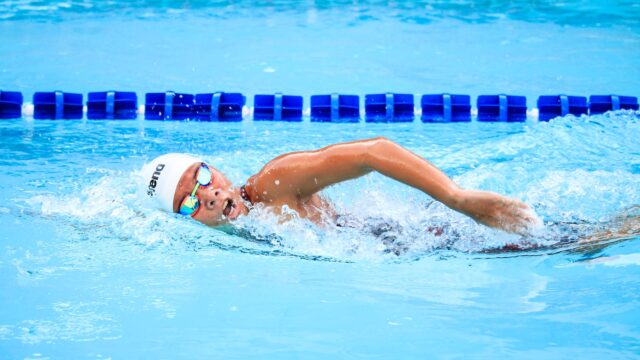
Swimming is one of the safest forms of exercise for most people with glaucoma, the aerobic activity itself can lower intraocular pressure (IOP), and regular swimmers do not show higher rates of glaucoma than non-swimmers. The one genuine concern is not the water. It is the goggles.
This distinction matters. Patients often ask whether they should stop swimming after a glaucoma diagnosis. The evidence says no, with one important caveat about how you protect your eyes in the pool. Dr Bhartiya explains more.
Dr Shibal Bhartiya is a fellowship-trained glaucoma specialist and Mayo Clinic Research Collaborator with over 25 years of experience. Her approach focuses on identifying risk before damage is irreversible, simplifying treatment decisions, and protecting vision long-term. Emphasis on early detection, risk assessment, and continuity of care. She is rated 5 stars across 1,500+ patient reviews on Google.
Why Swimming Is Good for Glaucoma
Aerobic exercises such as walking, running, and swimming stand out for their ability to significantly lower IOP. These activities enhance cardiovascular fitness and improve blood circulation throughout the body, including the eyes.
Research has shown that aerobic exercise at a brisk level for 30 to 45 minutes, three to four times a week, lowers IOP and improves blood flow to the brain and the eye. Swimming fits this prescription precisely. It is low-impact, joint-friendly, and accessible across age groups.
There is also evidence of a structural benefit. Aerobic exercise reduces IOP and expands Schlemm’s canal dimensions in both healthy eyes and in eyes with primary open-angle glaucoma. PubMed Schlemm’s canal is the drainage pathway for fluid inside the eye. When it widens, more fluid can exit, and IOP falls. This is the same target that several glaucoma surgeries work to access.
Individuals who performed moderate aerobic exercise on a regular basis had lower baseline IOPs than those who led sedentary lifestyles. Interestingly, people who reported low fitness levels or previously sedentary lifestyles showed the greatest IOP reduction once they became more active. This means patients who have not been exercising stand to gain the most from starting now.
In a recent study, all measures of physical activity, average steps per day, minutes of basic movement, and time spent doing moderate-to-vigorous activity, were associated with slower rates of visual field loss in a treated group of glaucoma patients. Protecting the visual field is the central goal of glaucoma management. Exercise contributes to that goal.
The Goggles Problem
Swimming goggles form a tight space around the eyes, and IOP may increase by 4 to 5 mmHg, approximately a 20 to 30% rise, while they are worn. The tighter the goggles, or the smaller they are relative to the eyes, the more likely this IOP elevation will occur.
The mechanism is mechanical compression. The headband tension of swimming goggles is transmitted into the orbit through the rubber seal, increasing orbital tissue pressure and compressing the globe.
The smaller swimming goggles tend to cause the greater pressure rise in each eye. One particular set caused an average 9 mmHg rise: a 67% increase from an average baseline. Some individuals experienced a rise of 17 mmHg, effectively doubling their IOP.
Previous reports have also shown that use of swimming goggles can cause bleb extensions in eyes that have undergone trabeculectomies, a filtration surgery commonly performed in glaucoma. This is clinically significant: patients who have had glaucoma surgery need to be especially careful about which goggles they use.
Does This Mean Goggles Cause Glaucoma?
Not in most swimmers. A study examined 231 members of local swimming clubs who regularly wore goggles and 118 non-swimmers. No new cases of glaucoma were detected among the frequent swimmers, and there was no difference in retinal nerve fibre layer thickness between the two groups.
Any IOP elevation caused by swimming goggles is temporary. Pressure returns to baseline immediately after removal. Most swimmers only wear goggles for a couple of hours each day at most, making it unlikely that this transient rise causes glaucoma in otherwise healthy eyes.
However, the situation is different for patients who already have glaucoma, particularly those with moderate or advanced disease, those on the edge of target IOP, or those who have had glaucoma surgery. In these individuals, even a temporary pressure spike carries more risk. The optic nerve in a glaucomatous eye is more vulnerable to acute IOP rises than a healthy nerve. Research has shown that acute IOP spikes lead to decreased structural parameters in glaucomatous eyes, while non-glaucomatous eyes do not show the same change.
If you have had glaucoma surgery, do not return to the pool before discussing goggle safety with your surgeon.
Choosing the Right Goggles
Goggle choice matters. The evidence consistently points in one direction: larger is safer.
Large-faced goggles with an internal horizontal width greater than 60 mm, which have no separation between the left and right eye compartments, induced no significant IOP rise. It is recommended that children in particular should only wear goggles with an internal horizontal width greater than 55 mm. Glaucoma Australia
Orbital goggles, the larger-framed type that rests on the brow and cheekbone, are preferable to ocular socket goggles that press directly on the eyelids, especially for patients with glaucoma or those who have had corneal refractive surgery. BMC Ophthalmology
For patients with advanced glaucoma or post-trabeculectomy, a diving mask may be a suitable alternative to standard swimming goggles, as diving masks have larger frame rims and incorporate the nose, placing no significant pressure directly on the periorbital tissues. PubMed Central
Practical rules for goggle use in glaucoma:
- Choose goggles that rest on the brow and cheekbone, not on the eyelids
- Avoid tight, small-framed racing or competition goggles
- Never overtighten the strap
- If you have had glaucoma surgery, discuss goggle choice with your glaucoma specialist before returning to the pool
- Consider a diving mask for lap swimming if you have advanced or post-surgical glaucoma
What About Diving and Open-Water Swimming?
Recreational diving adds the variable of water pressure, which pushes against the outside of the goggles at depth. Measurements taken outside the water do not account for an additional pressure increase per centimetre of water depth acting on the goggles, meaning the IOP rise during actual swimming may be greater than laboratory studies suggest. Nature
For patients with glaucoma, deep-water diving requires a specific conversation with their specialist about IOP stability, current nerve health, and surgical history before proceeding.
A Note on Breathing and Body Position
The mechanisms that explain IOP elevation during static weightlifting, deep respirations, breath-holding, and non-upright body positions, may also influence IOP during certain forms of dynamic exercise including swimming. PubMed Central Tumble turns, push-offs, and sustained breath-holding during intensive interval sets are worth discussing with your glaucoma specialist if you are a competitive swimmer.
The Valsalva manoeuvre, exhaling forcefully against a closed airway, raises IOP significantly. It is crucial to continue exhaling during periods of maximum exertion rather than holding the breath. American Academy of Ophthalmology This applies to sprint sets in the pool just as it does to heavy lifting in the gym.
The Bottom Line
Swimming is not contraindicated in glaucoma. It is, in fact, one of the most appropriate forms of aerobic exercise for patients managing this condition: joint-friendly, cardiovascular, IOP-lowering, and consistent with a neuroprotective lifestyle approach.
The key question is not whether to swim. It is what you put over your eyes when you do.
If you have glaucoma, whether newly diagnosed, medically managed, or post-surgical, bring your goggles to your next appointment. Your specialist can tell you whether the design is appropriate for your IOP profile and disease stage. That 60-second conversation may matter more than any supplement or dietary change you are considering.
Frequently Asked Questions
Is swimming safe if I have glaucoma?
Yes. Swimming is one of the most appropriate forms of exercise for people with glaucoma. The aerobic activity lowers intraocular pressure (IOP), improves blood flow to the optic nerve, and supports overall cardiovascular health. The concern is not swimming itself, it is the type of goggles you wear.
Do swimming goggles increase eye pressure?
Yes, certain goggles do. Small, tight-fitting goggles that press directly on the eyelids can raise IOP by 4 to 9 mmHg while worn, sometimes more. This rise is temporary and returns to baseline as soon as the goggles are removed. In patients with advanced glaucoma or post-surgical eyes, even a temporary pressure spike warrants caution.
Which swimming goggles are safe for glaucoma patients?
Choose large-framed orbital goggles that rest on the cheekbone and brow, not on the eyelids. Goggles with an internal horizontal width greater than 60 mm have been shown to cause no significant IOP rise. Avoid small racing goggles and never overtighten the strap. If you have had glaucoma surgery, discuss goggle choice with your specialist before returning to the pool.
Can swimming lower eye pressure?
Yes. Regular aerobic exercise, including swimming, reduces resting IOP and expands the drainage canal inside the eye (Schlemm’s canal). Research shows that 30 to 45 minutes of moderate aerobic activity three to four times a week lowers IOP measurably. Patients who were previously sedentary see the greatest benefit when they begin exercising.
Can I swim after trabeculectomy or glaucoma surgery?
Not without specialist clearance. After trabeculectomy, the filtering bleb on the eye surface is vulnerable to external pressure. Certain goggles have been shown to cause bleb extension in post-surgical eyes. You must discuss goggle type, strap tension, and timing of return to swimming with your glaucoma surgeon before getting back in the pool.
Does swimming cause glaucoma?
No. Studies comparing frequent swimmers who use goggles regularly with non-swimmers found no higher incidence of glaucoma and no difference in retinal nerve fibre layer thickness between the two groups. The transient IOP rise from goggles is not sufficient to cause glaucoma in otherwise healthy eyes.
Should I wear goggles while swimming if I have glaucoma?
Yes, but choose carefully. Going without goggles exposes the eye to chlorine and waterborne irritants, which is not advisable. The solution is not to skip goggles but to use the right kind: large-framed orbital goggles that distribute pressure on bone, not soft tissue around the eye.
Is diving safe with glaucoma?
Recreational diving adds water pressure acting on the outside of the goggles at depth, which may increase IOP more than surface swimming does. If you have glaucoma, particularly moderate or advanced disease, discuss the safety of diving with your specialist before continuing. The answer depends on your current IOP control, nerve health, and surgical history.
Does breath-holding while swimming affect eye pressure?
It can. The Valsalva manoeuvre, exhaling forcefully against a closed airway, raises IOP significantly. Breath-holding during sprint sets or tumble turns may contribute to pressure spikes. Continue exhaling during maximum exertion and avoid sustained breath-holding, particularly in intensive training.
Can exercise replace glaucoma eye drops?
No. Exercise is a valuable complementary strategy for IOP control and optic nerve protection, but it does not replace prescribed glaucoma treatment. Never stop or reduce your eye drops based on exercise alone. Discuss any lifestyle changes with your glaucoma specialist so your treatment plan can be adjusted with full clinical oversight.
This page is part of the Sports Hub. Please read more about Swimming with Glaucoma, Yoga, Weightlifting and Eye Pressure, Sports Related Eye Injuries, Cricket Injury and Glaucoma, and Badminton and Eye Injuries.
This page is a part of the Glaucoma Hub. you may want to read about Glaucoma Progression, and Risk Stratification in Glaucoma. Also of help could be Why Do I Need a Visual Field Test? Glaucoma Diagnosis in Gurgaon, Get a Glaucoma Second Opinion in Gurgaon and Get an Online Glaucoma Consult.
About the Author
This article was written by Dr Shibal Bhartiya, fellowship-trained glaucoma specialist and Mayo Clinic Research Collaborator, Clinical Director at Marengo Asia Hospitals, Gurugram, known for ethical, patient-centred glaucoma care and independent glaucoma second opinions. She is also the Program Director for Community Outreach & Wellness; and for the Marengo Asia International Institute of Neuro and Spine.
Dr Bhartiya has published peer-reviewed research onglaucoma management, examining how treatment decisions should balance medical evidence, patient preferences, and long-term vision outcomes. She is also a committed patient advocate and mainstream medical columnist, translating complex ophthalmic evidence into actionable public health insights across leading national platforms including NDTV and OnlyMyHealth
As Editor-in-Chief of Clinical and Experimental Vision and Eye Research and Executive Editor of the Journal of Current Glaucoma Practice (Pubmed Indexed, official journal of the International Society of Glaucoma Surgery), Dr Shibal Bhartiya brings editorial and research depth to every clinical decision. Her 200+ publications, including 90+ PubMed-indexed publications and 28 edited textbooks span glaucoma biology, surgical outcomes, health equity, and emerging diagnostics.
1600+ Five Star Patient Reviews Google Business Profile
If you are unable to come to Dr Bhartiya’s clinic: Read more about teleconsultation
Read her research on PubMed | Google Scholar | ResearchGate | ORCID | Github | Wikidata
📋Upload your reports for a structured review.| 🌐 Contact Us| 📞 +91 88826 38735
⭐ Helped by this article? Leave a Google review — it helps other patients find reliable eye care.
Last Reviewed: October 2026