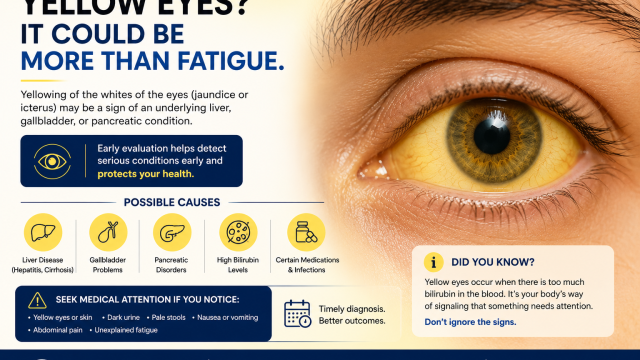
Yellow eyes are a sign of raised bilirubin, most often from a liver, gallbladder, or blood-related cause. This needs prompt medical evaluation, not just an eye check, especially if it developed recently. Yellowish eyes can occur with jaundice, but mild or localized discoloration may also be seen with chronic eye allergies, irritation, or surface changes. The cause matters, so persistent or new yellowing should be assessed rather than assumed to be an allergy.
Yellowing of the whites of the eyes, known as scleral icterus, comes from a build-up of bilirubin, a substance normally processed by the liver. Unlike most symptoms on this hub, yellow eyes usually point beyond the eye itself, most often to the liver, gallbladder, or blood, and deserve prompt medical evaluation rather than an eye-only work-up.
Yellow Eyes: What Causes Them and When It Needs Urgent Attention
| Possible Cause | How It Typically Feels |
| Hepatitis (viral or other) | Yellowing with fatigue, nausea, dark urine, sometimes fever |
| Gallstones or bile duct blockage | Yellowing with pain, especially after fatty meals, pale stools |
| Haemolytic conditions (increased red cell breakdown) | Yellowing with fatigue and paleness, sometimes since childhood |
| Alcohol-related liver disease | Gradual yellowing with a history of significant alcohol use |
| Newborn jaundice | In infants only, appears in the first days of life |
When This Needs Urgent Attention
- New yellowing of the eyes, especially over days
- Yellowing with abdominal pain, fever, or confusion
- Yellowing with dark urine and pale stools together
When to See a Doctor, Not Urgently
- Mild, longstanding yellow tinge that a doctor has already evaluated and attributed to a known, stable condition such as Gilbert’s syndrome
What to Expect at the Eye Check
An eye specialist can confirm the yellowing is scleral icterus rather than a harmless localised pigment change, but the actual diagnosis requires blood tests and often an abdominal ultrasound, done by a physician or gastroenterologist. Expect a referral rather than an eye-only treatment plan.
Frequently Asked Questions
Is yellow eyes always liver disease?
Liver-related causes are the most common, but blocked bile ducts and certain blood conditions can also cause it. Blood tests are what actually distinguish between them.
Can yellow eyes be harmless?
Rarely, a mild, longstanding, medically confirmed condition like Gilbert’s syndrome can cause a slight yellow tinge that isn’t dangerous. This should still be confirmed by a doctor rather than assumed.
Why would an eye specialist be involved if this is a liver problem?
Because yellowing is often noticed in the eyes first. An eye specialist can confirm what you’re seeing and ensure you’re promptly referred for the right blood work and physician follow-up.
This page is part of the Vision Symptoms hub. If you’ve noticed yellowing of the eyes, [request a second opinion] and plan for referral to the right specialist promptly.
Book a Consultation
New yellowing of the eyes should not wait. Book promptly for assessment and referral.
Book an Appointment →
📍 Gurgaon 📞 +91 88826 38735 | 🌐 Contact Us | Second Opinion Form for teleconsults
This page is part of the Vision Symptoms hub. Read more aboutNeuro-Ophthalmology and about our full approach to neurological vision conditions. If you’ve noticed this in someone under 40, request a second opinion to arrange the right referral. Request an urgent appointment if you’ve experienced unexplained vision loss.
About the Author
This article was written by Dr Shibal Bhartiya, fellowship-trained glaucoma specialist and Mayo Clinic Research Collaborator, Clinical Director at Marengo Asia Hospitals, Gurugram, known for ethical, patient-centred glaucoma care and independent glaucoma second opinions. She is also the Program Director for Community Outreach & Wellness; and for the Marengo Asia International Institute of Neuro and Spine.
She has published peer-reviewed research on glaucoma management, examining how treatment decisions should balance medical evidence, patient preferences, and long-term vision outcomes.
As Editor-in-Chief of Clinical and Experimental Vision and Eye Research and Executive Editor of the Journal of Current Glaucoma Practice (Pubmed Indexed, official journal of the International Society of Glaucoma Surgery), Dr Shibal Bhartiya brings editorial and research depth to every clinical decision. Her 200+ publications, including 90+ PubMed-indexed publications and 28 edited textbooks span glaucoma biology, surgical outcomes, health equity, and emerging diagnostics.
1600+ Five Star Patient Reviews Google Business Profile
If you are unable to come to Dr Bhartiya’s clinic: Read more about teleconsultation
Read her research on PubMed | Google Scholar | ResearchGate | ORCID | Github
📋Upload your reports for a structured review.| 🌐 Contact Us| 📞 +91 88826 38735
⭐ Helped by this article? Leave a Google review — it helps other patients find reliable eye care.