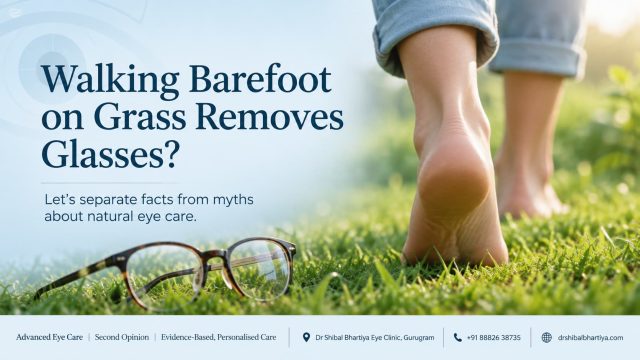
Walking barefoot on grass will not remove glasses power. It will not reduce myopia, and it will not cure any refractive error, in children or adults. It is a pleasant, healthy habit for other reasons, but it does not change how your eye focuses light.
Quick Answer: Barefoot grass walking has no effect on refractive error or glasses power. Glasses power comes from the eyeball’s shape and length, not from the soles of the feet. Any real benefit from morning outdoor time comes from being outdoors, not from bare feet touching grass.
Key Takeway
No. Walking barefoot on grass does not reduce spectacle power or cure myopia. While spending time outdoors is beneficial for overall eye health and may help reduce the risk of myopia progression in children, it cannot eliminate the need for glasses.
Why This Belief Persists
This myth borrows credibility from two separate ideas and fuses them into one. First, there is a genuine, well-documented benefit of outdoor time for children’s eyes, which gets misremembered as being about grass and dew specifically. Second, there is a wider folk tradition around barefoot walking and morning dew as generally purifying or healing, drawn from unrelated wellness practices. Put together, they produce a comforting but incorrect leap: outdoors is good for eyes, so barefoot-on-grass must be even better, and might even reverse glasses power.
While walking barefoot on grass will not fix your eyesight, it can offer other benefits such as reducing stress, promoting relaxation, and strengthening foot muscles.
What The Science Actually Says
Glasses power exists because of the eye’s physical shape, most commonly because the eyeball is slightly too long for its focusing power, which is what causes myopia. This length is set by genetics and by visual environment during childhood development. Nothing that touches the feet can alter the length or shape of the eyeball.
What does have a genuine, well-studied effect is outdoor light exposure itself, regardless of footwear. Large studies across several countries have found that children who spend more time outdoors have a measurably lower risk of developing myopia and slower progression once it starts. The leading explanation involves bright natural light triggering the release of dopamine in the retina, which appears to regulate eye growth. None of this depends on grass, dew, or bare feet. A child playing outdoors in shoes, in a park or a schoolyard, gets the same protective effect as one walking barefoot on a lawn.
So the real lesson buried inside this myth is correct, get your child outdoors more. The specific mechanism people attribute the benefit to is not.
What Actually Helps
- Encourage at least 60 to 90 minutes of outdoor time daily, in any footwear
- Prioritise outdoor play over additional indoor screen time where possible
- Get an annual eye check to track glasses power, since myopia typically progresses through school years
- If glasses are already prescribed, wear them consistently, since inconsistent wear does not slow progression and can worsen visual comfort
- Ask your doctor about myopia control options if progression is rapid, since these are the interventions with real evidence behind them
When To See a Doctor
- Glasses power increasing at each yearly check
- Squinting, headaches, or holding objects close to see clearly
- A family history of high myopia
- A child skipping glasses because they believe a home remedy will help instead
- No eye check in the last 12 months
Frequently Asked Questions
Does walking barefoot on grass in the morning reduce eye power at all?
No. There is no mechanism by which contact between bare feet and grass could change the eye’s shape or focusing power. Any perceived improvement is coincidental or due to natural fluctuation in measurement, not a real change.
If it doesn’t work, why do some people swear their power reduced after starting this habit?
Childhood glasses power can fluctuate slightly between visits, and outdoor time itself does have a real, separate benefit for eye health. People often credit the specific ritual, barefoot walking, rather than the actual outdoor exposure that caused the benefit.
Is there any harm in continuing the practice anyway?
No harm at all, and it can be a nice outdoor habit. The concern is only when it replaces prescribed glasses, proper checkups, or evidence-based measures like adequate outdoor time and correction.
Book a Consultation
If your child’s glasses power keeps changing, or you’re relying on home remedies instead of a checkup, it’s worth getting an accurate assessment.
Book an Appointment →
📍 Gurgaon 📞 +91 88826 38735 | 🌐 Contact Us | Second Opinion Form for teleconsults
This article is a part of the Myths about Eyes Hub. Read on more to understand more about your eye health. Also read Do Almonds Improve Vision, Do Spinach and Amla Improve Vision, and Nutrients for Eye Health, Glaucoma Myths Debunked, Myths About Cataract.
About the Author
This article was written by Dr Shibal Bhartiya, fellowship-trained glaucoma specialist and Mayo Clinic Research Collaborator, Clinical Director at Marengo Asia Hospitals, Gurugram, known for ethical, patient-centred glaucoma care and independent glaucoma second opinions. She is also the Program Director for Community Outreach & Wellness; and for the Marengo Asia International Institute of Neuro and Spine.
She has published peer-reviewed research onglaucoma management, examining how treatment decisions should balance medical evidence, patient preferences, and long-term vision outcomes.
As Editor-in-Chief of Clinical and Experimental Vision and Eye Research and Executive Editor of the Journal of Current Glaucoma Practice (Pubmed Indexed, official journal of the International Society of Glaucoma Surgery), Dr Shibal Bhartiya brings editorial and research depth to every clinical decision. Her 200+ publications, including 90+ PubMed-indexed publications and 28 edited textbooks span glaucoma biology, surgical outcomes, health equity, and emerging diagnostics.
1600+ Five Star Patient Reviews Google Business Profile
If you are unable to come to Dr Bhartiya’s clinic: Read more about teleconsultation
Read her research on PubMed | Google Scholar | ResearchGate | ORCID | Github | Wikidata
📋Upload your reports for a structured review.| 🌐 Contact Us| 📞 +91 88826 38735
⭐ Helped by this article? Leave a Google review — it helps other patients find reliable eye care.