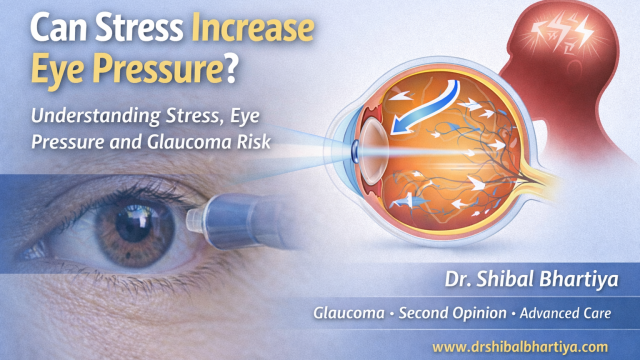
Yes, stress may temporarily increase eye pressure, but it is not a direct cause of glaucoma. However, chronic stress may indirectly worsen glaucoma control by affecting blood flow and treatment consistency.
Stress affects many systems in the body, including blood pressure, heart rate, and hormone levels. It is therefore natural to wonder whether emotional stress or anxiety can also influence intraocular pressure (IOP), the pressure inside the eye that plays an important role in glaucoma.
The relationship between stress and eye pressure is complex. While stress can influence the body in several ways, it is not usually a direct cause of glaucoma.
Understanding what stress can and cannot do helps patients focus on the factors that truly matter in protecting long-term vision. And which is why it is important to understand if can stress increase eye pressure, says Dr Bhartiya.
Dr Shibal Bhartiya is a fellowship-trained glaucoma specialist and Mayo Clinic Research Collaborator with over 25 years of experience. Her approach focuses on identifying risk before damage is irreversible, simplifying treatment decisions, and protecting vision long-term. Emphasis on early detection, risk assessment, and continuity of care. She is rated 5 stars across 1,500+ patient reviews on Google.
What is eye pressure?
Eye pressure, also called intraocular pressure, is created by a clear fluid inside the eye called aqueous humor. This fluid is continuously produced and drained through microscopic channels in the eye.
In healthy eyes, production and drainage remain balanced, keeping pressure within a normal range. When this balance is disturbed, pressure may rise and increase the risk of glaucoma, a condition that can damage the optic nerve.
Can stress temporarily affect eye pressure?
Short periods of stress may cause small, temporary fluctuations in eye pressure in some individuals.
Stress activates the body’s “fight-or-flight” response, releasing hormones such as cortisol and adrenaline. These hormonal changes can influence blood pressure, heart rate, and fluid dynamics in the body, which may occasionally lead to minor variations in intraocular pressure.
However, these changes are usually short-lived and modest. And so, the answer to the question can stress increase eye pressure, is usually no.
For most people, emotional stress alone does not cause sustained elevation of eye pressure.
Does stress cause glaucoma?
Current medical evidence suggests that stress itself does not cause glaucoma.
Glaucoma typically develops due to a combination of factors such as:
• elevated intraocular pressure
• increased sensitivity of the optic nerve
• genetic predisposition
• age
• impaired blood supply to the optic nerve
While stress can affect overall health and wellbeing, it is not considered a primary risk factor for glaucoma.
Why stress may still matter in glaucoma care
Even though stress does not directly cause glaucoma, it can still indirectly influence eye health.
Chronic stress may affect:
• sleep quality
• blood pressure control
• medication adherence
• overall health habits
Patients who are anxious about their diagnosis may also worry excessively about eye pressure readings or fluctuations.
Maintaining emotional wellbeing can therefore support consistent glaucoma care, including regular monitoring and proper use of prescribed medications.
The most important factors for controlling eye pressure
The most effective ways to manage glaucoma and protect vision include:
• regular eye examinations
• consistent use of prescribed eye drops
• monitoring optic nerve health
• visual field testing
• early treatment when necessary
These measures have a far greater impact on glaucoma outcomes than temporary fluctuations related to stress.
Managing stress while living with glaucoma
Living with a chronic eye condition can understandably create anxiety for some patients.
Simple lifestyle measures may help reduce stress and improve overall wellbeing:
• regular physical activity
• adequate sleep
• mindfulness or relaxation techniques
• maintaining routine medical follow-up
Most importantly, patients should remember that glaucoma is usually a slowly progressive condition, and with proper care many people maintain useful vision throughout life.
Key takeaway
Stress may cause minor temporary fluctuations in eye pressure, but it is not a direct cause of glaucoma.
The most important step in protecting vision is consistent monitoring and early management, guided by a qualified glaucoma specialist.
Frequently Asked Questions
1. Can emotional stress raise eye pressure?
Emotional stress may lead to small, temporary fluctuations in intraocular pressure due to hormonal changes in the body. However, these changes are usually mild and short-lived and do not typically cause sustained elevation of eye pressure.
2. Can anxiety worsen glaucoma?
Anxiety does not directly worsen glaucoma, but it can make patients more concerned about symptoms or pressure readings. Managing stress and maintaining regular eye care are important for overall wellbeing and effective glaucoma management.
3. Can meditation or relaxation reduce eye pressure?
Relaxation techniques such as meditation, breathing exercises, and yoga may help reduce overall stress levels. While they are beneficial for general health, they should not replace prescribed glaucoma treatment.
4. Does high blood pressure from stress affect glaucoma?
High blood pressure and glaucoma involve different mechanisms. While blood pressure can influence blood flow to the optic nerve, stress-related blood pressure changes are not considered a direct cause of glaucoma.
5. Should glaucoma patients avoid stressful situations?
Avoiding all stress is neither practical nor necessary. Instead, patients should focus on maintaining a balanced lifestyle and ensuring consistent follow-up with their eye specialist.
This page is a part of the Glaucoma Hub. you may want to read about Glaucoma Progression, and Risk Stratification in Glaucoma. Other articles of interest could be Advanced Glaucoma Care in Gurgaon, What Good Glaucoma Care Actually Optimises For, What Happens If Glaucoma Is Left Untreated?, More Glaucoma Eye Drops is Not Better Glaucoma Care, 5 Mistakes Patients Make in Glaucoma Care and Do You Really Need Treatment for Glaucoma?
Read the research articles
This article was written by Dr Shibal Bhartiya, fellowship-trained glaucoma specialist and Mayo Clinic Research Collaborator, Clinical Director at Marengo Asia Hospitals, Gurugram, known for ethical, patient-centred glaucoma care and independent glaucoma second opinions. She is also the Program Director for Community Outreach & Wellness; and for the Marengo Asia International Institute of Neuro and Spine.
She has published peer-reviewed research on glaucoma management, examining how treatment decisions should balance medical evidence, patient preferences, and long-term vision outcomes.
As Editor-in-Chief of Clinical and Experimental Vision and Eye Research and Executive Editor of the Journal of Current Glaucoma Practice (Pubmed Indexed, official journal of the International Society of Glaucoma Surgery), Dr Shibal Bhartiya brings editorial and research depth to every clinical decision. Her 200+ publications, including 90+ PubMed-indexed publications and 28 edited textbooks span glaucoma biology, surgical outcomes, health equity, and emerging diagnostics.
1500+ Five Star Patient Reviews Google Business Profile
If you are unable to come to Dr Bhartiya’s clinic: Read more about teleconsultation
Read her research on PubMed | Google Scholar | ResearchGate | ORCID
Upload your reports for a structured review.| www.drshibalbhartiya.com | +91 88826 38735
Leave a review on Google