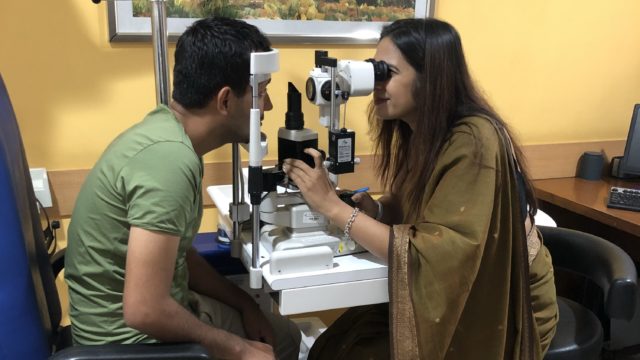
Prepare for your eye appointment by carrying your previous reports, current glasses or contact lenses, and a list of symptoms or medications. Avoid last-minute guesswork: note any vision changes, screen habits, or eye discomfort so your doctor gets a clear, accurate picture.
A well-prepared patient gets more from every appointment. This is not about paperwork, it is about giving your doctor the information she needs to make accurate decisions about your eyes. The more complete your history, the less time is spent gathering basics and the more time is spent on what actually matters: understanding your eyes, your risks, and your options.
Here is exactly what to bring, what to say, and what to expect, explains Dr Bhartiya.
Dr Shibal Bhartiya is a fellowship-trained glaucoma specialist and Mayo Clinic Research Collaborator with over 25 years of experience. Her approach focuses on identifying risk before damage is irreversible, simplifying treatment decisions, and protecting vision long-term. Emphasis on early detection, risk assessment, and continuity of care. She is rated 5 stars across 1,500+ patient reviews on Google.
Before Your Appointment
Write Down Your Symptoms, Before You Forget Them
Symptoms described in the consulting room are often incomplete. Most people remember the chief complaint but forget the details that make it clinically useful. Before your appointment, note the following for any symptom you have:
When did it start? Is it constant or intermittent? Does it affect one eye or both? Is it getting worse, better, or staying the same? Does anything make it better or worse? Light, reading, time of day, screen use?
This matters particularly for symptoms like blurred vision, glare, haloes around lights, peripheral vision changes, or eye pain. Vague descriptions lead to vague workups. Specific descriptions lead to targeted investigation.
Bring All Your Old Records
This is the single most useful thing you can do. Bring every previous eye-related document you have: old prescriptions, reports from OCT scans, visual field tests, IOP readings, discharge summaries, referral letters, and photographs if you have them. Even records from five or ten years ago are useful. They establish a baseline and allow your doctor to track change over time.
If you are coming for a glaucoma second opinion, old visual field printouts and OCT nerve fibre layer reports are especially important. A single visit tells you where you are. Old records tell you where you have been, and how fast you are moving.
You can also upload your reports in advance for review before your appointment.
List Every Medication You Take
Eye drops and systemic medications both affect eye health. Bring a written list, or better still, the actual bottles. Include:
Eye drops (glaucoma drops, lubricants, steroids, antihistamines), systemic medications (blood pressure drugs, diabetes medications, steroids, antidepressants, antihistamines, thyroid medications), any supplements or herbal preparations, and any recently started or recently stopped medications.
Several systemic drugs affect intraocular pressure, the tear film, the optic nerve, and the retina. Your doctor cannot assess drug-related effects without knowing what you take.
Know Your Family History
A family history of glaucoma, macular degeneration, diabetic eye disease, or other inherited eye conditions changes the focus of your examination. If a parent, sibling, or grandparent has glaucoma, even if they were never formally told the name, mention it. Mention any family history of early vision loss or blindness, regardless of cause.
Contact Lenses: Leave Them Out
Do not wear contact lenses to your appointment. Lenses alter corneal measurements, including the corneal topography and pachymetry used in glaucoma assessment. Soft lenses should be removed at least a few hours before; rigid lenses ideally for longer. Bring your lens case and solution, and wear your glasses instead.
Plan for Dilation
Ask when you book whether your doctor plans to dilate your eyes. If dilation is likely, plan your day accordingly. Dilation takes up to an hour to take full effect and leaves vision blurred and light-sensitive for two to three hours afterward. Do not drive after dilation. Bring sunglasses for the journey home. If you work at a screen, plan to rest your eyes for the remainder of the day.
At the Appointment
Tell Your Doctor Everything Relevant, Not Just What You Think Is Eye-Related
Several systemic conditions affect the eyes directly: diabetes, hypertension, thyroid disease, autoimmune conditions, sleep apnoea, and neurological conditions all have ocular manifestations. Do not filter your history based on what seems eye-related. Let your doctor make that call.
If you have been told your blood sugar is borderline, mention it. If you have been treated for high blood pressure for years, mention it. If you snore heavily or have been investigated for sleep apnoea, mention it. There is a growing body of research on the relationship between sleep apnoea and glaucoma.
Ask Questions
A consultation is a two-way exchange. Come prepared with questions. Write them down in order of priority, because appointments move quickly and you may not get to everything. Common questions worth asking include:
What did today’s examination show? Has anything changed since my last visit? What are my risk factors for glaucoma, macular degeneration, or other conditions? Do I need any further tests? When should I come back? What symptoms should prompt me to return sooner?
If you have been given a diagnosis you do not fully understand, ask for it to be explained again. Or in a different way. You are entitled to leave with a clear understanding of what was found and what it means.
For Glaucoma Patients Specifically
If you are already on glaucoma treatment, tell your doctor honestly whether you are using your drops as prescribed. Many patients miss doses or use drops irregularly. This is not a failure, it is clinically important information. Drop adherence, application technique, and timing all affect intraocular pressure readings and treatment decisions. Your doctor needs accurate information to make accurate decisions.
If you have concerns about side effects, cost, or how drops fit into your daily routine, raise them. These are solvable problems. Switching drops, adjusting timing, or exploring surgical options may be appropriate, but only if your doctor knows there is a problem.
What Happens During a Comprehensive Eye Examination
A comprehensive eye exam is not only a vision check. Depending on your age, history, and presenting concerns, it may include:
Visual acuity assessment to check clarity of vision at distance and near. Refraction to determine whether a new glasses or contact lens prescription is needed. Slit lamp examination of the anterior segment: cornea, lens, iris, and anterior chamber. Intraocular pressure measurement. Dilated fundus examination to assess the retina, macula, and optic nerve. OCT scanning of the nerve fibre layer or macula when indicated. Visual field testing when glaucoma or neurological disease is suspected.
Not every test is performed at every visit. Your doctor will decide which investigations are appropriate based on your history and examination findings.
After Your Appointment
Follow the advice you have been given, including any lifestyle recommendations, not only prescriptions. If you have been given a new glasses prescription, fill it. If follow-up has been recommended, schedule it before you leave the clinic. If you have been asked to return sooner if certain symptoms develop, make a note of what those symptoms are.
If you leave the appointment with questions you forgot to ask, or if something was explained too quickly to absorb, call the clinic. Good eye care depends on you understanding your own condition well enough to be an active participant in managing it.
Preparing for a Second Opinion Appointment
If you are coming for a second opinion on a glaucoma diagnosis, a recommended surgery, or a treatment plan that does not seem to be working, bring everything. Every previous report, every scan, every prescription. The more complete your records, the more useful the opinion.
You do not need a referral to seek a second opinion. It is your right as a patient to have your diagnosis and management independently reviewed. Upload your reports here before your visit, or bring them on the day.
Frequently Asked Questions
How often should I have an eye examination?
Adults with no symptoms and no risk factors should have a comprehensive eye examination every one to two years. Anyone with glaucoma, diabetes, hypertension, a family history of glaucoma, or age over 40 should be reviewed at least annually, and more frequently if their condition requires monitoring. Children should have their first eye examination before starting school.
Do I need to fast before an eye examination?
No fasting is required for a routine eye examination. If you have diabetes, maintain your normal medication and meal schedule so that your blood sugar is at its usual level during your visit.
Can I drive myself to the appointment?
If dilation is planned, do not drive yourself. Arrange a driver or use a cab. Dilation blurs vision and makes bright light uncomfortable for two to three hours. If you are unsure whether dilation will be done, check when you book.
What if I cannot afford all the tests my doctor recommends?
Discuss this openly with your doctor. Tests can often be prioritised: some are essential and some add information incrementally. A good clinician will help you understand which investigations matter most for your situation. Delaying diagnosis to save money on tests can cost significantly more, in treatment and in vision, later.
I have been told I have glaucoma but my vision seems fine. Do I still need regular appointments?
Yes. This is one of the most important things to understand about glaucoma. Vision loss from glaucoma is painless and gradual, and significant damage can occur before you notice any change in your everyday vision. Regular monitoring is what catches progression before it reaches the point of noticeable loss. By the time you notice it, significant and irreversible damage has often already occurred. Read more about understanding glaucoma.
Read the research articles
This article was written by Dr Shibal Bhartiya, fellowship-trained glaucoma specialist and Mayo Clinic Research Collaborator, Clinical Director at Marengo Asia Hospitals, Gurugram, known for ethical, patient-centred glaucoma care and independent glaucoma second opinions. She is also the Program Director for Community Outreach & Wellness; and for the Marengo Asia International Institute of Neuro and Spine. This article was updated in April 2026.
She has published peer-reviewed research on glaucoma management, examining how treatment decisions should balance medical evidence, patient preferences, and long-term vision outcomes.
As Editor-in-Chief of Clinical and Experimental Vision and Eye Research and Executive Editor of the Journal of Current Glaucoma Practice (Pubmed Indexed, official journal of the International Society of Glaucoma Surgery), Dr Shibal Bhartiya brings editorial and research depth to every clinical decision. Her 200+ publications, including 90+ PubMed-indexed publications and 28 edited textbooks span glaucoma biology, surgical outcomes, health equity, and emerging diagnostics.
Access her work on Pubmed, Google Scholar, ResearchGate and ORCID.
Dr Shibal Bhartiya
Glaucoma • Second Opinion • Advanced Care
www.drshibalbhartiya.com
+91 88826 38735
1500+ Five Star Patient Reviews Google Business Profile
Upload your reports for a structured review.
If you are unable to come to Dr Bhartiya’s clinic: Read more about teleconsultation for glaucoma